Standing Serratus Training On The Wall
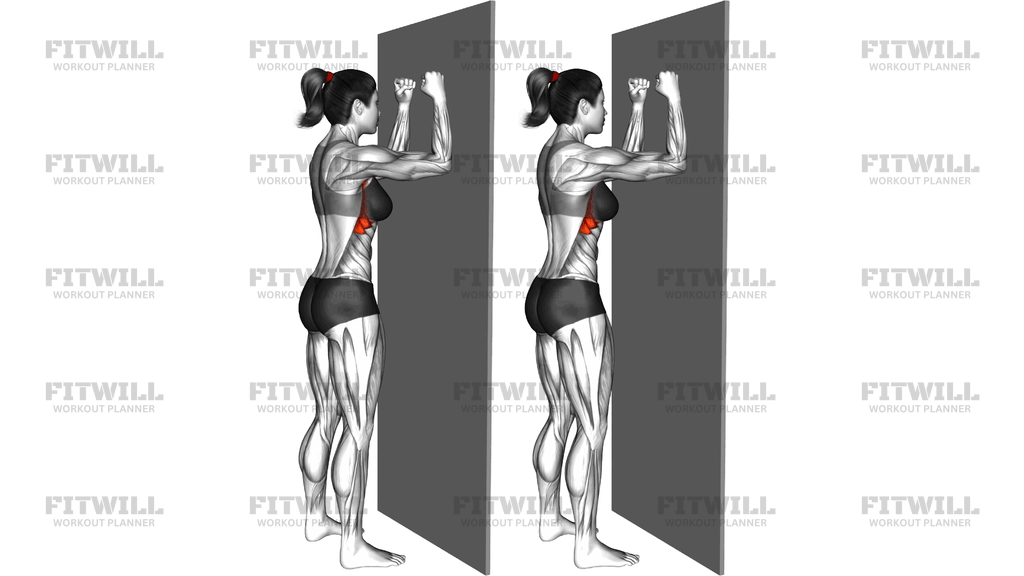
Standing Serratus Training On The Wall is a body-weight drill performed facing a wall, with the forearms and the backs of the hands placed flat against the surface at roughly face height and the elbows bent. From there you slide the forearms up the wall while actively pushing into it, which drives the shoulder blades forward and around the rib cage. The red-highlighted area in the movement pattern sits along the side of the ribs, which is exactly where the serratus anterior lives and where you should feel the work.
The serratus anterior is one of the most undertrained yet important muscles around the shoulder. It pulls the scapula forward around the ribs and rotates the shoulder blade upward as the arm rises, which keeps the shoulder joint moving smoothly overhead. When it is weak or lazy, people tend to shrug with the upper traps, let the shoulder blade wing off the ribs, or compensate with smaller stabilizers. This drill isolates that protraction and upward-rotation action without any load, making it a favorite in warm-ups, shoulder rehab progressions, and postural programs.
The wall setup is what makes the exercise work. Because the forearms stay in contact with the wall, you get constant feedback about your arm path, and the slight lean of the torso creates just enough body-weight resistance for the serratus to work against. Stand close enough that you must gently press into the wall, but not so close that your chest or face crowds the surface and forces you to crank the neck backward.
Execution is slow and deliberate rather than forceful. Keep the ribs stacked over the pelvis, avoid arching the lower back, and think about spreading the shoulder blades apart at the top of the slide instead of lifting the shoulders toward the ears. The elbows should track roughly shoulder-width, and the forearms should stay glued to the wall from start to finish. If your forearms peel off the wall or your shoulders creep upward, the range has gone beyond what your serratus can currently control.
This movement suits a wide range of people: office workers with rounded, forward-tilted shoulders; lifters who press or bench heavily and never train scapular control; and anyone rebuilding overhead mobility after a layoff. It fits neatly at the start of an upper-body session or as a daily stand-alone drill. Because it is low-load, the priority is quality of motion, not repetitions squeezed out at speed.
For safety, keep the effort moderate and pain-free. The press into the wall should feel like a firm push, not a maximal brace, and the neck stays relaxed with the eyes level. If a shoulder complains during the slide, reduce the lean, shorten the range, or stop and get the area assessed before continuing.
[ Workout Log & Planner ]
Put your next workout in Fitwill
Keep your plan and training log ready when you are.


Instructions
- Stand facing a clear, smooth wall about one short step away, with your feet roughly hip-width apart and your weight evenly distributed.
- Place your forearms and the backs of your hands flat on the wall so the elbows are bent to about 90 degrees and sit at or slightly below face height, roughly shoulder-width apart.
- Lean your chest slightly toward the wall until you feel a light, steady pressure through the forearms, and brace your core to keep the ribs down over your hips.
- Relax your neck, look straight ahead, and check that your shoulders are not already shrugged toward your ears before you start.
- Slowly slide both forearms up the wall as far as you can keep full contact, letting the elbows straighten as your hands travel higher.
- At the top position, actively push the wall away and imagine spreading your shoulder blades apart around your rib cage without shrugging.
- Pause briefly at the top, then slide the forearms back down along the same path with control until you return to the starting press.
- Exhale as you slide up and push into the wall, and inhale as you lower back down.
- Complete your reps in one smooth rhythm, then step back from the wall and gently reset your shoulder position between sets if needed.
Tips & Tricks
- The most common mistake is shrugging at the top of the slide, which shifts the work to the upper traps. If you feel the sides of your neck working, lower the top range and focus on pushing the wall away instead of reaching higher.
- Keep the forearms in contact with the wall the entire time. If they peel away as the arms rise, you are likely compensating with the chest or rotating the torso, so reduce the height of the slide.
- Do not let the lower back arch as you lean in. Squeeze the glutes lightly and keep the ribs stacked so the serratus does the work rather than the spine falling into extension.
- A very light press produces almost no training effect, but a hard shove makes you stiffen everywhere. Aim for a firm, medium push into the wall that you can hold smoothly through the whole rep.
- If one side feels weaker or moves differently, slow that side down or work it singly with one forearm on the wall so you can correct the imbalance.
- Keep the elbows from flaring wider than shoulder width as you slide. Tucking them slightly in front of the wall plane keeps the shoulder blade path clean.
- Tempo matters more than volume here. Two seconds up, a short pause, and two seconds down beats fast reps for actually feeling the muscle along the side of the ribs.
- If your wrists or the backs of your hands are uncomfortable pressed flat, adjust the hand angle slightly rather than forcing a straight wrist, and keep the pressure tolerable.
Frequently Asked Questions
Which muscles does Standing Serratus Training On The Wall work?
The main muscle is the serratus anterior along the side of the rib cage, which protracts and upwardly rotates the shoulder blade. The muscles around the shoulder blade, including the lower and middle trapezius, and the pec minor assist as you press and slide.
Is this exercise suitable for beginners?
Yes, it is one of the most beginner-friendly serratus drills because it uses body weight only and the wall gives constant feedback on the arm path. Start with a lighter lean and a shorter slide, then progress as control improves.
How far should I stand from the wall?
Stand close enough that a slight lean of the chest creates firm pressure through the forearms, usually about one short step away. If your face or chest touches the wall or you cannot keep the forearms flat, step back a little.
Why do my upper traps burn instead of the sides of my ribs?
That usually means the shoulders are shrugging as you slide up. Drop your shoulders away from your ears before starting, shorten the top range, and emphasize pushing the wall away rather than reaching higher.
Can I do Standing Serratus Training On The Wall with shoulder pain?
Mild, pain-free work is generally fine, but stop if the movement provokes sharp or increasing pain. Reduce the lean and range first, and if discomfort persists, have the shoulder assessed before continuing.
What can I use instead of a wall if I have no clear space?
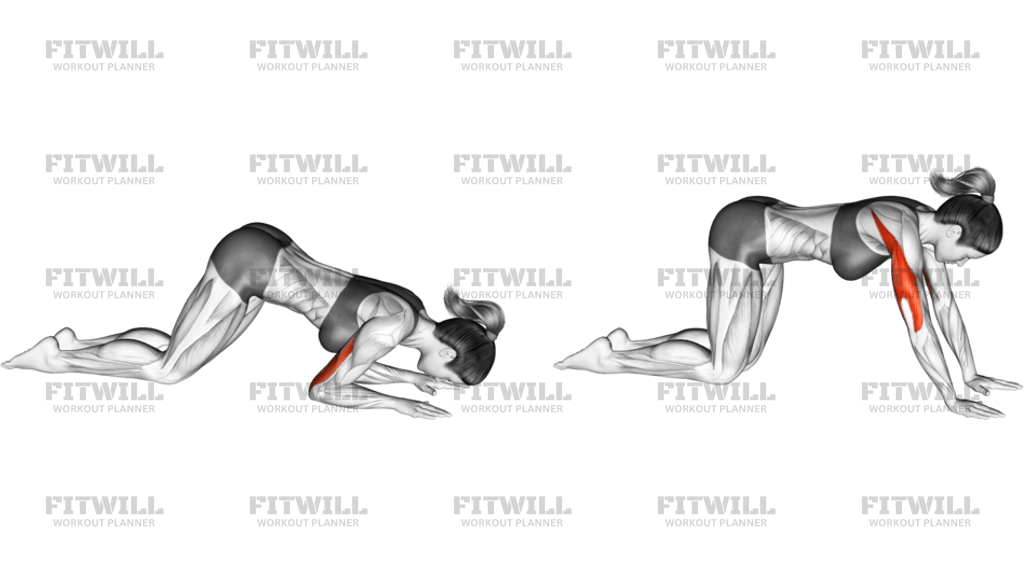
A sturdy door, a smooth pillar, or a push-up-plus on the floor on hands and knees trains a similar protraction pattern. The wall version is preferred at first because the upright position makes rib flare and shrugging easier to notice.
How many reps and sets should I do?
Around 8 to 12 slow, controlled reps for 2 to 3 sets works well, either as a warm-up before pressing days or as a stand-alone drill. Stop the set when the slide quality drops or the shoulders start shrugging.
Why is it important to keep the ribs down during the slide?
When the ribs flare and the lower back arches, the torso replaces scapular protraction with spinal extension, so the serratus gets a free ride. Keeping the ribs stacked over the pelvis forces the shoulder blades to do the moving.
Can this exercise help with winged shoulder blades?
It is commonly used to build control in the serratus anterior, which anchors the shoulder blade against the rib cage, so it is a reasonable part of a program for scapular control. Persistent visible winging should be evaluated by a professional to rule out nerve involvement.