Single Arm Scapular Push Up To Rotation
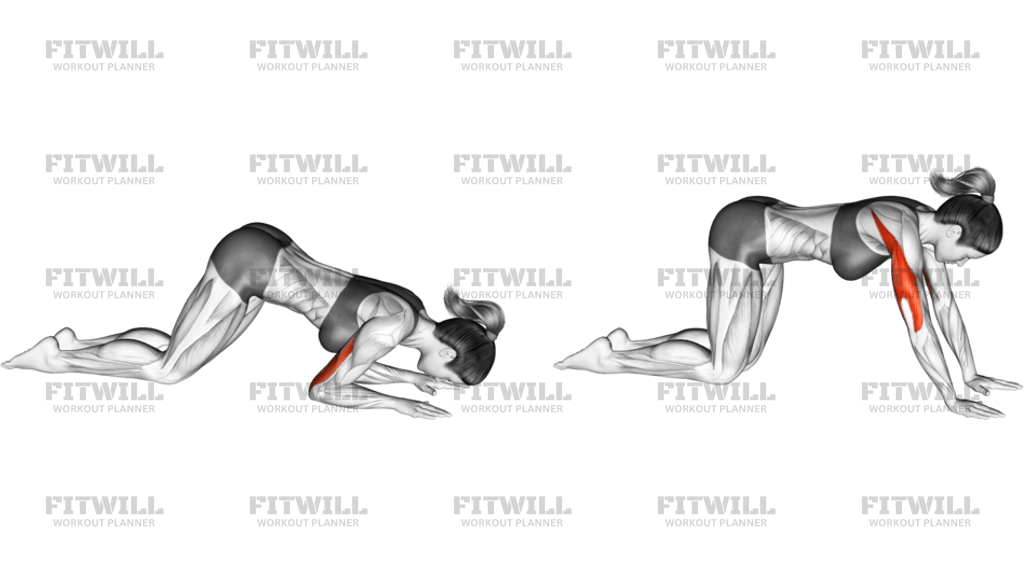
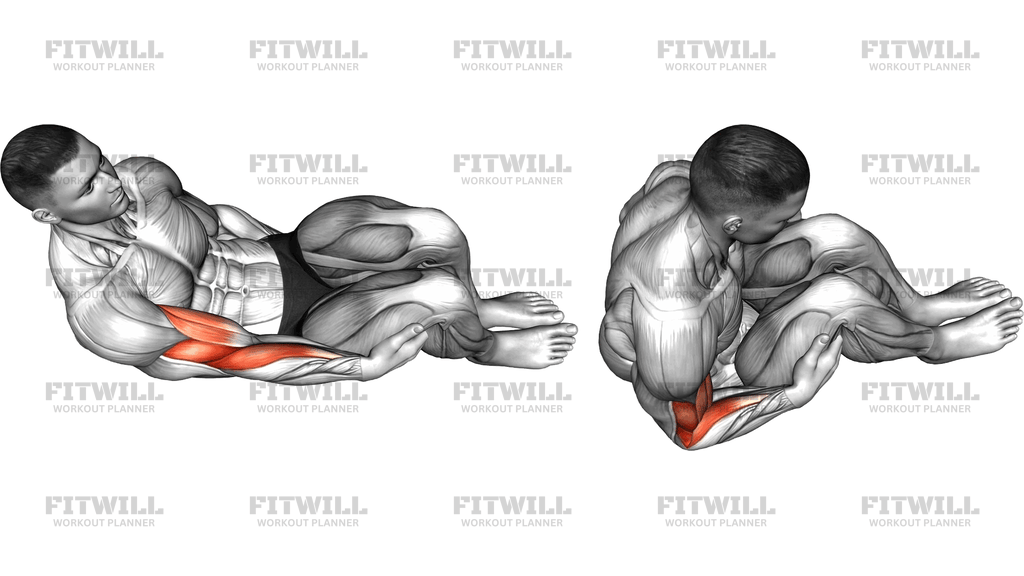
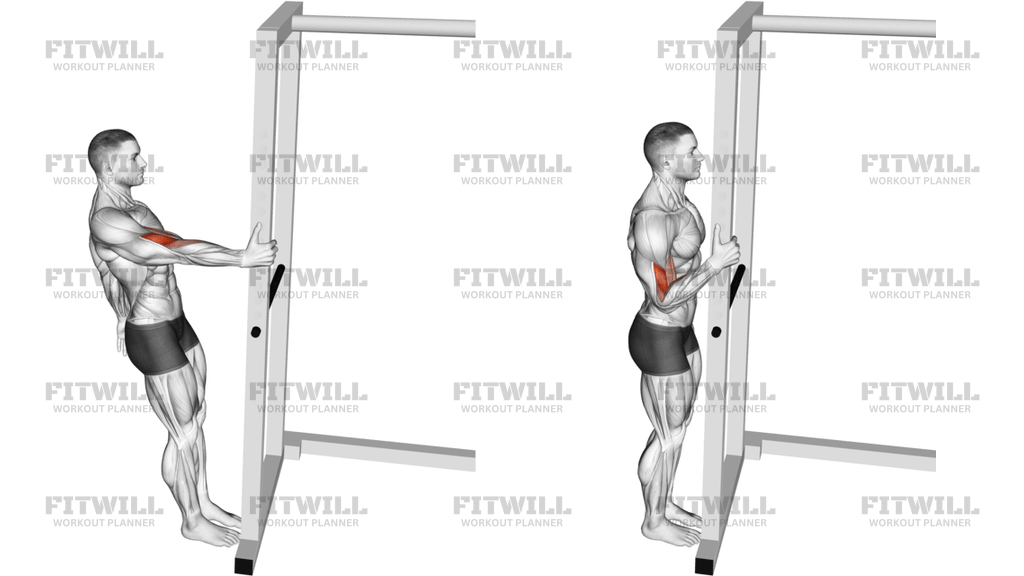
The Single Arm Scapular Push Up To Rotation is a bodyweight movement that blends two jobs into one drill: a protraction of the shoulder blade done from a single-arm support, followed by an open-book rotation of the upper body toward the ceiling. You start balanced on one straight arm with your feet or knees stacked behind you, push the floor away so the shoulder blade spreads across your ribcage, then reach the free hand up and across as your torso turns. The result is a shoulder stability exercise, a thoracic mobility drill, and an anti-rotation core challenge all at once.
This movement is especially useful for people whose shoulder blades don't move well or whose upper backs feel stuck. The serratus anterior, the muscle that wraps around your ribs just under the armpit, is the star here, along with the muscles that control and stabilize the scapula. The single-arm base raises the demand considerably compared to a two-hand scapular push-up, because your trunk has to resist twisting while one shoulder does all the protraction work. The rotation phase then takes the mid-back through internal rotation on the support side and trains the obliques to control the turn.
Setup matters more than it looks. Because you're on one arm, the position of that hand directly under the shoulder, the spread of the fingers, and the stacked line from hand to hip all determine whether the shoulder joint stays comfortable. If your base drifts wide or your hips sag, the shoulder takes stress it isn't positioned to handle. A mat under the supporting hand and knee or feet makes the position easier to hold for quality reps.
To execute it well, think of the two phases as separate skills. First, keep the elbow locked and move only the shoulder blade, letting your chest sink a few inches toward the floor, then push actively through the floor to spread the blade. Second, once protraction is complete, rotate from the ribcage, reaching the top hand across your body or up toward the ceiling, then reverse the turn before the next rep. Move slowly enough that you can feel the blade gliding, not the shoulder joint grinding.
You'll see this drill in shoulder prehab programs, warm-ups for pressing days, calisthenics skill work for planche and one-arm push-up progressions, and rehabilitation-adjacent training where scapular control is being rebuilt. It's also a smart inclusion for desk workers, since the protraction-and-rotation combination mobilizes exactly the ranges that prolonged sitting tends to stiffen.
Keep the load honest. If your trunk wobbles, drop to a knee-supported version before you lose form. Never let the supporting shoulder collapse into a shrug, and stop any set where the elbow starts bending or the wrist aches. Controlled reps in a smaller range beat big, sloppy sweeps every time.
[ Workout Log & Planner ]
Put your next workout in Fitwill
Keep your plan and training log ready when you are.


Instructions
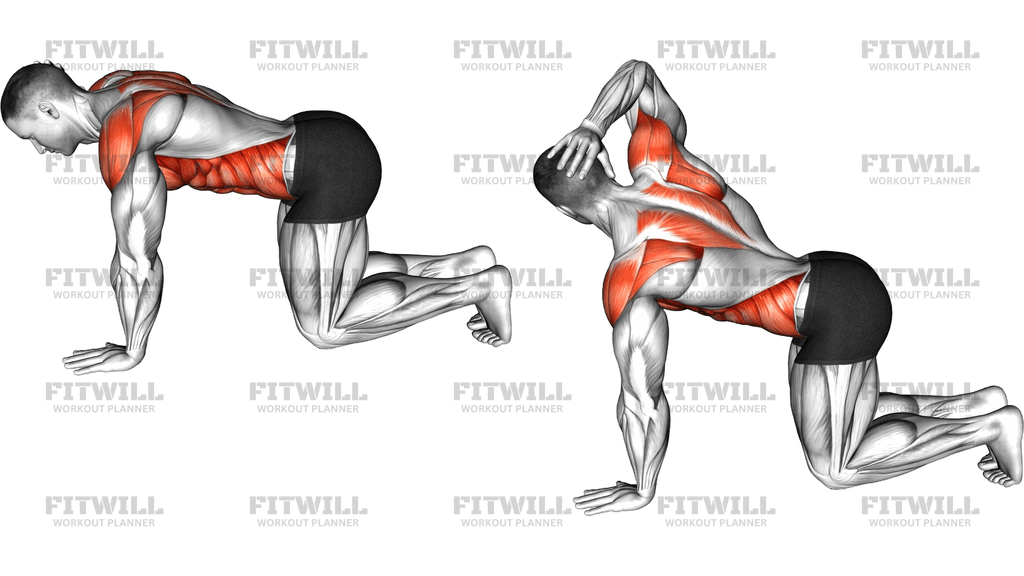
- Set up on an exercise mat in a single-arm high plank: one palm flat on the floor directly under the shoulder, fingers spread wide, arm fully straight.
- Stack your feet behind you (or drop to both knees for an easier base) and align your head, hips, and heels so your body forms one straight diagonal line.
- Brace your abdominals and squeeze your glutes so your trunk resists twisting before you even start moving.
- Keeping the elbow locked, let your chest sink toward the floor so the shoulder blade slides inward and back across your ribs.
- Push actively through the floor to spread the shoulder blade wide, lifting your chest slightly away from the ground to finish the scapular push-up.
- From that protracted position, rotate your upper body toward the ceiling, reaching the free hand up and across as your ribcage turns open.
- Pause briefly at the top of the rotation, keeping the supporting arm straight and the hips square-ish rather than dumping them toward the floor.
- Reverse the rotation with control, then relax the protraction slightly to return the shoulder blade to its neutral starting position.
- Exhale as you rotate and reach, inhale as you return, and keep your breathing steady rather than holding your breath under tension.
- Complete all reps on one side, then reset your plank position and match the count on the other arm.
Tips & Tricks
- If the supporting shoulder creeps up toward your ear, the upper trapezius has taken over the job of the serratus; consciously press the floor away and lengthen the neck before each rep.
- A common mistake is turning this into a partial push-up by bending the elbow. Lock the arm out and let the shoulder blade do the moving instead.
- If your hips twist the moment you reach across, narrow the difficulty by kneeling. A wide, sagging base hides the anti-rotation work you're trying to train.
- Keep your weight distributed across the whole palm and fingertips. Rolling onto the outside of the wrist is a sign the shoulder isn't stacked and load is leaking into the joint.
- Separate the two phases in your head: finish the protraction completely before starting the rotation. Blending them turns a precise scapular drill into a vague torso swing.
- The reach should come from the ribcage turning, not from cranking the neck. Let your eyes follow the hand only as far as feels comfortable.
- Slow the descent of the chest down. Most people rush the sinking phase and miss the deep serratus engagement that makes this exercise worth doing.
- If your wrist complains, use a fist or a set of push-up handles on the supporting side to keep it neutral; just keep the arm height identical to a flat-palm setup.
- Treat the last two reps as a quality check. If you can't finish them with a straight arm and controlled rotation, end the set rather than grinding through a collapsed shoulder position.
Frequently Asked Questions
Which muscles does the Single Arm Scapular Push Up To Rotation work?
The primary target is the serratus anterior, which drives the shoulder blade forward around the ribs. The supporting shoulder's delts and rotator cuff stabilize, while the obliques and deep core control the rotation, with the triceps and upper back assisting throughout.
Can beginners do the Single Arm Scapular Push Up To Rotation?
Yes, as long as they start from a kneeling base instead of a full plank. Kneeling shortens the lever dramatically and lets you learn the protraction and rotation before the trunk has to resist full bodyweight.
Why does only one arm support my body in this exercise?
The single-arm base forces the working shoulder to control the scapula without help from the other side, and it forces your trunk to resist twisting. That double demand is what separates this drill from a standard two-hand scapular push-up.
Should my elbow bend during the scapular push-up portion?
No. Keep the supporting elbow locked the entire time; the movement should come from the shoulder blade gliding across the ribcage, not from pressing with the arm. If the elbow bends, the range is usually too deep or you're fatigued.
How far should I rotate in the reaching phase?
Rotate only as far as you can keep the supporting arm straight and your breathing relaxed. A smaller turn under control trains more than forcing a big sweep that dumps your weight into the shoulder joint.
My hips sag and my lower back aches. What should I fix?
Your brace is failing under the single-arm load. Squeeze the glutes, tuck the pelvis slightly, and drop to a kneeling base until you can hold a straight line for the whole set without the hips dropping.
What can I substitute if the Single Arm Scapular Push Up To Rotation is too hard?
Start with a kneeling single-arm scapular push-up without the rotation, or a two-hand scapular push-up. Once you can protract cleanly for 10 to 12 controlled reps, add the rotation, then move back up to the full plank.
Where should this exercise fit in my training week?
It works best as a warm-up before pressing or pulling days, or as shoulder prehab on its own. Because the load is low but the control demand is high, keep the reps crisp and place it early in the session rather than at the end when you're tired.
Is it safe for cranky shoulders or wrists?
If you have a current shoulder injury, clear any new drill with a qualified professional first. For general discomfort, keep the range shallow, keep the hand stacked under the shoulder, and switch to push-up handles or a fist if the wrist extension is the limiting factor.
How many reps and sets should I do?
Two to three sets of 6 to 10 controlled reps per side is a solid working range. Prioritize a straight arm, a quiet trunk, and a deliberate rotation over chasing higher numbers.