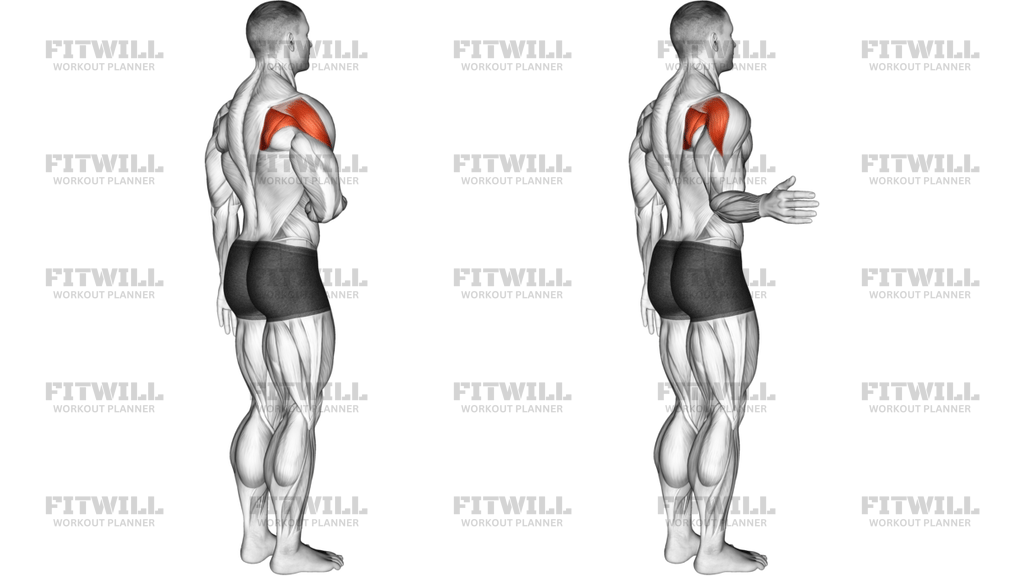
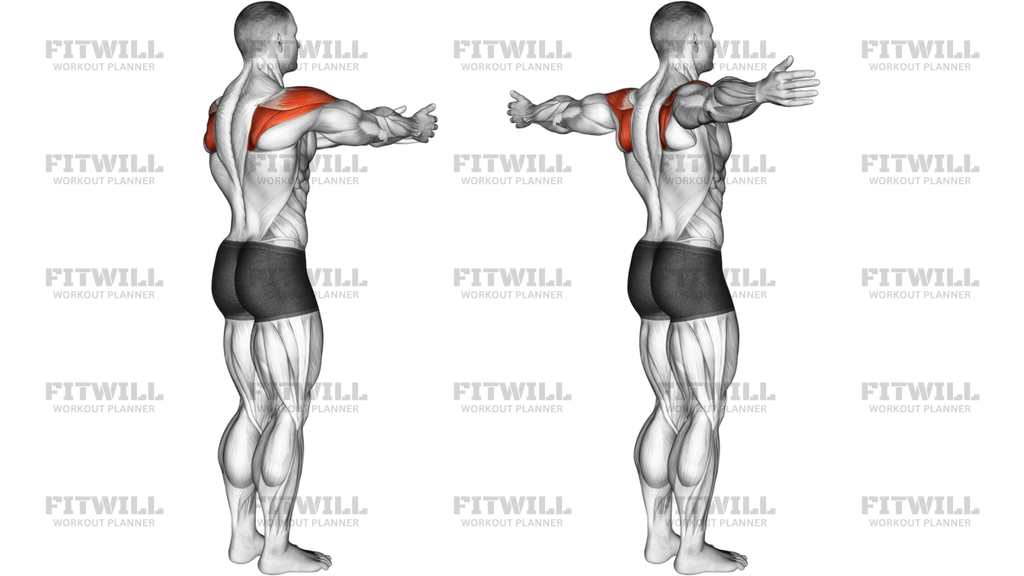
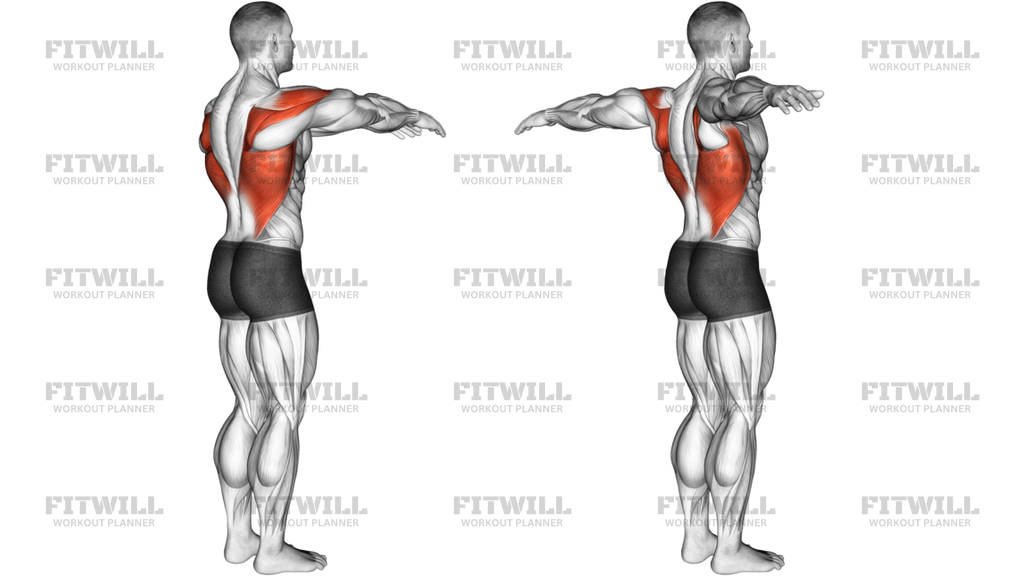
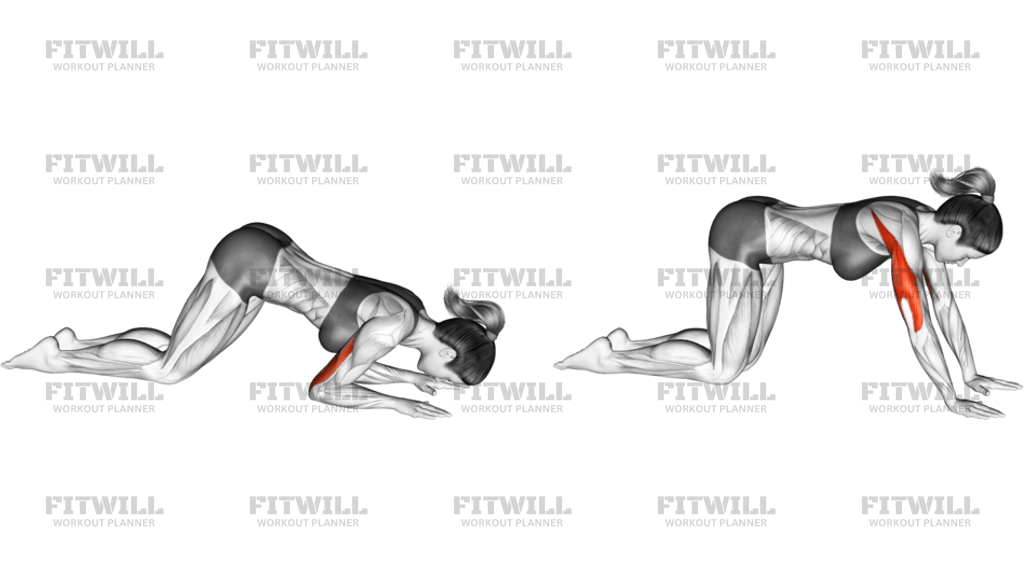
Side Step Tricep Kickback
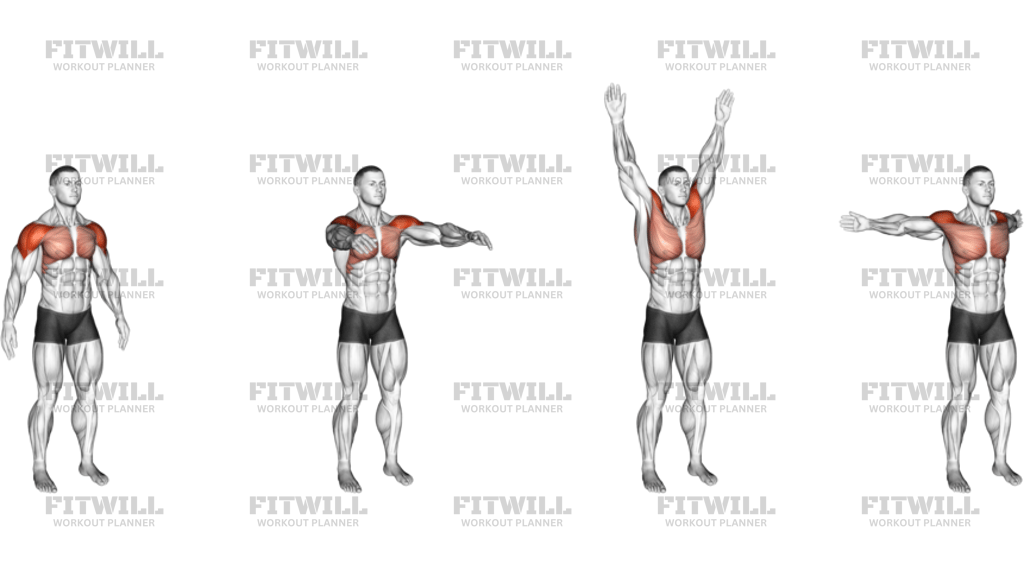
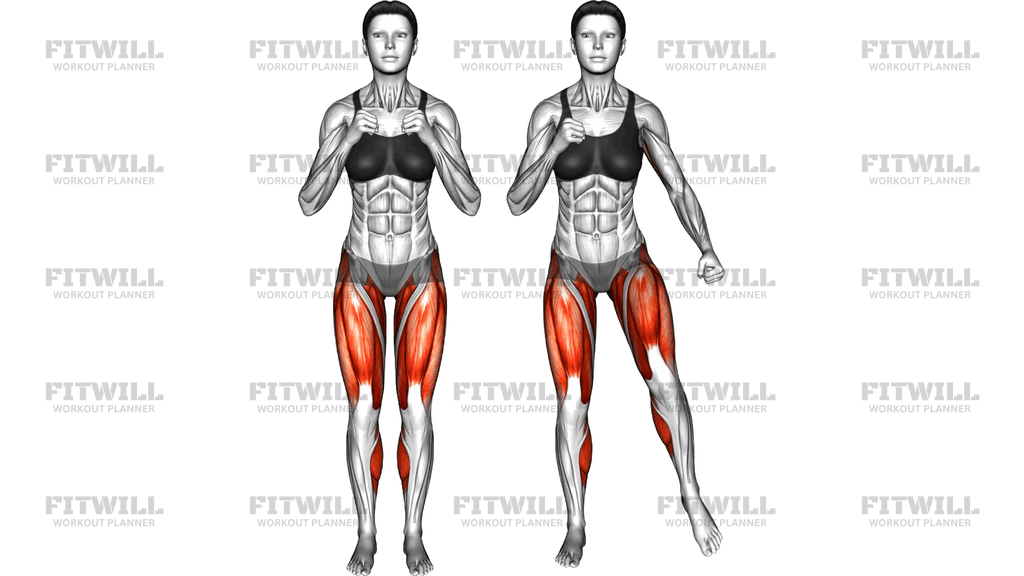
The Side Step Tricep Kickback is a standing bodyweight exercise that pairs a lateral step-out with an arm extension behind the hip. From an upright stance with your fists gathered at chest level, you step one leg out to the side while straightening the opposite or same-side arm down and back in a kicking motion, then bring everything back to the start. Because the legs and arms move together, the exercise trains coordination as much as it trains any single muscle.
The main target is the triceps, which straighten the elbow during the kickback phase. The side step adds real work for the quads and glutes, especially the glute medius on the outer hip that controls the stepping leg and stabilizes the standing leg. Your core stays busy the whole time keeping your torso tall and square while the limbs move in different directions.
This is a low-load, high-repetition movement, which makes it a good fit for warm-ups, home workouts, active recovery days, and anyone easing back into upper body training without dumbbells or cables. It is also a practical option in group or follow-along settings, since the rhythm of step-and-extend is easy to cue and follow.
Setup matters more than it looks. A staggered or narrow stance, a braced torso, and fists starting at chest height all determine whether the arm actually extends from the elbow or whether you start swinging from the shoulder. Keep the upper arm still and let only the forearm travel, or the triceps stop doing the work.
To execute well, step out with control, extend the arm fully so the elbow finishes straight, and pause for a beat before pulling the foot and fist back together. Move at a steady tempo rather than rushing, and keep your weight balanced over the standing leg. If you find yourself leaning sideways or shrugging, shorten the step and slow the arm down.
A few practical points: the movement should feel like a controlled punch down and back along your side, not a big reach. Expect a shoulder and upper back pump from holding the arms up between reps. Stop and reset your posture whenever your torso starts to tip, since a leaning torso changes both the arm path and how the hip absorbs the step.
[ Workout Log & Planner ]
Put your next workout in Fitwill
Keep your plan and training log ready when you are.


Instructions
- Stand tall with your feet together, knees soft, and your fists raised to chest height with elbows bent and tucked close to your ribs.
- Brace your core lightly and pull your shoulder blades down so your shoulders stay away from your ears.
- Shift your weight onto one leg and step the other foot out to the side, keeping the stepping foot light so you can return easily.
- As you step, extend one arm straight down and back beside your hip, keeping the upper arm fixed and moving only from the elbow.
- Squeeze the triceps for a moment at the fully extended position with the elbow straight.
- Bend the elbow to bring the fist back to your chest as you press off the stepping foot and draw it back to the start stance.
- Exhale as you step and extend, inhale as you return to center.
- Repeat on the same side for your planned reps, or alternate sides each rep.
- Reset your stance and posture between sets if you notice your torso leaning or your shoulders creeping upward.
Tips & Tricks
- The most common error is turning the kickback into a shoulder swing. Pin the upper arm against your ribs and let the forearm do the traveling so the triceps stay loaded.
- Keep the step short at first. A wide step-out pulls your weight sideways and makes the standing hip collapse inward, which shows up as a leaning torso.
- Do not lock the knee on the standing leg hard with each rep; keep it soft so the hip and thigh share the stabilizing work.
- Make a real fist and keep the wrist straight through the extension. A floppy wrist at the end of the kickback is where most people lose the clean finish.
- Match the timing of the arm and the leg. If the arm finishes long after the foot lands, slow both down until they move as one action.
- Keep your chest facing forward. Twisting toward the stepping side turns this into a torso rotation exercise and steals tension from the triceps.
- If your shoulders fatigue before your arms, lower your fists slightly between reps or shake them out during rest, since holding the hands at chest height is its own workload.
- For more triceps tension without equipment, pause one full second at full elbow extension on every rep instead of adding speed.
Frequently Asked Questions
Which muscles does the Side Step Tricep Kickback work?
The triceps are the primary mover during the arm extension, while the quads and glutes drive and stabilize the side step. The outer hip muscles on the standing leg and your core handle most of the balance work.
Does the arm kick back on the same side as the stepping leg or the opposite side?
Either pattern can work, but the most common version extends the arm on the same side as the stepping leg, keeping the torso square. Pick one pattern and stay consistent within a set so the rhythm stays clean.
Is the Side Step Tricep Kickback good for beginners?
Yes, it is a low-load bodyweight movement with an easy learning curve. Beginners should use a shorter step and slower tempo until the arm and leg timing feels natural.
Why do my shoulders burn more than my triceps during this exercise?
Holding your fists at chest height between reps keeps the shoulders under constant tension, so they fatigue first. Lower your arms slightly during the reset or slow the pace so the triceps do more of the actual extending.
Can I add resistance to the Side Step Tricep Kickback?
You can hold light dumbbells or wear wrist weights once the bodyweight version feels easy. Add load only after your elbow path stays clean, since extra weight usually exposes shoulder swinging first.
What can I substitute if stepping side to side is uncomfortable?
Perform the kickback from a plain standing stance without the step, or use a small forward-back march instead of a lateral step-out. This keeps the triceps work while removing the sideways hip demand.
How wide should the side step be?
About shoulder-width to start, with the stepping foot staying light on the ball of the foot. Widen only if you can keep your torso upright and your standing knee tracking over your toes.
Should my elbow stay bent during the step and only straighten at the end?
No, the extension happens as part of the step so the elbow is straight by the time the foot lands. Extending late turns the rep into two separate movements and reduces the triceps work.
Is it safe for my knees and elbows?
For most people, yes, since the load is just bodyweight. Keep the stepping knee soft, avoid jamming the elbow into a hard lock at the end of each extension, and stay on a non-slip surface.