Cable Neutral Grip Wide Pulldown (Version 3)
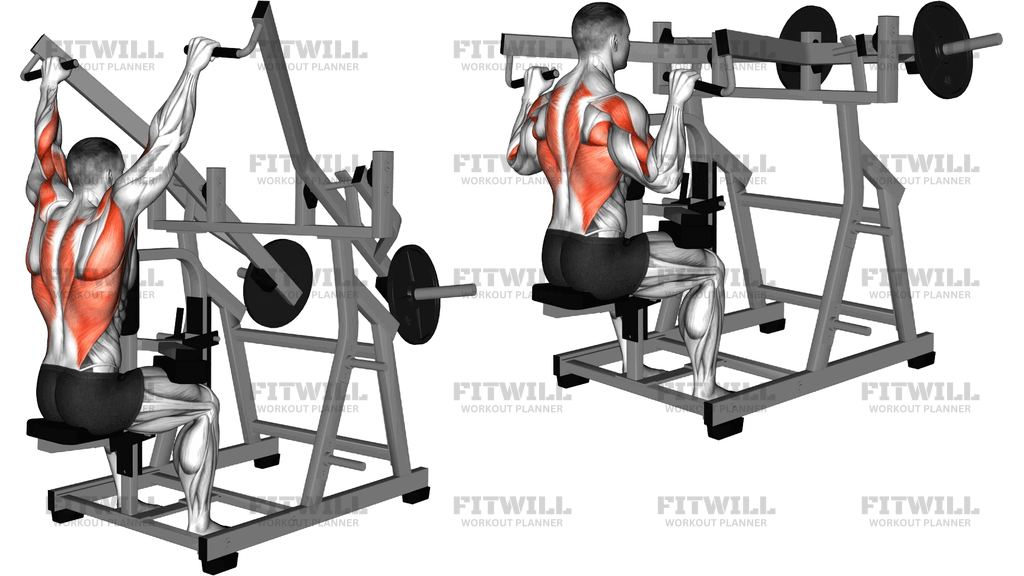
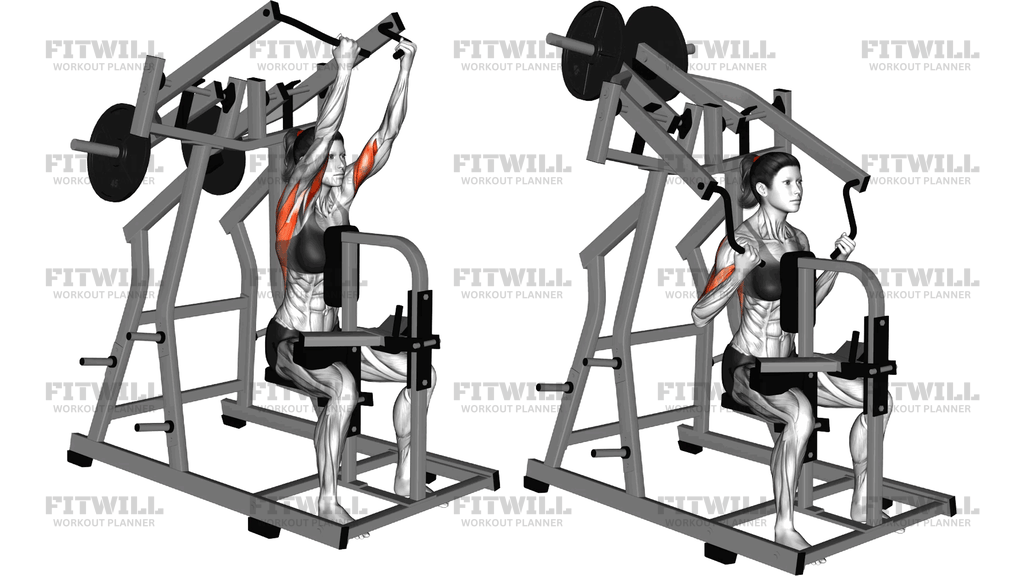
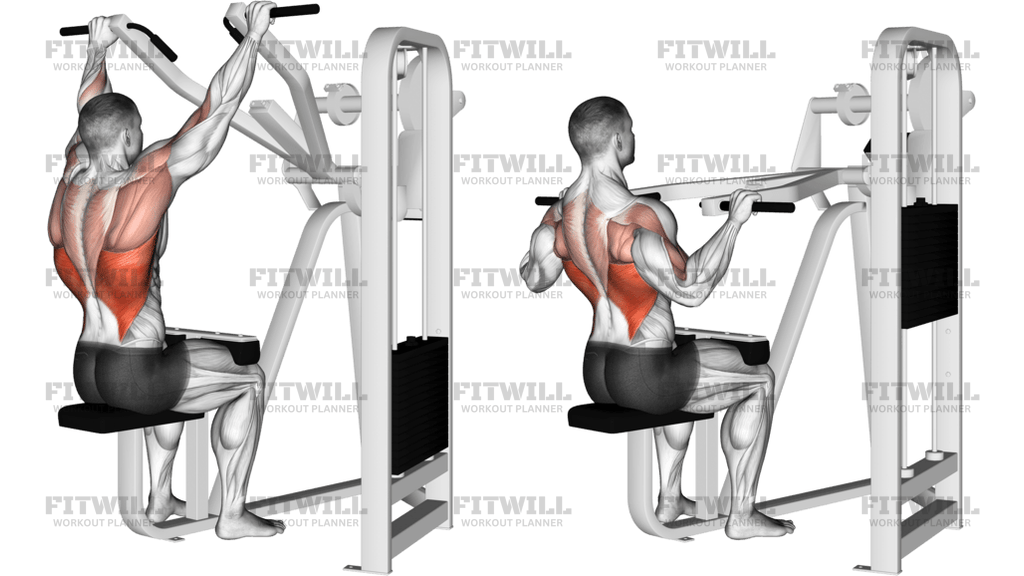
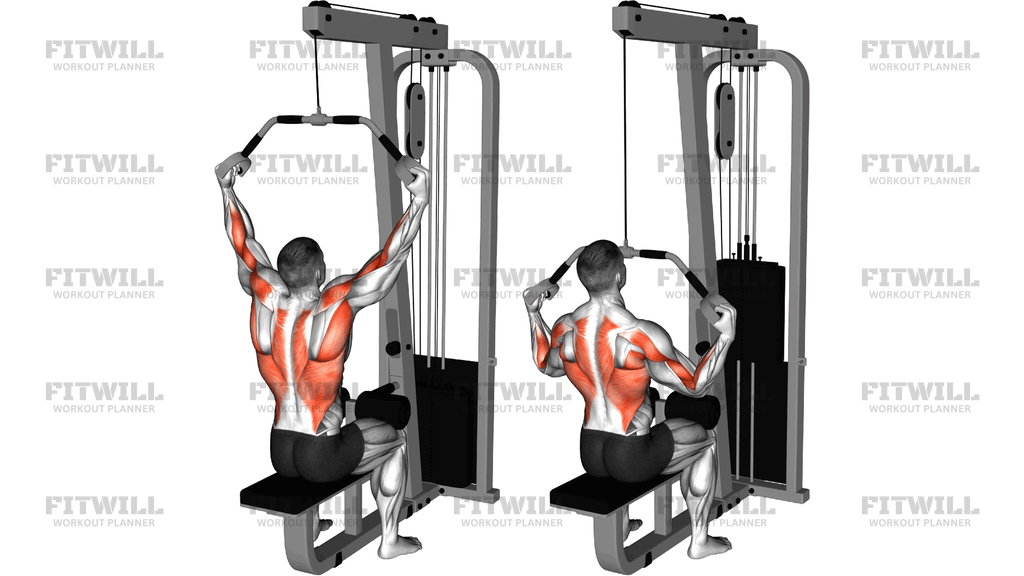
The Cable Neutral Grip Wide Pulldown is a seated vertical pull performed on a lat pulldown station using a wide cambered bar with angled neutral-grip handles. Because the handles face each other, your palms stay semi-supinated rather than fully pronated as on a standard straight bar, which changes the line of pull through your arms and lets many lifters feel their lats work more directly with less elbow and wrist strain.
The main muscles worked are the lats, which drive the elbows down and back from the overhead position. The teres major, lower traps, and rhomboids assist at the shoulder blade, while the biceps and forearms handle the elbow flexion and grip demands. The wide hand spacing shifts some emphasis toward the upper and outer portion of the back compared to a narrow or close-neutral pulldown.
This version is a good fit for lifters who find wide overhand grips uncomfortable, since the neutral handles keep the shoulders in a friendlier rotation throughout the arc. It is also useful for anyone whose biceps tend to take over on conventional pulldowns, because the semi-neutral palm position favors elbow drive from the back. It slots well as a primary vertical pull in a back day or as a higher-rep accessory after heavy pull-ups or rows.
Setup matters more than most lifters realize. Sit with your thighs secured under the pads, feet flat, and torso upright with only a slight backward lean. If you lean back too far, the movement drifts toward a row and you lose the vertical pull that makes the lats work through their longest range. Reaching full overhead extension at the top, with the shoulder blades allowed to rise, is what gives each rep the stretch the exercise is built around.
To execute well, pull the handles down by driving your elbows toward your sides and chest rather than yanking with the hands. Bring the bar to about upper-chest or collarbone height, hold briefly, and let the weight climb back up under control until the arms are fully extended. Keep the rep smooth on both ends; this exercise rewards a long, deliberate range far more than heavy, jerky loads.
The most common errors are pulling behind the neck, bouncing out of the top stretch, and shrugging the shoulders as fatigue sets in. Moderate loads, a full overhead stretch each rep, and a two-second controlled return will do more for back development than loading the stack and swinging the torso. If your wrists or shoulders complain at the bottom, narrow your hand position one notch or reduce the weight slightly before abandoning the movement.
[ Workout Log & Planner ]
Put your next workout in Fitwill
Keep your plan and training log ready when you are.


Instructions
- Sit on the pulldown bench facing the cable machine and place your thighs under the pads so your legs are held firmly without pinching.
- Grip the wide angled handles with a neutral grip, palms facing each other, hands set at the widest comfortable position on the bar.
- Stand briefly to pull the bar into position, then sit back down and plant your feet flat on the floor.
- Brace your core and set your torso nearly upright with a small backward lean of about 10 to 15 degrees.
- Start with your arms fully extended overhead and let your shoulder blades rise slightly to feel the stretch across your lats.
- Exhale and pull the handles down by driving your elbows toward your ribs, keeping them wide but moving down and slightly back.
- Finish the pull with the bar at upper-chest or collarbone height and your elbows just past your torso line, squeezing the back briefly.
- Inhale as you allow the bar to travel back up slowly, letting your arms straighten completely without shrugging hard.
- Complete your reps, then stand to return the bar gently to the stack rather than letting it crash under the weight.
Tips & Tricks
- Think of pulling with your elbows, not your hands, so your fingers act as hooks and the lats do the work instead of the biceps.
- If your elbows flare far behind your torso at the bottom, you are turning the pulldown into a row; reduce the backward lean and keep the pull more vertical.
- Do not lean back further as the set gets hard. A torso that keeps creeping backward is the clearest sign the load is too heavy.
- Pause for a beat at the top with arms fully straight. Cutting the top range short removes the lat stretch that drives most of the growth stimulus.
- The neutral handles should keep your wrists stacked over your forearms; if your wrists bend backward, adjust your hand placement on the bar rather than muscling through.
- Keep the thigh pads snug. If your hips lift off the seat during the pull, the pads are too loose or the weight is beyond what you can control.
- Control the return for at least two seconds. Letting the stack yank your arms up is where most shoulder discomfort and lost tension happen on this exercise.
- Chalk or straps are worth using on higher-rep sets, since grip failure usually ends the set before the lats are fully challenged.
- Match your hand width on both sides of the bar's center so one lat does not take more load than the other.
Frequently Asked Questions
Which muscles does the Cable Neutral Grip Wide Pulldown target?
The lats are the primary mover, supported by the teres major, rhomboids, and lower traps at the shoulder blades. The biceps and forearms assist through elbow flexion and grip.
Why use a neutral grip instead of a wide overhand grip on pulldowns?
The neutral handles keep your shoulders in a more comfortable rotation and often let you feel the lats working without wrist or shoulder strain. Lifters who get pinching with a pronated wide bar frequently tolerate this version better.
Should the bar come down to my chest or behind my neck?
Bring the bar to upper-chest or collarbone height. Pulling behind the neck places the shoulders in a risky end-range position and offers no meaningful extra back benefit.
How wide should my hands be on the neutral handles?
Use the widest position that still lets you drive your elbows down fully without your wrists bending backward. If the outermost position shortens your range, move one notch inward.
How is this different from a close-grip neutral pulldown?
The wide spacing puts your arms further out, shifting some work toward the upper and outer back and limiting how much the arms can dominate the pull. A close-neutral version lets the elbows tuck tighter and is generally easier on range but slightly less wide-back focused.
Can beginners do the Cable Neutral Grip Wide Pulldown?
Yes, it is one of the more beginner-friendly vertical pulls because the seated position and thigh pads stabilize the body. Start with a light weight and prioritize the full stretch at the top over load.
My biceps fatigue before my back feels anything. What should I change?
Lighten the load, loosen your grip so your fingers act as hooks, and focus on driving your elbows to your ribs. Slowing the pulling phase also helps stop the biceps from snatching the weight down.
What can I substitute if my gym has no neutral-grip pulldown bar?
A standard lat pulldown with a moderate overhand grip, a single-arm cable pulldown with a handle, or pull-ups all train the same vertical pulling pattern with the lats as the primary mover.
How controlled should the eccentric be on this exercise?
Aim for roughly two to three seconds on the way up. Letting the stack pull your arms up removes the loaded stretch on the lats and is the most common place tension is lost.