Lever Seated Wide Pulldown (Plate Loaded)
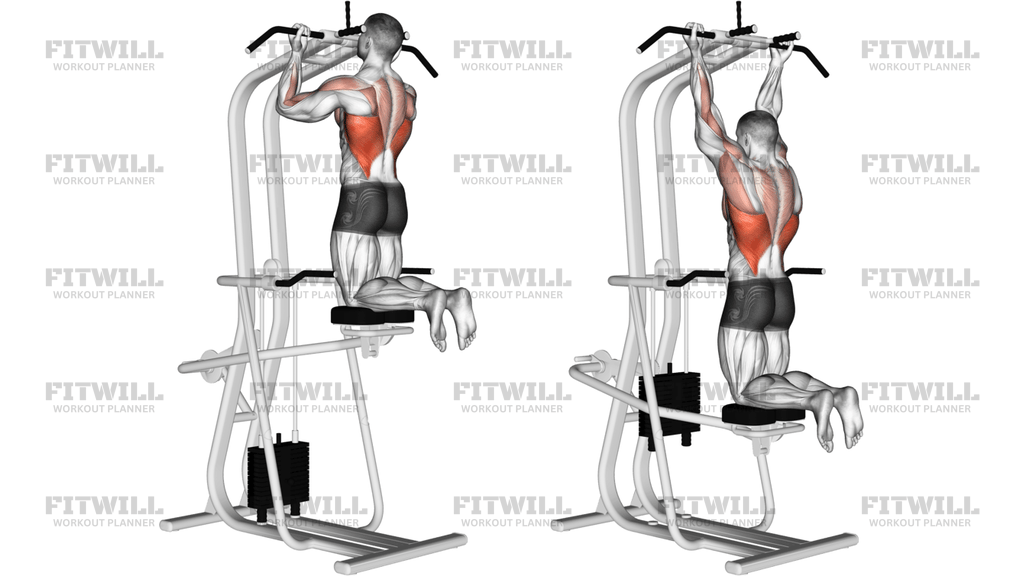
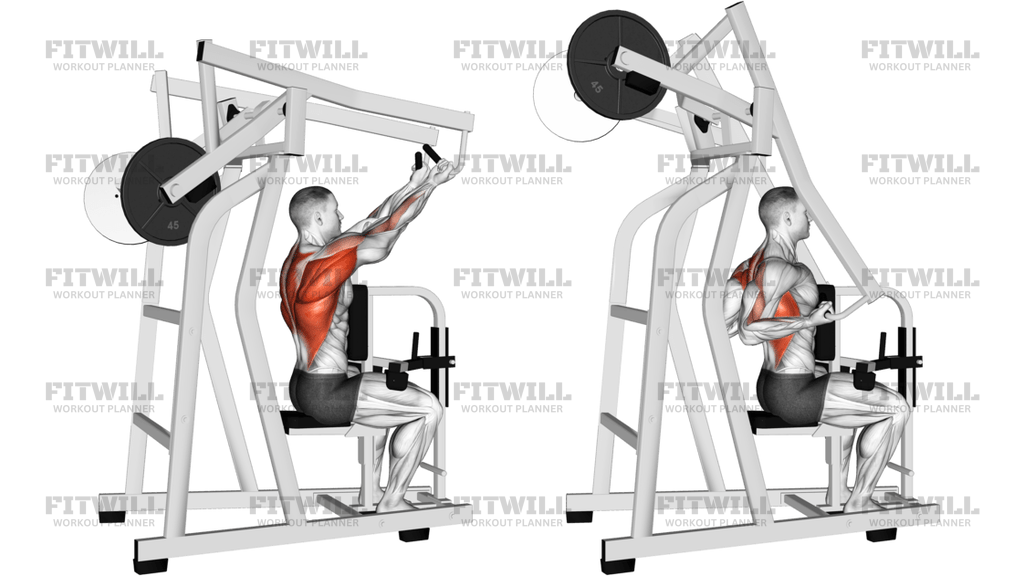
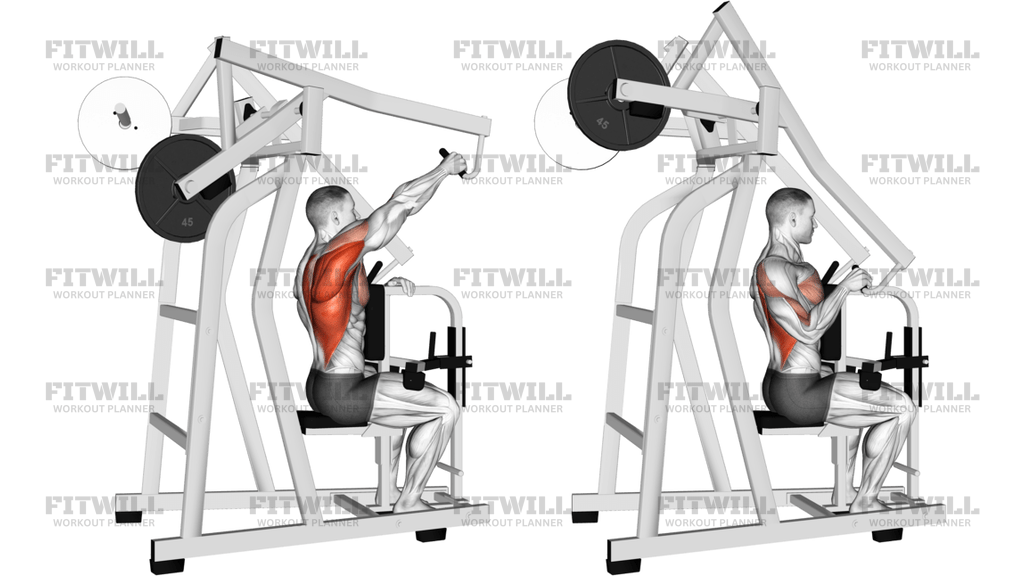
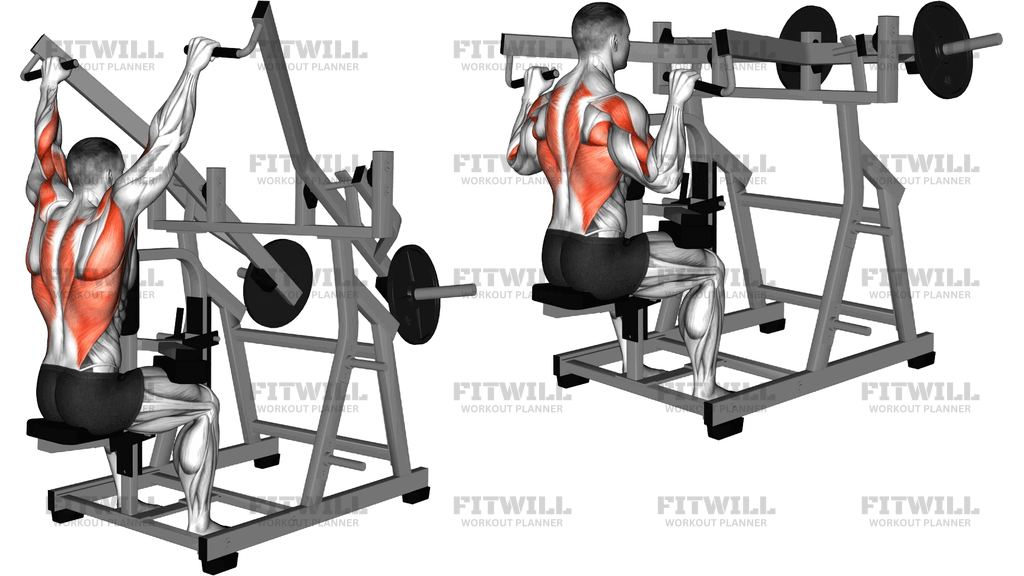
The Lever Seated Wide Pulldown is a plate-loaded machine exercise that targets the lats through a wide, overhead pulling path. You sit facing the machine with your chest against the pad, grip the wide handles positioned above and outside your shoulders, and pull them down and back toward your upper chest. Because the resistance travels on a fixed lever arm loaded with weight plates, the movement stays stable and predictable from the first rep to the last.
This is one of the most beginner-friendly ways to train a vertical pull. Unlike a pull-up or a cable pulldown, the machine guides the path for you, so you can focus on feeling your back work instead of stabilizing the weight. That same fixed path also makes it easy to progress in small plate increments, which is why it works well for intermediate and advanced lifters who want controlled volume on lat day without hammering the elbows and shoulders with free-swinging loads.
The primary muscles are the latissimus dorsi, with strong assistance from the teres major, mid and lower traps, rhomboids, and rear delts as the shoulder blades retract at the bottom of the pull. The biceps and forearm flexors handle a good share of the gripping and elbow flexion, which is normal for any pulldown. The wide grip biases the outer lats and upper back more than a narrow, neutral grip would.
Setup matters more than most people assume. The seat height determines whether the handles start at a full overhead stretch or whether you begin with the pull already half done. Your chest should rest lightly against the pad so your torso stays upright; leaning far back turns the exercise into a row and steals work from the lats. Take a few seconds to set these two things before you load plates, and every set that follows will feel more consistent.
To execute well, pull the handles down by driving your elbows toward your hips rather than yanking with your hands, pause briefly when the handles reach chest or collarbone level, then let the arms extend back up under control until you feel a full stretch through the lats. Breathe in as the handles rise, exhale as you pull down. Two to four sets of eight to fifteen reps fits most goals, whether you are building back width, adding pulling volume after pull-ups, or rehabilitating your way back into vertical pulling after time away from the bar.
A final practical note: because the lever arm swings around a pivot, the resistance feels slightly heavier at some points in the range than others. Keep the tempo smooth and avoid bouncing out of the stretched position at the top, where the lats are loaded at their longest and most vulnerable angle.
[ Workout Log & Planner ]
Put your next workout in Fitwill
Keep your plan and training log ready when you are.


Instructions
- Sit on the machine seat facing the pad and adjust the seat height so that when you reach up, you can grip the wide handles with your arms nearly fully extended overhead.
- Take a wide overhand grip on both handles, hands set comfortably outside shoulder width, and place your upper chest lightly against the chest pad with your feet flat on the floor.
- Brace your core and pull your shoulders down away from your ears before the first rep so you are not starting from a shrugged position.
- Begin each rep from full extension with the lats stretched, arms straight but elbows not locked hard.
- Pull the handles down and slightly back by leading with your elbows, driving them down toward your hips until the handles reach upper chest or collarbone level.
- Squeeze your shoulder blades down and together for a brief pause at the bottom of the pull.
- Release slowly and let the handles travel back up along the same path until your arms are fully extended and you feel the stretch across your lats.
- Exhale as you pull down and inhale as the handles return overhead, keeping the breathing steady throughout the set.
- Keep your torso pressed to the pad and your lower back neutral; do not rock backward to help the weight down.
- Complete all reps, then let the weight plates settle fully before letting go of the handles or leaving the seat.
Tips & Tricks
- If your shoulders shrug up at the start of every rep, the weight is too heavy or you are skipping the pre-set; pull your shoulder blades down first, then begin the pull.
- The most common fault on this machine is leaning back off the chest pad to turn the pulldown into a row. If you cannot keep your chest touching the pad, drop the load by one plate.
- Think elbows to hips, not hands to chest. Cueing the elbows shifts effort toward the lats and away from the biceps.
- Do not fully relax your arms at the top between reps. Keep light tension so the plates never free-fall and your shoulder joints never take a sudden jerk at the stretch.
- If your forearms fatigue before your back, try a full grip with your thumb wrapped around the handle instead of a thumbless grip, or use lifting straps on heavier sets.
- The wide handles should track slightly outward to inward, not straight down. If the path feels like it is pinching your shoulders, check that your grip is symmetrical and your seat is centered.
- Pause a full second at the bottom. Most lifters rush the contracted position on machine pulldowns and miss the mid-back work entirely.
- Lower the handles to collarbone level, not behind the neck. Behind-the-neck pulldowns place the shoulder in a risky externally rotated position with no added benefit.
- Adjust the seat one notch down if the handles start below full overhead reach; you should feel a lat stretch at the top, not an already-bent arm.
Frequently Asked Questions
What muscles does the Lever Seated Wide Pulldown work?
The latissimus dorsi is the prime mover, supported by the teres major, mid and lower traps, rhomboids, and rear delts. The biceps and forearms assist through elbow flexion and gripping.
Why use a wide grip instead of a narrow grip on this machine?
The wide grip lets the upper arms pull on a more lateral path, which emphasizes the outer lats and upper back. A narrow grip allows a greater range of motion at the shoulder but shifts slightly more toward the lower lats and biceps.
Is the Lever Seated Wide Pulldown good for beginners?
Yes. The fixed lever path removes the stability demands of a pull-up or free cable, so beginners can learn what lat engagement feels like and progress in small plate jumps.
How is this different from a cable lat pulldown?
A plate-loaded lever machine has a fixed arc determined by the pivot point, while a cable lets the handle path drift. The lever version is more consistent rep to rep but slightly less customizable to your individual shoulder line.
My chest keeps coming off the pad during heavy sets. What should I change?
That usually means the load is heavier than your lats can move with strict form, so your body is borrowing momentum from the torso. Reduce the weight and focus on driving the elbows down while keeping your chest in contact with the pad.
Can the Lever Seated Wide Pulldown replace pull-ups?
It can serve as a substitute or a supplement. It trains the same vertical pulling pattern, though it does not build the grip, core, and shoulder stability that hanging from a bar requires. Many lifters use both.
How many sets and reps should I do?
Two to four sets of eight to fifteen reps covers most hypertrophy and strength-endurance goals. Because the machine is stable, it is also a good place to take the last set close to failure.
Should I pull the handles behind my neck for a better back contraction?
No. Behind-the-neck pulling forces the shoulders into heavy external rotation under load and offers no extra lat stimulus. Pull to your upper chest or collarbone every rep.
Is it safe for people with shoulder issues?
The supported torso and guided path make this gentler on the shoulders than many free-weight pulls, but anyone with an existing shoulder problem should work within a pain-free range and clear the exercise with a qualified professional first.
Why do the plates feel heavier at the top of the rep than at the bottom?
The lever arm changes the effective resistance as it swings through its arc, so the load profile varies slightly across the range. Control the top stretch rather than bouncing, since that is where the lats are loaded at their longest.