Roll Pull And Bend On Stabilitity Ball
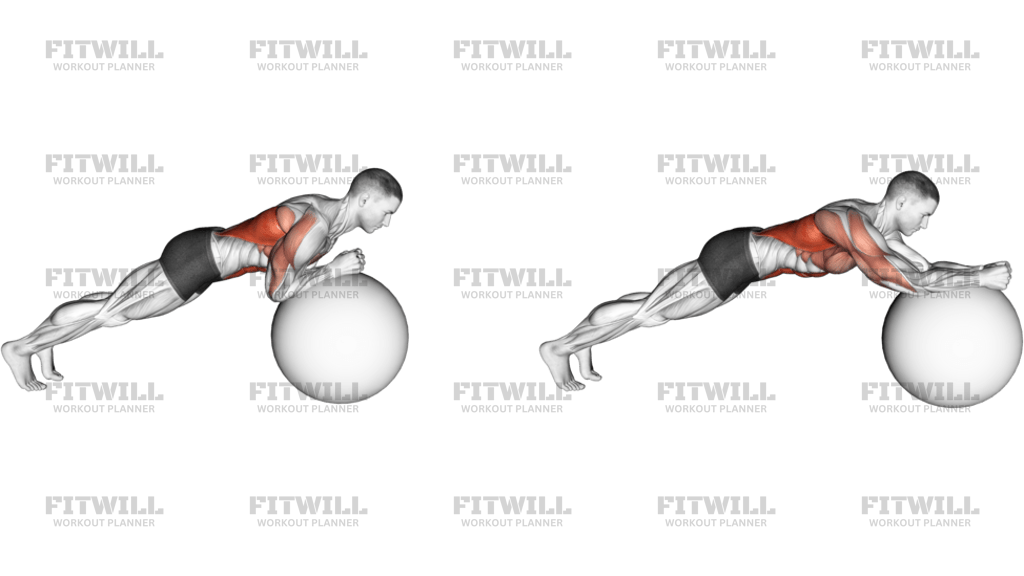
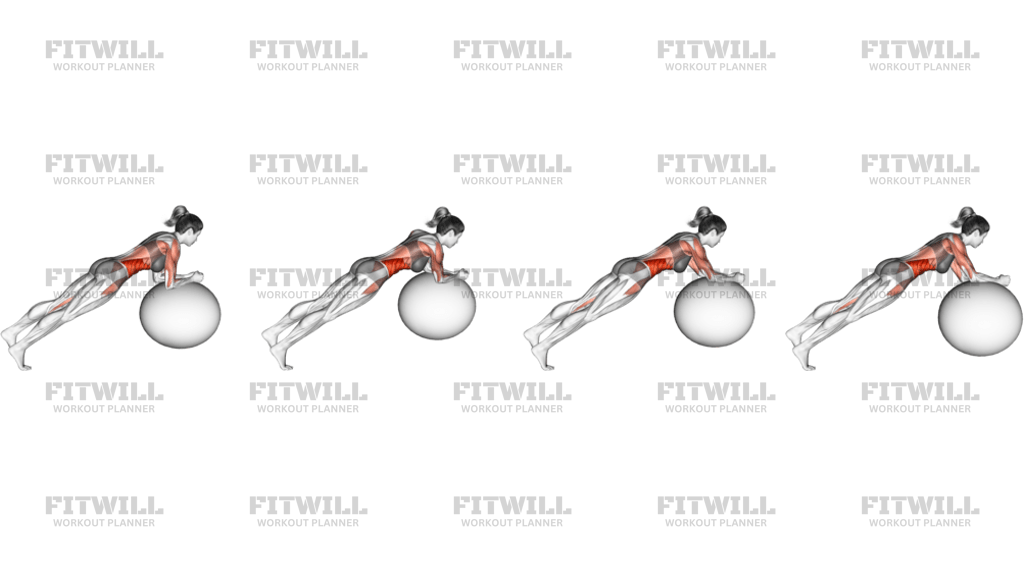
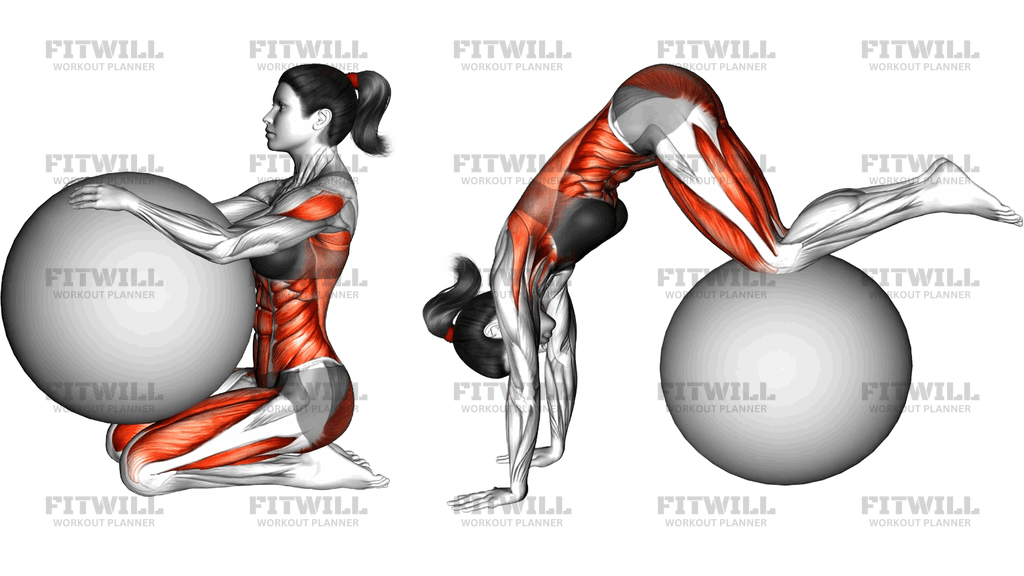
Roll Pull And Bend On Stability Ball is a kneeling-to-pike core movement performed with an exercise ball. You begin kneeling on the floor with the ball hugged against your body, roll forward until your knees or shins rest on top of the ball, and then use your trunk to pull your hips up toward the ceiling into an inverted V position. The combined rolling, pulling, and hip-bending action makes this a demanding full-core exercise rather than a simple crunch.
The exercise works the rectus abdominis and deep core hard as they control the ball and then fold the torso, while the obliques and hip flexors drive the pike. Because your hands stay planted on the floor, the shoulders, chest, and arms also work statically to hold you steady while the ball moves under your legs. This mix of moving support and stabilizing upper body is what separates it from floor-only ab work.
Setup matters a lot here. The ball size should let your knees rest on top of it with your wrists under your shoulders in the plank position, and your hands should be planted firmly on a non-slip surface before you ever lift your knees off the floor. Rolling out too far before you have control puts you into a low-back arch and makes the pike much harder to execute cleanly.
To perform it well, think of the movement in two halves: first, a controlled roll into a plank with the shins on the ball, and second, a deliberate pull of the knees or hips upward as you bend at the waist. Exhale as you lift, keep your neck relaxed between your arms, and lower back down one phase at a time rather than dumping everything at once. The descent is where most people lose shape, so treat it as half the repetition.
This exercise suits intermediate trainees who already own a solid plank and are comfortable with ball knee tucks or jackknives. It is a good progression tool for gymnastics-style core strength, a useful addition to home workouts where only a ball is available, and a way to train hip flexion and trunk control together. If your wrists or shoulders complain before your abs do, scale back to knee tucks until the upper body can hold its end of the bargain.
[ Workout Log & Planner ]
Put your next workout in Fitwill
Keep your plan and training log ready when you are.


Instructions
- Kneel on the floor with a stability ball in front of you and hug the ball against your chest and thighs with both arms.
- Roll the ball forward as you lean your weight onto it, letting your knees or shins come to rest on top of the ball.
- Walk your hands out until your wrists are directly under your shoulders and your body forms a straight plank line from head to knees.
- Press your palms into the floor, spread your fingers, and brace your abdominals so your lower back does not sag.
- Keeping your knees and shins glued to the ball, pull the ball toward your hands as you bend at the hips and drive your tailbone toward the ceiling into a pike.
- Hold the top of the pike briefly with your legs as straight as your hamstrings allow and your head relaxed between your arms.
- Reverse the movement with control: lower the hips back to the plank position before you roll the ball away, rather than dropping both at the same time.
- Exhale as you pull into the bend and inhale as you lower back to the plank.
- After your final rep, walk your hands back toward the ball, roll it forward, and step your knees off onto the floor to reset safely.
Tips & Tricks
- If the ball drifts out to one side during the pike, your obliques are working unevenly; slow the pull down and pull both knees toward your chest equally.
- A common mistake is letting the lower back arch in the plank phase before the pike starts; squeeze your glutes slightly to lock the plank in first.
- Keep your shoulders stacked over your wrists the whole time. If your shoulders drift behind your hands, the pike turns into a shoulder crusher instead of an ab exercise.
- Do not straighten your legs at the expense of the fold. A slightly bent-knee pike with a strong abdominal contraction beats a picture-perfect straight-leg pike with a rounded, unsupported back.
- If your wrists ache, grip the floor actively and shift a little more weight into the base of the palm, or use a mat with some padding under your hands.
- Tight hamstrings usually limit the top position; lift only as high as your back stays long and rounded through the waist, not arched and strained.
- Keep the ball fully inflated. A soft ball sinks under your shins and makes the rolling phase feel sluggish and unstable.
- Practice on grass or a mat the first few times so a slip does not send the ball skidding out from under your knees.
- Start each set from the floor rather than jumping straight into a plank on the ball; the controlled roll-out is part of the exercise, not just a setup.
Frequently Asked Questions
What muscles does Roll Pull And Bend On Stability Ball work?
The rectus abdominis and deep core do most of the pulling and bending work, with strong help from the obliques and hip flexors during the pike. Your shoulders, triceps, and chest work statically to keep your torso stable while the ball moves under your legs.
Is Roll Pull And Bend On Stability Ball suitable for beginners?
It is better treated as an intermediate progression. If you cannot yet hold a plank with your shins on a stability ball for 20 to 30 seconds, build that first, then practice small hip lifts before attempting the full pike.
Where exactly should the ball sit during the exercise?
Your knees or shins should rest on the top of the ball with your wrists stacked under your shoulders. If the ball sits too close to your ankles, the roll-out becomes unstable; too close to your thighs makes the pike position easier but shortens the range.
How is this different from a stability ball jackknife?
A jackknife pulls the knees toward the chest in a tucked position, while Roll Pull And Bend On Stability Ball takes the hips up into an extended pike with a strong bend at the waist. The longer lever of the straighter legs makes the hip flexors and lower abs work harder.
Why does my lower back hurt when I do this exercise?
That usually means you are rolling out into an arched plank before pulling, or collapsing out of the pike instead of lowering with control. Reduce your roll-out distance, keep your glutes engaged in the plank, and master knee tucks before using the full pike.
What can I substitute if I do not have a stability ball?
Slider discs or a towel on a smooth floor under your feet let you do a similar pike pull-in. A suspension trainer set at knee height is another option, though the unstable rolling surface of the ball is harder to reproduce.
How many reps and sets should I do?
Two to four sets of 6 to 12 controlled reps is a sensible range. Stop the set when your plank position breaks down, because sloppy reps on a rolling ball tend to load the lower back instead of the abs.
How do I get into the starting position safely?
Kneel on the floor, hug the ball, and roll forward onto it with your knees before walking your hands out to the plank. Avoid trying to hop both knees onto the ball at once; the controlled roll keeps you centered over the ball from the start.
What ball size should I use?
A standard 55 to 65 centimeter ball works for most people, sized so that in the plank your wrists are under your shoulders and your knees sit on top of the ball. Taller users may need a 75 centimeter ball to keep the plank position comfortable.