Standing Arm Rotation
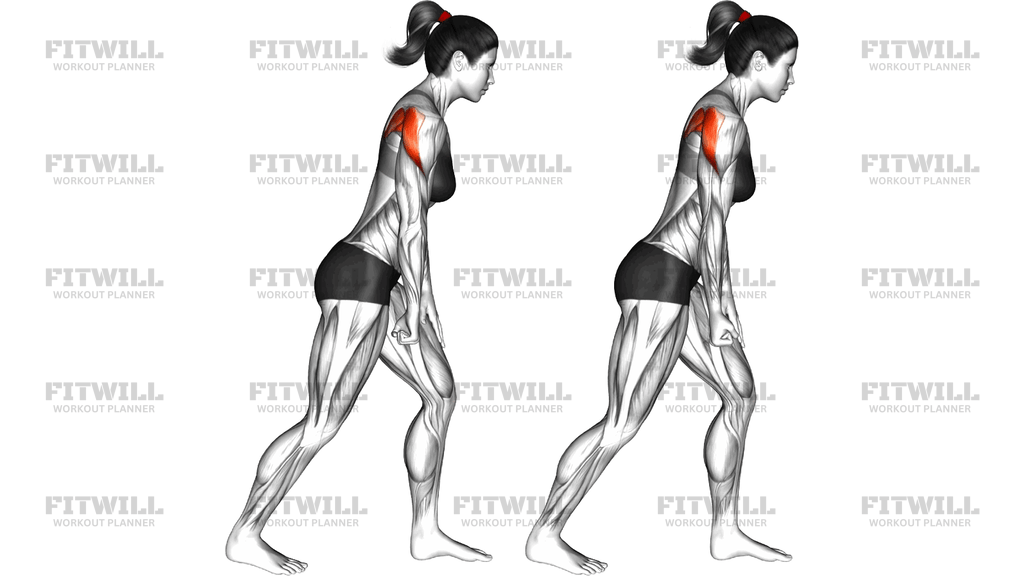
Standing Arm Rotation is a simple bodyweight shoulder movement in which you take a staggered stance, lean the torso slightly forward, let one arm hang straight down, and rotate it in and out from the shoulder joint. Because the arm hangs freely and no external load is involved, the rotation travels through the shoulder's natural arc, making this a reliable warm-up and mobility drill for the shoulder complex. The highlighted working area sits around the deltoid and rotator cuff group at the back of the shoulder, which controls and stabilizes the turning motion.
This movement is especially useful before pressing, pulling, throwing, or racquet activities, when the shoulder needs to be warmed through internal and external rotation rather than just swinging forward and back. It also suits people who spend long hours at a desk and feel stiffness when reaching across the body or behind the back. Because it requires no equipment, you can use it at home, in the gym, or as part of a pre-training routine with minimal space.
The setup matters more than it might appear. Standing upright with the arm beside you limits how cleanly the shoulder can rotate, which is why the slight forward lean and staggered stance are part of the position. The hinge lets the hanging arm sit clear of the hip and thigh, so the rotation comes from the shoulder joint itself rather than being blocked or redirected by the torso. Your free hand can rest on your front thigh to support the leaning position and keep the lower back comfortable.
To perform it well, keep the hanging arm relaxed and straight, with only a soft bend at the elbow. Rotate the entire arm so the palm turns to face forward and backward, or sweep the arm in a controlled circular path, depending on the variation you choose. The motion should feel smooth and pain-free; if you feel pinching at the front of the shoulder, reduce the range before continuing. The rest of the body stays quiet: your spine stays long in the lean, and your hips and legs stay still so the arm does the turning.
Treat Standing Arm Rotation as a controlled, moderate-speed drill rather than a ballistic swing. Ten to fifteen slow rotations in each direction per side is usually enough as a warm-up, and it can also be repeated later in the day to ease stiff shoulders. If you are recovering from a shoulder issue or have a history of shoulder pain, keep the range small, stay within comfort, and check with a qualified professional before loading the area with heavier training.
[ Workout Log & Planner ]
Put your next workout in Fitwill
Keep your plan and training log ready when you are.


Instructions
- Stand with your feet in a comfortable staggered stance, one foot slightly ahead of the other, knees soft.
- Hinge forward from the hips about 20 to 30 degrees and rest your free hand on your front thigh for support.
- Let your working arm hang straight down from the shoulder, relaxed, with a slight bend in the elbow.
- Draw your shoulder blade gently back and down so the arm does not slump forward into the shoulder socket.
- Keeping the arm hanging, rotate it from the shoulder joint so the palm turns to face behind you, then rotate outward until the palm faces forward.
- Pause briefly at each end of the turn without forcing the rotation further.
- Reverse the rotation smoothly and continue turning in and out for 10 to 15 controlled repetitions.
- Breathe steadily throughout, exhaling as you rotate and inhaling as you return through the middle of the arc.
- Switch sides, reset your stance, and repeat the same number of rotations with the other arm.
- When finished, stand upright slowly and roll both shoulders back to settle them before your next exercise.
Tips & Tricks
- A common mistake is turning the whole torso to fake extra rotation; keep your chest and hips facing the same direction and let only the arm turn.
- If the hanging arm drifts toward your thigh, increase the forward lean slightly so the arm clears the leg and the shoulder can rotate freely.
- Avoid locking the elbow hard; a soft bend keeps the arm relaxed and prevents strain at the joint.
- Watch for the shoulder hiking up toward the ear as you rotate; drop the shoulder blade down before each set to keep the joint in a better position.
- Speed is the usual failure point with this drill. Fast, whippy swings irritate the shoulder, so keep each rotation taking about two seconds.
- If you feel a pinch at the front of the shoulder at the end range, shorten the rotation instead of pushing through the discomfort.
- Switch which foot is forward between sets so both sides of your lower back and hips get the same supported position.
- Do this drill before upper-body training rather than after heavy pressing, when the shoulder tissues are warm and responsive.
- Keep your neck relaxed and gaze at the floor slightly ahead of you; craning the head up tightens the upper traps and spoils the shoulder position.
Frequently Asked Questions
Which muscles does Standing Arm Rotation work?
It primarily targets the deltoid area around the shoulder while the rotator cuff muscles control the turning of the arm. The muscles of the upper back and shoulder blade also work lightly to hold the arm in a stable hanging position.
Is Standing Arm Rotation suitable for beginners?
Yes. It uses no equipment and low speed, so most people can learn it immediately. Beginners should start with a smaller rotation range and only increase it once the movement feels smooth.
Why lean forward instead of standing upright during Standing Arm Rotation?
The slight forward lean lets the hanging arm sit clear of the hip and thigh so the shoulder can rotate through a fuller arc. Standing fully upright can crowd the arm against the body and shorten the range.
Should the elbow stay straight during this exercise?
Keep the elbow soft with only a slight bend. Locking it straight adds unnecessary joint stress, while bending it too much turns the movement into a forearm rotation instead of a shoulder rotation.
How many repetitions should I do?
Around 10 to 15 controlled rotations per side works well as a warm-up. You can repeat the set once more if your shoulders still feel stiff before training.
What is the most common mistake with Standing Arm Rotation?
Rotating the trunk and hips instead of the arm itself. If your chest twists with each turn, brace lightly and focus on turning only the hanging arm from the shoulder joint.
Can I replace Standing Arm Rotation with arm circles?
Arm circles are a reasonable general warm-up, but they move the arm in a big sweeping arc rather than rotating it in the shoulder socket. Standing Arm Rotation is more specific for internal and external shoulder rotation, so the two complement each other rather than replace one another.
Is it safe to do Standing Arm Rotation with a sore shoulder?
Gentle, pain-free rotation is generally well tolerated, but you should keep the range small and stop if you feel sharp pain or pinching. If shoulder pain persists or follows an injury, consult a qualified professional before continuing.
When is the best time to include Standing Arm Rotation in a workout?
Use it near the start of your session, after light general activity, to prepare the shoulders for pressing, pulling, or overhead work. It also works well as a standalone mobility break during the day.