Standing Arm Crossover And Elbow Pullback
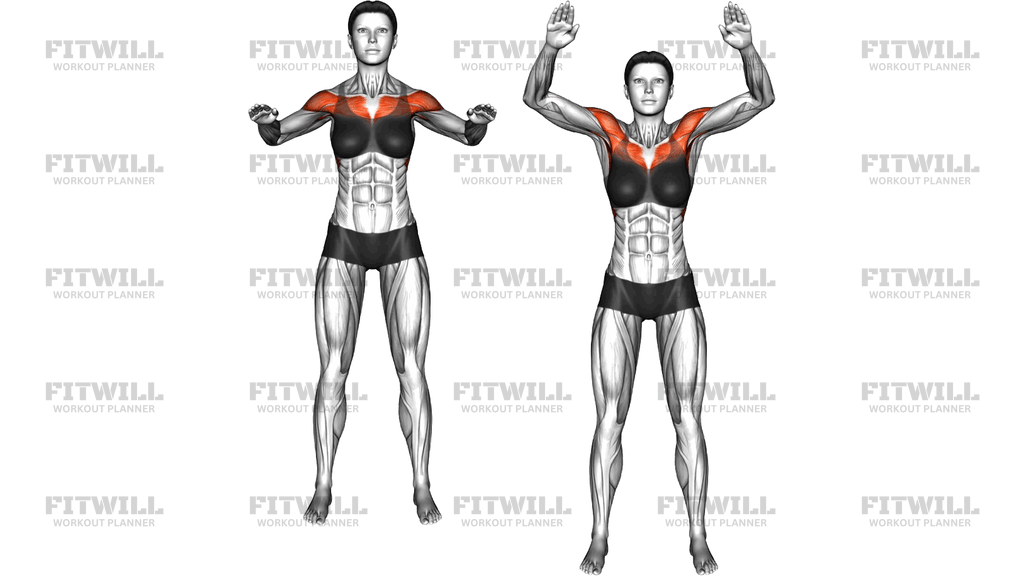
The Standing Arm Crossover And Elbow Pullback is a standing, body-weight movement that takes your arms through a large, flowing arc: from a wide T position at shoulder height, up across the front of your body, and overhead into a bent-elbow goalpost shape. Because it needs no equipment and very little space, it works well as a dynamic warm-up before upper-body training or as a standalone mobility drill during a desk-break routine.
The main areas it targets are the shoulders and upper chest. The crossing phase opens and lengthens the pectorals and front shoulders, while the overhead elbow pullback asks the shoulder muscles and upper back to actively control the arms once they pass head height. The core works quietly in the background to keep your ribcage stacked over your pelvis while your arms move, which is why the drill feels more demanding on the trunk than people expect.
Setup matters more than it looks. Stand with feet about hip-width apart, knees soft, and weight spread evenly across both feet. If your torso leans back or your lower back arches as the arms travel overhead, you lose the chest stretch and shift stress into the spine. Keeping the ribs down and the brace light but steady is what makes the arc clean from bottom to top.
To execute it well, move the arms smoothly rather than quickly. Sweep both arms up and inward so they cross in front of you around forehead height, then continue the arc upward. As your hands pass head level, bend the elbows and pull them back and out until the forearms point up and the palms face forward, wide above your shoulders. Reverse the same path down, uncrossing as the arms return to the wide starting position.
This drill is a common warm-up before bench pressing, overhead pressing, or any pushing day, and it also suits people who spend long hours sitting and need to restore shoulder range of motion. Because it is unloaded, it is generally friendly for beginners, though anyone with a cranky shoulder should keep the arc slightly below the point of pinching and stay in a range that feels like movement, not strain.
A good working set is eight to twelve controlled repetitions, timed with your breath: exhale as the arms sweep up, inhale as they return. Quality of the arc matters far more than speed or height, so treat it as a movement rehearsal for your upper body rather than a calorie burner.
[ Workout Log & Planner ]
Put your next workout in Fitwill
Keep your plan and training log ready when you are.


Instructions
- Stand tall with your feet hip-width apart, knees slightly bent, and your weight balanced evenly across both feet.
- Raise both arms straight out to your sides until they are level with your shoulders, palms facing forward and elbows just barely bent.
- Brace your abdominal muscles lightly and keep your ribcage down over your pelvis so your lower back does not arch.
- Sweep both arms up and inward in a smooth arc so they cross over each other in front of you at around forehead height.
- Continue the arc upward, and as your hands pass head level, bend your elbows and pull them back and out until your forearms point up, palms forward, in a wide goalpost position overhead.
- Pause for a beat at the top, feeling the stretch across your chest and the front of your shoulders.
- Reverse the path with control: uncross the arms as they lower, widening them back out to the shoulder-height T position.
- Exhale as the arms sweep up and overhead, and inhale as they return to the starting position.
- Reset your posture between reps so each repetition starts from the same tall, braced stance.
- Perform 8-12 smooth, continuous repetitions per set.
Tips & Tricks
- If your shoulders creep up toward your ears as the arms go overhead, consciously relax your neck and let the shoulder blades stay low before each rep.
- Arching the lower back is the most common fault in this drill; if your ribs flare at the top, shorten the arc slightly until you can keep the torso upright throughout.
- Cross the arms around forehead height, not at the waist - crossing too low turns the movement into a hug and strips out the chest stretch.
- Keep the elbows pulled back and out at the top; letting them drift forward collapses the goalpost position and reduces the work on the shoulders.
- Move at a tempo of about two seconds up and two seconds down; rushing the crossover turns it into uncontrolled swinging.
- Keep your wrists neutral and hands relaxed - gripping or cocking the wrists back hard adds tension without improving the movement.
- If one shoulder feels tighter, you can pause for an extra second on that side's crossover to give it a slightly longer opening.
- Use this drill before pressing exercises rather than after heavy lifting, when the shoulders are warm and the tissues respond best to dynamic movement.
- Face a mirror occasionally to check that both arms travel evenly; one side often crosses higher or pulls back further without you noticing.
Frequently Asked Questions
Which muscles does the Standing Arm Crossover And Elbow Pullback work?
It primarily targets the shoulders, especially the front delts, with a strong dynamic stretch through the upper chest during the crossover. The upper traps and core assist as you control the arms overhead.
Is the Standing Arm Crossover And Elbow Pullback suitable for beginners?
Yes. It is unloaded, requires no equipment, and the range can be scaled down easily. Beginners should simply keep the arc smaller and prioritize smooth, controlled reps.
How high should my arms go in the Elbow Pullback phase?
Take the hands overhead only as far as you can keep the forearms vertical and the elbows pulled back without shrugging or arching your back. Height that costs torso position is too much height.
How is this different from plain arm circles?
Arm circles are continuous rotational loops, while this drill follows a specific path: a crossover in front of the body, then an overhead elbow pullback into a goalpost position. That gives a directed chest stretch plus active shoulder control rather than simple circling.
When should I do the Standing Arm Crossover And Elbow Pullback?
It works best as a dynamic warm-up before bench pressing, overhead pressing, or push-up sessions. It also fits well into mid-day mobility breaks if you sit for long stretches.
How many repetitions should I perform?
Eight to twelve smooth repetitions is a solid working range. If you are using it as a pre-lift warm-up, two sets at that rep count is usually plenty.
My shoulder pinches when my arms go overhead. Should I stop?
Reduce the arc so the hands stop just below the pinch point and keep the movement smooth and pain-free. If the discomfort persists or worsens, skip the top portion and consult a qualified professional before continuing.
Can I substitute this drill if I cannot raise my arms fully overhead?
Yes. A front arm crossover at chest height with a gentle elbow pullback to shoulder level covers much of the same territory. Expand the range gradually as your overhead comfort improves.
Why do my lower back and abs feel this movement?
Your trunk stabilizes to keep the ribcage stacked while the arms sweep through a long arc overhead. That mild bracing demand is normal and part of what makes the standing version valuable.