Standing Left Over Right Hand Slant
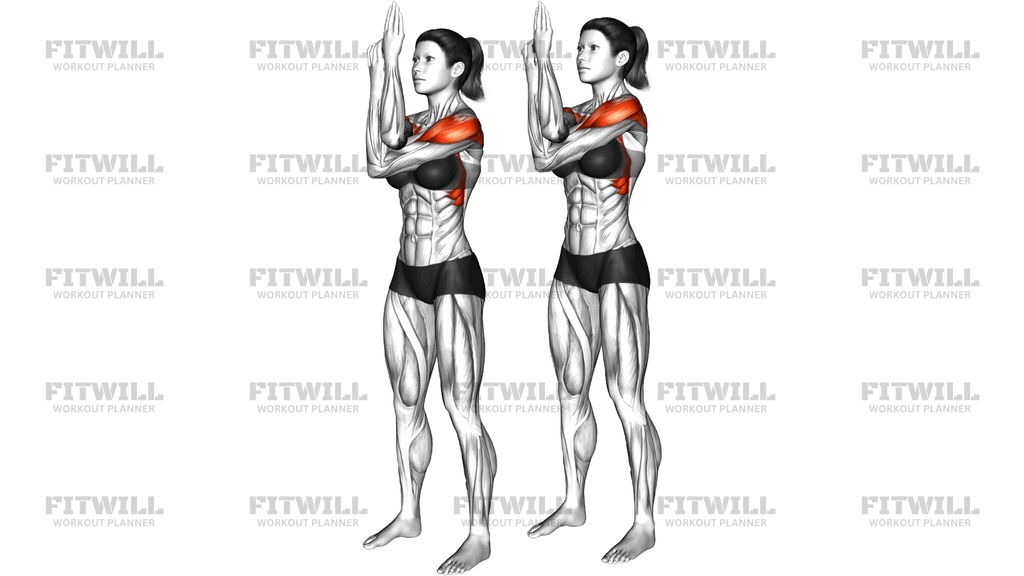
The Standing Left Over Right Hand Slant is a cross-body shoulder stretch performed from a tall standing position. You bring your left arm across the front of your chest at shoulder height, then use your right hand to hook over the outside of that arm and gently draw it toward your body. The result is a focused, static stretch through the back of the left shoulder — mainly the posterior deltoid and the small rotator cuff muscles that sit underneath it — along with tension that runs into the upper back near the shoulder blade.
This stretch is one of the simplest ways to address the tightness that builds up in the rear of the shoulder. Anyone who presses, rows, throws, swims, or spends long hours at a desk with rounded shoulders will benefit from it. Overhead athletes use it to keep the shoulder's internal rotation range healthy, while lifters often place it between sets of benching or after upper-body sessions to restore comfortable movement before the next workout.
The setup matters more than it looks. Because you are standing with no bench or wall for support, your posture is part of the stretch. Feet about hip-width apart, ribs stacked over the pelvis, and shoulders level create a neutral frame so the pull travels into the shoulder itself rather than being cheated away by twisting the torso or shrugging the pulling arm. Crossing the arm over at shoulder height — not below the chest — keeps the stretch line honest.
To execute it well, draw the left arm across without letting the shoulder blade wing forward or the elbow drop, then let the right hand apply slow, steady pressure over the top of the left upper arm. The sensation should sit deep in the back of the shoulder capsule, not at the elbow joint or in the neck. Hold for twenty to thirty seconds, breathe steadily, and repeat on the other side so both shoulders get equal attention.
The most common mistake is pulling too hard. The cross-body position loads the shoulder near the end of its range, so yanking the arm inward can irritate the front of the joint. Think of easing the arm across rather than dragging it, and back off immediately if you feel pinching at the front of the shoulder. Done with patience, this is one of the safest and most portable shoulder stretches you can keep in your routine — no equipment, no floor space, and under a minute per side.
[ Workout Log & Planner ]
Put your next workout in Fitwill
Keep your plan and training log ready when you are.


Instructions
- Stand upright with your feet about hip-width apart, weight balanced evenly, and your shoulders relaxed down away from your ears.
- Raise your left arm to shoulder height and sweep it horizontally across the front of your chest, elbow slightly bent, as if wrapping it over to the right side.
- Bring your right hand up and hook it over the top of your left upper arm, just above the elbow, so your right hand can control the pull.
- Brace lightly through your core and keep your hips and chest facing forward — resist the urge to rotate your torso into the stretch.
- Gently pull the left arm toward your chest with your right hand until you feel a firm but comfortable stretch in the back of the left shoulder.
- Hold the end position for 20 to 30 seconds, keeping the left shoulder blade from rolling forward as you hold.
- Breathe slowly throughout the hold, letting each exhale soften the tension in the shoulder a little more.
- Release the grip gradually, lower the left arm back to your side, and let both shoulders settle for a moment.
- Repeat the same cross-body pull on the right arm, matching the hold time so both sides stay even.
Tips & Tricks
- Keep the crossed arm at shoulder height. Letting the arm sit low across the waist shifts the stretch away from the posterior deltoid and makes the hold feel like nothing.
- Pull over the top of the upper arm with your right hand rather than grabbing the elbow itself — direct elbow pressure can strain the joint instead of stretching the shoulder.
- If you feel a pinch at the front of the left shoulder, reduce the pull slightly and rotate the thumb of the crossed arm upward a touch before reapplying pressure.
- Watch for the pulling shoulder creeping up toward your ear; shrugging the right side steals range and hides tightness. Keep it pinned down.
- The torso loves to rotate into the pull. Anchor your gaze on a fixed point ahead of you and keep both hips squared to stay honest with the stretch.
- A slight bend in the crossed elbow is fine and often more comfortable than locking it straight, but avoid bending so much that the arm loses its horizontal line.
- Warm the shoulder first with a few arm circles if you're stretching before training — cold shoulder capsules respond less happily to end-range holds.
- Ease into the hold over the first few seconds instead of hitting full depth immediately; the tissue accepts the stretch better and you can judge intensity accurately.
Frequently Asked Questions
What muscles does the Standing Left Over Right Hand Slant stretch?
The main targets are the posterior deltoid on the back of the crossed shoulder and the rotator cuff muscles beneath it, with secondary tension reaching the serratus anterior and upper back near the shoulder blade.
Why does the exercise specify 'Left Over Right'?
It describes the starting position — your left arm crosses over the front of your body while your right hand applies the pull. After finishing the left side, repeat the same setup with the right arm over to keep both shoulders balanced.
Is the Standing Left Over Right Hand Slant suitable for beginners?
Yes, it requires no equipment and little coordination. Beginners should focus on a lighter pull and a shorter hold of about 15 seconds until they learn to distinguish a stretch sensation from joint discomfort.
Should I pull on the crossed arm's elbow or the upper arm?
Hook your hand over the upper arm just above the elbow. Pulling directly on the elbow concentrates force into the elbow joint and can produce soreness that has nothing to do with the shoulder you are trying to stretch.
How long should I hold the Standing Left Over Right Hand Slant?
Twenty to thirty seconds per side works well for a general flexibility routine, and you can repeat the hold two to three times if the shoulder is particularly tight.
When is the best time to do this stretch?
It fits well after upper-body pressing or pulling workouts, following throwing or swimming sessions, or any time the backs of your shoulders feel tight. It can also be used between heavy sets of pressing to keep the shoulders moving comfortably.
What should I do if I feel pinching at the front of my shoulder during the stretch?
Ease the pressure off right away, lower the crossed arm slightly, and rotate the thumb upward before pulling again. If pinching persists, skip the movement that day and consult a qualified professional rather than pushing through it.
Can I do this stretch seated instead of standing?
Yes, a seated version works if you sit tall with your back unsupported by the chair, though the standing version makes it easier to keep the torso from rotating and cheating the stretch.
How do I know if I'm twisting my torso instead of stretching the shoulder?
Check that your chest and hips still face straight ahead and your head stays centered. If your shoulders have rotated toward the pulling side, reset your stance and reduce the pull until you can hold the square position.