Chin Tuck Against The Wall
Chin Tuck Against The Wall is a simple posture and neck exercise performed standing with your back, shoulders, and head positioned against a flat wall. From that aligned position, you gently draw your chin straight back so the back of your head stays in contact with the wall, creating the familiar 'double chin' movement. The wall acts as a reference point, which is what makes this exercise so effective: it removes the guesswork about where your head actually sits in space, something most people misjudge when they have spent years leaning forward over desks, phones, and steering wheels.
This movement primarily targets the deep neck flexors, the small muscles at the front of the neck that are responsible for controlled craniocervical flexion. These muscles are often long and underactive in people with a forward head posture, while the upper trapezius and levator scapulae at the top of the shoulders become short and overworked. By training the deep flexors to do their job, Chin Tuck Against The Wall helps rebalance that pattern and gives you a repeatable way to find a neutral head position.
It is a staple in rehab and postural settings, frequently recommended for people who experience neck tightness from desk work, long driving sessions, or screen use, and it is commonly included in programs for tech neck and upper cross syndrome. Because the movement is low load and self-paced, it suits beginners, office workers, and anyone starting a neck or posture routine after a period of inactivity. It is also a useful primer before strength training, teaching you to keep your head stacked over your ribcage during pressing, rowing, and overhead work.
The setup matters more than the effort. Stand with your heels a comfortable distance from the wall and let your shoulders, upper back, and the back of your head rest against it. If your head sits far forward, simply touching the back of your head to the wall may already feel like work, and that is normal. The exercise is the small horizontal glide of the chin backward, not a big nod or a forceful press.
Executed well, the movement is slow and subtle: glide the chin straight back, hold briefly, and release with control while keeping your gaze level and your shoulders relaxed. Avoid tipping the head up or down, shrugging, or jutting the jaw. Ten or more smooth repetitions, done once or twice a day, are typically enough. The exercise should create a mild working sensation at the front of the neck, never sharp pain, dizziness, or tingling, and anyone with a neck injury or persistent symptoms should check with a qualified professional before continuing.
[ Workout Log & Planner ]
Put your next workout in Fitwill
Keep your plan and training log ready when you are.


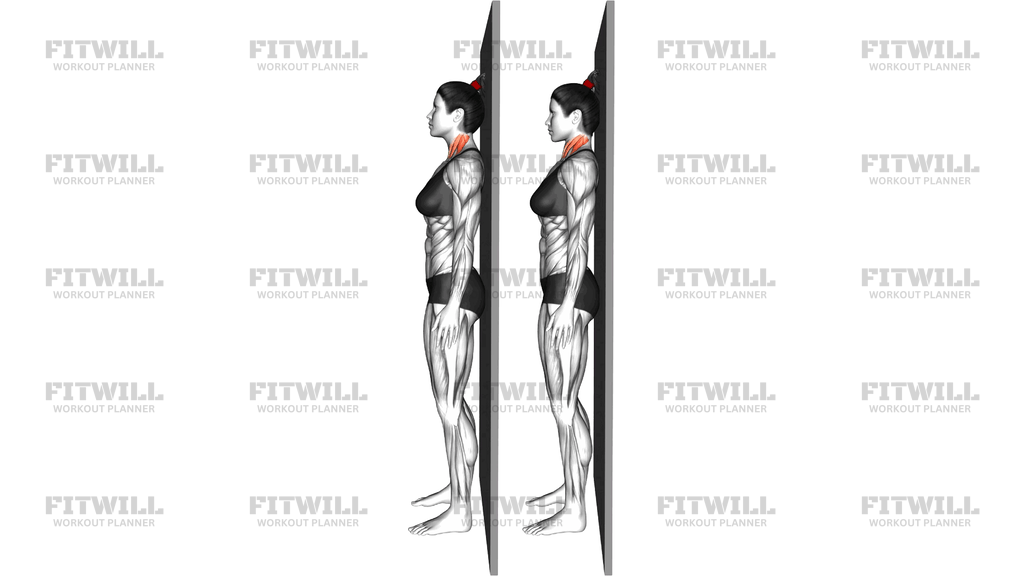
Instructions
- Stand with your back to a flat wall and walk your heels in until your hips, upper back, and the back of your head can all rest against it, with your feet about hip-width apart.
- Let your arms hang relaxed at your sides and soften your shoulders down away from your ears so your upper traps stay loose.
- Check your head position: the back of your head should touch the wall without forcing your chin up, and your eyes should look straight ahead at the horizon.
- Brace lightly through your core and keep your ribcage stacked over your pelvis so you are not arching your lower back to make contact with the wall.
- Glide your chin straight back horizontally, as if sliding the back of your head up the wall, making a double chin; keep your gaze level and your jaw relaxed.
- At the end position, pause for two to three seconds and feel gentle work at the front of your neck while the back of your head stays in contact with the wall.
- Slowly release the tuck and let your head return to its resting position against the wall, keeping the movement smooth rather than letting it spring back.
- Exhale as you glide the chin back and inhale as you release, breathing steadily throughout the set.
- Complete eight to twelve controlled repetitions, rest briefly, and reset your posture against the wall between sets if you feel your shoulders creeping upward.
Tips & Tricks
- The movement is a backward glide, not a nod: if your eyes drop or your chin moves toward your chest, you are flexing the upper neck instead of retracting the head.
- Do not press hard into the wall; light, sustained contact is enough, and forcing the head back usually recruits the very upper-trap tension you are trying to reduce.
- If the back of your head cannot reach the wall comfortably at first, stand a little farther out, perform the chin glide in the air, and gradually move closer over sessions.
- Watch for jaw tension and teeth clenching at the end of the tuck; let the lips rest together softly and keep the tongue relaxed on the roof of your mouth.
- Keep the shoulders quiet. If you notice yourself shrugging as you tuck, exhale fully before each rep and consciously settle the shoulder blades down the wall.
- A mirror from the side, or a quick phone video, is the easiest way to see whether your chin is gliding straight back or dipping downward.
- Short, frequent sets beat one long session; two or three rounds spread through the workday fit this exercise better than a single heavy effort.
- If you feel a stretch or ache at the base of the skull rather than work at the front of the neck, reduce the range of the tuck and hold for a shorter time.
Frequently Asked Questions
Which muscles does Chin Tuck Against The Wall work?
It primarily targets the deep neck flexors at the front of the neck, which retract the head against the wall. The upper trapezius and levator scapulae are engaged in a lengthening, postural role rather than as prime movers.
Why is the wall necessary for this exercise?
The wall gives you objective feedback about head position, which most people misjudge when their head habitually sits forward. It keeps the retraction straight and prevents you from substituting a nod or a shoulder shrug.
Is Chin Tuck Against The Wall suitable for beginners?
Yes, it is one of the most beginner-friendly neck exercises because it is low load and self-paced. If even the starting position feels demanding, begin by simply practicing head-to-wall contact before adding repetitions.
My head cannot touch the wall without tilting my chin up. What should I do?
That usually reflects a pronounced forward head position. Step your heels slightly away from the wall, perform the chin glide in the air, and move closer over time as your resting posture improves.
How is a chin tuck different from nodding the head?
A chin tuck slides the head and chin straight backward horizontally, like making a double chin, while a nod rotates the head downward. Keep your eyes fixed on a point at eye level to make sure you are retracting, not nodding.
How many repetitions should I do?
Eight to twelve slow repetitions with a two to three second hold works well, repeated once or twice daily. Because the deep neck flexors are endurance-oriented postural muscles, consistency matters more than volume.
Can Chin Tuck Against The Wall help with tech neck from desk work?
It is a common choice in posture routines for people who spend long hours at screens, since it retrains neutral head alignment. Pair it with regular breaks and screen height adjustments rather than relying on the exercise alone.
What is a good substitute if I do not have a wall available?
You can perform the same chin retraction lying on your back on a mat, which gives similar feedback through the floor. Seated chin tucks work too, but they require more awareness because nothing guides the head position.
Is it safe if I have a neck injury or experience dizziness?
Stop if the exercise produces sharp pain, tingling, or dizziness, and consult a qualified health professional before continuing. Anyone recovering from a neck injury should get clearance and individual guidance before adding this movement.
Should I feel a stretch at the back of my neck during the tuck?
A mild stretching sensation at the base of the skull is common when the posterior neck muscles are tight, but the primary feeling should be gentle effort at the front of the neck. If the stretch is uncomfortable, shorten the range of the tuck.