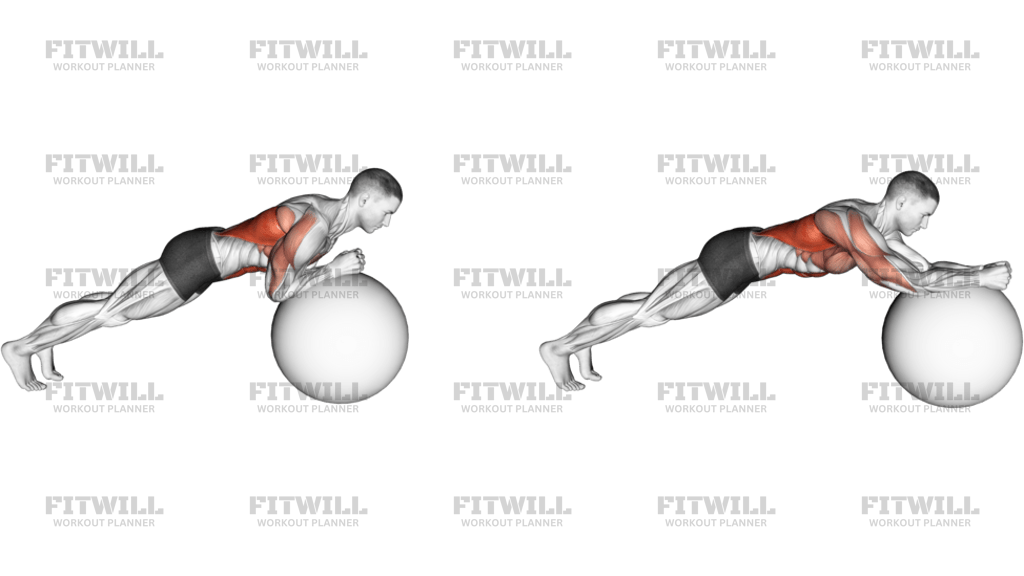
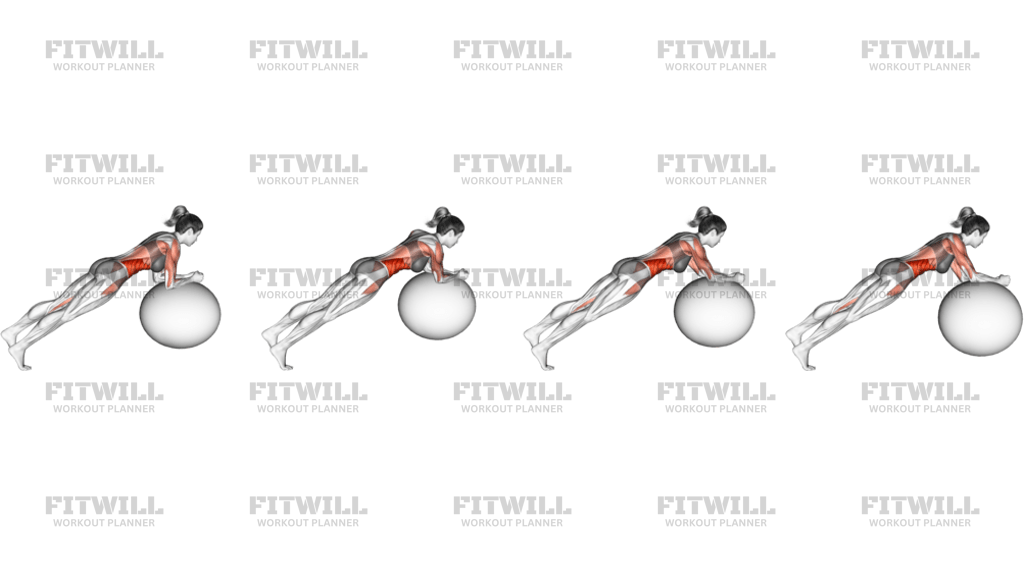
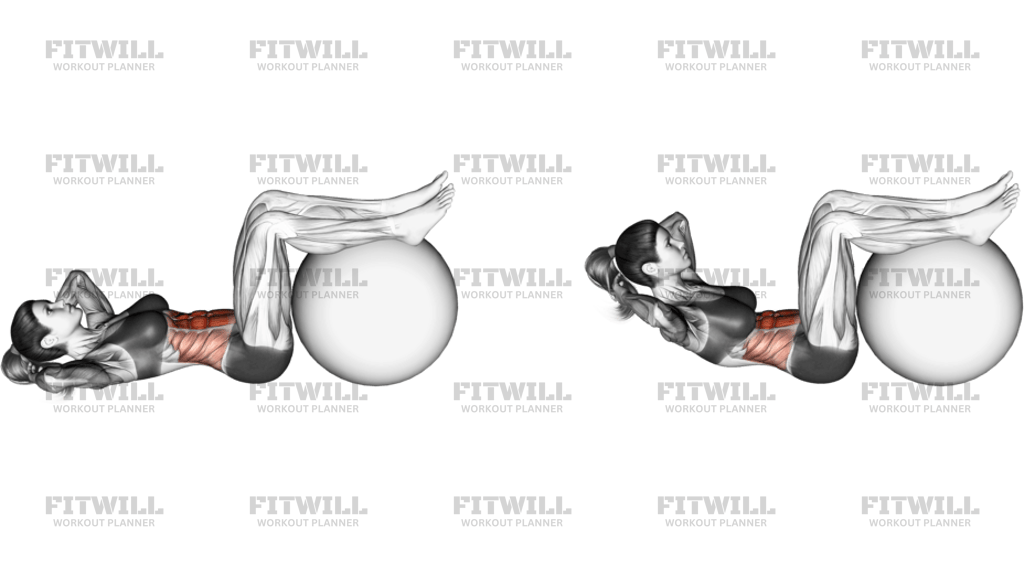
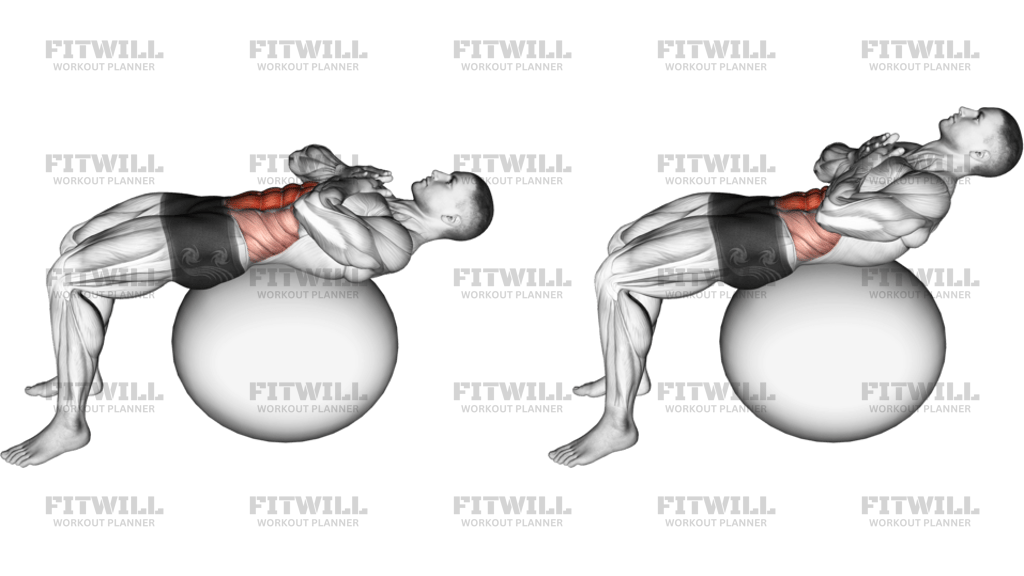
Sitting Body Mobilization On Exercise Ball
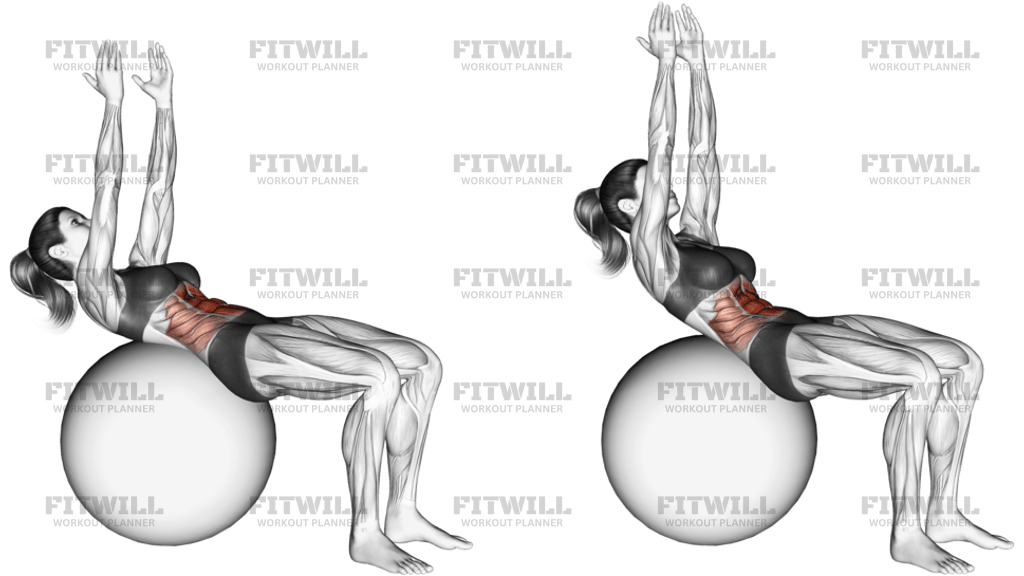
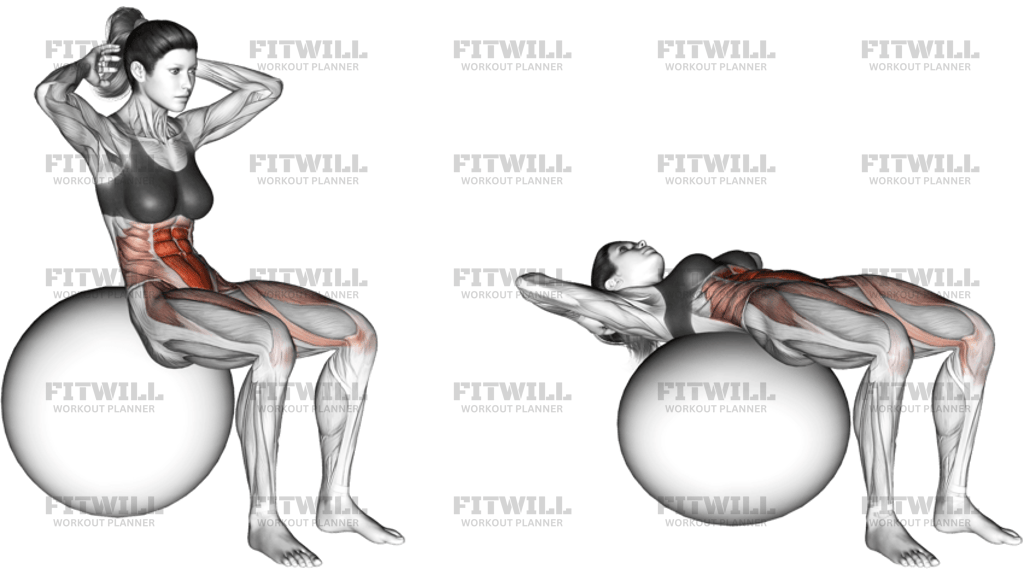
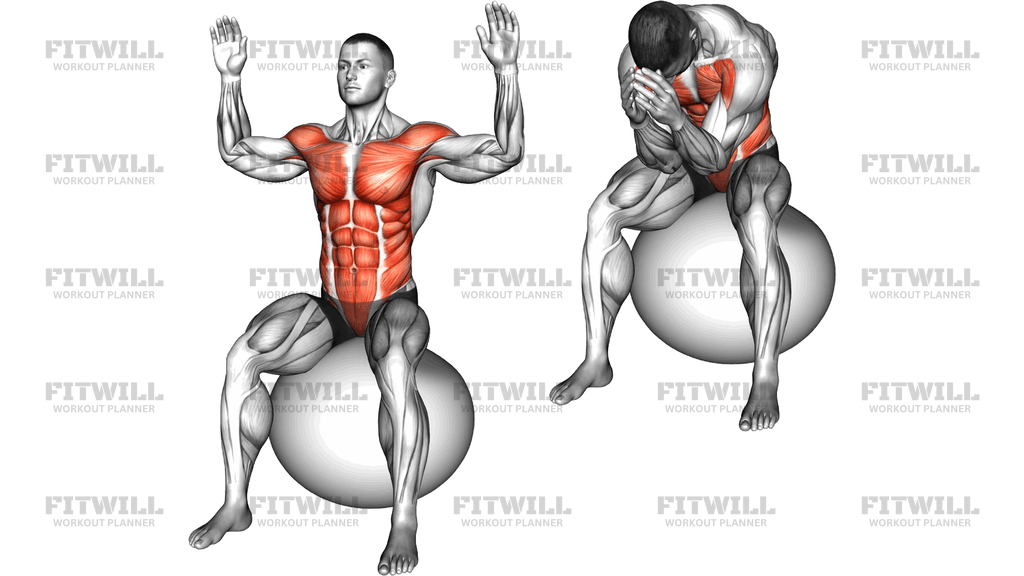
Sitting Body Mobilization On Exercise Ball is a gentle, seated movement performed on a stability ball that takes your spine through a full cycle of extension and flexion. You sit upright on the ball with your arms raised and elbows bent, then slowly curl your torso forward, bringing your hands together in front of your chest before unrolling back to the tall starting position. The ball provides an unstable, rounded surface underneath you, so every part of the movement also asks your trunk to stay organized and balanced.
This is a useful drill for anyone who spends long hours sitting at a desk, because prolonged chair sitting tends to leave the mid and lower back stiff and the deep abdominal muscles dormant. The raised-arm position opens the chest and front shoulders while lengthening the abdominals, and the forward curl then takes the spine the opposite way, flexing it segment by segment. Moving between those two shapes on a soft, mobile surface mobilizes the whole trunk in a way a rigid bench or the floor cannot.
The primary muscles working are the abs, especially the rectus abdominis as it pulls the ribs toward the pelvis during the curl. The obliques assist and steady the rotation-free path of the torso, the chest and front shoulders get a lengthening stretch in the start position, and the stabilizers around the hips and spine work quietly the entire time to keep you centered on the ball. The legs contribute more than you might expect, as your feet and thighs quietly control the ball from rolling beneath you.
Setup matters more here than in most seated drills. The ball should be sized so your knees sit at roughly a right angle with feet flat on the floor, and your hips should rest on the top-center of the ball, not the side. If you sit too far forward the ball wants to roll out from under you; too far back and your lower back has to arch to compensate. A few seconds spent finding that balanced perch pays off in a smoother, safer movement.
To execute well, think of the motion as rolling your spine rather than hinging at the hips. Start tall with a proud chest and arms in a raised goalpost position, then exhale as you nod your chin and peel your upper back into a rounded curl, letting your hands drift together in front of you. Pause briefly, then inhale as you stack your spine back up one section at a time until you are sitting tall again with arms wide. Keep the tempo slow enough that you can feel each vertebra's contribution.
This drill fits well as a warm-up before core or upper body training, as a movement break during the workday, or as a low-load reintroduction to abdominal work for people returning from a layoff. Because it is performed seated with feet on the floor, the demand is modest, but the combination of balance, mobilization, and abdominal control makes it worth treating with the same attention to form you would give a heavier exercise. Stop and reposition if you feel the ball slipping or your balance drifting sideways.
[ Workout Log & Planner ]
Put your next workout in Fitwill
Keep your plan and training log ready when you are.


Instructions
- Choose a stability ball that lets you sit with your feet flat on the floor and your knees bent to about 90 degrees, and place it on a non-slip surface.
- Sit on the top-center of the ball with your feet hip-width apart and pointed forward, letting your weight settle evenly through both sitting bones.
- Raise both arms up and out to the sides with elbows bent, palms facing forward, and open the chest into a tall, upright posture.
- Lightly brace your abdominal wall and draw your shoulder blades down so your ribs are not flaring upward.
- Exhale and begin the curl by tucking your chin, then rounding your upper back so your hands come together in front of your chest.
- Continue flexing until your mid back is rounded and you feel your abdominal muscles fully engaged, keeping your hips in contact with the ball and your feet planted.
- Pause for a moment at the curled position without collapsing your head toward your knees.
- Inhale and slowly uncurl, stacking your spine back up until you return to the tall seated position with arms back in the raised position.
- Breathe steadily throughout, exhaling on the curl forward and inhaling on the way back up.
- Complete your repetitions, then step carefully off the ball by walking your feet forward and standing up with control.
Tips & Tricks
- The most common fault is pulling the head down with the hands or chin instead of letting the abs drive the curl, so keep the movement originating from the ribs and trunk.
- If the ball rolls forward under you as you curl, your hips are drifting with the torso, hold the hips still on top of the ball and move only the spine.
- Avoid bouncing out of the curled position, the return to tall sitting should be just as slow as the curl to keep the mobilization even through the whole spine.
- Keep your heels down and your toes relaxed, lifting the feet or gripping the floor with the toes usually means the ball is shifting and the core is losing its steady position.
- If raising the arms fully causes shoulder or neck discomfort, lower them to a goalpost position closer to shoulder height and keep the same chest-open posture.
- Underinflated balls sink and encourage slumping, so make sure the ball is firm enough that your hips stay level with or slightly above your knees.
- Think of flexing the spine one section at a time rather than hinging forward from the hips, which turns the drill into a hip stretch and reduces the abdominal work.
- Keep your gaze forward at the start and let the eyes follow the hands during the curl, this keeps the neck in line with the rest of the spine instead of craning.
Frequently Asked Questions
Which muscles does the Sitting Body Mobilization On Exercise Ball work?
The abs, particularly the rectus abdominis, do the main work during the forward curl, with the obliques helping control the path. The chest and front shoulders are stretched in the raised-arm position, and the hip and trunk stabilizers work throughout to keep you centered on the ball.
Is this exercise suitable for beginners?
Yes, it is a low-load, seated movement with feet on the floor, which makes it one of the more approachable stability ball drills. Beginners should start with a smaller range of motion and focus on staying centered before curling deeper.
How large should the stability ball be for the Sitting Body Mobilization On Exercise Ball?
Pick a size that lets you sit with feet flat and knees bent to roughly 90 degrees, with hips level or slightly higher than the knees. If your hips sink below the knees, the ball is too small or underinflated.
Why do my arms need to be raised during this drill?
The raised, bent-arm position opens the chest and lengthens the abdominals before you curl, giving the spine a fuller journey between extension and flexion. It also gives you a clear visual target as your hands come together in front of your chest.
My ball keeps rolling forward when I curl, what am I doing wrong?
You are most likely letting your hips travel with your torso instead of keeping them stacked on top of the ball. Hold the hips still and imagine rolling only your spine, like a wheel rolling over the ball beneath it.
Can I do this exercise without a stability ball?
You can perform a similar seated curl on a bench or chair, but you lose the mobile, rounded surface that makes the movement distinct. A stability ball challenges your balance and lets the spine articulate over a curved support, so the ball version is worth keeping when available.
How many repetitions should I perform?
Eight to twelve slow, controlled repetitions work well as a warm-up or movement break. The tempo matters more than the count, so prioritize feeling each section of the spine move over adding reps.
Is the Sitting Body Mobilization On Exercise Ball safe for people with back stiffness?
The seated, supported nature of the drill makes it a gentle option for mobilizing a stiff spine, but anyone with a current or recent back issue should move within a comfortable range and consult a qualified professional first. Never push into pain during the curl.
Should this drill be done before or after a workout?
It works best as a warm-up, since it takes the spine, chest, and hips through a full range before loading, and it wakes up the abdominal muscles for heavier core work. It can also be used on its own as a midday movement reset.
How do I keep my balance on the ball during the curl?
Keep your feet flat and hip-width apart, press them lightly into the floor, and make small adjustments through the feet rather than swinging the arms. Sitting on the exact top of the ball, rather than the front or back, gives you the largest margin of stability.