Power Sled Pull
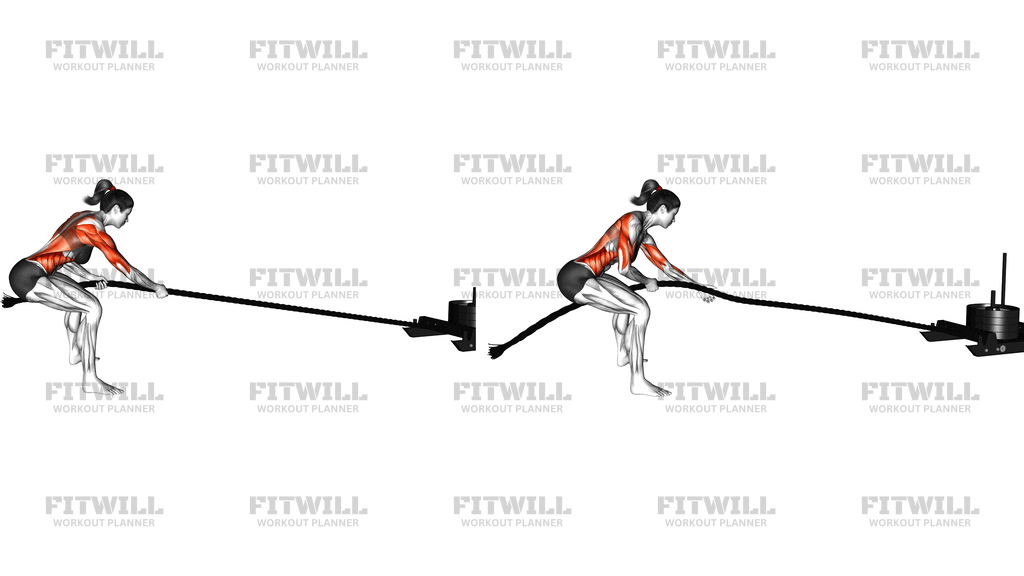
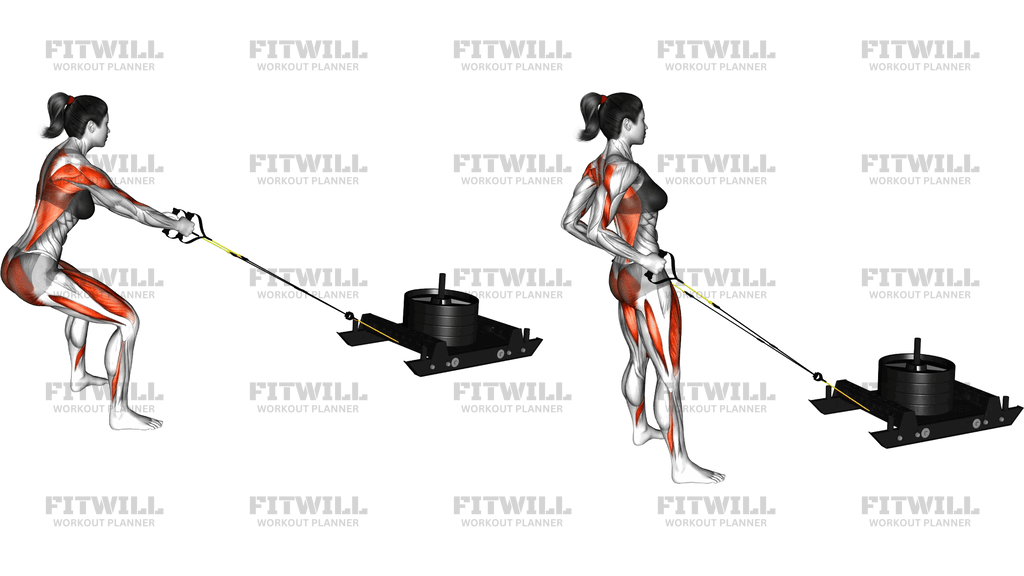
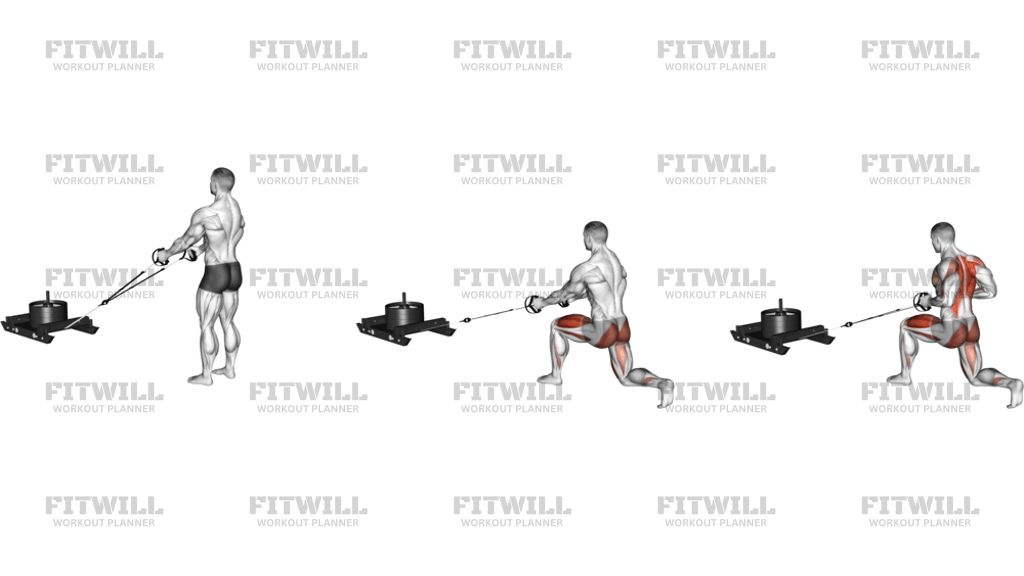
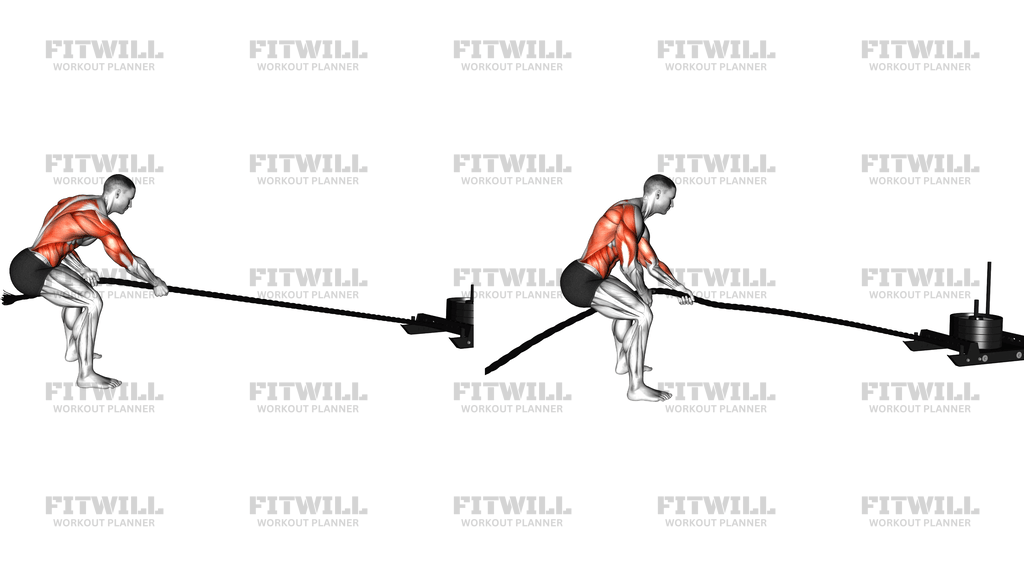
The Power Sled Pull is a rope-based sled drill where you face the sled in an athletic stance and haul it toward you hand over hand. A rope or strap is anchored to a loaded sled, and your job is to reel in that slack using pulling strength from the back and arms while your legs and hips keep you anchored to the floor. Unlike a sled drag or push, this version turns the sled into a movable resistance for rowing-type pulling, so every inch of rope has to be earned through your upper body.
This movement earns its place in most conditioning programs because it blends strength work with a genuine cardio demand. As you pull, the lats, mid back, biceps, and forearms do the hauling, while the glutes, quads, and calves work isometrically to hold your stance against the sled's drag. Your core has to stay braced the whole time so the force you generate through the arms actually transfers into moving the sled rather than twisting your torso.
The setup matters more than most people expect. Your stance width, hip height, and the angle of the rope all determine whether you pull with your whole body or just your arms. Sit your hips back, keep a soft knee bend, and lean slightly away from the sled so your bodyweight feeds into the pull. If you stand too upright, the load shifts entirely to the lower back and biceps; if you squat too deep, your legs fatigue before your pulling muscles get challenged.
Athletes use the Power Sled Pull for grip endurance, pulling power, and low-impact conditioning, which makes it popular in combat sports, football, and general strength training alike. Because there is no eccentric loading on the muscles, it tends to leave you less sore than traditional pulling exercises, so it fits well on days between heavy lifting sessions.
Load the sled conservatively at first. A weight you can pull for twenty to thirty meters with clean hand-over-hand strokes is far more productive than a sled that barely creeps forward while your form falls apart. Keep the rope taut, your shoulders down, and your breathing steady throughout the set.
[ Workout Log & Planner ]
Put your next workout in Fitwill
Keep your plan and training log ready when you are.


Instructions
- Anchor a rope or heavy strap to the eyelet of a Power Sled and load the sled with weight plates appropriate for your strength level.
- Take the free end of the rope in both hands and walk backward until the rope is taut, leaving enough room to pull the sled several meters toward you.
- Set your feet slightly wider than hip width, bend the knees, and push the hips back into an athletic stance with the chest up and the back flat.
- Brace the core as if preparing for a light punch, and pull the shoulders down away from the ears before the first stroke.
- Pull the rope hand over hand toward your torso, driving each elbow back past your ribs and drawing the rope to the side of your body.
- Keep the hips low and steady; resist the urge to stand up or rock backward as the sled starts to move.
- Continue reeling in rope until the sled reaches you or the planned distance is covered, keeping each stroke deliberate and full.
- Exhale forcefully on each pull and inhale as you reach for the next handhold of rope.
- Once the set is done, walk forward carefully, let the rope go slack, and reset the sled at the starting distance before the next effort.
Tips & Tricks
- If the sled refuses to budge, the load is likely too heavy for your pulling strength; strip a plate off before your grip and lower back pay for it.
- Watch for the rope drifting out to one side, which usually means one arm is doing more work; pull the rope to a consistent point beside your torso on every stroke.
- Sitting too far back turns this into a leg exercise and shortens your pulling range; find a stance where the hips are back but the arms can still fully extend.
- Shrugging the shoulders during each pull shifts tension away from the lats; keep the shoulder blades pulled down and let the big back muscles do the hauling.
- Use gloves or build grip tolerance gradually, because rope friction on the palms is often the first thing to fail, not the back or arms.
- On slick turf or gym flooring, widen the stance and grip the floor with the feet, since the sled's drag can pull you forward mid-stroke.
- Keep the head neutral and eyes forward rather than craning down at the rope; a dropped chin rounds the upper back and weakens the pull.
- Alternate which hand leads each set so both sides of the back and arms get even work over the course of a session.
- Anchor the sled on a surface it slides on smoothly; dragging it over rough concrete multiplies the resistance unpredictably.
Frequently Asked Questions
Which muscles does the Power Sled Pull work the most?
The lats and mid back drive each pulling stroke, with strong support from the biceps and forearms. The glutes, quads, and calves hold the athletic stance isometrically while the core keeps the torso from twisting.
How heavy should I load the sled for the Power Sled Pull?
Start with a load you can pull for twenty to thirty meters in controlled hand-over-hand strokes without stalling. If the sled barely moves or your form breaks down within a few meters, reduce the weight.
Is the Power Sled Pull suitable for beginners?
Yes, as long as the load is light and the emphasis is on learning the hip-back stance and hand-over-hand rhythm. Beginners often benefit from shorter distances, around ten meters, until the grip and pulling pattern feel automatic.
How is the Power Sled Pull different from a sled push or drag?
A push and a drag use the legs as the prime movers while the upper body just holds position, whereas the rope pull makes the back and arms the driving muscles. That makes it a better fit when you want upper-body pulling work combined with conditioning.
Why does my grip give out before my back during the Power Sled Pull?
Rope friction and the sustained squeeze demand a lot from the forearms, so grip often limits the set first. Use gloves, tape the rope contact points, or shorten the distance and add more sets to build grip endurance over time.
What is the most common form mistake in this exercise?
Standing up and rocking backward as the sled gets heavy, which turns the pull into a bodyweight tug and strains the lower back. Hold the hips back and the chest up, and let each stroke come from the arms and lats.
Can I substitute anything if I don't have a Power Sled?
A weighted plate or tire attached to a tow strap works on smooth flooring, or you can loop a heavy resistance band around a fixed anchor and perform hand-over-hand pulls. The movement pattern and muscle demand stay very similar.
How should I breathe during the Power Sled Pull?
Exhale hard on each pull stroke and inhale as you reach up the rope for the next grip. Continuous steady breathing keeps the core braced without you holding your breath through the set.
How far should I pull the sled each set?
Distances of ten to thirty meters work well depending on the goal, with heavier loads and shorter distances favoring strength and longer pulls building conditioning. Keep the distance consistent between sets so you can gauge progress.
Is the Power Sled Pull hard on the joints?
It is generally a low-impact option because there is no jumping or heavy eccentric loading on the muscles. Still, keep the back flat, avoid jerking the rope at the start, and warm up the shoulders and grip before heavier pulls.