Band Thruster
Band Thruster combines a front squat with an overhead press, turning one continuous rep into a lower-body and upper-body coordination drill. Standing on the band creates a smooth rise in resistance as you drive upward, so the exercise teaches you to stay stacked, balanced, and controlled while moving from the bottom of the squat into a strong press. It is especially useful when you want a full-body movement that builds work capacity without needing a barbell or machine.
The main training effect comes from the legs, shoulders, triceps, and core working together. Your quads and glutes start the rep out of the squat, while the shoulders and triceps finish the press overhead. Because the band pulls harder as you stand up, the torso has to stay organized and the ribs have to stay down, otherwise the press turns into a backward lean.
Setup matters a lot on Band Thruster. Place the band under the middle of both feet, set your stance about shoulder width, and bring the handles or ends to shoulder height with the elbows slightly in front of the ribs. That front-rack position should feel stable before you start squatting, with even tension in both sides of the band and the wrists stacked over the forearms.
Each repetition should feel like one smooth sequence: squat down with control, drive up through the floor, then press the band overhead after the legs have done their job. At the top, finish with the arms straight, biceps close to the ears, glutes tight, and the ribs still stacked over the pelvis. On the way down, bring the hands back to the shoulders first and then descend into the next squat under control.
Band Thruster works well in conditioning blocks, home workouts, and accessory sessions where you want a demanding but compact full-body exercise. It is also easy to scale by changing band tension, squat depth, or press range, which makes it practical for beginners and advanced lifters alike. Keep the movement clean and repeatable; if the band pulls you off balance or forces a big back arch, the load is too heavy or the stance needs adjusting.
Fitwill
Log Workouts, Track Progress & Build Strength.
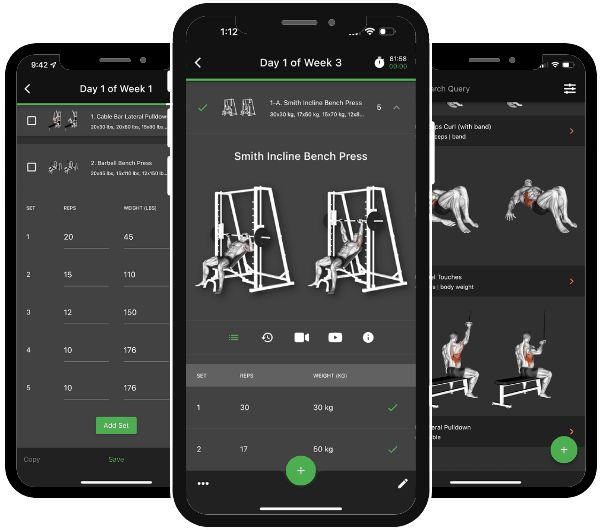
Achieve more with Fitwill: explore over 5000 exercises with images and videos, access built-in and custom workouts, perfect for both gym and home sessions, and see real results.
Start your journey. Download today!


Instructions
- Stand on the middle of the band with your feet about shoulder width apart and bring the handles or ends up to shoulder height.
- Keep your elbows slightly in front of your ribs, wrists stacked over your forearms, and the band evenly tensioned before you start the rep.
- Sit your hips back and down into a front squat while keeping your heels planted and your chest tall.
- Lower until your thighs are near parallel or as deep as your mobility allows without letting the band pull you forward.
- Drive through your heels and midfoot to stand up, letting the squat lead the rep before you press.
- As you finish standing, press the band straight overhead until your arms are fully extended.
- Keep your ribs down and your glutes tight at the top so you do not lean back to finish the press.
- Lower the handles back to shoulder height with control, then reset your breath before the next repetition.
Tips & Tricks
- Choose a band that lets you squat comfortably before the overhead press turns into a back lean.
- Keep the handles parked at shoulder height between reps instead of letting them drift behind your body.
- Think "stand first, press second" so the press does not start while you are still rising out of the squat.
- If your heels pop up, widen your stance slightly or reduce squat depth before adding more resistance.
- Keep the elbows slightly forward in the bottom position so the band tracks cleanly over the shoulders.
- Finish with the wrists over the shoulders and the biceps near the ears, not with the ribs flared forward.
- Lower the band under control; snapping the handles down will make the next squat unstable.
- Reduce the band tension if your low back arches before the arms lock out overhead.
Frequently Asked Questions
What muscles does Band Thruster work?
Band Thruster mainly trains the quads, glutes, shoulders, triceps, and core. The legs drive the squat and the upper body finishes the overhead press.
Can beginners perform this exercise?
Yes, beginners can use a light band and a shallow squat first. The key is keeping the band in front-rack position and pressing overhead without leaning back.
Where should the band sit before I start Band Thruster?
Stand on the center of the band with both feet and bring the handles or ends to shoulder height. Your elbows should stay slightly in front of your torso, not tucked behind it.
How deep should I squat in Band Thruster?
Squat as deep as you can while keeping your heels down, chest lifted, and the band under control. Parallel is a solid target for most people, but the best depth is the one you can own.
Why does Band Thruster feel harder at the top?
The band creates more tension as you stand up and press overhead, so the hardest part is usually near full extension. That is normal and is part of what makes the exercise useful for power and conditioning.
What is the biggest mistake on Band Thruster?
The most common mistake is pressing too early and turning the rep into a forward or backward wobble. Finish the squat drive first, then press in a straight line overhead.
Is Band Thruster more of a leg exercise or a shoulder exercise?
It is a full-body movement, but the legs usually create the main force and the shoulders and triceps finish the press. That is why it works well as a conditioning lift.
Can I use Band Thruster in a circuit workout?
Yes, it fits well in circuits because it is compact, raises the heart rate, and does not require a bench or rack. Keep the band light enough that every rep still looks crisp.