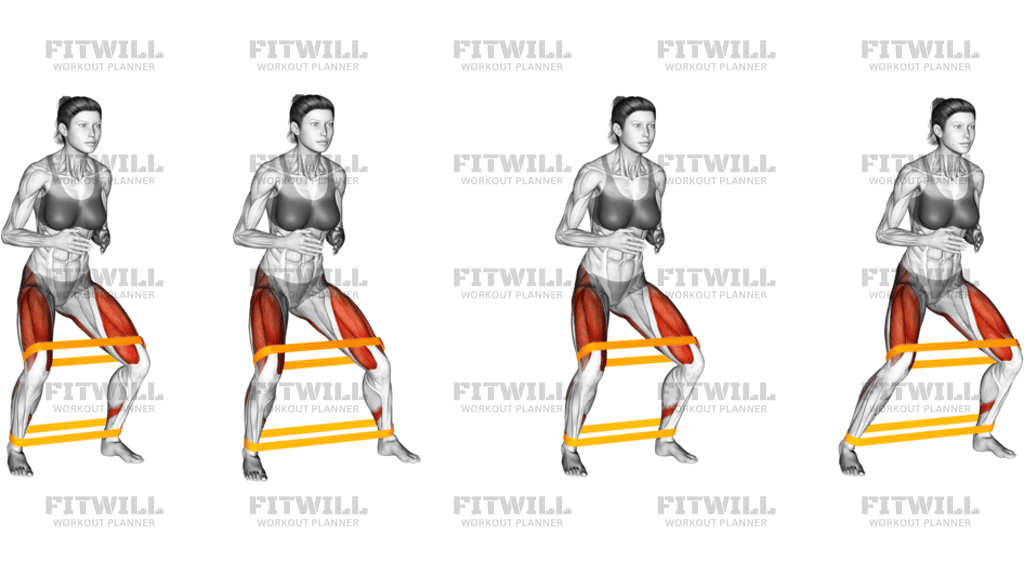
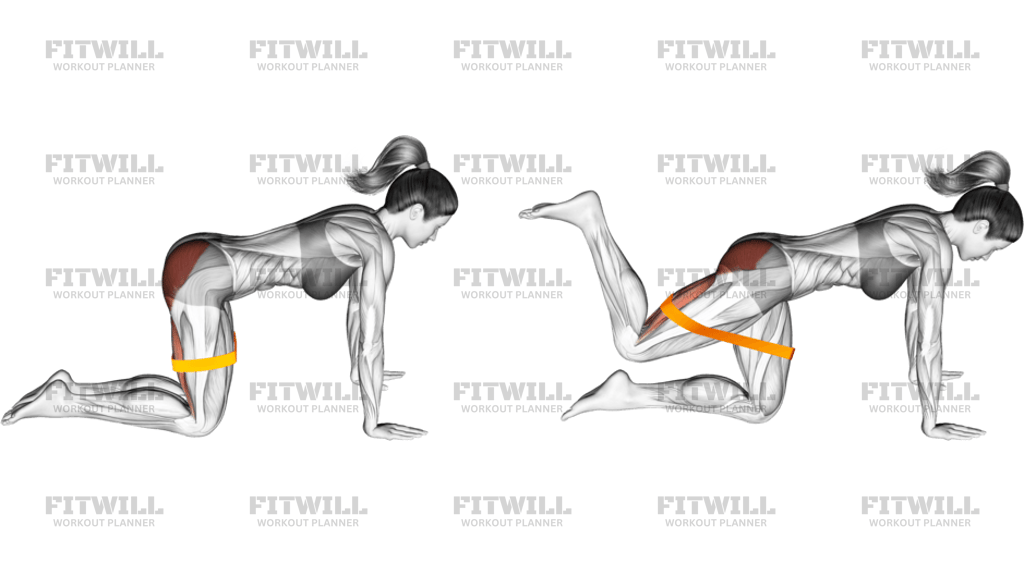
Resistance Band Glute Bridge Abduction
Resistance Band Glute Bridge Abduction combines a glute bridge with active knee abduction, so the hips have to stay lifted while the thighs press outward against the band. The position on the floor makes it a useful accessory for glute activation, hip stability, and controlled lower-body tension without needing a machine or heavy load. It is especially helpful when you want a bridge pattern that also challenges the outer hips and the muscles that keep the knees tracking well.
The exercise starts with the band looped above the knees, feet planted, and the torso braced before the hips rise. That setup matters because the bridge should come from the glutes and hamstrings, not from a rib flare or a lower-back arch. Once the pelvis is elevated, the knees open slightly against the band while the hips stay high. The goal is to keep the bridge shape steady as the thighs move outward, rather than turning the rep into a fast, unstable pulse.
At the top of the rep, the trunk should look stacked: ribs down, chin relaxed, and weight spread through the heels and mid-foot. Pressing the knees out should feel deliberate and symmetrical, with no shifting to one side. If the feet are too far away or the lower back takes over, the movement loses the glute emphasis and becomes a compensation pattern. A smaller range with clean control is usually more useful than forcing the knees wide.
This variation fits well in warmups, accessory work, glute-focused sessions, or rehab-style training where you want low-load tension and clear hip engagement. It can also help teach people to keep the pelvis stable while the hips work through extension and abduction at the same time. Beginners can learn it quickly, but it still rewards precision: the bridge height, band tension, and knee path all need to stay consistent from the first rep to the last.
Treat each repetition like a controlled reset rather than a throwaway burn-out rep. Lift, press out, hold briefly, and lower without collapsing. When done well, the exercise builds better awareness of glute drive and hip control for squats, lunges, deadlifts, and other lower-body movements where the knees and pelvis need to stay organized.
[ Workout Log & Planner ]
Put your next workout in Fitwill
Keep your plan and training log ready when you are.


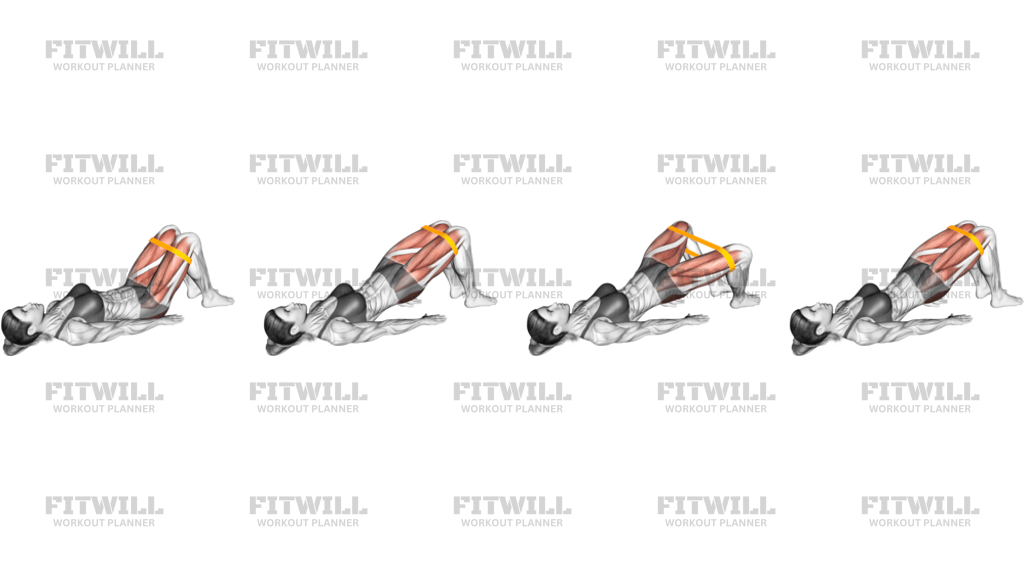
Instructions
- Loop a resistance band just above your knees and lie on your back with your knees bent, feet flat, and arms resting by your sides.
- Set your feet about hip-width apart and walk them close enough that your shins are near vertical when you lift.
- Gently tuck your ribs down, brace your abdomen, and keep your pelvis level before the first rep.
- Drive through your heels to lift your hips until your knees, hips, and shoulders form a straight line.
- At the top of the bridge, press your knees outward against the band without letting your hips drop or twist.
- Hold the bridge briefly while keeping the glutes tight and the lower back from arching.
- Bring the knees back to neutral under control, then lower your hips to the floor with steady tension.
- Reset your breath at the bottom and repeat for the planned reps before fully relaxing.
Tips & Tricks
- Place the band high enough on the thighs that it challenges the hips without sliding into the knees.
- Keep the feet rooted; if the heels lift, your hamstrings and lower back usually take over.
- Think about lifting the pelvis first and opening the knees second so the bridge does not turn into a rushed abduction drill.
- Press the knees out only as far as you can while keeping both hips level.
- A small pause at the top usually gives better glute tension than repeating quick pulses.
- If your low back arches, shorten the bridge height and keep the ribs stacked over the pelvis.
- Keep the neck relaxed and look straight up so you do not crunch the chin toward the chest.
- Use a light band if your knees collapse inward or if you cannot maintain the bridge position while abducting.
Frequently Asked Questions
What does Resistance Band Glute Bridge Abduction work most?
It mainly targets the glutes, especially the outer hip muscles, while the hamstrings and core help keep the bridge stable.
Can beginners perform this exercise?
Yes. Beginners usually do well with a light band and a smaller bridge height so they can learn the knee-out action without losing pelvic control.
Where should the resistance band sit?
Place it just above the knees on the thighs. If it sits too low, it can slide during the bridge and change the feel of the rep.
Should I open my knees on every rep?
Yes, but only enough to keep tension in the band while the hips stay high. The outward pressure should be controlled, not forced.
Why do my hamstrings feel this more than my glutes?
Your feet may be too far from your hips, or you may be lifting by arching the back. Move the feet a little closer and keep the ribs down.
What is the biggest mistake in this movement?
Letting the hips sag or twist while the knees move outward. The bridge should stay steady while the thighs do the opening.
Is this more of an activation exercise or a strength exercise?
It can be both. Most people use it as an accessory or activation drill, but slower reps with a stronger band can make it a real glute strength builder.
How can I make it harder without changing the exercise?
Use a stronger band, add a longer pause at the top, or slow the lowering phase while keeping the bridge height and knee path clean.