Half Sit-Up
Half Sit-Up is a bodyweight core exercise that trains trunk flexion from the floor to a partial seated position. It sits between a crunch and a full sit-up: the movement is longer than a curl-up, but it stops short of the aggressive hip drive that often takes over in a full repetition. That makes Half Sit-Up useful when you want direct abdominal work without turning the set into a swing or a leg-lift drill.
The main target is the rectus abdominis, with the obliques and transversus abdominis helping you keep the ribs stacked and the torso controlled. Because the legs stay long and the body starts flat, the hip flexors can assist more than they do in a short crunch, so the setup matters. If your low back arches hard or your feet start popping up, the set usually becomes more about momentum than about the abs.
A clean Half Sit-Up starts with the whole back settled on the floor, the neck relaxed, and the arms placed so they do not yank the head or shoulders upward. From there, the torso should curl smoothly off the floor, ribs closing toward the pelvis as you rise. The goal is a controlled, repeatable path that keeps the movement honest instead of chasing a bigger range by throwing the upper body forward.
This exercise works well as accessory core work, part of a warm-up, or a higher-rep finisher after heavier lifts. It can also help beginners learn how to flex the trunk without needing equipment, load, or complicated setup. If you feel the neck, hips, or lower back taking over, shorten the range, slow the tempo, or bend the knees slightly so the abs can keep control.
Half Sit-Up is best treated as a precision exercise, not a speed test. Keep the rep smooth on the way up and just as controlled on the way down, and stop the set once you can no longer keep the torso moving without jerking. Done that way, it becomes a simple but effective way to build better abdominal strength, torso control, and awareness of how your trunk should move under tension.
Fitwill
Log Workouts, Track Progress & Build Strength.
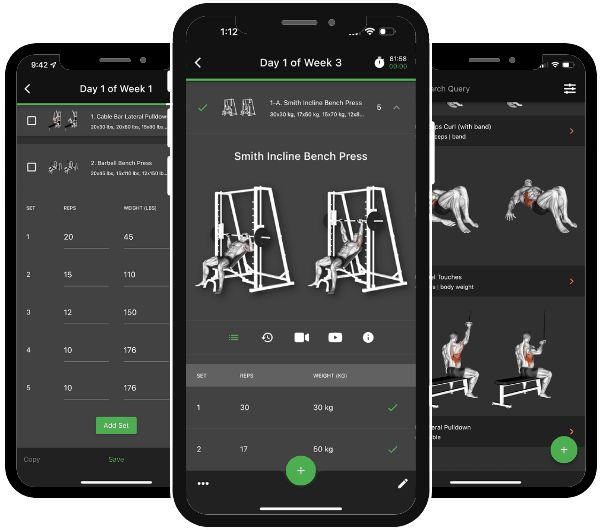
Achieve more with Fitwill: explore over 5000 exercises with images and videos, access built-in and custom workouts, perfect for both gym and home sessions, and see real results.
Start your journey. Download today!


Instructions
- Lie on your back on the floor or mat with your legs extended and your arms resting by your sides, palms down.
- Set your feet hip-width apart, relax your shoulders, and keep your chin slightly tucked so your neck stays long.
- Press your lower back gently toward the floor and brace your abs before you start the first rep.
- Exhale and curl your head, shoulders, and upper back off the floor, leading with your ribs rather than your hips.
- Keep your legs quiet and your heels grounded as you rise into the half sit-up position.
- Stop when your torso is halfway to upright or when your abs start to lose control and the hips want to drive the motion.
- Pause briefly at the top, then lower your shoulders and upper back back to the floor under control.
- Inhale as you lower, reset your low back and shoulder blades, and repeat for the planned number of reps.
Tips & Tricks
- If your feet lift during the rise, bend your knees slightly and keep the heels heavy on the floor.
- Keep your eyes on the ceiling instead of pulling your chin toward your chest.
- Let the ribs curl down first; if the hips start leading, the rep is turning into a momentum sit-up.
- A small pause at the top makes the abs do the work instead of bouncing through the middle of the rep.
- Lower slowly enough that your shoulders touch down under control rather than dropping from the top.
- If your lower back arches off the floor, shorten the range and exhale earlier in the rep.
- Keep your hands away from the head so you do not turn the exercise into a neck pull.
- A mat or folded towel under the spine helps if the floor position bothers your tailbone or mid-back.
- Higher reps usually suit Half Sit-Up better than heavy loading because the line of pull is already demanding.
Frequently Asked Questions
What muscles does Half Sit-Up work most?
The main target is the rectus abdominis, with the obliques and transverse abdominis helping control the curl. The hip flexors assist more when the legs stay long.
Is Half Sit-Up good for beginners?
Yes, as long as you keep the range short and controlled. Beginners often do better with bent knees at first if straight legs make the lower back arch or the hip flexors cramp.
How high should I come up in a Half Sit-Up?
Come up until your torso is roughly halfway to upright, or stop sooner if the rep starts to turn into a throw. The top position should still feel like your abs are controlling the movement.
Why do my hip flexors take over in Half Sit-Up?
Straight legs lengthen the lever and make the hip flexors help more. Bend the knees slightly, slow the pace, and focus on curling the ribs toward the pelvis instead of yanking the torso up.
Should my hands be behind my head?
Not in this version. Keeping the arms by your sides, as shown, removes the temptation to pull on the neck and makes the abs do more of the work.
What should I do if my feet lift off the floor?
Shorten the range, keep your heels heavy, and bend the knees a little if needed. Feet lifting usually means the rep is too fast or the torso is rising with momentum.
Is Half Sit-Up different from a crunch?
Yes. A crunch is shorter and keeps the movement mostly in the upper trunk, while Half Sit-Up travels farther and usually involves more spinal flexion and more hip-flexor assistance.
How can I make Half Sit-Up harder without using weight?
Slow the lowering phase, add a brief pause at the top, or keep the legs straighter if your back stays flat. Those changes increase control demands without changing the exercise.