Arms Overhead Full Sit-Up
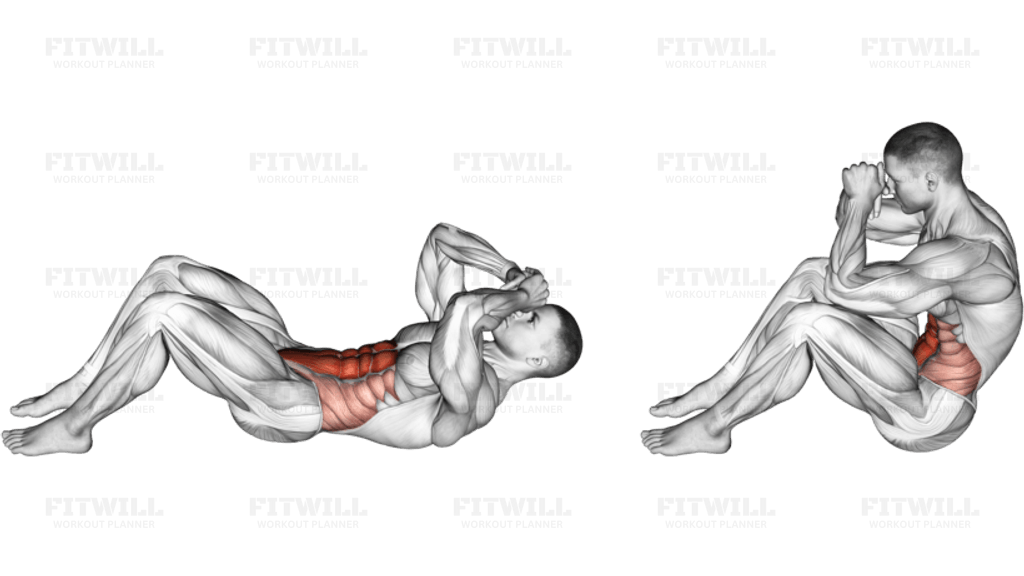
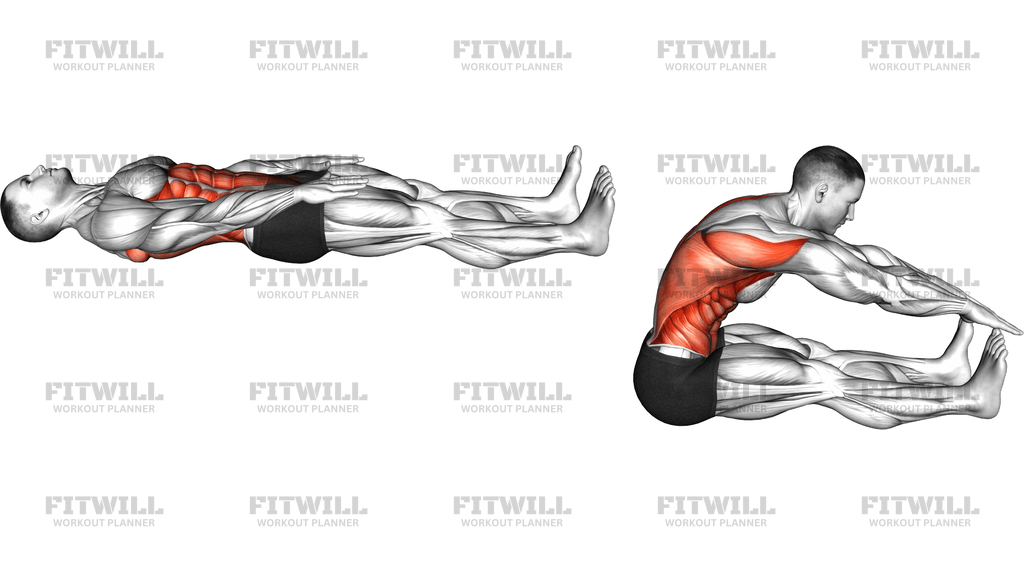
Arms Overhead Full Sit-Up is a bodyweight floor exercise that trains spinal flexion from a long lever position. You start lying flat with the arms reaching overhead, then curl all the way up to a tall seated position before lowering back under control. Because the arms stay long, the torso has to do more work than in a short crunch, which makes this a demanding abdominal movement even without added load.
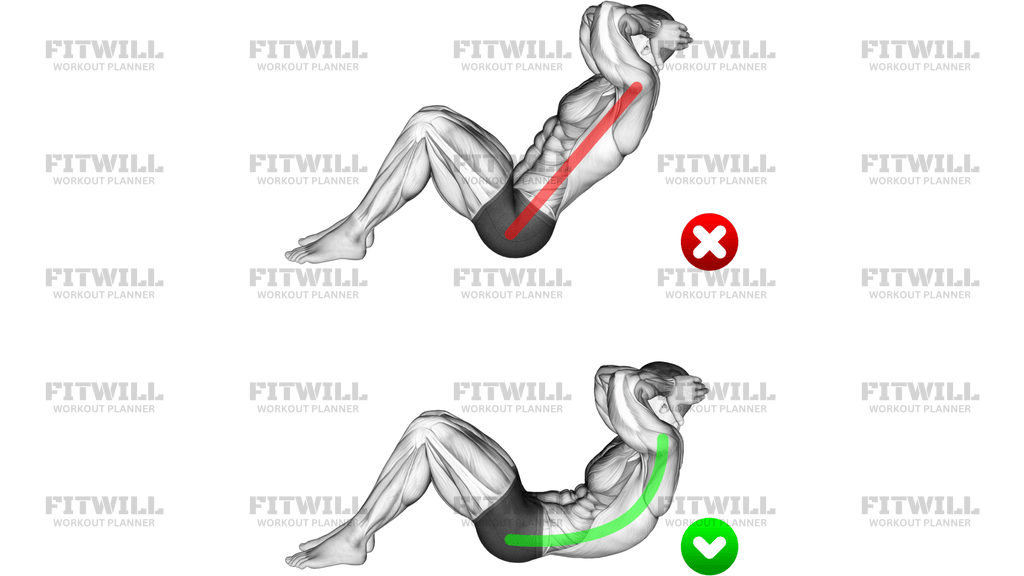
The exercise is built around the rectus abdominis, with the obliques and hip flexors helping to stabilize and finish the sit-up. In practical terms, that means the rep should feel like a controlled curl of the rib cage toward the pelvis, not a yank of the neck or a fast throw of the body. The overhead reach lengthens the lever arm and increases the challenge across the entire midsection, especially when you keep the lower back from arching off the floor on the way down.
The setup matters because the opening position determines how much of the rep you can actually control. Lie on a mat with the legs extended or softly bent, arms straight overhead, ribs down, and the chin slightly tucked. If your lower back pops off the floor immediately, shorten the lever by bending the knees a little or reducing the range until you can keep the torso organized from the first inch of the rep.
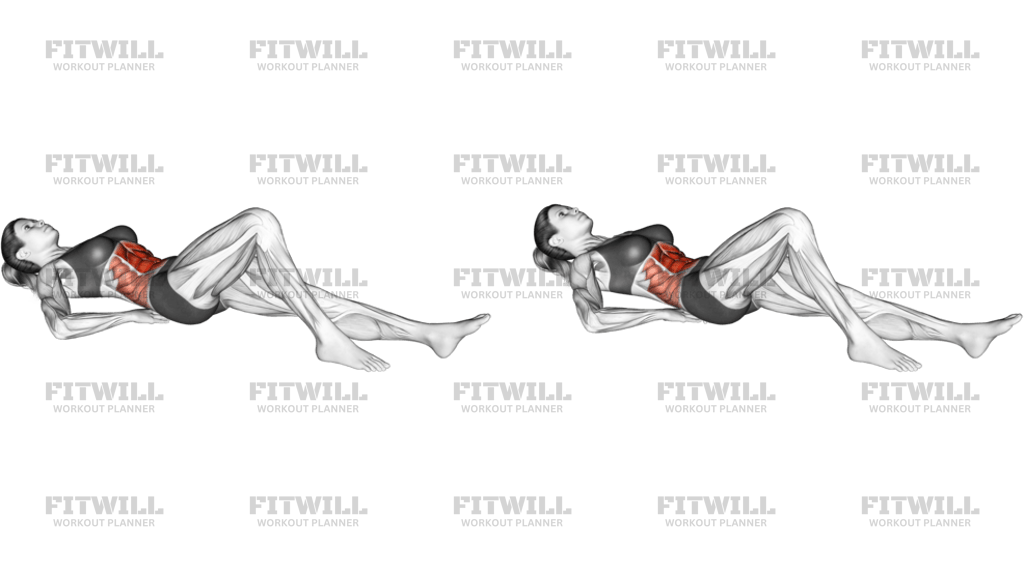
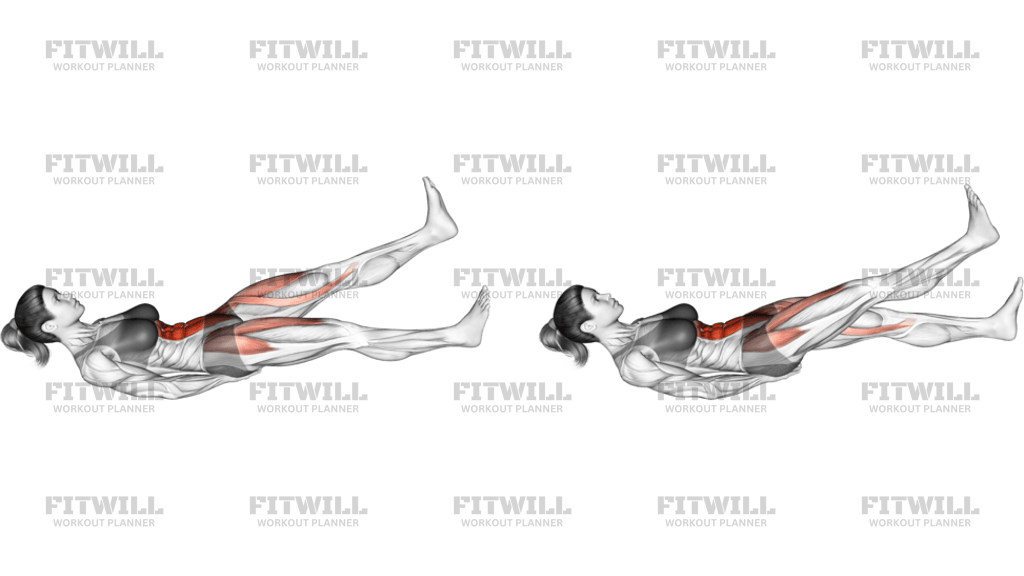
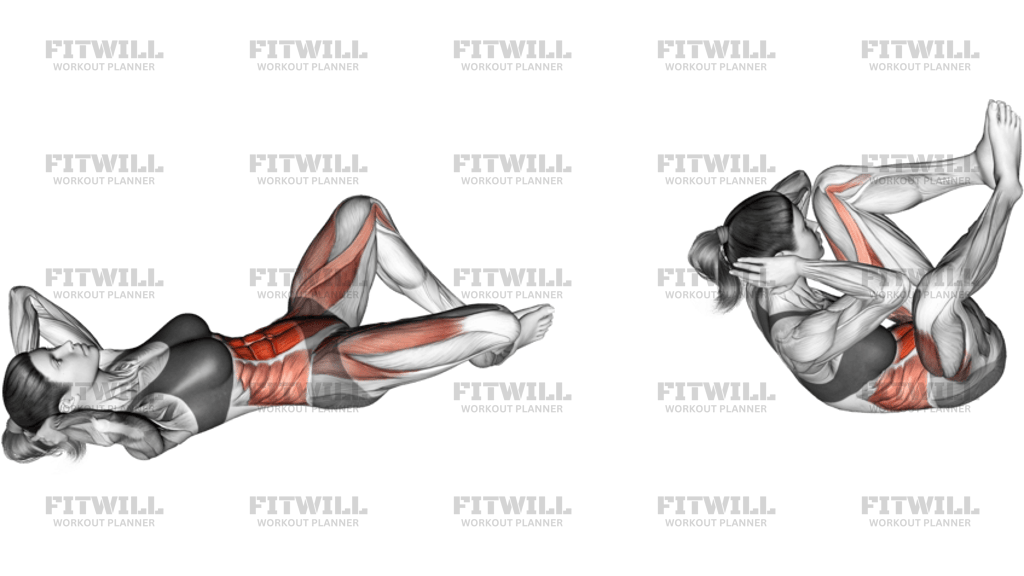
On each repetition, curl the head and shoulders off the floor first, then continue rolling the spine up until you are seated tall over the pelvis. Reach the hands forward as you rise, then reverse the motion slowly, stacking the spine back down one segment at a time. The descent should be just as deliberate as the lift, with the exhale helping the curl up and the inhale happening as you lower and reset.
This is a strong choice for core-focused training, conditioning circuits, or warmups that need a bodyweight abdominal drill with a clear end range. It is also useful when you want a sit-up variation that challenges control more than speed. Beginners can use it if they keep the motion small and clean, but anyone with low-back irritation should respect the range and stop short of any position that turns the rep into a hip-flexor tug or a lumbar strain.
[ Workout Log & Planner ]
Put your next workout in Fitwill
Keep your plan and training log ready when you are.


Instructions
- Lie on a mat with your legs extended or lightly bent, arms straight overhead, palms facing up or in, and your lower back gently pressed toward the floor.
- Set your ribs down and tuck your chin slightly so your neck stays long before the first rep starts.
- Exhale, brace your midsection, and begin by curling your head and shoulders off the floor.
- Keep reaching the hands forward as the torso rises, letting the arms stay long instead of pulling on the head.
- Continue rolling up through the spine until you are seated tall over your hips with the chest stacked over the pelvis.
- Pause briefly at the top without collapsing the shoulders or leaning back to rest on momentum.
- Inhale and lower slowly, placing the upper back, mid-back, and lower back down one segment at a time.
- Let the arms return overhead only after the torso is fully back on the mat, then reset tension for the next repetition.
Tips & Tricks
- Keep the arms reaching long overhead at the start; bending the elbows shortens the lever and makes the rep easier.
- If your lower back arches off the floor immediately, bend the knees a little or shorten the range before loading up more reps.
- Think about curling the rib cage toward the pelvis rather than trying to sit up by throwing the chest forward.
- Do not yank on the neck or lock the chin hard to the chest; the torso should lead the movement.
- Use a slow descent, because dropping back too fast turns the exercise into a momentum drill instead of a controlled sit-up.
- Keep the feet relaxed unless you specifically need to anchor them for balance or a regression.
- Exhale through the hardest part of the curl to help keep the ribs down and the trunk tight.
- Stop the set when you can no longer roll down segment by segment and the movement turns into a flop.
Frequently Asked Questions
What muscles work most in an Arms Overhead Full Sit-Up?
The rectus abdominis does most of the work, with the obliques and hip flexors helping to stabilize and finish the rep.
Why are the arms kept overhead in this sit-up?
The overhead reach creates a longer lever, so the abs have to work harder through both the curl up and the controlled return.
Is this harder than a normal sit-up?
Usually yes, because the long arm position increases the demand on the trunk and makes it easier to lose control if you rush.
Should my knees be straight or bent?
Straight legs match the image and make the movement longer; a slight knee bend is a useful regression if your low back arches or your hamstrings are tight.
Do I need to anchor my feet?
No, not unless you are using it as a regression. Anchoring the feet can make the rep feel more stable, but it also changes how much the hip flexors help.
What is the most common mistake with this exercise?
The biggest error is jerking the torso up and down instead of rolling through the spine with control.
Can beginners do Arms Overhead Full Sit-Ups?
Yes, but they should use a smaller range, bend the knees if needed, and stop before the lower back loses position.
How do I know if I am lowering far enough?
Lower until your upper back and shoulders return to the mat with control, but do not force the lumbar spine into an uncomfortable arch.