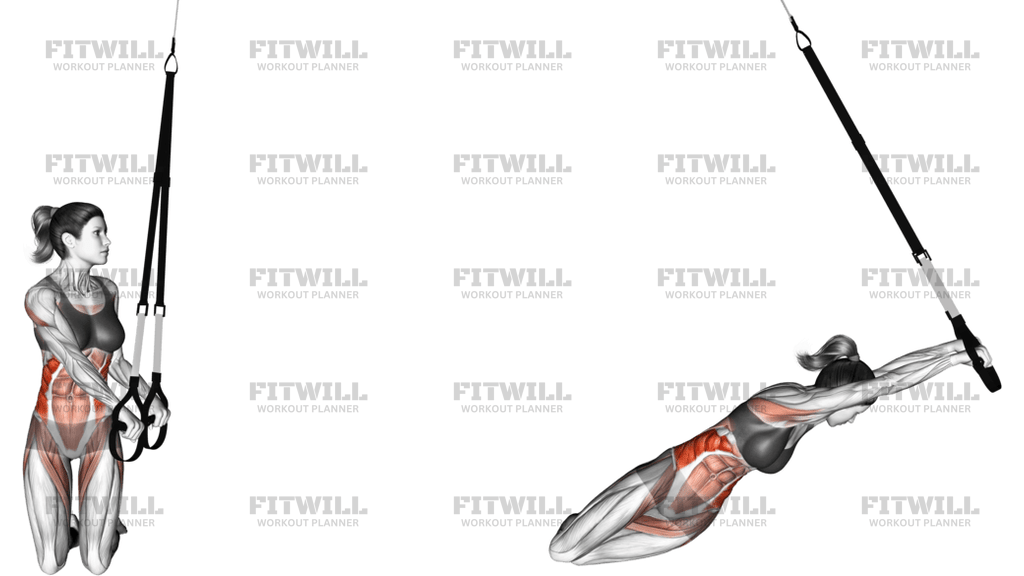
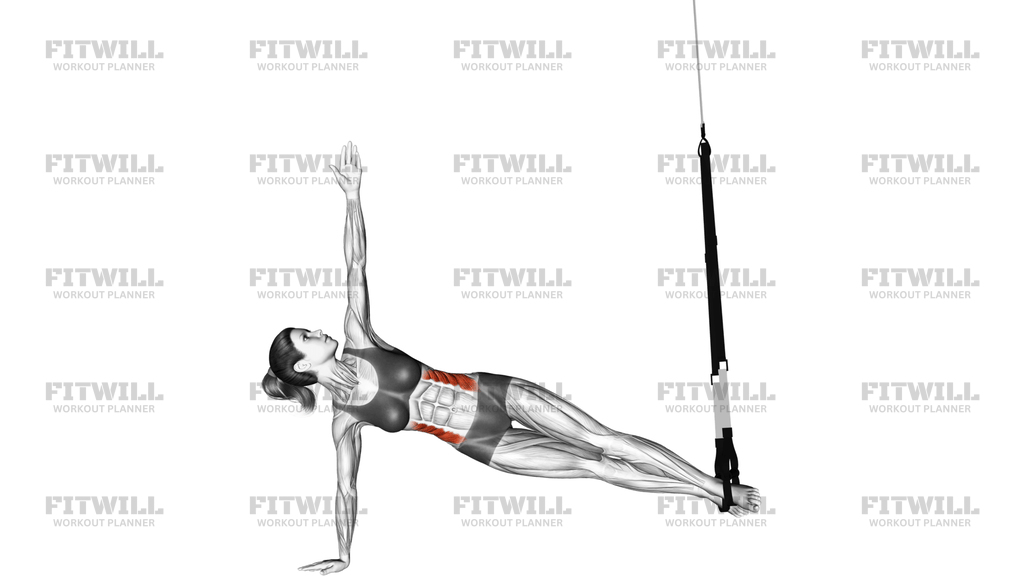
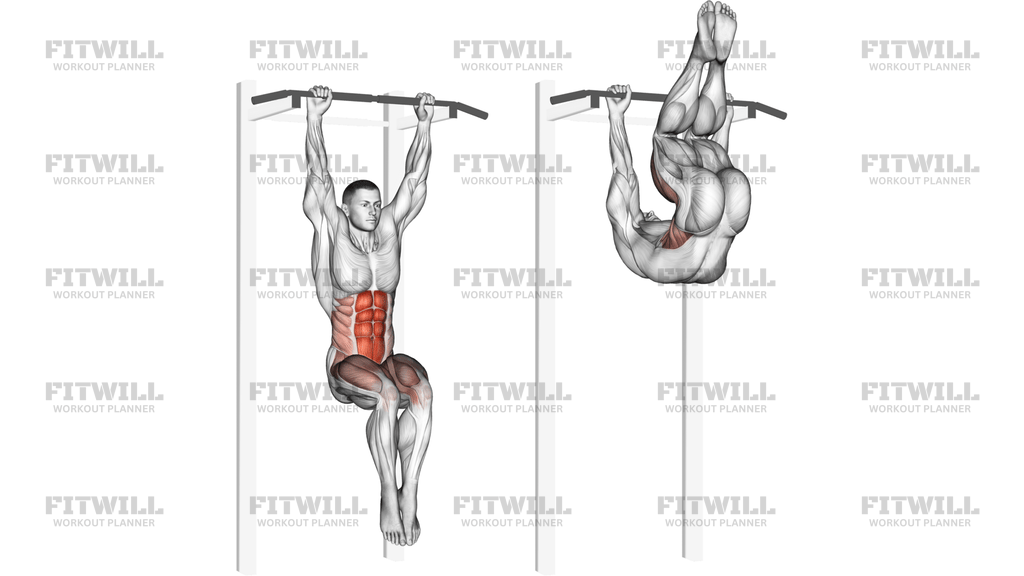
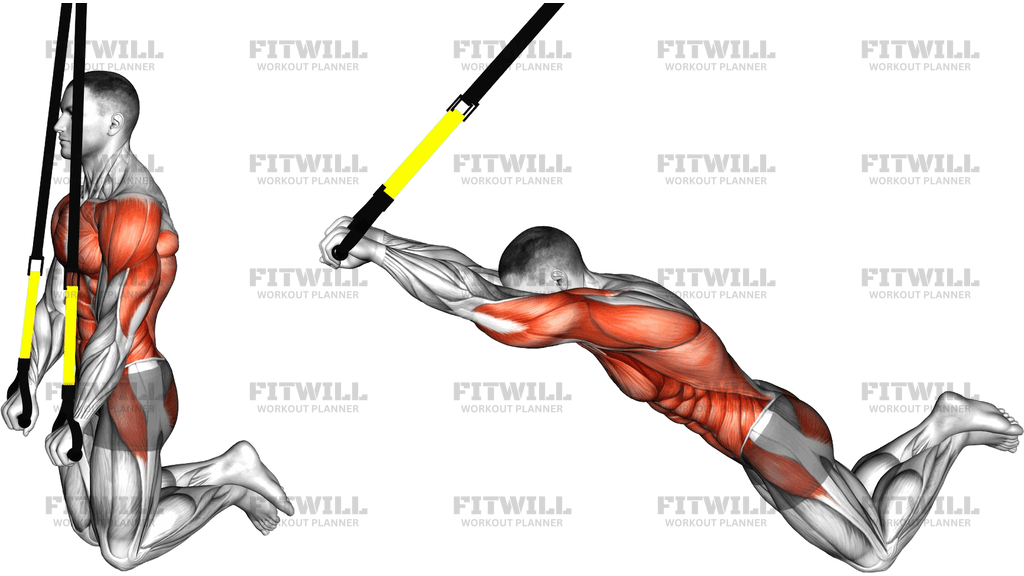
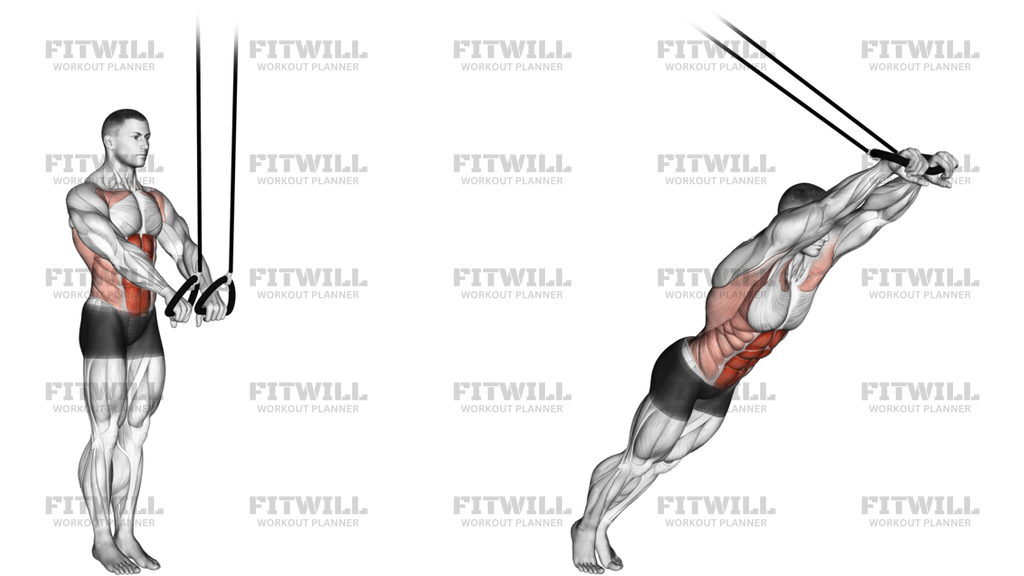
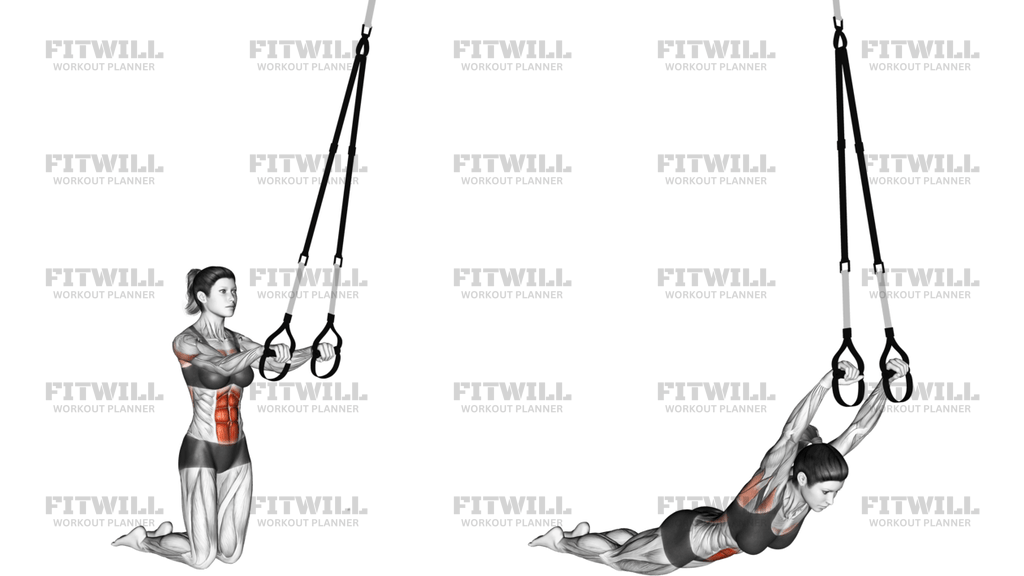
Suspension Supine Crunch
Suspension Supine Crunch is a suspension-trainer core exercise performed while lying on your back with the feet supported in the straps. The suspension setup adds instability, so the abs have to do more than just curl the trunk; they also have to keep the pelvis quiet and the spine organized while the legs stay suspended. That makes this a useful option when you want direct rectus abdominis work with extra demand on control and body tension.
The exercise mainly trains the rectus abdominis, with the obliques and deep core muscles helping to prevent twisting and keep the rib cage and pelvis lined up. Hip flexors assist, especially if the legs drift or the torso turns into a leg-lift pattern. The quality of the setup matters a lot here: the straps should be secure, the body should start long and braced, and the head, ribs, and pelvis should stay stacked before the first rep begins.
Each rep should be a smooth crunch, not a swing. From the starting position, exhale and curl the sternum toward the pelvis while keeping the legs quiet in the cradles. The movement should come from spinal flexion and rib-cage closure, not from yanking with the hips or throwing the shoulders forward. At the top, the abs should be visibly shortened without losing neck position or letting the lower back arch. Lower back down with control until the torso is long again, then reset your brace before the next rep.
This exercise is best used for focused core work, accessory volume, or as a controlled finisher when you want a strong ab stimulus without loading the spine directly. It is especially useful for people who already know how to brace and want a more challenging crunch variation than the floor version. Keep the range strict, the tempo deliberate, and the setup consistent from rep to rep so the suspension does not turn the movement into momentum work.
If the straps are set too high, the movement can feel unstable and the legs may drift. If they are too low, the exercise can become overly compressed and harder to control. A clean Suspension Supine Crunch should feel challenging in the abs, steady through the pelvis, and smooth through the return phase. Stop the set when you can no longer keep the torso curling without pulling through the hips or losing tension in the midsection.
[ Workout Log & Planner ]
Put your next workout in Fitwill
Keep your plan and training log ready when you are.


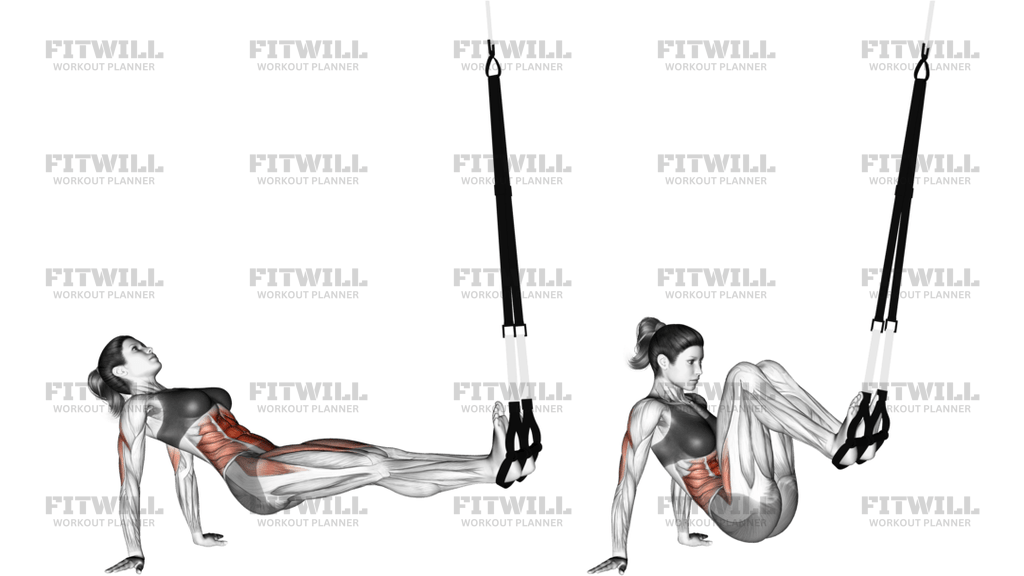
Instructions
- Set the suspension straps so the foot cradles hang around mid-calf height and check that both straps are even and secure.
- Lie on your back under the anchor point and place both heels or feet into the cradles, then extend the legs long so your body starts in one straight line.
- Press your lower back gently toward the floor and brace your midsection before the first rep so the ribs do not flare.
- Keep your head neutral and your chin slightly tucked, with the straps holding the feet steady rather than the legs driving the motion.
- Exhale and curl your shoulders and upper back off the floor by bringing your sternum toward your pelvis.
- Keep the movement small and deliberate so the abs create the crunch instead of the hips pulling the knees or the straps swinging.
- Pause briefly when the abs are fully shortened and the rib cage is tucked down.
- Inhale as you lower your torso back to the floor under control, keeping tension in the straps and avoiding a drop.
- Reset your brace before each repetition and stop the set if you start pulling through the hip flexors or losing neck position.
Tips & Tricks
- Set the straps so you can start with straight legs without the cradles pulling you into an exaggerated arch.
- Think about curling the ribs toward the pelvis instead of lifting the legs higher.
- Keep the feet quiet in the cradles; any swinging usually means the reps have turned into momentum work.
- Do not pull your chin forward. Keep the back of the neck long so the abs, not the neck, finish the rep.
- If your hip flexors take over, shorten the range and focus on a smaller crunch with more trunk flexion.
- Use a slow lowering phase so the abs stay loaded instead of dropping back to the floor.
- Exhale through the crunch to help the rib cage close and keep pressure off the lower back.
- Choose a rep count that lets every rep look the same; this movement is about precision more than speed.
- If the floor contact feels unstable, bend the knees slightly as a regression before returning to straight legs.
Frequently Asked Questions
What muscle does Suspension Supine Crunch target most?
The rectus abdominis is the main target, with the obliques and deep core muscles helping to control the torso.
Can beginners perform this exercise?
Yes, if they can keep the straps stable and control a small crunch without pulling from the hips.
How should I set up the straps for the crunch?
Set the foot cradles around mid-calf height and make sure both straps are even before lying back under the anchor.
What is the biggest form mistake on this exercise?
Letting the movement turn into a hip-flexor leg pull or swinging the straps instead of curling the torso.
Should my legs stay straight the whole time?
They can stay long, but the key is keeping them quiet and supported while the abs drive the crunch.
How can I make the rep harder without changing the exercise?
Slow the lowering phase, pause at the top, and keep the straps perfectly still through the whole set.
What should I do if I feel this in my neck?
Keep the chin lightly tucked, shorten the range, and focus on lifting the shoulders with the abs instead of reaching forward.
Is this a good replacement for floor crunches?
Yes, it is a harder crunch variation when you want more instability and a stronger demand on trunk control.