Barbell Rear Lunge
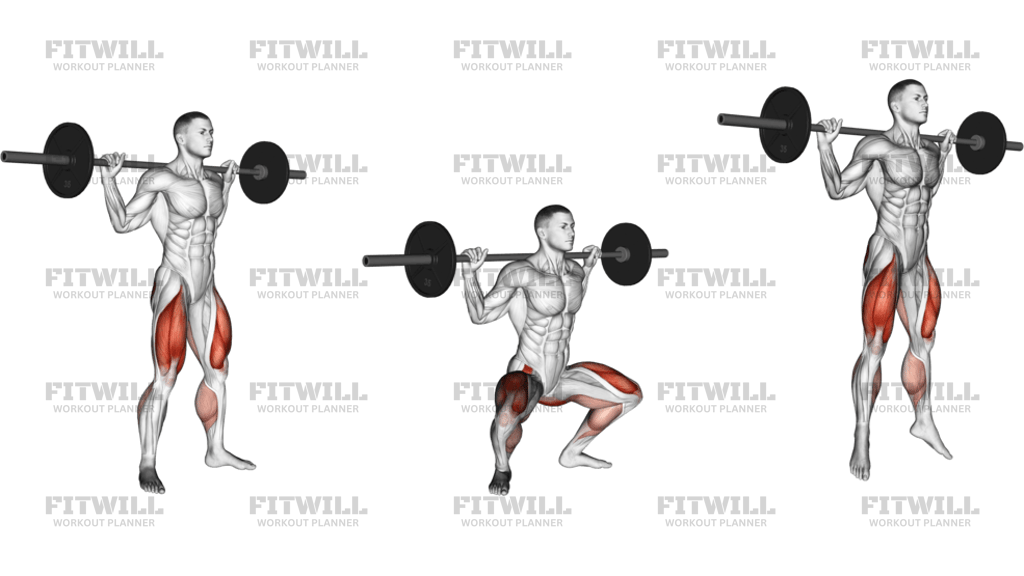
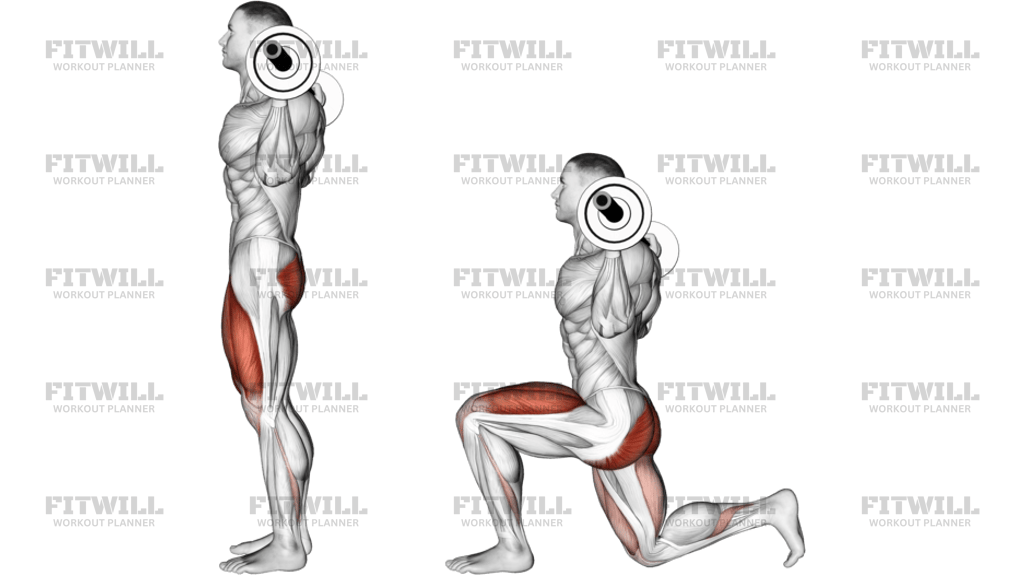
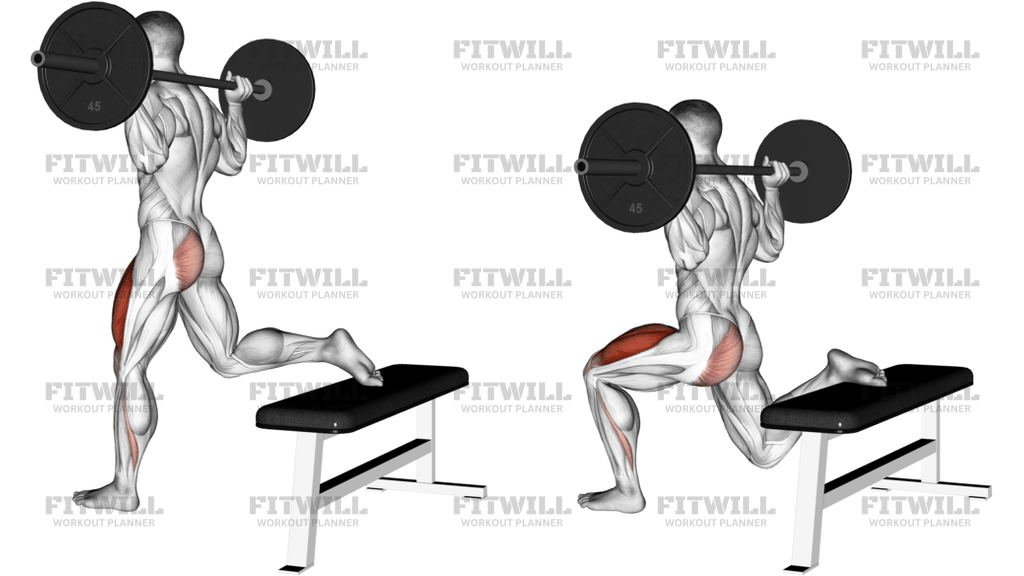
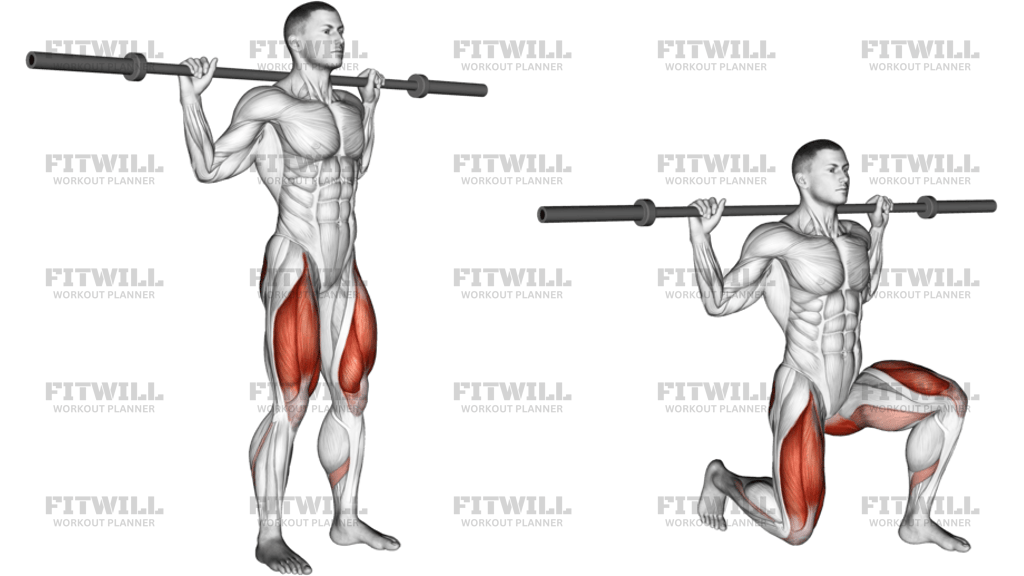
Barbell Rear Lunge is an exercise for legs, glutes, and core that uses barbell to build useful training quality through controlled movement. The Barbell Rear Lunge is a loaded reverse lunge performed with the barbell on the upper back. The main goal is to perform each repetition with enough control that the target area, posture, and breathing stay consistent from the first rep to the last.
The primary emphasis is glutes, while quads, hamstrings, adductors, and core assist with stability and clean execution. In anatomy terms, the main work centers on the Gluteus maximus, with help from Quadriceps femoris, hamstrings, Adductor magnus, and Rectus abdominis. Yes, the glutes work strongly to extend the front hip as you return to standing.
A strong set starts with the setup, because the starting position determines whether the rest of the repetition feels stable or rushed. Set the barbell across your upper back and stand with your feet hip width apart. Brace your core and step one leg backward. Lower into the lunge until both knees bend comfortably. Keep the body organized before you move so the working muscles can guide the exercise instead of momentum taking over.
During the repetition, use the instructions as direct coaching cues rather than trying to force a bigger range than you can control. Push through the front foot to bring the rear leg back to standing. Continue for reps, then switch sides or alternate legs. Continue for reps, then switch sides or alternate legs.
The best training effect comes from clean, repeatable reps rather than rushing for a higher count. Keep the front knee tracking over the toes. Avoid pushing mainly off the back foot. Keep the bar level across your shoulders. Take a steady step instead of dropping backward.
Use Barbell Rear Lunge in the part of the workout where focused technique and controlled tension fit your goal, such as a warmup, accessory block, core session, or targeted strength circuit. Reduce the load if your balance breaks down. Lower until you can keep the front foot flat, hips square, and knees comfortable. It is not strictly better, but many lifters find the backward step easier to control and more comfortable on the knees.
[ Workout Log & Planner ]
Put your next workout in Fitwill
Keep your plan and training log ready when you are.


Instructions
- Set the barbell across your upper back and stand with your feet hip width apart.
- Brace your core and step one leg backward.
- Lower into the lunge until both knees bend comfortably.
- Push through the front foot to bring the rear leg back to standing.
- Keep your torso tall and the bar level as you stand.
- Place the rear foot back under your hips before the next rep.
- Continue for reps, then switch sides or alternate legs.
- Use the same stride length and knee control on both sides.
Tips & Tricks
- Keep the front knee tracking over the toes.
- Avoid pushing mainly off the back foot.
- Keep the bar level across your shoulders.
- Take a steady step instead of dropping backward.
- Reduce the load if your balance breaks down.
- Keep the front heel planted as the back knee lowers.
- Step slightly wider if your stance feels like a tightrope.
- Reset at the top if the bar rolls or your hips twist.
Frequently Asked Questions
Does the rear lunge target glutes?
Yes, the glutes work strongly to extend the front hip as you return to standing.
How deep should I lunge?
Lower until you can keep the front foot flat, hips square, and knees comfortable.
Is it better than a forward lunge?
It is not strictly better, but many lifters find the backward step easier to control and more comfortable on the knees.
Where should the bar sit during Barbell Rear Lunge?
Rest the bar across your upper back and keep it level. Avoid letting it sit on your neck or roll as you step back.
Should I push off the back foot?
Use the back foot for balance, but drive mostly through the front foot to return to standing.
Can beginners do Barbell Rear Lunge?
Beginners should learn reverse lunges without a bar first. Add the barbell once the step and balance feel consistent.
Why do I wobble during Barbell Rear Lunge?
Your step may be too narrow or the load too heavy. Step slightly wider and reduce the weight until the bar stays level.