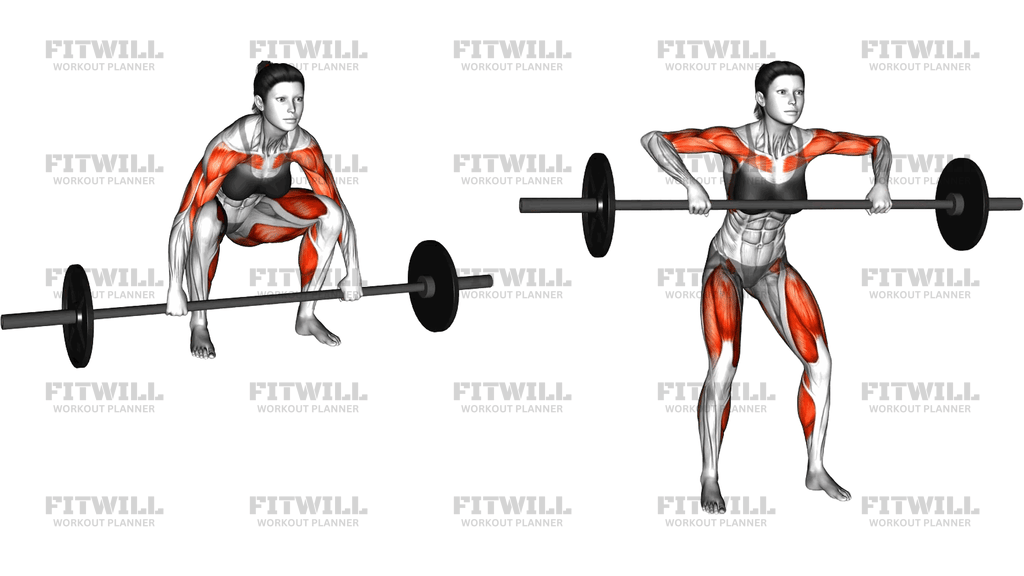
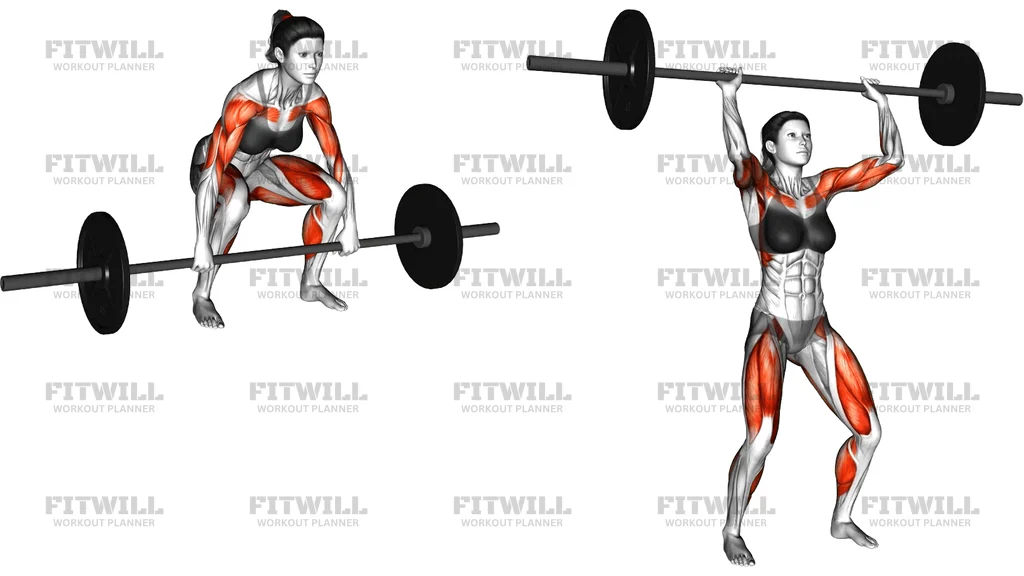
Barbell Banded Sumo Deadlift
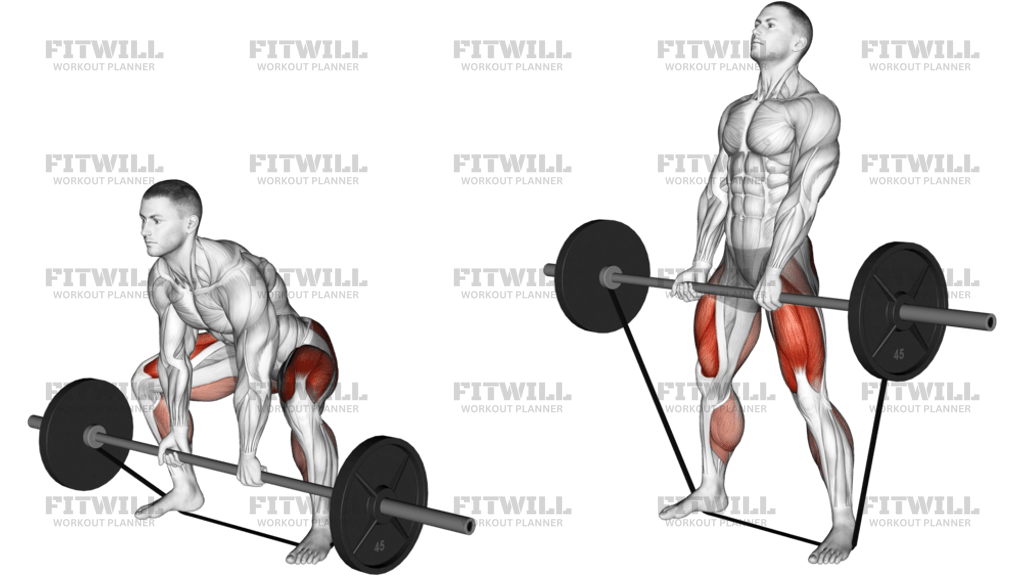
Barbell Banded Sumo Deadlift is a deadlift variation that combines a wide sumo stance with a barbell and band tension to make the top of the lift harder. It is built for lifters who want a strong lower-body pull with extra demand on the glutes, adductors, hamstrings, and the trunk muscles that keep the torso tight as the bar leaves the floor. The band changes the resistance curve, so each rep has to stay organized from the floor all the way to lockout.
The setup matters because the sumo deadlift rewards position more than force. With the feet set wide and the toes turned out, the bar should sit over the midfoot and the shins should stay fairly vertical as you reach down. If the bar starts too far forward, the pull turns into a back-dominant grind; if the stance is too narrow, you lose the hip opening that makes the sumo position efficient.
Barbell Banded Sumo Deadlift should feel like a tight wedge before the plates move. Pull the slack out of the bar and the band, brace hard, and drive the knees out so the hips can rise without the chest collapsing. As the bar travels up the shins and thighs, stay close to the body and finish by standing tall rather than leaning backward. The band should make the final part of the rep feel heavier, not pull you out of position.
This variation is useful as deadlift accessory work, a posterior-chain builder, or a technique tool for lifters who want to practice staying tight through lockout. It can also be a practical choice when you want more glute and adductor emphasis than a conventional pull provides. The movement is still demanding, so the load and band tension should leave room for a clean start and a controlled return to the floor.
When Barbell Banded Sumo Deadlift is performed well, the rep looks deliberate and repeatable. The knees open, the bar stays close, and the torso angle changes smoothly instead of jerking upright at the beginning. If the hips shoot up first, the lower back rounds, or the finish turns into a lean-back, the set is too heavy or the setup is off. Keep the return controlled, reset your brace each rep, and use the band to challenge speed and finish position without losing the sumo mechanics.
[ Workout Log & Planner ]
Put your next workout in Fitwill
Keep your plan and training log ready when you are.


Instructions
- Set the bar over your midfoot, take a wide sumo stance, and turn your toes out so your shins can stay fairly vertical.
- Reach down with your hands inside your knees and grip the bar firmly while keeping your chest lifted.
- Anchor the band so it is already under tension at the floor, then pull the slack out of both the bar and the band before you lift.
- Brace hard, wedge your hips between your knees, and set your shoulders tight so your arms hang straight like straps.
- Drive the floor apart and start the pull by pushing through the floor rather than yanking the bar with your back.
- Keep the bar brushing close to your shins and thighs as it rises, and let the knees continue tracking out over the toes.
- Stand tall at the top with your glutes squeezed and ribs down, but do not lean back to finish the rep.
- Lower the bar under control to the floor, reset your brace, and take a fresh breath before the next repetition.
Tips & Tricks
- If the band tension makes the bar jump forward off the floor, reduce the band stretch or the load until the start position stays tight.
- Your knees should open with the toes; if they cave in, the stance is probably too narrow or the set is too heavy.
- Think about pushing the floor apart instead of pulling straight up. That cue usually helps the hips and glutes stay involved.
- Keep the bar close enough to graze the legs. If it swings away, the hips are likely rising too fast.
- Do not finish with an exaggerated lean-back. The lockout is hip extension, not a standing backbend.
- Use straps only if grip is ending the set before your legs and hips do.
- Reset every rep from a dead stop instead of bouncing the plates, especially if the band tension makes the setup sloppy.
- If you feel the lower back taking over, shorten the range and lighten the band before adding more weight.
Frequently Asked Questions
What muscles does Barbell Banded Sumo Deadlift work?
It mainly trains the glutes, adductors, hamstrings, and spinal erectors, with the upper back and grip working hard to keep the bar close. The band adds extra demand near lockout.
Where should the band be placed on Barbell Banded Sumo Deadlift?
A common setup loops the band under the feet and over the bar sleeves so tension increases as you stand. The key is that the band stays taut from the floor to the top.
How wide should my sumo stance be?
Wide enough that your shins stay fairly vertical and your knees can open out without your hips collapsing. If you have to round forward to reach the bar, narrow the stance a little.
Should Barbell Banded Sumo Deadlift feel like a back exercise?
Your back should stay tight, but the lift should be driven by the legs and hips. If your lower back is doing most of the work, the load or setup is off.
Is Barbell Banded Sumo Deadlift good for beginners?
Yes, if the band tension is light and the technique is controlled. Most beginners should learn the wide stance and dead-stop pull with just the bar before adding harder band tension.
Can Barbell Banded Sumo Deadlift replace conventional deadlifts?
It can be a useful accessory or variation, but it does not train the exact same mechanics as a conventional pull. Use it when you want more adductor and glute emphasis with a stronger lockout challenge.
Why do I feel Barbell Banded Sumo Deadlift in my inner thighs?
That is normal. The wide stance and knee-out position load the adductors heavily, especially when you drive hard from the floor.
What is the most common mistake on Barbell Banded Sumo Deadlift?
Letting the bar drift forward and turning the rep into a back-dominant grind. Keep the bar close, stay wedged, and finish by standing tall instead of leaning back.