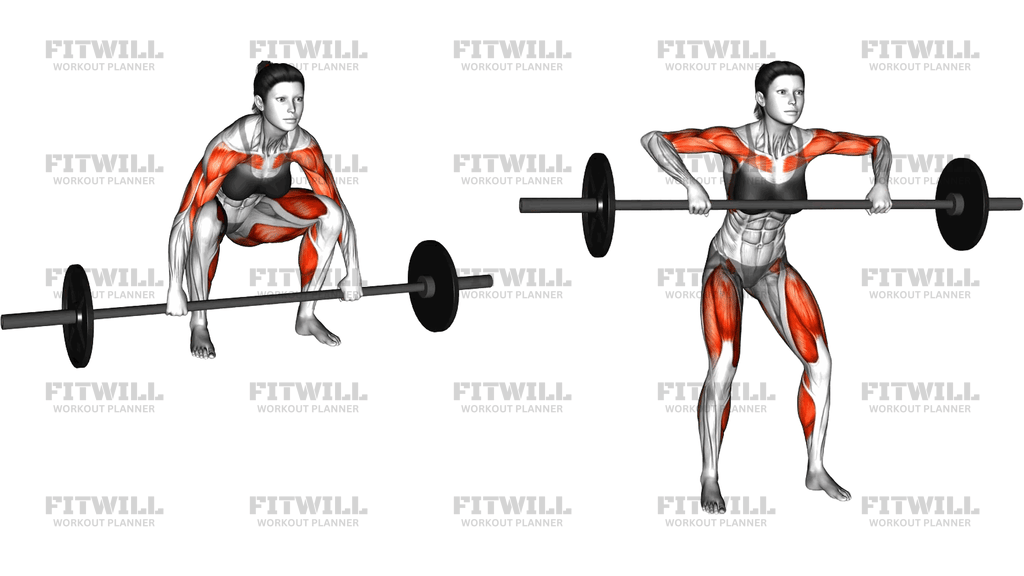
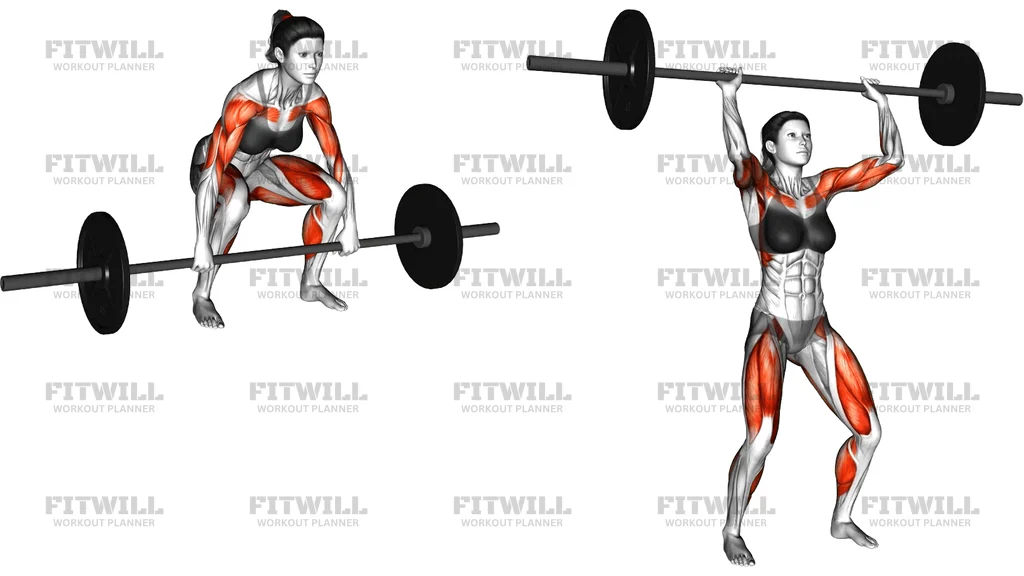
Landmine Sumo Squat
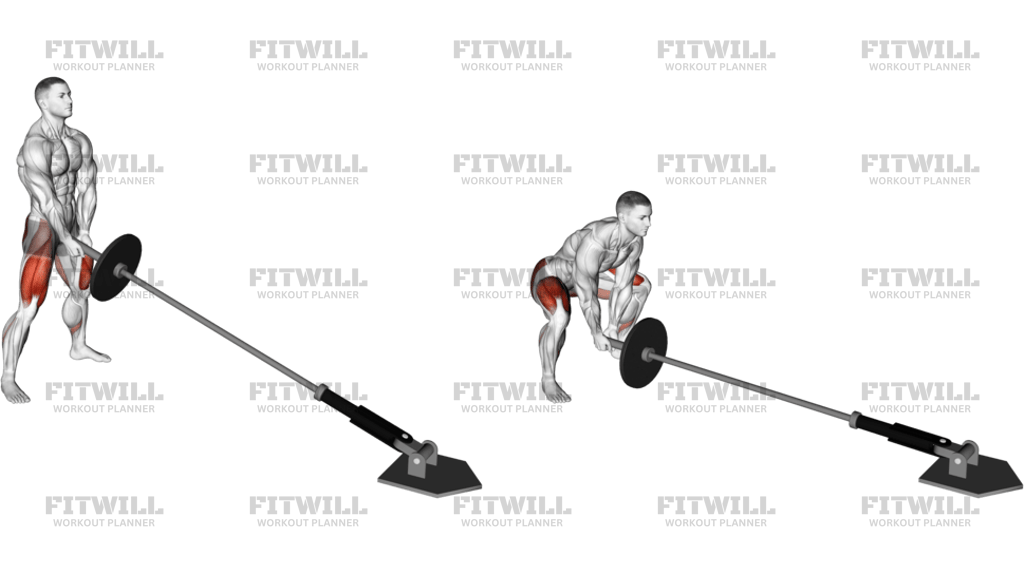
Landmine Sumo Squat is a wide-stance squat performed with the free end of a barbell anchored in a landmine attachment. The load sits in front of the body and travels on a fixed diagonal path, which makes the exercise feel more guided than a free barbell squat while still demanding strong leg drive, hip control, and trunk stability. The stance and bar position shift emphasis toward the inner thighs, glutes, and quads, with the core working hard to keep the torso stacked over the hips.
This variation is useful when you want a squat pattern that is easier to balance than a back squat but still heavy enough to build strength. Because the hands hold the bar between the legs, setup matters: the feet need to be wide enough for the hips to drop between the knees, the toes need enough turnout to keep the knees tracking cleanly, and the chest should stay tall so the weight does not pull the shoulders forward. When the position is right, the squat feels controlled from the bottom up rather than folded at the waist.
On each repetition, lower by sending the hips down between the feet while the knees open outward in line with the toes. Keep the bar close to the body and let it stay centered between the legs instead of drifting forward. At the bottom, the thighs should be deep enough to challenge the legs without losing spinal position or heel contact. Drive up by pushing the floor apart and extending the knees and hips together, then finish tall without leaning back or shrugging the shoulders.
The landmine setup makes this a good option for lower-body strength work, hypertrophy, or accessory training when you want a squat that is friendly to people who dislike a heavily loaded bar on the back. It is also a practical teaching tool for learning hip opening, knee tracking, and bracing under load. Keep the reps smooth and repeatable, stop the set before the torso collapses inward, and adjust the range if the bottom position turns into a posterior pelvic tuck or a forward tip.
Use this exercise when you want a leg-focused movement that still asks the torso to stabilize the load. It fits well in a lower-body session, a mixed strength circuit, or as a primary squat variation when technique quality is the priority. The best result comes from a stance you can reproduce every rep, a controlled descent, and a strong stand-up that finishes with the hips and knees locked out together.
[ Workout Log & Planner ]
Put your next workout in Fitwill
Keep your plan and training log ready when you are.


Instructions
- Anchor one end of a barbell in a landmine base and stand facing the free end with a wide sumo stance, toes turned out and the bar centered between your feet.
- Hold the sleeve or bar end with both hands in front of your hips, keep your chest tall, and let your arms hang straight so the load stays close to your body.
- Brace your midsection before you descend and keep your ribs stacked over your pelvis instead of letting the torso tip forward.
- Sit the hips down between your knees while letting the knees track outward in the same direction as your toes.
- Lower until your thighs reach a depth you can control without rounding your lower back or lifting your heels.
- Pause briefly in the bottom if you can maintain position, then drive the floor apart and stand by extending your hips and knees together.
- Keep the bar path smooth and close to the body as you rise, without yanking it forward or letting it swing.
- Exhale through the hard part of the ascent, then reset your stance and breath before the next repetition.
Tips & Tricks
- Set your feet wide enough that the bar can drop straight between your legs; if the knees crowd the hands, widen the stance slightly.
- Turn the toes out just enough to let the knees open naturally, but do not flare so far that the arches collapse.
- Think about pushing the knees out over the toes, not forcing them hard apart with the hips twisting open.
- Keep the handles or sleeve close to your pelvis so the landmine does not pull your torso forward at the bottom.
- If your heels want to lift, reduce the depth or narrow the stance slightly before adding more load.
- Use a tempo you can own on the way down; the guided path should feel controlled, not bounced off the bottom.
- A small pause near the bottom can help you feel whether the glutes and adductors are doing the work or whether momentum is taking over.
- Stop the set when your chest starts to cave, your knees drift inward, or the bar starts swinging away from the midline.
Frequently Asked Questions
What muscles does a Landmine Sumo Squat work?
It mainly trains the glutes, quadriceps, and inner thighs, with the core and upper back helping keep the load steady.
Why use a landmine instead of a free barbell for this squat?
The landmine fixes the bar on a diagonal path, which makes balance easier and lets you focus more on leg drive and stance control.
How wide should my stance be?
Wide enough that the bar can travel between your legs without forcing your torso forward. If your knees run into your hands, your stance is probably too narrow.
Where should I hold the bar?
Grip the free end of the bar in front of your hips with both hands and keep it centered so the load stays close to your body.
Can beginners do this exercise?
Yes. The landmine path is often easier to learn than a barbell back squat, as long as the load stays light enough to control the depth and knee tracking.
What is the most common mistake?
Letting the chest fold forward and the bar drift away from the body. That usually turns the squat into a back-dominant hinge and makes the bottom position unstable.
How deep should I squat?
Lower only as far as you can keep the heels down, knees open, and spine neutral. Depth is useful only if you can hold the position cleanly.
Can I use this as my main squat exercise?
Yes, especially if you want a front-loaded squat pattern that is easier on balance. It also works well as accessory work for glutes and adductors.