Barbell Sumo Squat
Barbell Sumo Squat is a wide-stance barbell squat that shifts the emphasis toward the glutes, inner thighs, and thighs while still demanding strong trunk control. The bar sits across the upper back, the feet stay wider than shoulder width, and the toes turn out so the hips can drop between the legs instead of folding forward. That setup changes the mechanics of the squat: you are still training a squat pattern, but with a more open hip position and a different balance of work through the hips, knees, and trunk.
The exercise is especially useful when you want a squat variation that lets you stay tall, load the legs hard, and challenge hip abduction and adductor strength at the same time. In anatomy terms, the main work centers on the Gluteus maximus, with help from Biceps femoris, Rectus abdominis, and Erector spinae. You will also feel the adductors working strongly because the wider stance asks them to stabilize the thighs as the knees track out over the toes.
Setup matters more here than in a narrower squat because the stance width, toe angle, and bar position all affect whether the rep feels strong or awkward. A good start means the bar is seated firmly on the rear delts or upper traps, the chest is tall, the ribs are stacked over the pelvis, and the feet are rooted through the full foot. If the stance is too wide, the hips can feel pinched and the heels may lift; if it is too narrow, the movement stops feeling like a true sumo-style squat.
During the descent, the hips travel down between the knees while the knees continue to track in line with the toes. Keep the bar over the midfoot, resist letting the chest collapse, and stop where your depth remains controlled and your lower back stays neutral. On the way up, drive the floor apart, keep pressure through the heels and midfoot, and finish by standing tall without leaning back. Breathing should be deliberate: take air before each rep, brace hard, and exhale as you pass the sticking point.
This is a strong choice for lower-body strength or hypertrophy work, accessory squat volume, or sessions where you want more glute and adductor involvement than a conventional shoulder-width squat. It can be beginner-friendly with a light bar and careful depth, but the wide stance should still feel stable rather than forced. Keep the motion smooth, repeatable, and pain-free, and treat loss of knee tracking, heel lift, or lower-back rounding as a sign to reduce load or adjust the stance before continuing.
[ Workout Log & Planner ]
Put your next workout in Fitwill
Keep your plan and training log ready when you are.


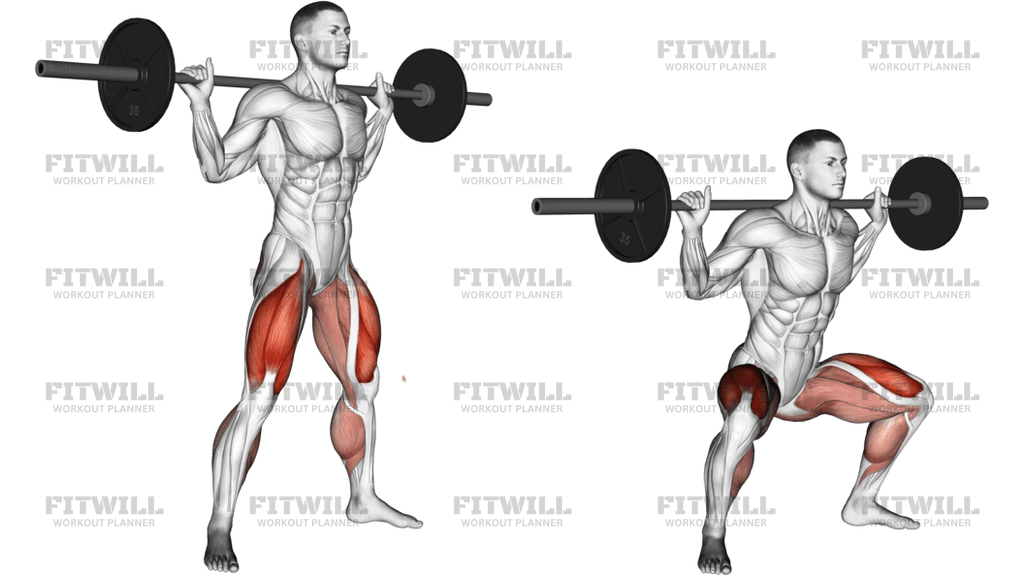
Instructions
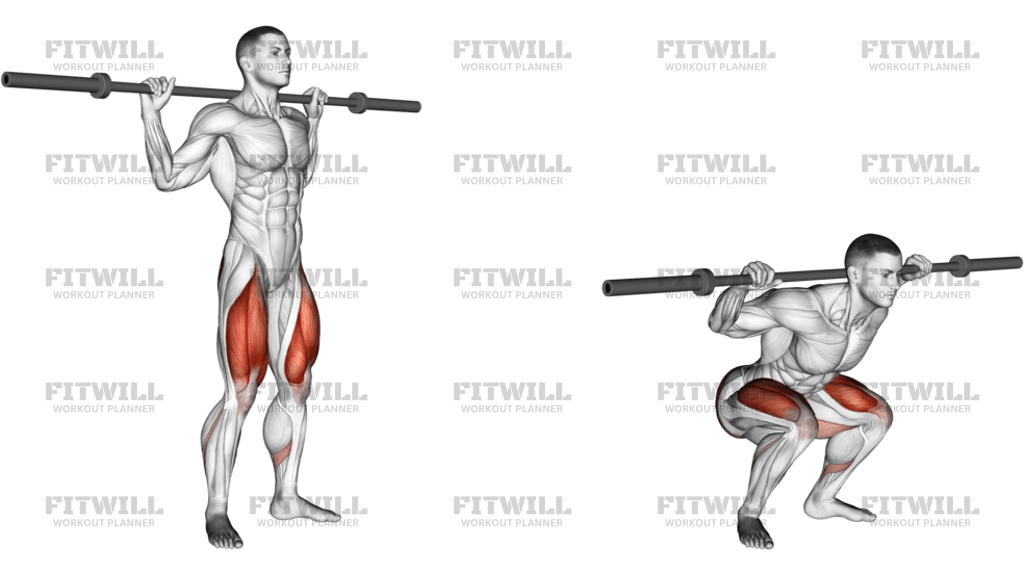
- Set the bar across your upper traps or rear delts, step under it, and brace it with a firm overhand grip.
- Stand with your feet wider than shoulder width and turn your toes out so your knees can travel in the same direction.
- Unrack the bar, take one or two short steps back, and plant your feet with pressure through the whole foot.
- Take a breath into your belly and sides, then tighten your trunk before each rep.
- Unlock your hips and knees together and begin lowering by sitting down between your legs.
- Keep your chest lifted and let your knees track over your toes as you descend under control.
- Lower until your thighs reach a comfortable depth without losing heel contact or a neutral lower back.
- Drive the floor apart, stand up through the midfoot and heels, and exhale as you pass the hardest part of the rep.
- Reset your breath and stance at the top before starting the next repetition.
- Re-rack the bar only after you finish the set and can stand tall without twisting.
Tips & Tricks
- Use a stance that feels open at the hips but still lets you keep both heels planted.
- Turn the toes out only as far as you can keep the knees tracking in line with them.
- Keep the bar centered over the midfoot; if it drifts forward, shorten the range or reduce the load.
- Think about spreading the floor with your feet to keep the knees from collapsing inward.
- A slight forward torso lean is normal, but the chest should not fold over the thighs.
- If you feel the adductors stretching hard, that is expected; sharp groin pain is not.
- Use flat, stable shoes or lifting shoes so the wide stance stays grounded.
- Pause the set if your lower back starts rounding at the bottom of the squat.
- Do not bounce out of the hole; keep the descent and ascent equally controlled.
- Choose a load that lets every rep look the same from the side, not just the first one.
Frequently Asked Questions
What muscles does a barbell sumo squat work most?
It mainly targets the glutes and thighs, with strong involvement from the inner thighs, hamstrings, and core.
Where should the bar sit for this squat?
The bar should rest across the upper traps or rear delts, not on the neck or mid-back.
How wide should my stance be?
Wide enough that your hips can drop between your legs while your heels stay down and your knees track over your toes.
Why do my inner thighs feel this more than a regular squat?
The wider stance increases the demand on the adductors, so the inner thighs help stabilize and drive the movement.
Is this exercise beginner-friendly?
Yes, if you start with a light bar, a controlled depth, and a stance that feels natural instead of forced.
What is the most common form mistake?
Letting the knees cave inward or letting the chest collapse forward usually turns the rep into a less stable squat.
How deep should I go?
Go as deep as you can while keeping the bar balanced, the heels planted, and the lower back neutral.
How is this different from a regular back squat?
The wide stance and turned-out toes shift more work to the hips and inner thighs and usually let you stay more upright.
Can I use this for strength or just higher reps?
It works well for both, but heavier sets should only be used when the stance and bar path stay consistent.
What should I do if my hips feel pinched?
Narrow the stance slightly, reduce toe angle, shorten depth, or lower the load until the squat feels smooth.