Barbell Side Split Squat
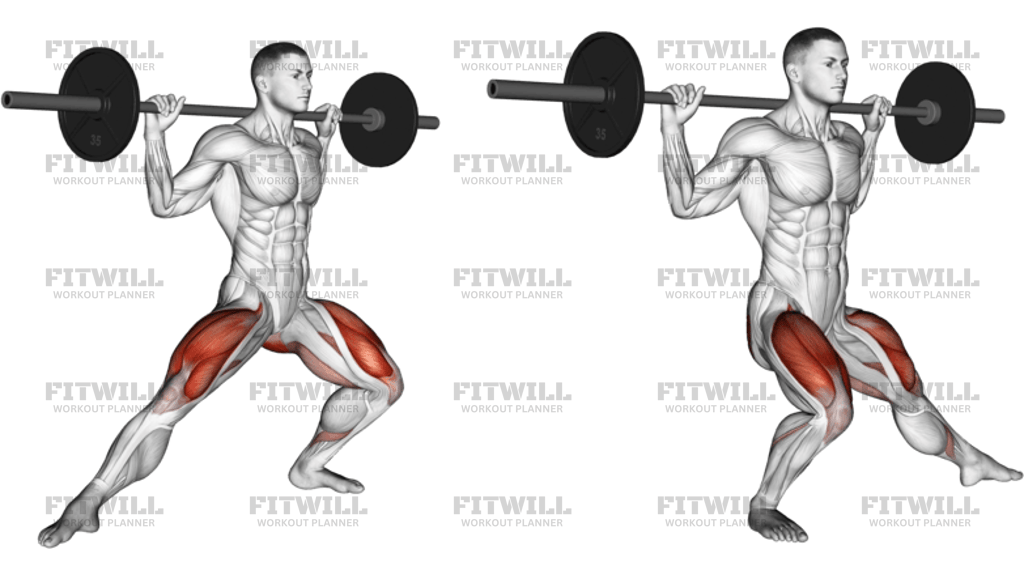
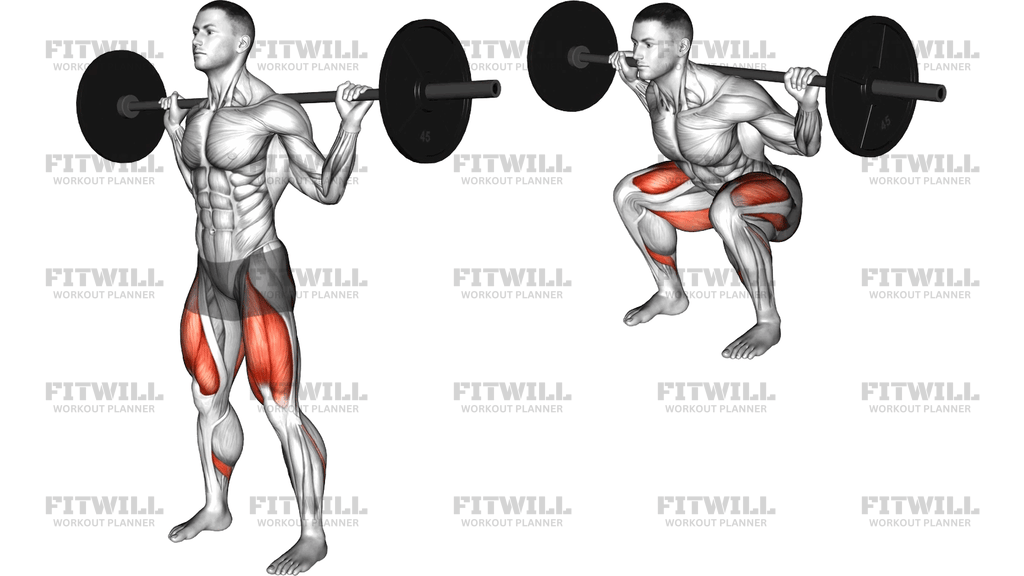
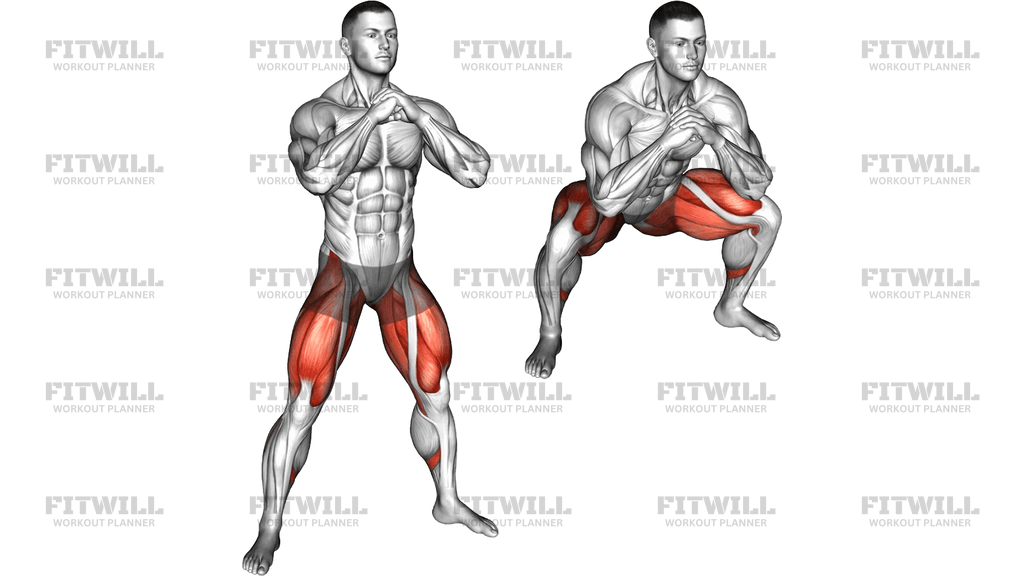
The Barbell Side Split Squat is a planted lateral squat performed with a barbell across the upper back. From a wide stance, you shift the hips toward one leg, bend that knee, and keep the other leg longer, creating a strong glute and thigh demand on the working side while the opposite inner thigh lengthens.
This exercise trains the glutes, quads, adductors, hamstrings, and core in a side-to-side pattern that standard squats do not emphasize as directly. The barbell adds load through the trunk, so the torso has to stay organized while the hips move laterally. Good reps should feel controlled and grounded, not like a quick lean or bounce.
Set up with a stance wide enough to move sideways without the working heel lifting. Keep the toes slightly turned out, brace the trunk, and lower by sending the hips back and toward the working foot. Return to the middle by pressing through that foot, then either repeat the same side or move to the other side with equal control.
Use Barbell Side Split Squats for glute and adductor strength, lateral movement capacity, or as an accessory after squats and deadlifts. Keep the range conservative until your knee tracks cleanly and the bar stays level. If the inside of the straight leg feels sharp or the working knee collapses inward, shorten the stance and lighten the bar.
[ Workout Log & Planner ]
Put your next workout in Fitwill
Keep your plan and training log ready when you are.


Instructions
- Set the barbell across your upper back and stand with your feet well outside shoulder width.
- Angle your toes slightly out and keep your whole foot in contact with the floor.
- Brace your core and keep the bar centered before shifting to one side.
- Send your hips back and toward the working leg as that knee bends over the toes.
- Keep the opposite leg longer and let the inner thigh stretch without forcing the knee.
- Lower until the working heel, knee position, and torso angle are still controlled.
- Push through the working foot to bring your hips back to the center.
- Repeat on the same side or alternate sides while keeping the bar level.
Tips & Tricks
- Use a stance that lets you sit into the working hip without the opposite foot peeling off the floor.
- Keep the working knee pointing in the same direction as the toes throughout the rep.
- A slight forward torso angle is fine, but the bar should not drift in front of your midfoot.
- Pause lightly at the bottom if you tend to bounce out of the adductor stretch.
- Drive from the bent leg rather than pulling yourself up with the straight leg.
- Keep the nonworking foot turned out enough that the knee feels comfortable.
- Use lighter load than a regular squat because the lateral position is less stable.
- Match the same depth and tempo on both sides to avoid favoring your stronger hip.
Frequently Asked Questions
What is the main benefit of the side split squat?
It builds lateral leg and hip strength that regular squats do not train as directly.
Which muscles are targeted most?
The glutes are the main target, with strong help from the quads, adductors, hamstrings, and core.
Should I alternate sides?
You can alternate sides or complete all reps on one side first, as long as both sides are trained evenly.
Where should the barbell sit?
Place it across the upper back below the neck, as you would for a comfortable back squat setup.
How wide should my stance be?
Use a stance wide enough to shift sideways, but not so wide that the straight-leg inner thigh feels strained before you descend.
Should the working heel stay down?
Yes. If the heel lifts, reduce your depth, adjust the stance, or shift the hips back more.
Is this the same as a side lunge?
It is similar, but the feet stay planted for the full set instead of stepping out and back each rep.
What should I do if my knee caves inward?
Lighten the load and focus on tracking the knee over the toes. A narrower stance may also help.