Barbell Speed Squat
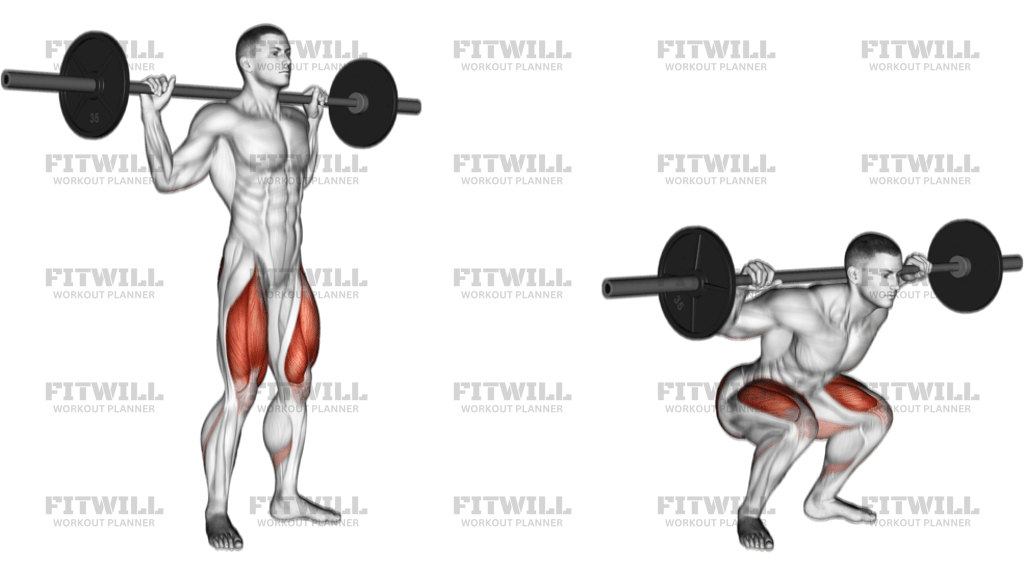
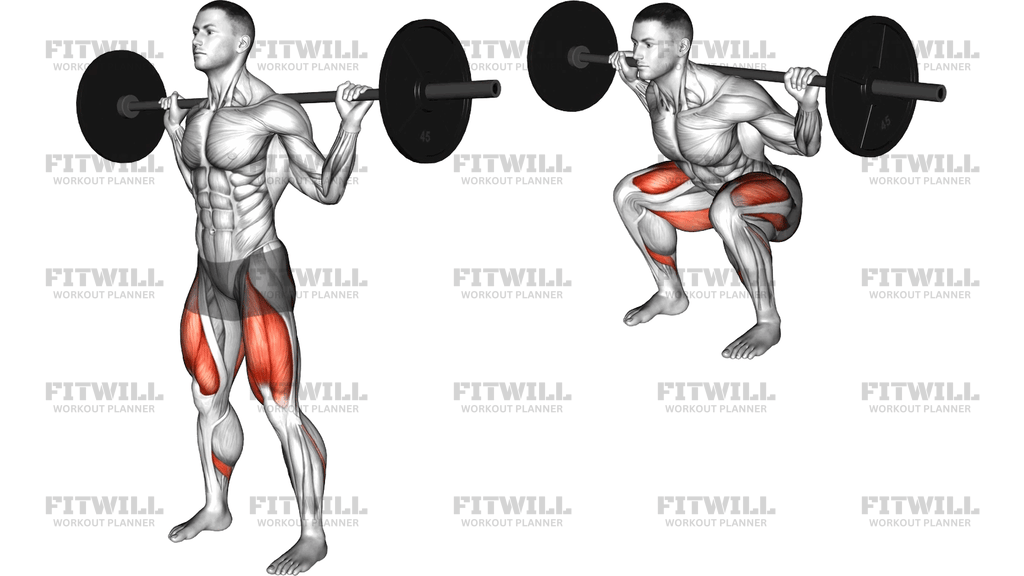
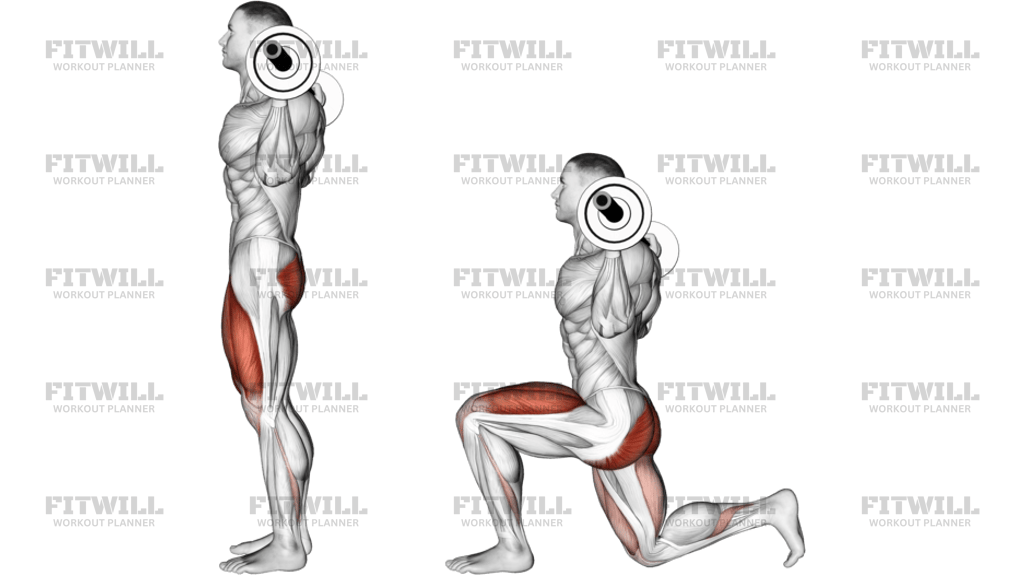
The Barbell Speed Squat is a back squat variation performed with submaximal weight and an emphasis on fast, crisp upward bar speed. The descent stays controlled, then the lifter drives out of the bottom aggressively while maintaining normal squat mechanics. It is a power-focused squat, not a sloppy rushed squat.
The exercise trains the glutes, quads, hamstrings, adductors, and core, with the main goal of producing force quickly. Because the bar is intentionally lighter than a max-effort squat, each rep should look sharp and repeatable. If the bar slows dramatically or technique changes, the set has gone past its purpose.
Set up as you would for a back squat with the bar secure, feet in your normal squat stance, and the trunk braced. Lower under control to your chosen depth, keep the knees tracking with the toes, and drive up as fast as possible while staying balanced through the whole foot. Reset the brace between reps rather than bouncing mindlessly.
Use Barbell Speed Squats early in a lower-body session after warmups, or as a dedicated power accessory with lighter loads. They are most useful when speed, position, and intent all stay high. Stop the set before fatigue turns the reps into slow grinders.
Fitwill
Log Workouts, Track Progress & Build Strength.
Achieve more with Fitwill: explore over 9600 exercises with images and videos, access built-in and custom workouts, perfect for both gym and home sessions, and see real results.
Start your journey. Download today!




Instructions
- Set the barbell across your upper back and take your normal squat stance.
- Grip the bar firmly, brace your core, and keep your chest and upper back set.
- Lower into the squat under control instead of dropping into the bottom.
- Keep your knees tracking with your toes and your weight balanced over the midfoot.
- Reach your planned depth while maintaining the same torso position you use for regular squats.
- Drive up as explosively as possible, pushing the floor away without letting the bar path drift.
- Stand fully, regain your brace, and start the next rep only when your position is clean.
- End the set once the bar speed or squat mechanics noticeably decline.
Tips & Tricks
- Use a load light enough that the concentric phase feels fast on every rep.
- Treat the descent as controlled and the ascent as explosive; both parts matter.
- Do not relax in the bottom just to bounce higher, because that usually changes knee and hip position.
- Keep the same stance you use for strong regular squats unless a coach has prescribed otherwise.
- Take small sets with good rest if the goal is power rather than conditioning.
- If the bar path shifts forward, slow down the setup and reinforce your brace before continuing.
- Stop before grinding reps; slow reps are no longer speed squats.
- Use safety pins or spotters when training speed work with a barbell on the back.
Frequently Asked Questions
What is the purpose of a speed squat?
It trains explosive strength and faster bar movement with lighter to moderate loads.
How heavy should I go?
Use a load that lets you move quickly while keeping clean squat mechanics.
Which muscles does it work?
It mainly works the glutes and quads, with support from the hamstrings, adductors, and core.
Should I descend fast too?
No. Lower with control, then drive up fast. Dropping into the bottom can make your position inconsistent.
When should I do Barbell Speed Squats?
They usually fit early in a workout after warmups, when you are fresh enough to move the bar quickly.
How many reps should a set have?
Use low to moderate reps so every rep stays fast. End the set when speed or technique drops.
Is this different from a jump squat?
Yes. In a Barbell Speed Squat your feet stay planted and you accelerate the bar without leaving the floor.
What is the biggest mistake?
Using too much weight. If the rep becomes a slow grind, it no longer trains the intended speed quality.