Barbell Stiff Leg Good Morning
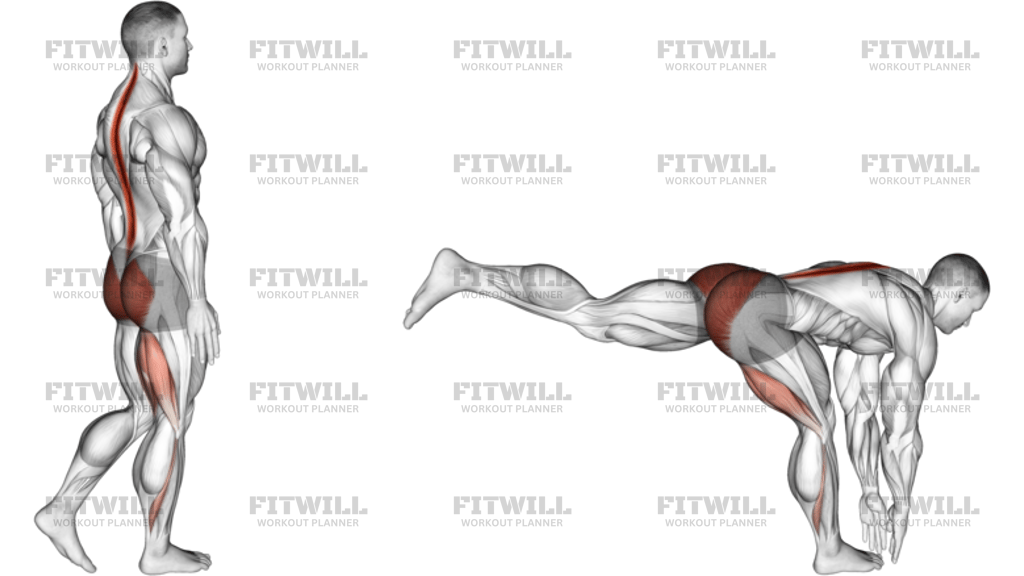
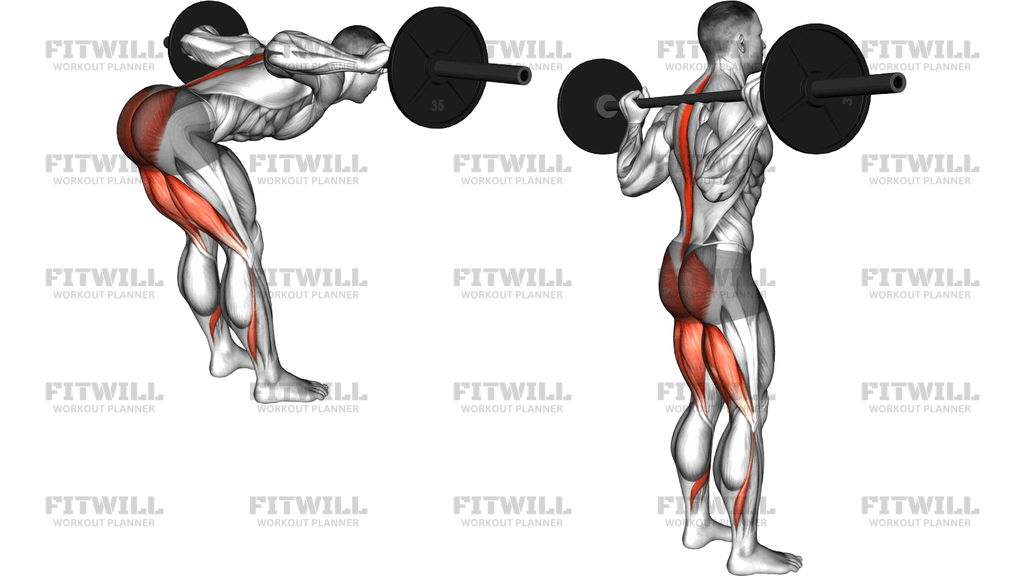
The Barbell Stiff Leg Good Morning is a hip-hinge exercise performed with the barbell across the upper back and the knees kept only slightly bent. Compared with a regular good morning, the straighter leg position increases the hamstring stretch while the glutes, lower back, and core control the torso.
This movement is most effective when it feels like the hips are traveling backward rather than the chest simply dropping forward. The hamstrings lengthen as the torso inclines, and the glutes drive the hips forward to return to standing. The lower back works isometrically to hold position, not to round and extend repeatedly.
Set up with the bar below the neck, feet about hip width, and a soft but stable knee bend. Brace, push the hips back, and lower until the hamstrings are stretched while the spine stays neutral. Reverse by driving the hips forward and squeezing the glutes, finishing tall without leaning back.
Use this exercise as a posterior-chain accessory with light to moderate loading. It can build hinge strength and hamstring control, but it demands respect because the bar is on the back and the torso acts as a long lever. Stop before your back rounds or the hamstring stretch pulls you out of position.
Fitwill
Log Workouts, Track Progress & Build Strength.
Achieve more with Fitwill: explore over 9600 exercises with images and videos, access built-in and custom workouts, perfect for both gym and home sessions, and see real results.
Start your journey. Download today!




Instructions
- Place the barbell across your upper back below the neck and stand with your feet about hip width.
- Keep a small bend in your knees and hold that knee angle throughout the rep.
- Brace your core, keep your chest broad, and set your gaze slightly ahead of you.
- Push your hips backward as your torso hinges forward.
- Keep the bar balanced over your midfoot and your spine neutral as you lower.
- Stop when you feel a strong hamstring stretch without rounding your back.
- Drive your hips forward and squeeze the glutes to return to standing.
- Finish tall with ribs down, then reset before the next rep.
Tips & Tricks
- Use lighter weight than a squat because the torso lever makes the bar much more demanding.
- Keep the knees soft but nearly fixed; bending them more turns the movement into a different hinge.
- Think about closing a car door with your hips to start the descent.
- Do not chase floor depth; hamstring tension and spine position decide the range.
- Keep the bar glued to the upper back by pulling it gently into your shoulders.
- Move slowly on the way down to avoid being pulled into a rounded position.
- Stop the set if your lower back starts moving more than your hips.
- Practice with a dowel or empty bar before adding meaningful load.
Frequently Asked Questions
What muscles does this good morning work?
It mainly works the glutes and hamstrings, with the lower back and core stabilizing the torso.
How low should I go?
Lower only as far as you can keep a neutral spine and controlled hamstring tension.
Should this be heavy?
It is usually best with light to moderate loading and strict form.
Where should the barbell sit?
Place it across the upper back below the neck, not on the cervical spine.
Should my knees be locked?
No. Keep a slight bend to protect the joints while still emphasizing the hamstrings.
How is this different from a regular good morning?
The stiffer leg position increases hamstring stretch and usually limits the range compared with a more bent-knee good morning.
Why do I feel my lower back?
Some stabilizing work is normal, but your lower back should not be the main mover. Reduce range or load if it takes over.
What is the safest way to learn it?
Start with a dowel or empty bar and practice the hip hinge before adding load.