Barbell Reverse-Grip Bent-Over Row
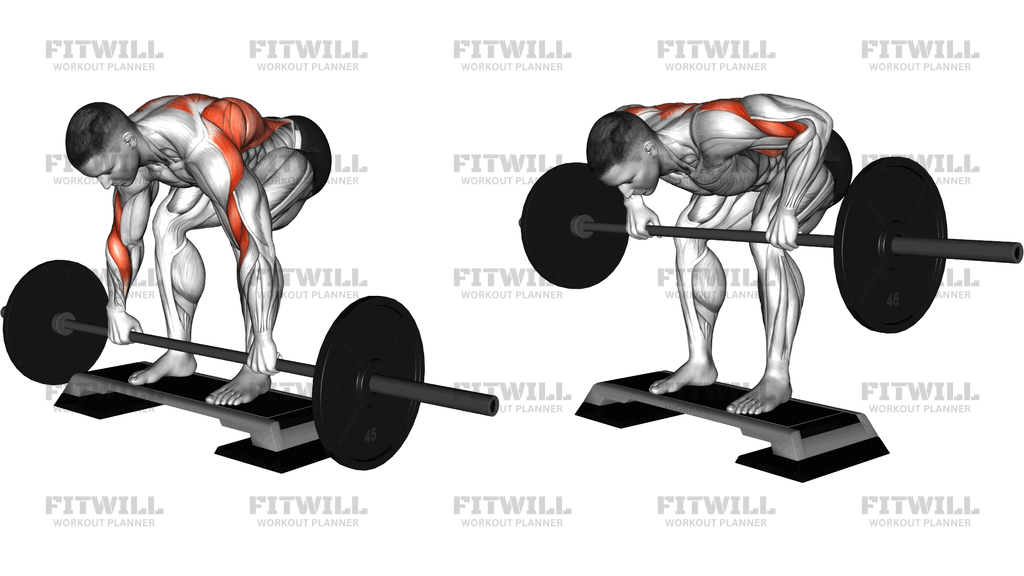
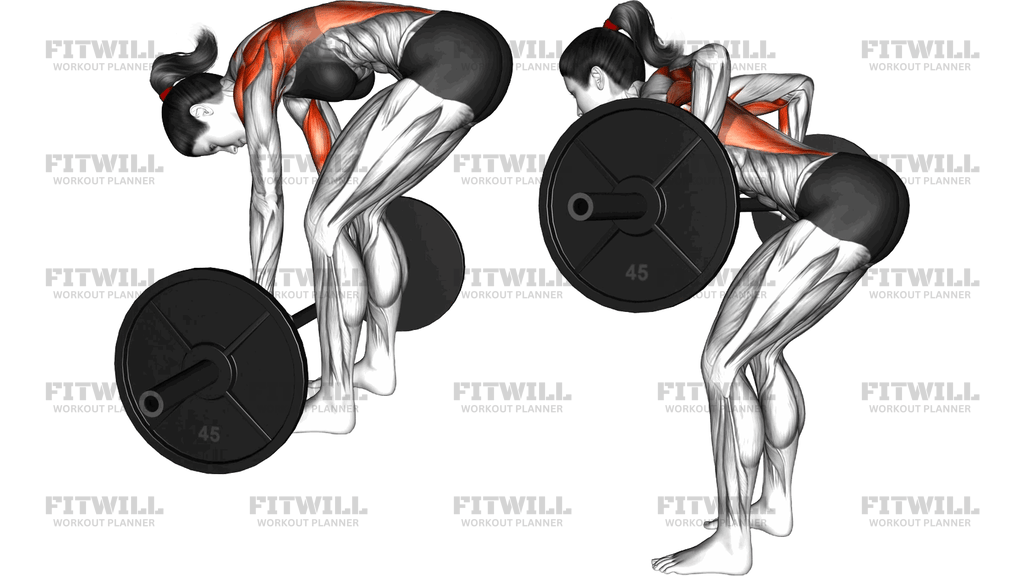
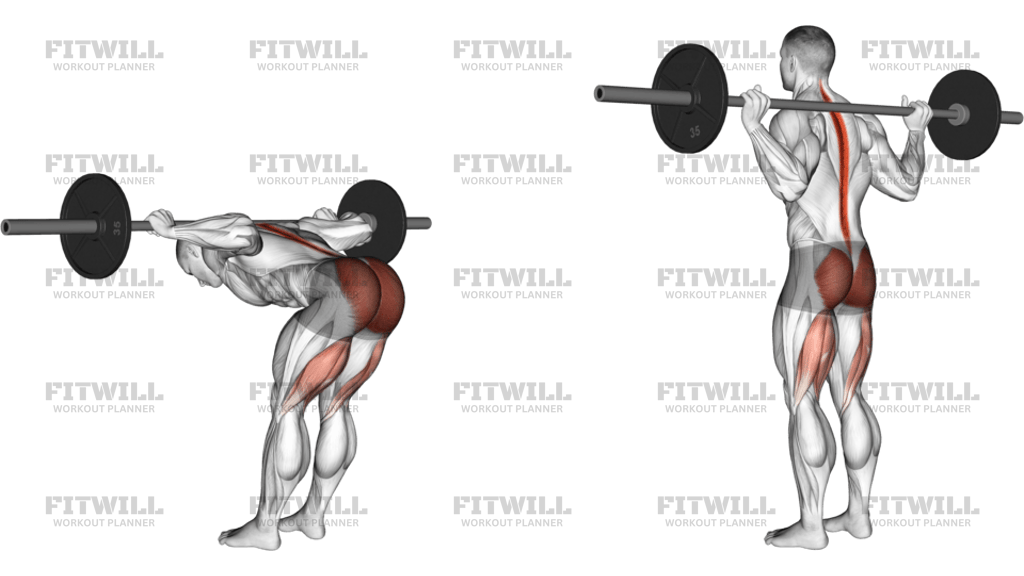
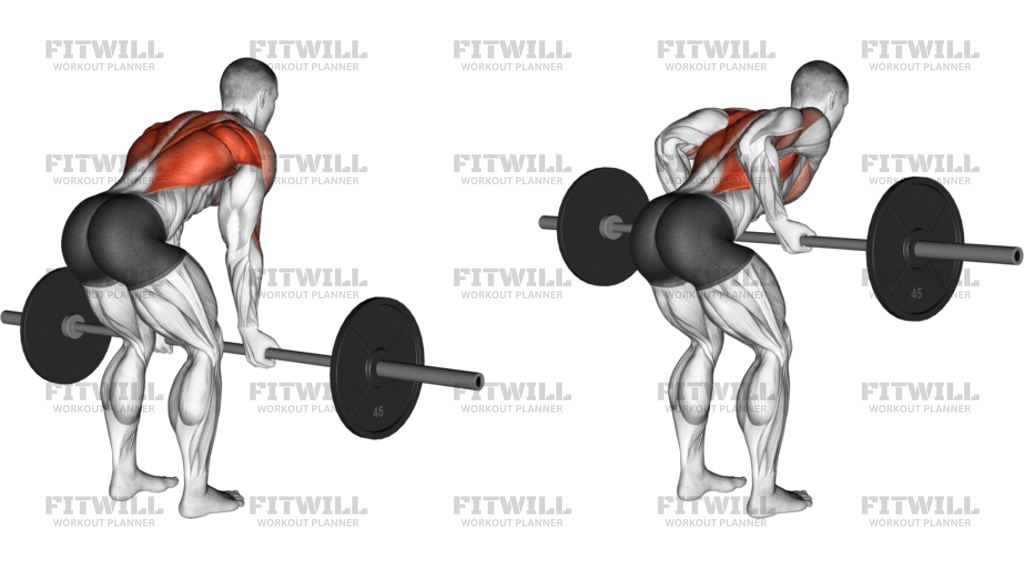
The Barbell Reverse-Grip Bent-Over Row is a back exercise performed from a hip-hinged position with an underhand grip. The palms-up grip usually keeps the elbows closer to the body, increasing lat and biceps involvement while the upper back, rear shoulders, and lower back stabilize the pull.
This row trains the upper back and lats while asking the trunk to hold a steady hinge. The bar should hang below the shoulders, then travel toward the lower ribs or waist as the elbows drive back. The torso angle should stay consistent so the rep is a row, not a partial deadlift.
Set up by gripping the bar underhand, hinging forward with a neutral spine, and bracing before the first pull. Pull the elbows back close to the sides, squeeze the back briefly, then lower the bar until the arms are extended without losing the hinge. Keep the wrists comfortable and the bar close to the body.
Use this variation when you want a row that emphasizes the lats and biceps more than a wide overhand row. Choose a load that lets you control the lowering phase and keep your lower back stable. If the underhand grip bothers the elbows or wrists, switch to a neutral-grip handle or overhand row.
[ Workout Log & Planner ]
Put your next workout in Fitwill
Keep your plan and training log ready when you are.


Instructions
- Stand with the barbell in front of your thighs and hold it with an underhand, palms-up grip.
- Hinge at the hips until your torso is angled forward and your back stays neutral.
- Brace your core and let the bar hang below your shoulders with your arms straight.
- Keep your neck in line with your spine and your weight balanced over the midfoot.
- Pull the bar toward your lower ribs or waist by driving your elbows back.
- Squeeze the upper back and lats briefly without standing up.
- Lower the bar slowly until the arms extend again.
- Repeat while keeping the same hinge angle.
Tips & Tricks
- Use less weight if your torso rises every time you pull.
- Keep the elbows close to the body to take advantage of the reverse grip.
- Do not curl the bar; let the back start the pull and the biceps assist.
- Keep the wrists straight instead of letting the bar roll into the fingers.
- Control the lowering phase so the lats stay loaded.
- Avoid jerking from the hips to start the rep.
- Use straps only if grip limits back work and your hinge remains strict.
- Stop the set if your lower back can no longer hold position.
Frequently Asked Questions
What muscles does the reverse grip row work?
It mainly works the upper back and lats, with help from the biceps, rear shoulders, lower back, and core.
What does the underhand grip change?
It usually brings the elbows closer to the body and increases biceps involvement.
Should my torso move?
Keep your torso as steady as possible so the row comes from the back and arms.
Where should I pull the bar?
Pull toward the lower ribs or waist while keeping the elbows close to your sides.
Is the reverse grip harder on the wrists?
It can be for some lifters. Keep the wrists neutral or switch grips if the position feels painful.
Should I feel my biceps?
Yes, the underhand grip increases biceps involvement, but the back should still drive the row.
How low should my torso be?
Hinge low enough to row effectively while keeping a neutral spine and stable balance.
What is the biggest mistake?
Using hip momentum to bounce the bar upward instead of holding a steady bent-over position.