Barbell Hip Thrust
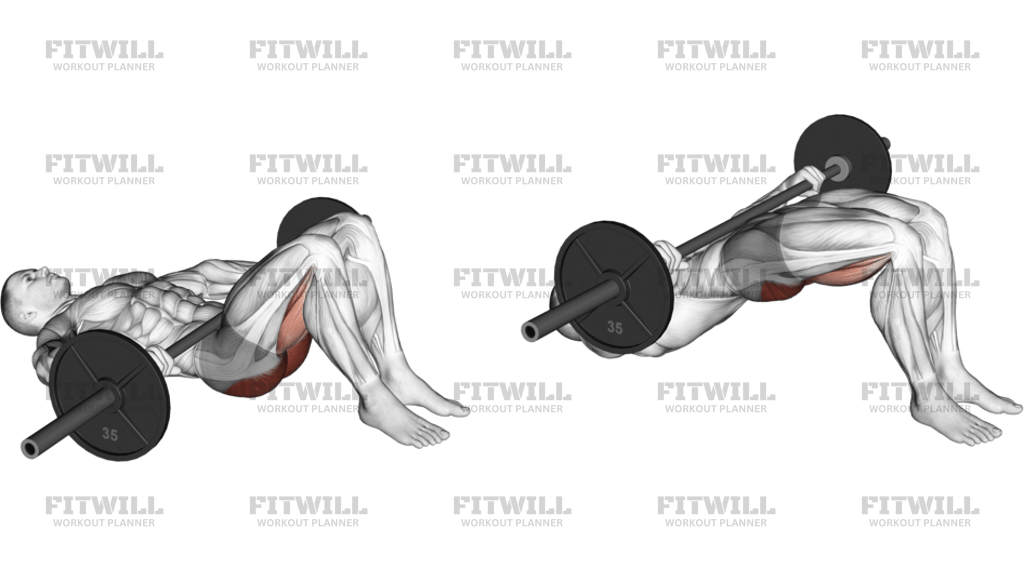
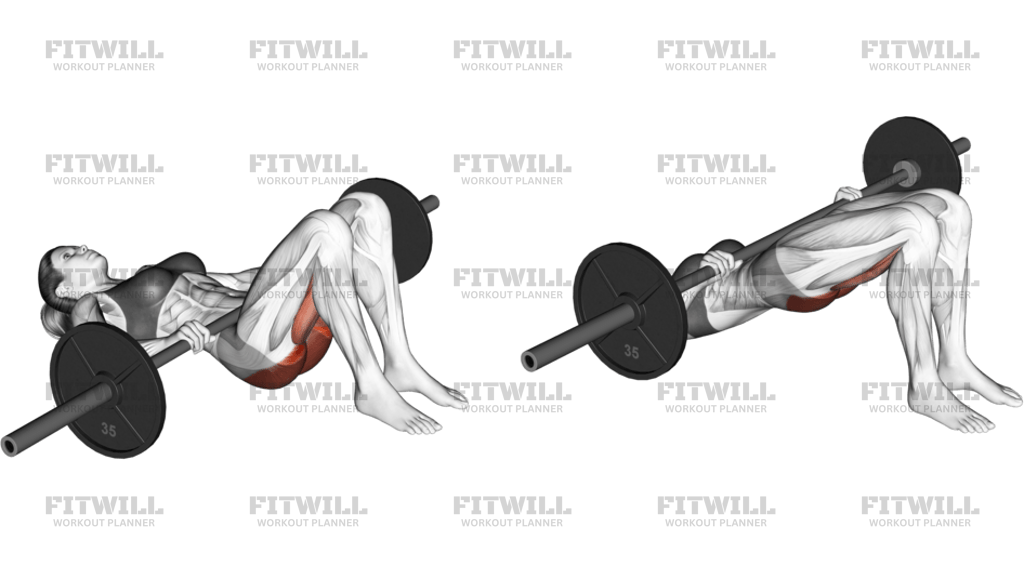
Barbell Hip Thrust is a bench-supported glute exercise built around full hip extension against a loaded barbell. Your upper back rests on the bench while the bar sits across the front of the hips, letting you drive the pelvis upward without needing to stand or hinge through the torso. That setup shifts the emphasis toward the glutes and away from a squat- or deadlift-style leg drive, which is why the bench height, foot placement, and bar position matter so much.
The movement is most effective when the body is stacked for clean force transfer. The feet should stay planted far enough forward that the shins are close to vertical at the top, the ribs should stay down, and the neck should stay relaxed as the torso moves between the bench and the floor. If the feet are too close, the knees tend to dominate; if they are too far away, the hamstrings and lower back usually take over. A well-set hip thrust should feel like a direct hip extension pattern with the glutes doing the majority of the work.
At the top of each rep, the hips should finish fully extended without over-arching the lower back. The bar path is short, but the tension is high, so the goal is to move smoothly from the bottom position, drive through the heels and midfoot, and finish with the pelvis level rather than tipped forward. A brief squeeze at lockout helps the glutes finish the rep, but the shoulders stay anchored on the bench and the chest does not need to flare upward to fake a bigger range.
Barbell Hip Thrust is useful for building glute strength, size, and lockout power, and it also works well as an accessory lift when you want hard glute work without the fatigue of a large lower-body compound. It can be loaded heavily, but only when the bench contact, foot position, and bar placement are stable enough that each rep stays repeatable. Beginners can use it with a lighter bar, a pad, or reduced range while they learn how to keep the torso steady and the hips moving straight up and down.
The safest reps are the ones that stay controlled from the first lift to the last return. If the shoulders slide on the bench, the bar shifts on the hips, or the knees collapse inward, the set is usually too heavy or the setup is off. Treat the hip thrust as a precise strength movement: establish the bench, plant the feet, brace, drive the hips up, and lower under control so the glutes stay loaded instead of the lower back taking over.
[ Workout Log & Planner ]
Put your next workout in Fitwill
Keep your plan and training log ready when you are.


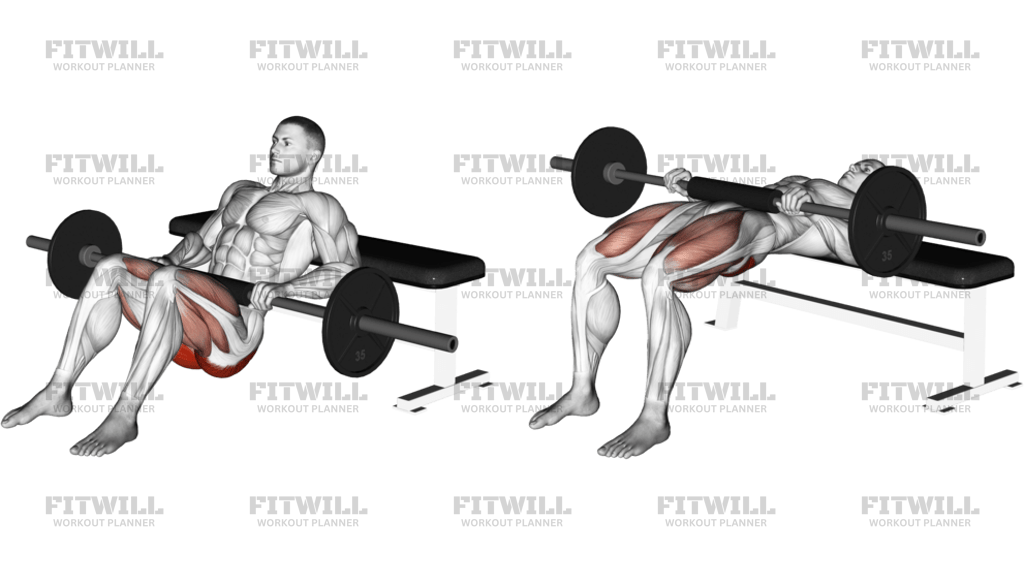
Instructions
- Sit on the floor with your upper back against the edge of a flat bench and roll the barbell into the crease of your hips.
- Bend your knees and place your feet flat on the floor far enough forward that your shins are close to vertical at the top.
- Grip the bar just outside your hips, tuck your chin slightly, and keep your shoulders anchored on the bench.
- Brace your midsection and press through your heels and midfoot to drive the hips upward.
- Lift until your torso and thighs form a straight line and the glutes are fully squeezed.
- Pause briefly at lockout without arching the lower back or flaring the ribs.
- Lower the bar under control until the hips return near the floor and the glutes stay loaded.
- Reset your breath and repeat for the planned number of repetitions.
Tips & Tricks
- Place the bar in the hip crease, not high on the stomach, so the load sits on the pelvis instead of the soft tissue above it.
- Use a pad or thick towel if the bar contact is uncomfortable, but keep the bar centered so it does not roll.
- Set your feet before the first rep; if you have to walk them around mid-set, the glutes usually stop owning the movement.
- At the top, think about tilting the pelvis slightly under and squeezing the glutes, not throwing the chest upward.
- Keep the chin tucked enough that the neck stays long; looking behind you often turns the finish into a back arch.
- Use a short pause at lockout when you want more glute tension and less bouncing off the bottom.
- Lower with control until the hips are just below bench level if mobility allows; do not chase extra depth by letting the spine collapse.
- Choose a load that lets the shoulders stay planted and the knees track over the toes without caving inward.
Frequently Asked Questions
What muscle does Barbell Hip Thrust target most?
The glutes are the main target, especially the gluteus maximus at hip lockout.
Why are my feet so important in the hip thrust setup?
Foot position changes which muscles take over. If your feet are too close, the knees do more work; if they are too far away, the hamstrings and lower back usually dominate.
Should the barbell sit on my hips or stomach?
It should rest across the front of the pelvis in the hip crease. If it rides too high on the abdomen, the setup feels unstable and the bar can shift during the thrust.
How high should I lift at the top of each rep?
Lift until the torso and thighs are roughly in line and the glutes are fully squeezed. You do not need to overextend the lower back to make the rep count.
Can I use a pad on the barbell?
Yes. A pad or folded towel can make the bar more comfortable, especially when you are learning the movement or using heavier loads.
What is the most common form mistake?
Overarching the lower back at the top is the biggest one. The finish should come from the hips and glutes, not from flaring the ribs and leaning the chest back.
Is Barbell Hip Thrust a good beginner exercise?
Yes, if the load is light and the setup is stable. Beginners usually do best with a controlled range, a pad on the bar, and a deliberate pause at the top.
Where should I feel the working effort?
You should feel a strong squeeze in the glutes, with the hamstrings and core helping to stabilize. If the lower back is taking over, the setup or finish position needs adjustment.