Boat Stretch
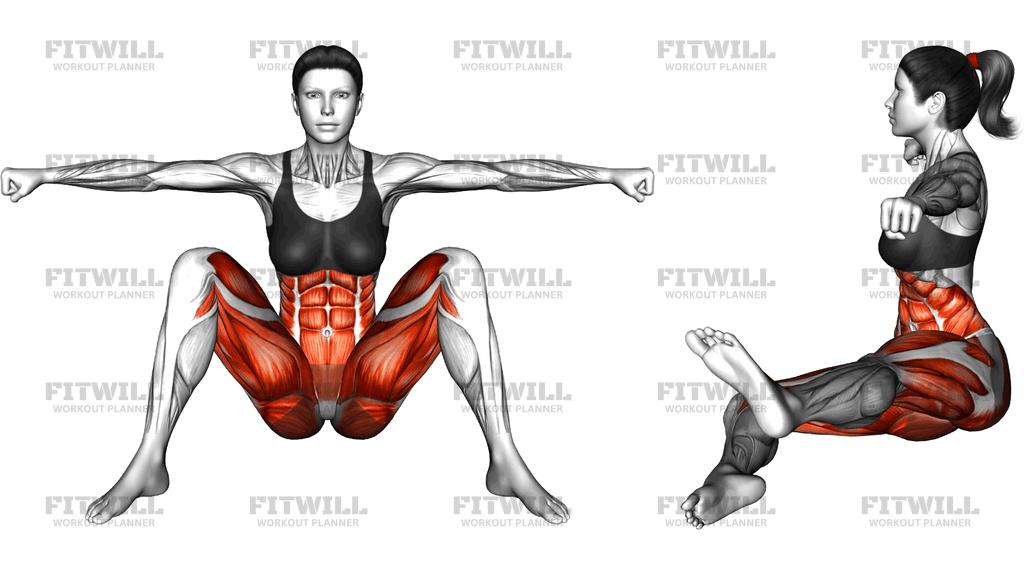
Boat Stretch is a seated bodyweight core hold where the torso leans back and the legs lift to create a balanced V-like shape. It trains the abs to hold the trunk steady while the hip flexors and quads help keep the legs elevated and the lower back supports posture.
The position can be scaled easily by bending the knees, holding behind the thighs, or keeping the toes closer to the floor. A good hold feels tall through the chest and active through the abs, not collapsed into the low back. The goal is a steady balance on the sitting bones with controlled breathing.
Set up seated with the knees bent, feet near the floor, and hands ready to assist if needed. Lean back slightly, lift the feet, and find the point where the abs can hold the shape without rounding the spine. From there, reach the arms forward or keep light support behind the legs.
Use Boat Stretch as a core strength hold, warmup, or mobility-friendly control drill. Straightening the legs increases difficulty, but it is optional. Stop or scale down if the lower back strains, the shoulders round heavily, or breathing becomes braced and stuck.
Fitwill
Log Workouts, Track Progress & Build Strength.
Achieve more with Fitwill: explore over 9600 exercises with images and videos, access built-in and custom workouts, perfect for both gym and home sessions, and see real results.
Start your journey. Download today!




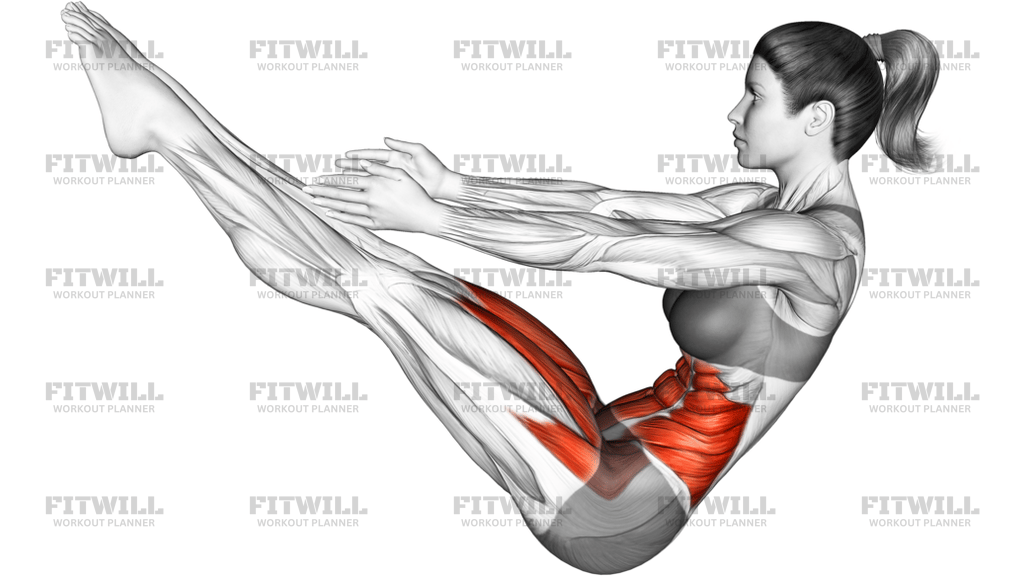
Instructions
- Sit on the floor with your knees bent and feet close to the ground.
- Place your hands lightly behind your thighs or beside your hips for balance.
- Lean your torso back slightly while keeping your chest lifted and spine long.
- Brace your abs and lift your feet until you balance on your sitting bones.
- Keep the knees bent or begin straightening the legs only if you can stay tall.
- Reach your arms forward, or keep light hand support if the hold is too difficult.
- Breathe steadily while holding the boat position.
- Lower the feet with control before your lower back or hip flexors take over.
Tips & Tricks
- Keep the chest lifted so the hold comes from the abs instead of a rounded slump.
- Bend the knees more to reduce hip-flexor strain.
- Hold behind the thighs if balancing on the sitting bones feels unstable.
- Straight legs are a progression, not a requirement.
- Keep the toes at about eye level only if the spine stays long.
- Breathe in small controlled breaths rather than clenching the jaw.
- Stop the hold when the lower back starts to feel compressed.
- Use shorter holds with cleaner posture before trying longer durations.
Frequently Asked Questions
What muscles does Boat Stretch use?
It mainly uses the abs, with help from the hip flexors, quads, and lower back.
Can beginners do Boat Stretch?
Yes. Beginners can keep the knees bent and hold for shorter periods.
Should my legs be straight?
Straight legs are optional and more difficult. Bent knees are fine if they help you keep control.
Where should I balance?
Balance on your sitting bones, not on the tailbone or rounded lower back.
Can I hold my legs?
Yes. Lightly holding behind the thighs is a useful modification while you build core strength.
Why do my hip flexors work so much?
They help hold the legs up. Bend the knees or lower the feet slightly if they dominate the hold.
How long should I hold Boat Stretch?
Hold only as long as you can keep a long spine and steady breathing.
What is the biggest mistake?
Rounding the back and holding the breath to stay up. Scale the position instead.