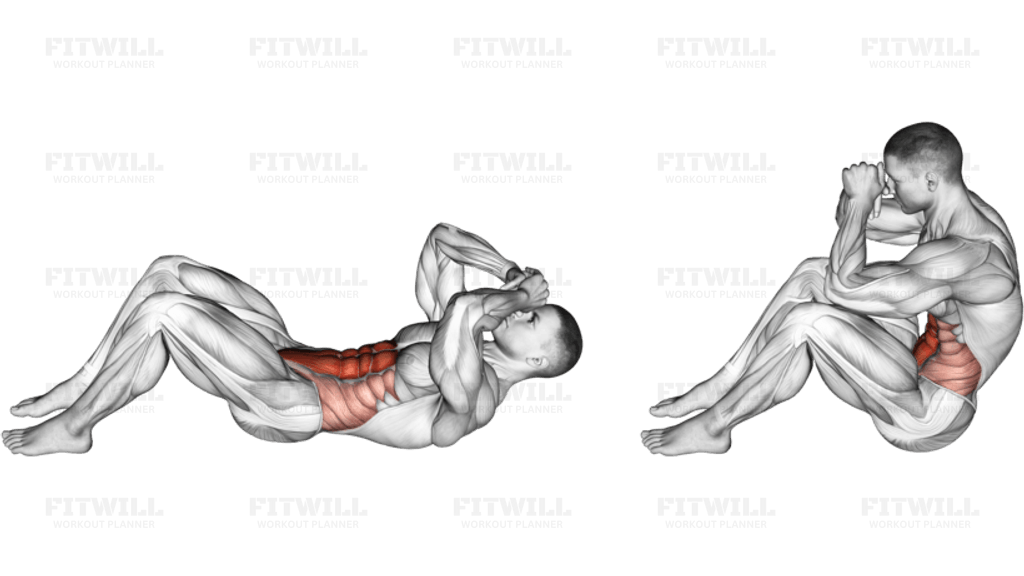
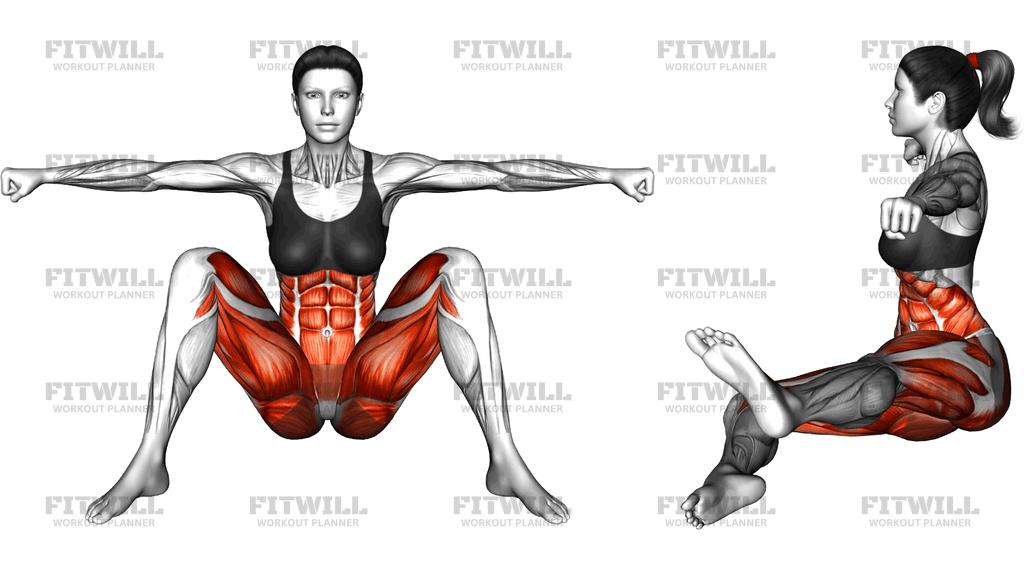
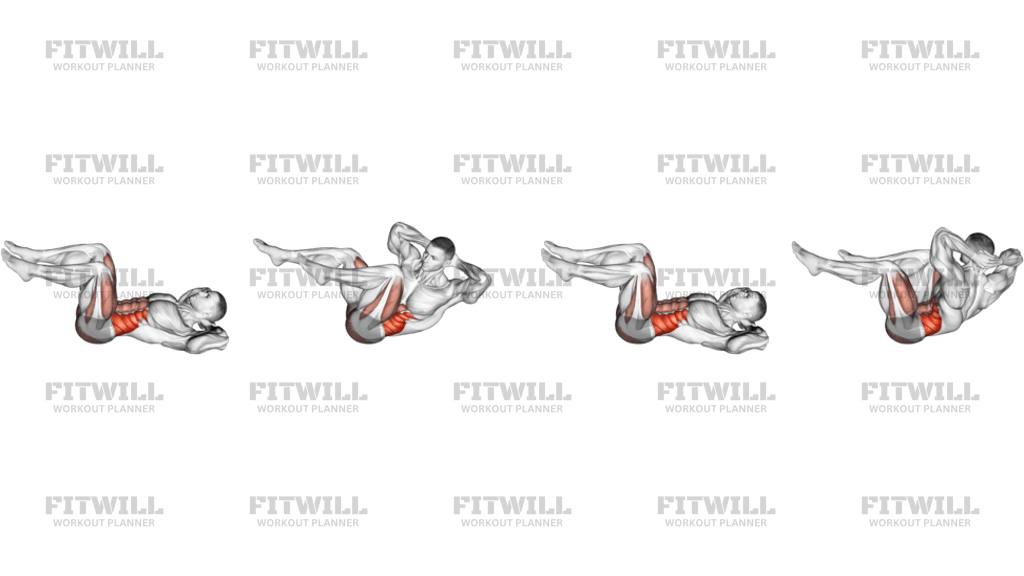
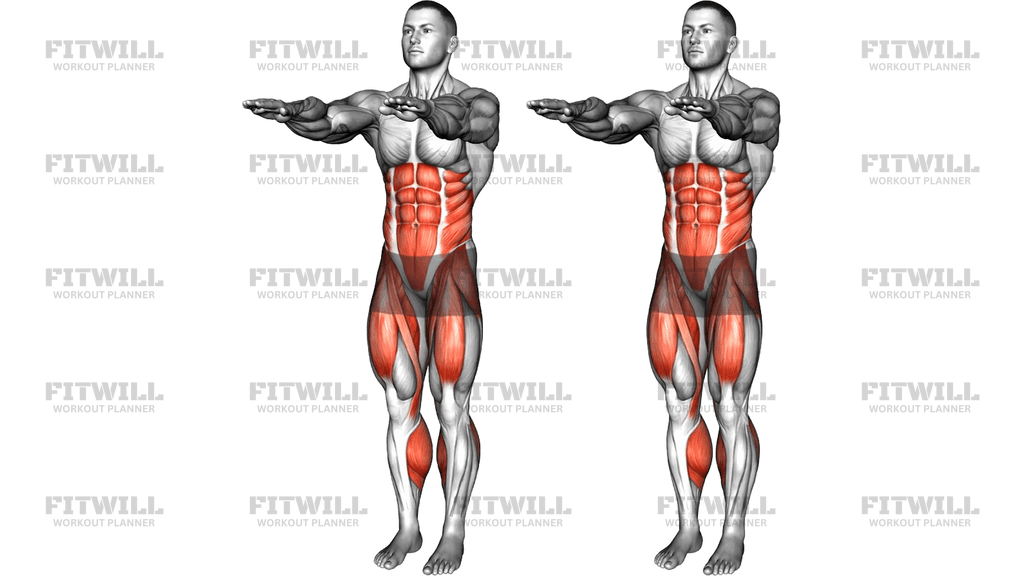
Lying Bottoms Up
Lying Bottoms Up is a floor-based abdominal exercise where the legs stay lifted while the pelvis curls slightly off the floor. The movement is small, but it strongly challenges the lower portion of the rectus abdominis to posteriorly tilt the pelvis while the hip flexors help hold the legs in position.
The exercise is often confused with a big leg swing. In a clean rep, the hips curl upward under control and the legs do not whip overhead. The arms can press lightly into the floor for balance, but the abs should create the lift rather than momentum.
Set up on your back with the legs lifted, arms by your sides, and lower back controlled against the floor. Exhale, curl the hips just enough to lift the tailbone, pause briefly, then lower the pelvis slowly. Keep the range focused and repeat without letting the legs swing.
Use Lying Bottoms Up as a core accessory or finisher when you want a controlled reverse-crunch style movement. It is best performed with moderate reps and a deliberate tempo. If the hip flexors dominate or the lower back arches, bend the knees or reduce the range.
[ Workout Log & Planner ]
Put your next workout in Fitwill
Keep your plan and training log ready when you are.


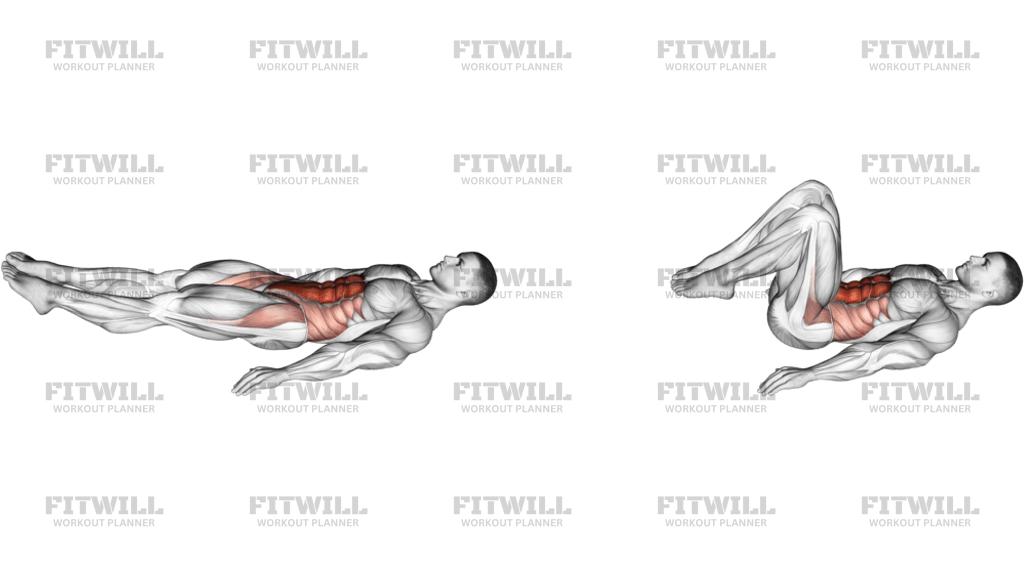
Instructions
- Lie on your back with your legs lifted above your hips.
- Place your arms on the floor beside you with palms down for light support.
- Brace your abs and keep your lower back controlled against the floor.
- Exhale and curl your pelvis upward so your hips lift slightly from the floor.
- Keep the legs from swinging overhead as the hips rise.
- Pause briefly at the top of the curl.
- Lower your hips slowly until the pelvis returns to the floor.
- Reset the legs and repeat with the same small controlled range.
Tips & Tricks
- Think tailbone curling up, not legs kicking up.
- Keep the movement small enough that the abs stay in charge.
- Press the arms lightly into the floor, but do not shove hard to create momentum.
- Exhale during the hip lift to help the ribs stay down.
- Bend the knees if straight legs pull too much from the hip flexors.
- Lower slowly so the pelvis does not drop and jar the lower back.
- Stop the set if your lower back arches between reps.
- Use a pause at the top instead of a bounce.
Frequently Asked Questions
What muscles does Lying Bottoms Up work?
It mainly works the abs, with help from the hip flexors and obliques.
Should I lift my hips high?
No. A small controlled curl is enough if the abs are doing the work.
Why do I feel my hip flexors?
They help hold the legs lifted, but the hip curl should come from the abs.
Is Lying Bottoms Up the same as a reverse crunch?
It is very similar, with emphasis on a small controlled pelvic curl rather than a large leg swing.
Where should my arms be?
Keep them on the floor beside you for balance, using only light pressure.
Should my legs swing overhead?
No. Keep the legs controlled and let the pelvis curl from the abs.
How can I make it easier?
Bend your knees or use a smaller hip lift so your lower back stays controlled.
What is the biggest mistake?
Using momentum from the legs instead of a deliberate abdominal curl.