Bridge Hip Abduction
Bridge Hip Abduction combines a glute bridge with an outward knee or leg movement. The hips stay lifted while the knees move away from each other, making the outer glutes, especially the gluteus medius, work along with the gluteus maximus, hamstrings, and abs.
The bridge position trains hip extension, and the abduction adds a side-hip stability demand. This makes the exercise useful for glute activation, hip control, and teaching the knees to stay aligned instead of collapsing inward. A loop band can be added around the thighs, but bodyweight is enough when the tempo is strict.
Set up on your back with knees bent and feet planted. Lift into a glute bridge, brace the core, and keep the pelvis level. From that lifted position, move the knees outward under control, pause, then bring them back to the starting width without letting the hips drop.
Use Bridge Hip Abduction in warmups, glute-focused accessory blocks, or lower-body activation work. Keep the range smooth and controlled. If the lower back arches or the hips sag during the abduction, reduce the range or lower the resistance.
[ Workout Log & Planner ]
Put your next workout in Fitwill
Keep your plan and training log ready when you are.


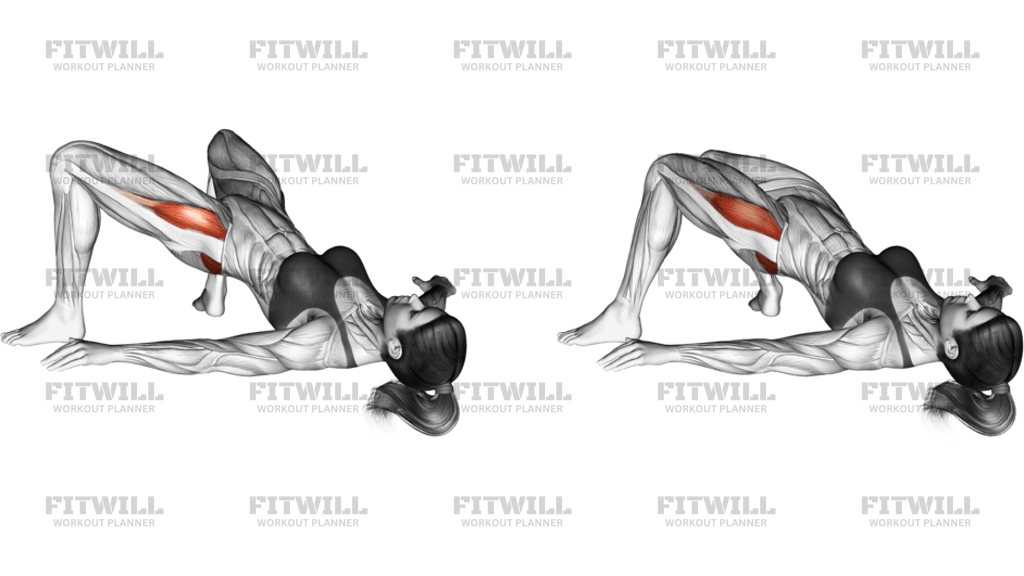
Instructions
- Lie on your back with your knees bent, feet flat, and arms resting on the floor.
- Set your feet about hip width and keep the heels close enough to feel the glutes.
- Brace your core and lift your hips into a glute bridge.
- Keep your ribs down and pelvis level at the top.
- Move your knees outward away from each other without letting the feet roll.
- Pause briefly when the outer glutes are working.
- Bring the knees back to the starting width with control.
- Continue the abductions while keeping the hips lifted.
Tips & Tricks
- Keep the hips lifted at the same height as the knees move out and in.
- Press through the heels and big-toe side of the foot so the feet stay planted.
- Do not flare the ribs or arch the lower back to make the bridge higher.
- Move the knees slowly instead of snapping the band or legs outward.
- Think outer glutes opening the knees, not feet twisting on the floor.
- Use a mini band only if you can keep the pelvis level.
- Keep the knees from collapsing inward on the return.
- Lower and reset if hamstrings cramp or the glutes stop working.
Frequently Asked Questions
What muscles does Bridge Hip Abduction work?
It mainly works the outer glutes, with support from the glutes, hamstrings, and abs.
Can I use a band?
Yes. A loop band around the thighs can make the abduction harder.
Should my hips move?
They should stay lifted and level while the legs move outward.
Where should I place a band?
If using one, place a loop band around the thighs above the knees.
Should my feet move during the abduction?
No. Keep the feet planted while the knees move outward and return.
Why do I feel my hamstrings?
They assist the bridge, but if they dominate, bring your feet slightly closer and focus on squeezing the glutes.
Can beginners do Bridge Hip Abduction?
Yes. Start without a band and use a small controlled knee-opening range.
What is the biggest mistake?
Letting the hips drop every time the knees move outward.