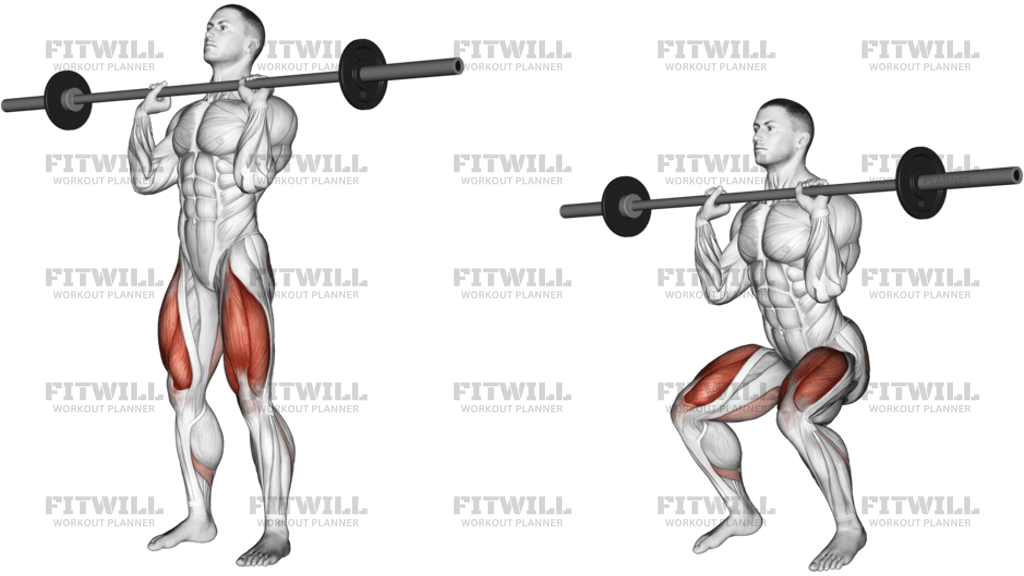
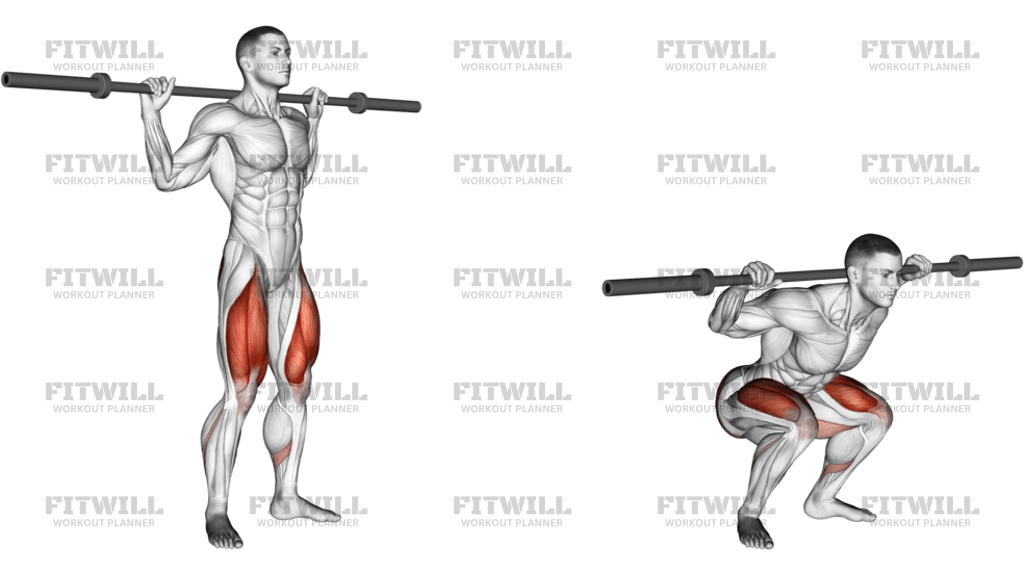
Barbell Full Squat Side POV
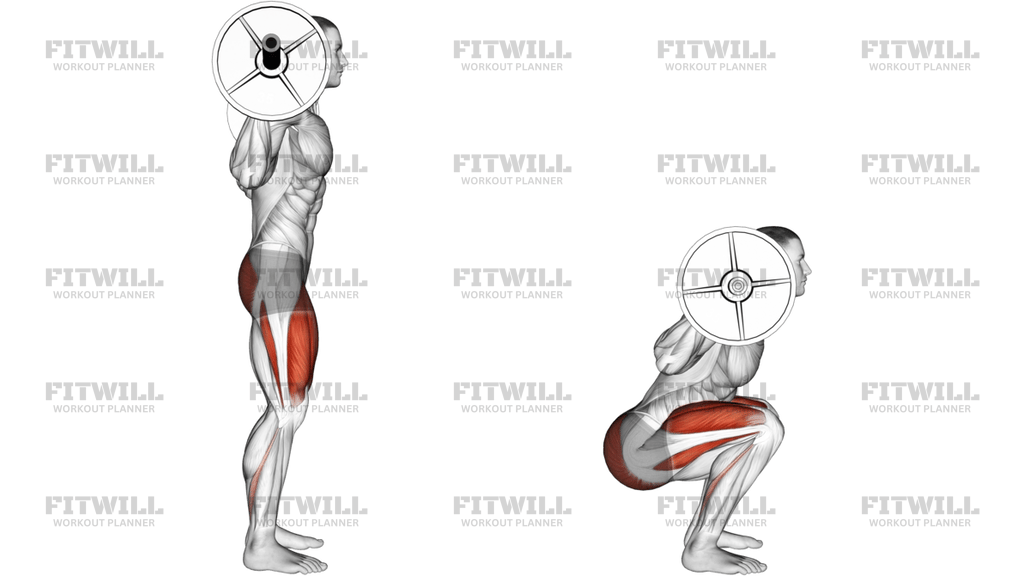
Barbell Full Squat Side POV is a barbell back squat taken to full depth, with the bar resting across the upper back while the lifter descends under control and drives back up from the bottom. It is a foundational lower-body strength exercise that trains the glutes, thighs, and trunk together, so the rep quality depends on the relationship between foot pressure, torso angle, and bracing.
The full-squat position asks more from the hips, knees, and ankles than a partial squat, which is why the setup matters so much. A stable stance lets you keep the bar path over the mid-foot while the knees travel in line with the toes and the heels stay planted. When those pieces stay organized, the squat becomes a repeatable strength pattern instead of a fight for balance.
Because the bar sits on the back, the upper back and trunk have to stay firm from the unrack to the final lockout. If the chest collapses or the pelvis tucks aggressively at the bottom, the load shifts away from the legs and into compensation patterns. Good reps look smooth on the way down, controlled in the hole, and decisive on the way up without a bounce or a forward drift.
This exercise is useful for building lower-body strength, muscle, and coordination in general strength programs, sports training, and hypertrophy work. It can be loaded heavily once technique is consistent, but it also works well with lighter weight when the goal is depth, bracing practice, or cleaner squat mechanics. The best versions keep the descent deliberate, the bottom position controlled, and the ascent driven through the whole foot.
For safety, stop the set if the bar shifts on the back, the heels repeatedly pop up, or the lower back takes over before the legs do. Use a rack with safeties or a spotter when the load is challenging, and choose depth you can own on every repetition. Full squat training is most productive when each rep looks nearly the same from the first to the last.
[ Workout Log & Planner ]
Put your next workout in Fitwill
Keep your plan and training log ready when you are.


Instructions
- Set the bar across your upper back, grip the bar just outside shoulder width, and step under it with your feet about hip width apart.
- Lift the bar out of the rack by straightening your legs, then take one to three short steps back until you have clear space to squat.
- Set your stance at about shoulder width or slightly wider, turn your toes out a little, and root both feet into the floor.
- Take a breath into your belly and sides, brace your trunk, and keep your ribs stacked over your pelvis before each rep.
- Sit down and back between your hips, letting your knees track in line with your toes as the bar stays over the middle of your feet.
- Descend until your hips pass below your knees if your mobility allows it, while keeping your heels down and your back tight.
- Drive up from the bottom by pushing the floor away, keeping your chest and hips rising together instead of tipping forward.
- Exhale as you pass the hardest part of the ascent, then stand tall and fully lock out before the next repetition.
- Walk the bar back into the rack under control and place it firmly on the hooks before letting go.
Tips & Tricks
- Keep the bar pinned to your upper back, not your neck, so the load sits on the shelf created by your rear delts and traps.
- Use the same foot pressure on every rep: heel, base of the big toe, and base of the little toe should all stay connected.
- If your knees cave in, think about spreading the floor apart and following the line of your second and third toes.
- Do not let the descent turn into a drop; a controlled lowering phase makes the bottom position much easier to own.
- If your chest folds forward early, slightly widen your stance or reduce the depth until you can keep the torso braced.
- A small heel wedge or lifting shoes can help if ankle mobility is limiting depth or forcing the heels to rise.
- Keep your gaze neutral and your neck long; looking up often overextends the low back and changes the bar path.
- For heavier sets, use safety pins or a spotter so a failed rep can be reracked without collapsing under the bar.
Frequently Asked Questions
What muscles does Barbell Full Squat Side POV work most?
It primarily trains the glutes and thighs, with the hamstrings, core, and lower back helping to stabilize the bar.
Is this a back squat or a front squat?
This is a back squat, with the bar resting across the upper back rather than on the front shoulders.
How deep should I go on the squat?
Go as deep as you can while keeping your heels down, your knees tracking over your toes, and your lower back from tucking hard at the bottom.
Why do my heels come up at the bottom?
Heel lift usually means the stance is too narrow, ankle mobility is limited, or you are dropping into a depth you cannot control yet.
Should my knees go past my toes?
Yes, they can move forward as long as your feet stay planted and the knees track in line with the toes.
What is a common form mistake in the bottom position?
A common mistake is letting the pelvis tuck and the chest collapse, which shifts tension away from the legs and into the low back.
Can beginners do this exercise?
Yes, but they should start with an empty bar or very light load and learn to brace, sit between the hips, and stand up without losing position.
What stance width usually works best?
Most lifters do well with feet about shoulder width apart or slightly wider, with a modest toe-out that lets the hips sit between the legs.