Half Knee Bends
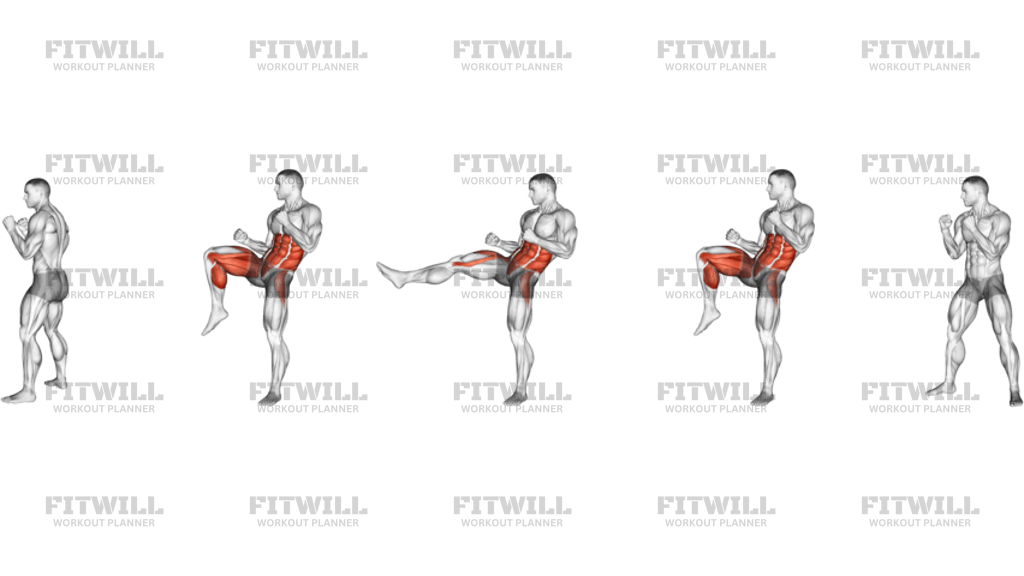
Half Knee Bends is a bodyweight knee-drive drill that teaches you to stay tall while one leg works and the other leg cycles up through the front of the body. It is less about heavy strength loading and more about clean rhythm, balance, and lower-body coordination. The movement shown here is a controlled marching-style pattern, so the quality of each rep matters more than speed or height.
This exercise mainly challenges the hips, thighs, calves, and trunk to work together while you repeatedly shift from one leg to the other. The standing leg has to stay springy and organized, and the lifted leg has to come up without forcing the torso to lean back. That makes Half Knee Bends useful for warm-ups, conditioning circuits, running prep, and any session where you want an upright single-leg rhythm without external equipment.
The setup is simple, but it makes a big difference. Stand with your feet about hip-width apart, your chest stacked over your pelvis, and your arms bent like a relaxed runner. Before the first rep, find a light athletic stance on the balls of your feet so the transition from one side to the other feels smooth rather than heavy or choppy.
As you repeat the movement, drive one knee forward and up while the opposite arm swings naturally to match it. Keep the lifted knee high enough to be useful, but not so high that your lower back arches or your ribs flare. Each rep should come down under control so the foot lands quietly and you can switch sides without losing posture or balance.
Half Knee Bends works best when the motion looks crisp from start to finish. It is a good choice for beginners because the drill is easy to scale, but it still rewards athletes who want cleaner footwork, steadier hips, and better trunk control. Use it as a warm-up, a low-impact conditioning drill, or a movement prep exercise before running, jumping, or lower-body training.
[ Workout Log & Planner ]
Put your next workout in Fitwill
Keep your plan and training log ready when you are.


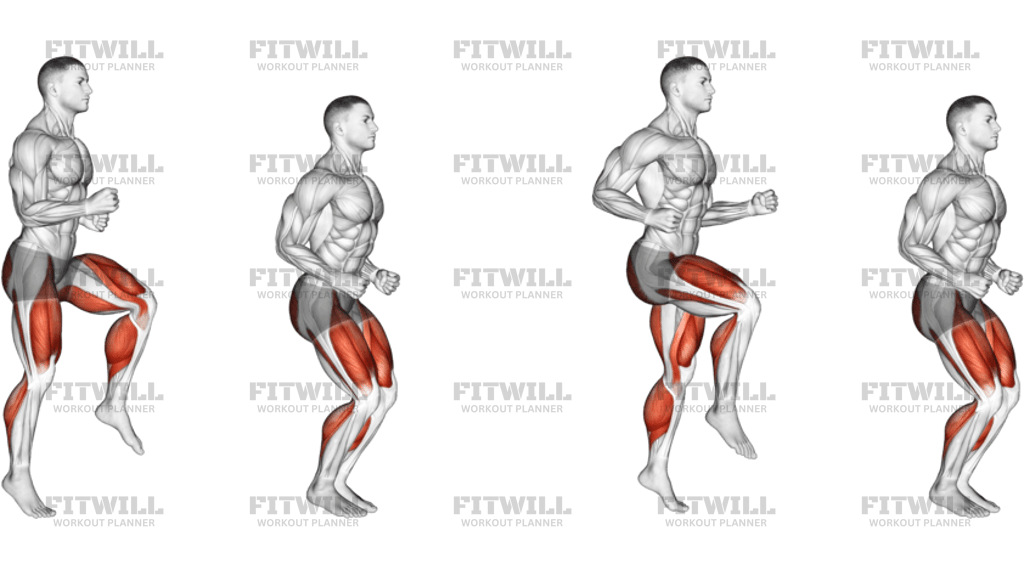
Instructions
- Stand upright with your feet hip-width apart, your chest tall, and your arms bent at your sides in a light running position.
- Shift your weight onto one foot and keep that standing knee softly bent so you can stay springy on the ball of the foot.
- Brace lightly through your midsection and set your gaze straight ahead before you begin the first rep.
- Drive the opposite knee forward and up toward hip height while keeping your torso stacked over your hips.
- Swing the opposite arm naturally as the knee rises, as if you were marching or jogging in place.
- Lower the lifted leg with control until the foot returns close to the floor without slamming down.
- Switch sides immediately and keep the same upright rhythm on every rep.
- Continue alternating legs for the planned number of repetitions or time, then bring both feet back under your hips and stand tall to finish.
Tips & Tricks
- Think of the drill as a tall march, not a jump, so the torso stays stacked instead of bouncing.
- If you lean back when the knee rises, lower the lift a little and keep the ribs over the pelvis.
- Land quietly on the switching foot; a noisy landing usually means you are dropping too fast.
- Keep the support leg soft and springy so the transition feels quick instead of locked out.
- Let the opposite arm move with the knee to help you keep a natural running rhythm.
- Raise the knee only as high as you can without twisting the hips or flaring the low back.
- Use a smaller range of motion if your balance gets shaky or your foot placement starts wandering.
- Breathe steadily and avoid holding your breath through the faster part of the cadence.
Frequently Asked Questions
What does Half Knee Bends work?
It mainly trains the hips, thighs, calves, and trunk to coordinate while you alternate knee drives and stay upright.
Is Half Knee Bends the same as high knees?
It is very similar in pattern, but this version is usually done as a controlled marching-style drill rather than an aggressive sprint drill.
How high should the knee come up in Half Knee Bends?
Lift it to about hip height if you can stay tall. If your torso leans back, bring the knee up a little less.
Do my arms matter in Half Knee Bends?
Yes, keep the opposite arm moving naturally with each knee drive. The arm swing helps you keep rhythm and balance.
Can beginners do Half Knee Bends?
Yes. Start with a slow march, small knee lift, and a steady cadence before you try a faster pace.
What is the biggest mistake in Half Knee Bends?
Leaning back and throwing the leg up usually breaks the pattern. Keep your ribs stacked over your hips and let the knee rise from control, not momentum.
Should Half Knee Bends stay on the balls of the feet?
A light, springy forefoot contact works best. Avoid sitting back on your heels because it makes the transition slower and less athletic.
When should I use Half Knee Bends in a workout?
It fits well in a warm-up, movement prep block, or conditioning circuit, especially before running, jumping, or lower-body training.