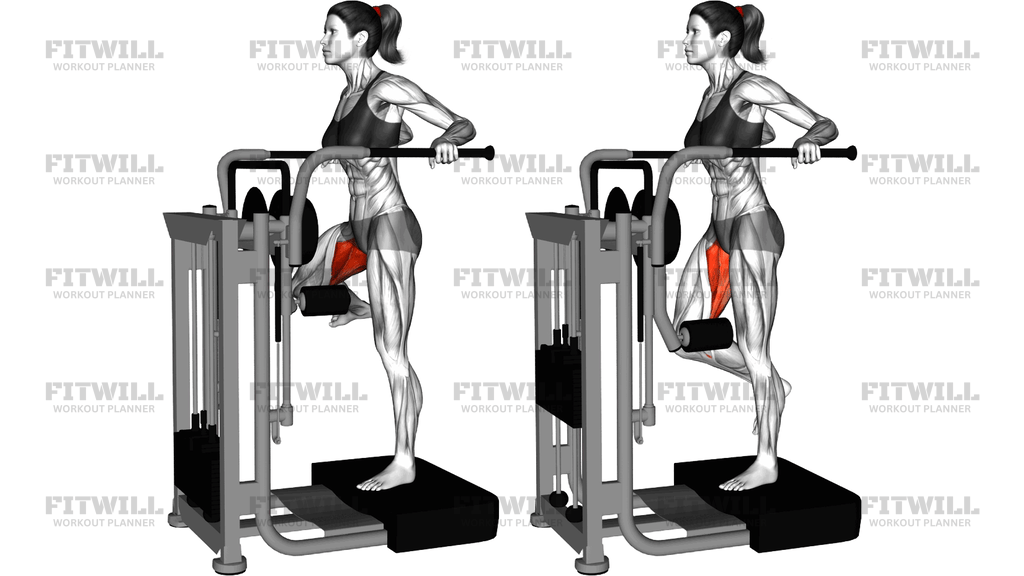
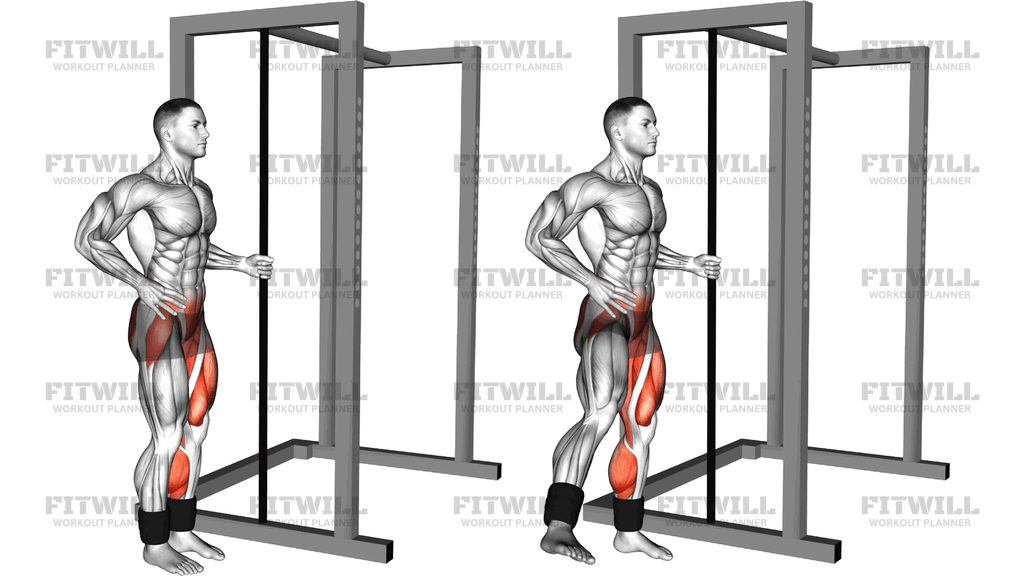
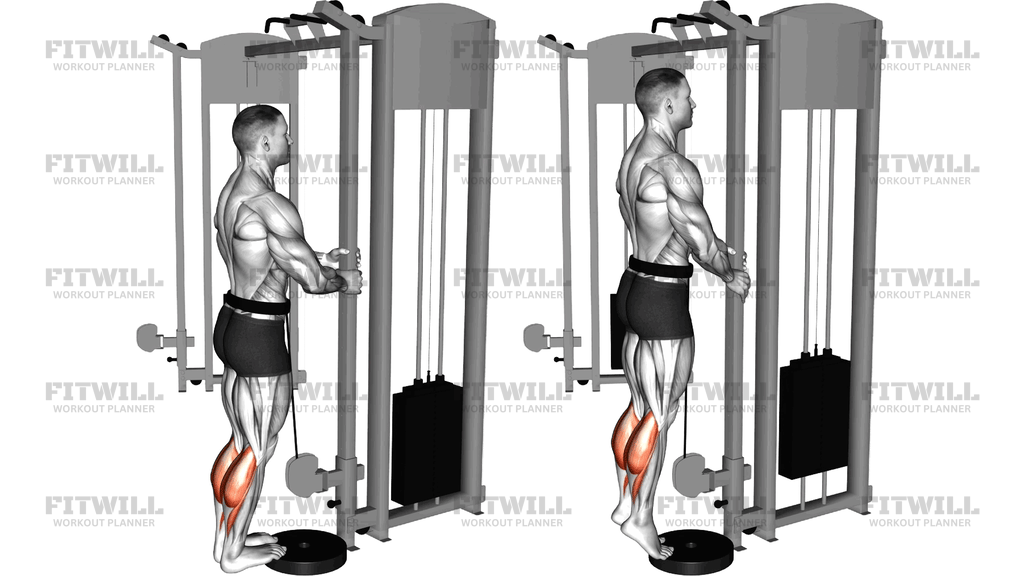
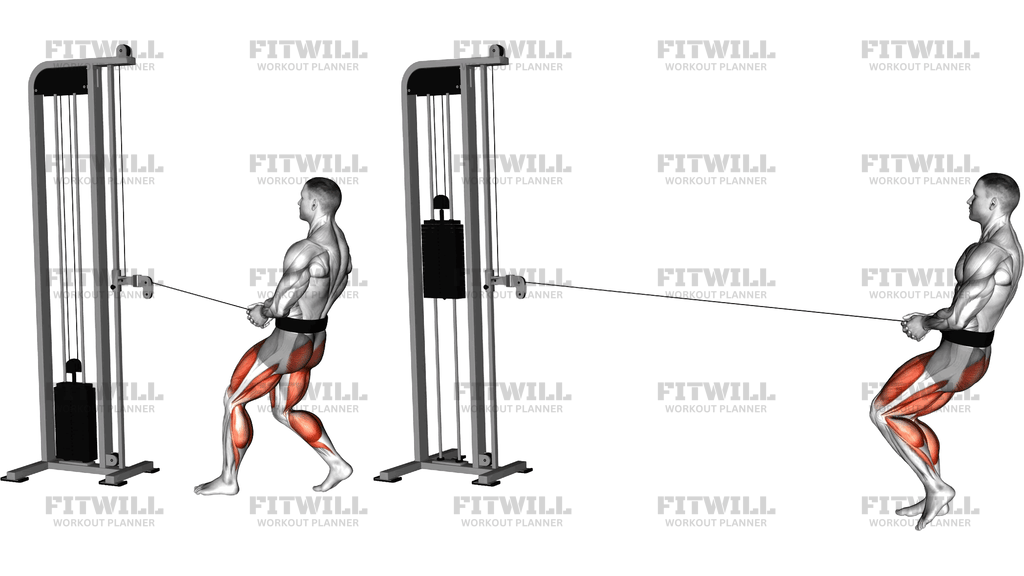
Cable Hip Adduction
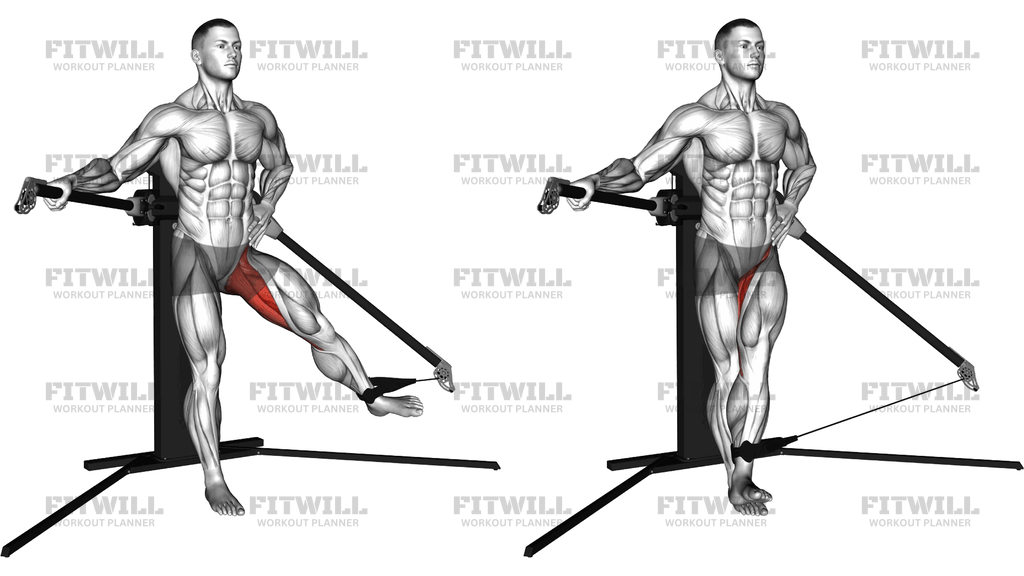
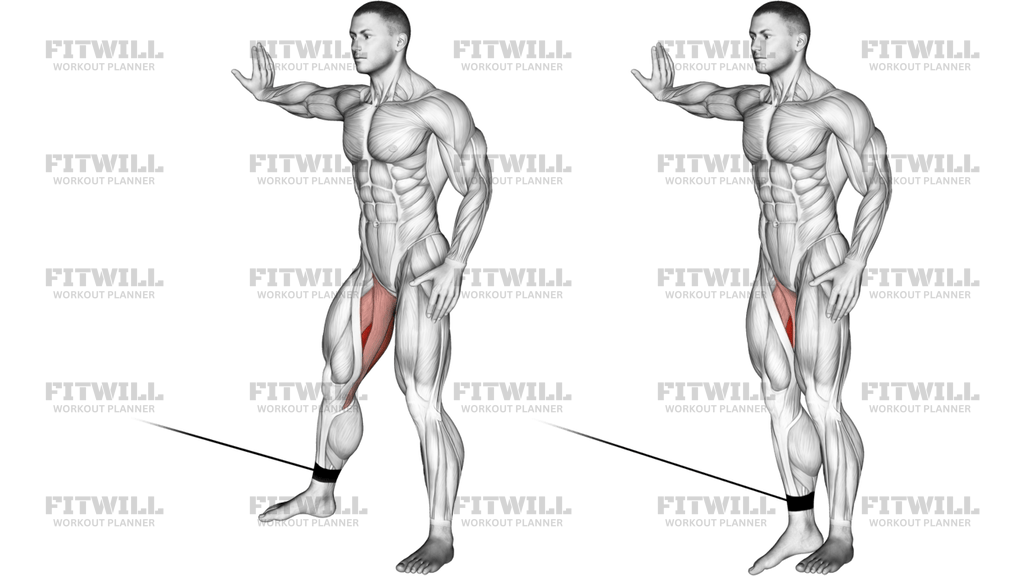
Cable Hip Adduction is a single-leg lower-body cable exercise that trains the inner thigh by pulling the working leg inward toward the midline. The ankle strap and low cable create steady tension through the whole range, so the movement is useful when you want to feel the adductors work without relying on momentum or large body shifts.
The exercise is small and targeted, but the setup matters because balance can easily turn it into a torso exercise. When the pelvis stays level and the standing leg remains quiet, the inner thigh can do the adduction work while the hips and core simply keep the body upright. That makes Cable Hip Adduction a practical accessory for groin strength, hip control, and lower-body balance work.
Set the ankle strap on a low pulley and fasten it to the working leg. Stand sideways to the machine, hold on to the frame if needed, and start with the leg slightly away from the body so there is tension before the first rep. From there, draw the leg inward across the front of the standing leg or toward the centerline, then return it slowly until the cable again has a clean stretch without letting the hips tip or the torso lean.
Cable Hip Adduction fits well after leg training, as part of hip-stability work, or as a controlled accessory when the adductors need more direct loading. It can also be useful for athletes who need stronger inner-thigh control during changes of direction, split-stance work, or single-leg patterns. The best reps are compact, smooth, and balanced; the stack should move because the leg is moving, not because the trunk is swaying.
If the standing foot rolls inward or the lower back starts to lean toward the cable, reduce the load and narrow the range. The goal is a clean inward sweep of the leg with the pelvis staying quiet.
[ Workout Log & Planner ]
Put your next workout in Fitwill
Keep your plan and training log ready when you are.


Instructions
- Attach an ankle strap to a low pulley and fasten it securely to the working leg.
- Stand sideways to the machine with the strap on the leg farthest from the stack or in the position that gives you the cleanest inward path.
- Hold the machine or a stable support with one hand, keep your torso tall, and brace your core before moving the leg.
- Start with the working leg slightly out to the side so the cable already has tension.
- Pull the leg inward across the front of the standing leg or toward the body’s midline in a smooth arc.
- Keep the pelvis level and the standing hip quiet as the moving leg crosses inward.
- Pause briefly at the inward finish, then return the leg slowly to the start without letting the trunk lean toward the cable.
- Repeat for the set, then unfasten the strap and switch sides before starting the other leg.
Tips & Tricks
- If you have to lean toward the cable to finish the rep, lighten the load and shorten the range so the hips stay square.
- A small support hold is fine and often helps you feel the inner thigh work without wobbling through the standing leg.
- Keep the moving foot relaxed and let the thigh do the job; gripping the floor hard with the working foot can turn the movement into a balance drill.
- The inward path should feel smooth and controlled, not like the leg is being yanked back to center by the stack.
- Do not let the standing knee cave inward as the other leg moves across the body.
- If the groin feels tight or pinchy, reduce the range and keep the finish closer to the midline instead of forcing a big cross-over.
- Use lighter loads with cleaner mechanics before you chase a heavier stack; this movement rewards precision more than brute force.
- Match both sides carefully so one hip does not get all the direct adductor work.
Frequently Asked Questions
What muscles does Cable Hip Adduction work?
It mainly trains the inner-thigh adductors, with the hips and core helping keep the body steady.
Is Cable Hip Adduction good for groin strength?
Yes, it is one of the more direct ways to load the adductors with controlled resistance.
Can beginners do Cable Hip Adduction?
Yes, but light loads and a hand on the machine usually make the movement much easier to control.
Should I swing the leg in Cable Hip Adduction?
No, the leg should travel in a smooth inward arc without using momentum from the torso.
How should I set up the pulley for Cable Hip Adduction?
A low pulley with an ankle strap is the standard setup because it keeps steady tension on the inner thigh.
Can Cable Hip Adduction help with knee collapse?
It can support the adductors that help control the hip and knee, but it should be part of a broader lower-body plan.
Where should the working leg finish?
Usually near the standing leg or the midline, as long as the pelvis stays level and the movement remains comfortable.