Cable Standing Crunch With Rope Attachment
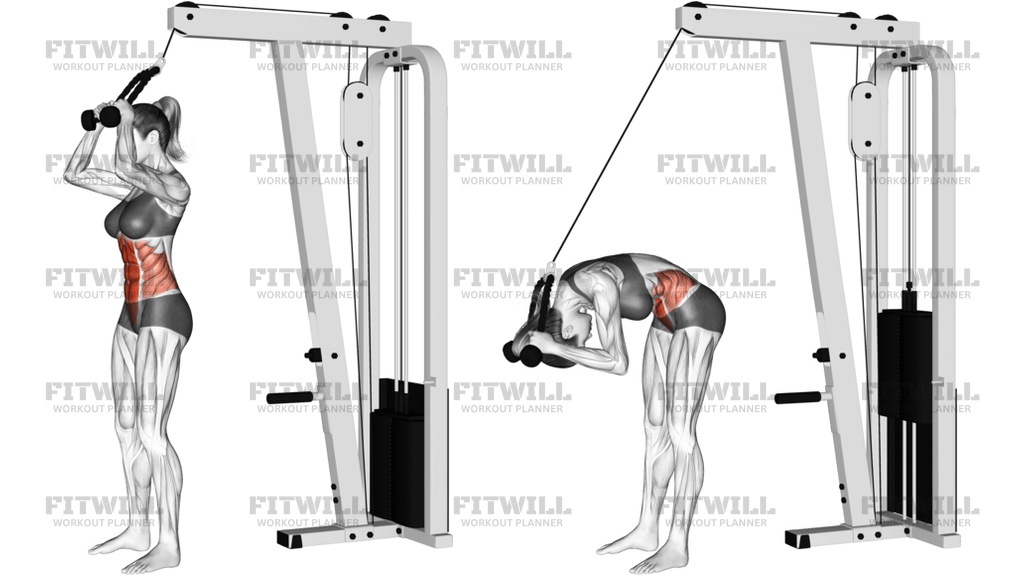
Cable Standing Crunch With Rope Attachment is a standing abdominal exercise built around a high cable and rope attachment. The setup keeps constant tension on the trunk while you flex the spine under load, so the work stays on the front of the torso instead of turning into a sloppy full-body pull. It is useful when you want direct abdominal training without lying on the floor or anchoring your feet, and it is especially effective when the load is light enough to let the torso, ribs, and pelvis move in a controlled arc.
The movement is driven by spinal flexion: the ribcage closes toward the pelvis while the hips stay mostly in place. The rope is only a handle for the hands, not the part you are trying to move. If the elbows flare, the shoulders shrug, or the hips drift back to create momentum, the cable stops training the abs and starts becoming a body-swinging lift. A good rep looks compact and deliberate, with the neck relaxed and the torso rounding only as far as you can keep the stack and your balance under control.
The standing position matters because you have to stabilize from the feet up while the cable is trying to pull your upper body into extension. That means your stance should be predictable, your knees soft, and your torso stacked before each rep. Exhale as you crunch down, briefly squeeze the shortened position, then return slowly until you feel the abdomen lengthen again without letting the weight yank you open. The return phase should still feel organized; do not let the rope snap your arms overhead or let your lower back take over the stretch.
This exercise fits well in an accessory or core-focused block after the main lifts, when you want direct trunk work that can be progressed with small jumps in load or tempo. It is also useful for beginners who need a simple, easy-to-understand abdominal pattern, provided the resistance stays light and the range stays clean. Used well, the cable standing crunch gives you a repeatable way to train the abs through both the shortened and lengthened parts of the rep while keeping tension smooth and the setup consistent.
[ Workout Log & Planner ]
Put your next workout in Fitwill
Keep your plan and training log ready when you are.


Instructions
- Attach a rope to the high pulley, select a light load, and stand in a staggered or shoulder-width stance with a slight bend in the knees.
- Hold the rope beside your temples or forehead with your elbows bent and pointed down slightly, then step far enough away to feel the cable pulling you upright.
- Set your ribs over your pelvis, brace your midsection, and keep your chin tucked so your neck stays long.
- Exhale and crunch your ribcage toward your pelvis, letting your torso round while your hips stay mostly fixed.
- Keep the elbows quiet and the shoulders relaxed as you pull the cable through the abdominal curl.
- Squeeze the shortened position for a brief pause without jerking the weight stack.
- Inhale and return slowly until your torso is open again and the abs are under tension, not hanging on the cable.
- Reset your stance and repeat for the planned reps before carefully letting the rope back to the starting height.
Tips & Tricks
- Choose a load that lets your torso curl instead of forcing you to yank the rope downward.
- If your lower back feels more stretched than your abs, reduce the range and finish the rep earlier.
- Keep the elbows nearly fixed so the arms do not become the primary movers.
- Let the ribs move toward the pelvis rather than hinging at the hips like a good-morning.
- A small staggered stance can help you stay balanced when the stack gets heavier.
- Do not shrug the shoulders toward the ears; the rope should stay close while the neck stays relaxed.
- Use a short pause at the bottom to remove momentum and make each rep more honest.
- Control the return all the way back up so the stack never slams or pulls you open.
- If the movement turns into neck strain or arm fatigue, the load is too high for a clean abdominal set.
Frequently Asked Questions
What muscles does the cable standing crunch with rope attachment train?
It primarily trains the abdominal wall, especially the rectus abdominis, with the obliques and deep core muscles helping stabilize the torso.
Should I bend at the hips or curl my spine?
Curl your spine and bring your ribcage toward your pelvis. The hips should stay mostly stacked while the torso flexes.
How should I hold the rope attachment?
Hold the rope beside your temples or forehead with bent elbows. The rope is just a handle; it should not be yanked by the arms.
Where should I feel this exercise?
You should feel the front of the abs shorten hard at the bottom and lengthen under control on the way back up. Your neck and shoulders should stay quiet.
Can beginners use the standing cable crunch?
Yes. It is beginner-friendly if the load is light and the motion stays small, smooth, and controlled.
What is the most common mistake with this movement?
The biggest mistake is turning it into a cable pulldown by using the arms, shoulders, or hips instead of the abs.
How low should I crunch?
Lower only until you can still keep balance, keep the neck relaxed, and feel the abs working. More range is not better if it becomes a hinge or a yank.
How do I progress this exercise?
Progress by adding a little load, adding a pause at the bottom, or slowing the return while keeping every rep crisp.