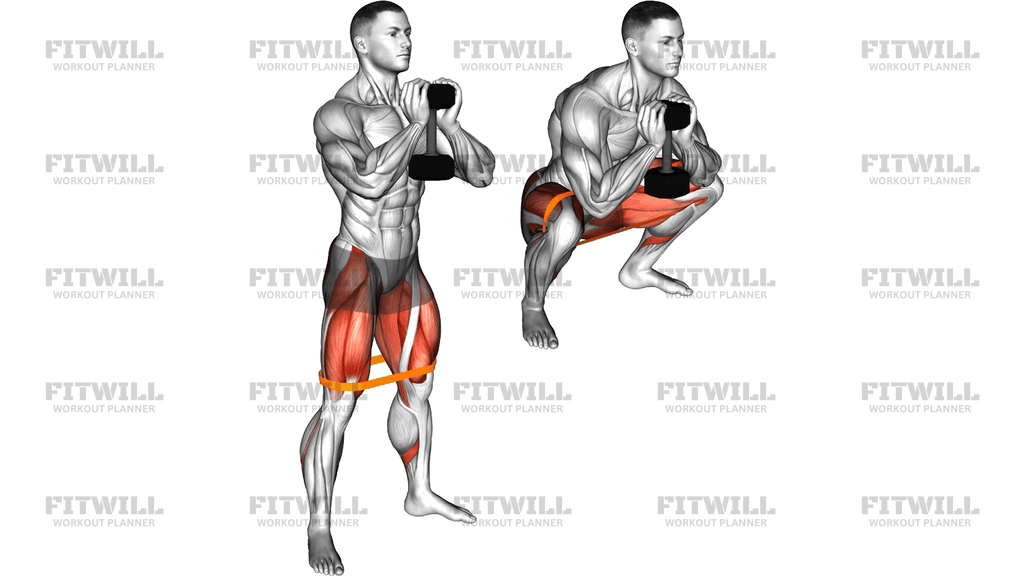
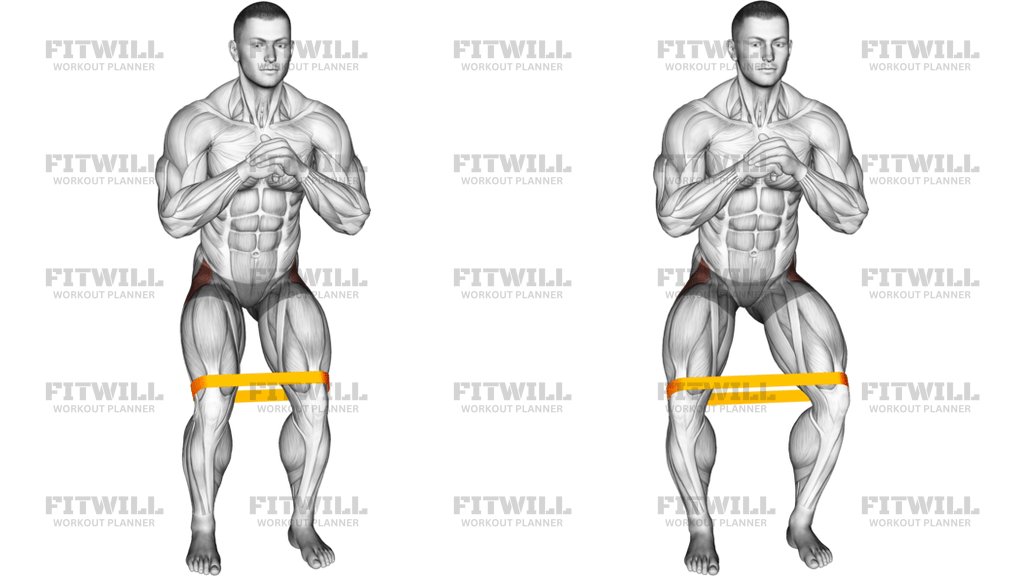
Resistance Band Cable Squat
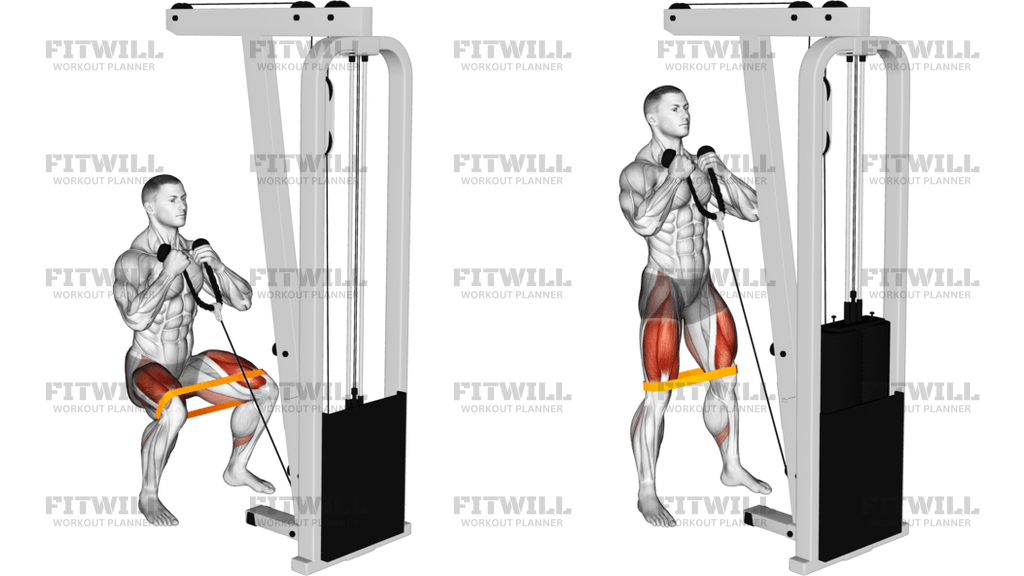
Resistance Band Cable Squat combines a low cable pull with a band around the thighs to add resistance and keep the knees working out against each other as you squat. It is a lower-body strength movement that asks you to stay tall through the torso while the hips and knees bend together, then drive back to standing without losing the line of the knees or collapsing the band. The setup matters because the cable tension and the band both change how the squat feels from the first inch of the descent.
This exercise is useful when you want a squat pattern that adds constant tension and teaches cleaner knee tracking. The cable helps load the movement from the front, while the band reminds you to keep the thighs active and the knees pressing outward. That combination makes Resistance Band Cable Squat a good option for accessory work, warm-ups before heavier squats, or higher-rep lower-body training when you want more control than load.
Start by setting the cable at a low position, stepping far enough away that the handles stay tight against your upper chest or front shoulders, and placing the band just above your knees or around the lower thighs. Plant your feet about shoulder-width apart, grip the handles firmly, and set your ribs down so the torso stays stacked over the pelvis. From there, sit the hips back and down until the thighs reach the depth you can control without the heels lifting or the band losing tension.
As you descend, keep the knees tracking over the toes and press them gently outward into the band instead of letting them cave inward. The cable should stay under tension, but it should not pull you forward so far that you tip onto your toes. At the bottom, reverse smoothly by driving the floor away, keeping the chest open, and bringing the hips and shoulders up together instead of letting the hips shoot up first.
Use Resistance Band Cable Squat for controlled hypertrophy work, movement prep, or as a lighter squat variation when barbell loading is not the goal. It can also help lifters who need feedback on knee position because the band gives instant notice when the legs drift inward. Keep the reps honest, control the lowering phase, and reset your stance before every rep so the cable, band, and feet all stay organized throughout the set.
[ Workout Log & Planner ]
Put your next workout in Fitwill
Keep your plan and training log ready when you are.


Instructions
- Set the cable pulley low, step back until the handles stay tight at your upper chest, and place a mini band just above your knees or around the lower thighs.
- Stand with your feet about shoulder-width apart, toes slightly turned out, and keep the cable line centered as you face the stack.
- Hold the handles against your front shoulders or chest, lift your elbows slightly forward, and keep your wrists straight.
- Take a breath, brace your trunk, and set your ribs down so your torso stays stacked before you descend.
- Sit your hips back and down, letting your knees bend and track over your toes while you press gently out into the band.
- Lower until your thighs reach a depth you can control without the heels rising, the chest collapsing, or the band slackening.
- Drive through the midfoot and heels to stand back up, keeping the knees pressed out as the hips and shoulders rise together.
- Exhale near the top, reset your stance if needed, and repeat for the next rep without letting the cable pull you off balance.
Tips & Tricks
- Use a lighter cable setting if the handles drag your shoulders forward before you reach squat depth.
- The band should stay active the whole rep; if your knees cave in at the bottom, shorten the range or use a stronger outward cue.
- Keep the handles close to your chest so the cable resists the squat instead of turning it into a forward hinge.
- Do not let the elbows drop and the upper back round, or the cable tension will pull your torso out of position.
- Think about sitting between your heels, not just dropping straight down, so the squat stays balanced over the midfoot.
- If your heels lift, widen your stance a little or reduce depth before adding more load.
- A controlled two- to three-second lowering phase makes the band and cable feel useful without turning the movement into a bounce.
- Stop the set when the knees stop tracking cleanly over the toes, even if the cable weight still feels manageable.
Frequently Asked Questions
What muscles does Resistance Band Cable Squat work?
It mainly trains the quadriceps and glutes, with the adductors, calves, and core helping you keep the squat stable against the band and cable.
Why use both a cable and a band for this squat?
The cable adds steady front-loaded resistance, while the band gives feedback on knee tracking. Together they make it harder to relax at the bottom of the squat.
Where should the band sit during Resistance Band Cable Squat?
Place it just above the knees or around the lower thighs so it can cue the legs to stay active without sliding into the knee joint.
How far should I step back from the cable stack?
Step back far enough that the handles stay snug at your chest through the whole squat. If the cable goes slack at the bottom, move back a little more.
Is Resistance Band Cable Squat beginner-friendly?
Yes, as long as you use light cable resistance and a band that does not force the knees too hard outward. The setup gives good feedback, but the load should still let you balance comfortably.
What is the most common mistake with this exercise?
Letting the knees cave in or letting the cable pull the torso forward are the biggest problems. Keep the handles close, ribs stacked, and knees pressing gently out into the band.
How deep should I squat here?
Go only as low as you can while keeping the heels down, the band under tension, and the chest from collapsing. Depth should be earned by position, not forced.
Can I replace a barbell squat with Resistance Band Cable Squat?
It is better as a lighter accessory or technique variation than a direct replacement for heavy barbell squats. Use it when you want more tension and knee-control feedback, not maximal loading.