Cable One-Arm Lateral Raise
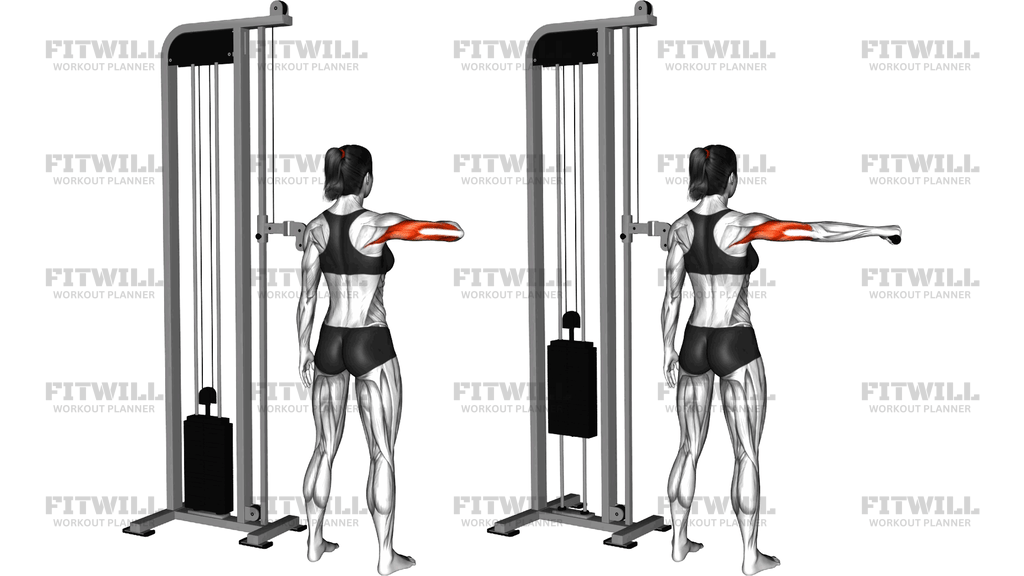
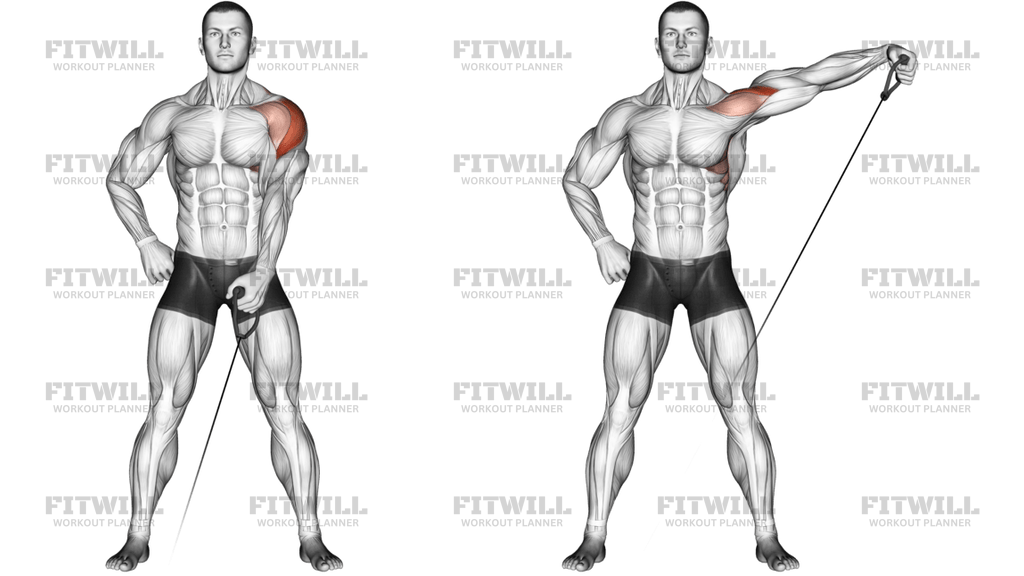
Cable One-Arm Lateral Raise is a single-arm shoulder abduction exercise that uses cable tension to train the side delt through a smooth outward lift. The cable keeps the shoulder working through the bottom and middle of the rep, which often makes this version feel more consistent than a dumbbell raise when you want to keep the path strict.
The primary target is the lateral deltoid, with the upper traps and core helping stabilize the body. It works best when the torso stays still, the elbow keeps a small bend, and the hand travels out to the side instead of turning the rep into a shrug or a swing. That makes Cable One-Arm Lateral Raise useful for shoulder isolation, side-delt hypertrophy, and clean unilateral control.
Set a low pulley with a single handle and stand side-on to the stack with a stable stance. Hold the handle in the working hand, keep the elbow softly bent, and start with the arm slightly in front of the thigh so there is tension at the bottom. Lift the arm laterally to around shoulder height or a comfortable top range, pause briefly, and lower under control without letting the shoulder creep up toward the ear.
Cable One-Arm Lateral Raise works well as a shoulder accessory after pressing, as a lighter isolation movement, or as a unilateral option when one side needs more attention than the other. The single-arm setup makes it easier to spot compensation and keep the rep honest. Good sets are quiet through the torso, smooth through the arm, and symmetrical between sides even though only one side is moving at a time.
If the torso starts leaning or the trap takes over, reduce the load and keep the range a little smaller. The goal is a clean side-delt raise that feels controlled from the first rep to the last.
[ Workout Log & Planner ]
Put your next workout in Fitwill
Keep your plan and training log ready when you are.


Instructions
- Set a low pulley with a single handle and stand side-on to the stack with a stable stance.
- Hold the handle in the working hand and keep the elbow softly bent.
- Start with the arm slightly in front of the thigh so the cable has tension before the first lift.
- Stack your ribs over your pelvis and keep the torso quiet.
- Raise the arm laterally to around shoulder height or the highest pain-free point that still feels controlled.
- Pause briefly at the top without shrugging the shoulder, then lower under control.
- Keep the wrist neutral and the elbow angle consistent through the whole rep.
- Repeat for the planned reps, then switch sides and match the same tempo and range.
Tips & Tricks
- If the torso leans, the load is too heavy for a strict side-delt raise.
- Keep the shoulder down as the arm rises; the trap should not be the muscle that finishes the rep.
- A slightly forward start position at the bottom often feels better on the shoulder than starting perfectly at your side.
- Use a smaller range if you feel the front of the shoulder taking over or the trap starting to shrug.
- The hand should travel out and up, not just up, so the lateral delt stays the main driver.
- Keep the elbow bend the same from bottom to top to avoid turning the rep into a curl.
- Match both sides carefully so the weaker side does not get a shorter, easier version of the movement.
- A moderate load with a clean path is much more useful here than a heavy stack that forces body sway.
Frequently Asked Questions
What muscles does Cable One-Arm Lateral Raise work?
It mainly works the lateral deltoid, with the upper traps and core helping stabilize the movement.
Why use the one-arm version of Cable One-Arm Lateral Raise?
It improves side control and makes it easier to match strength and range between sides.
Should my arm be straight in Cable One-Arm Lateral Raise?
No, keep a slight elbow bend instead of locking the arm straight.
Can beginners do Cable One-Arm Lateral Raise?
Yes, as long as they keep the load light and the torso from swinging.
What is the most common mistake in Cable One-Arm Lateral Raise?
Shrugging the shoulder or swinging the torso to get the handle higher.
How high should I raise the handle?
Usually to shoulder height or the highest comfortable point where the shoulder still feels controlled.
What rep range works well here?
Moderate to high reps usually work well because the exercise is a strict shoulder isolation movement.