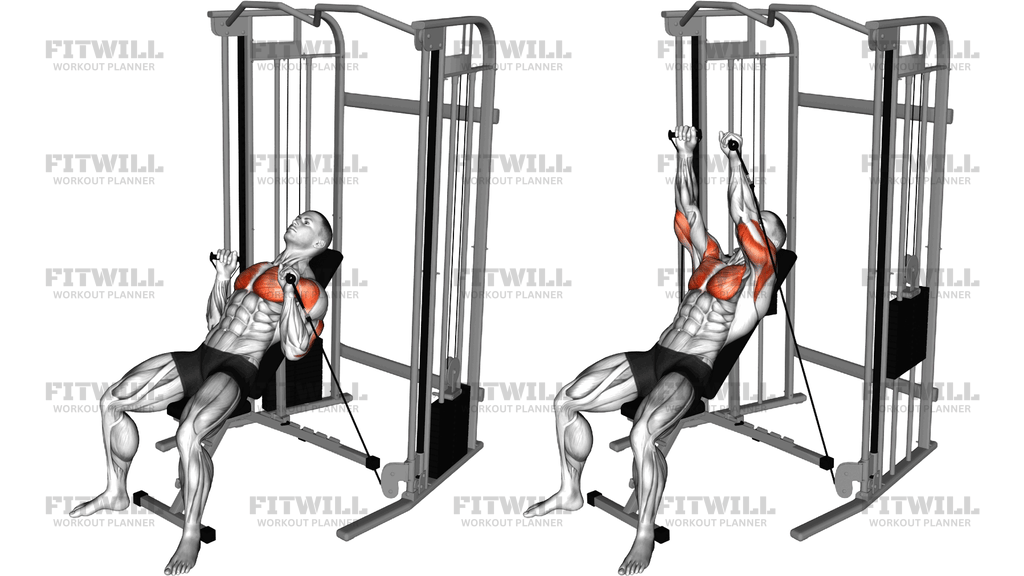
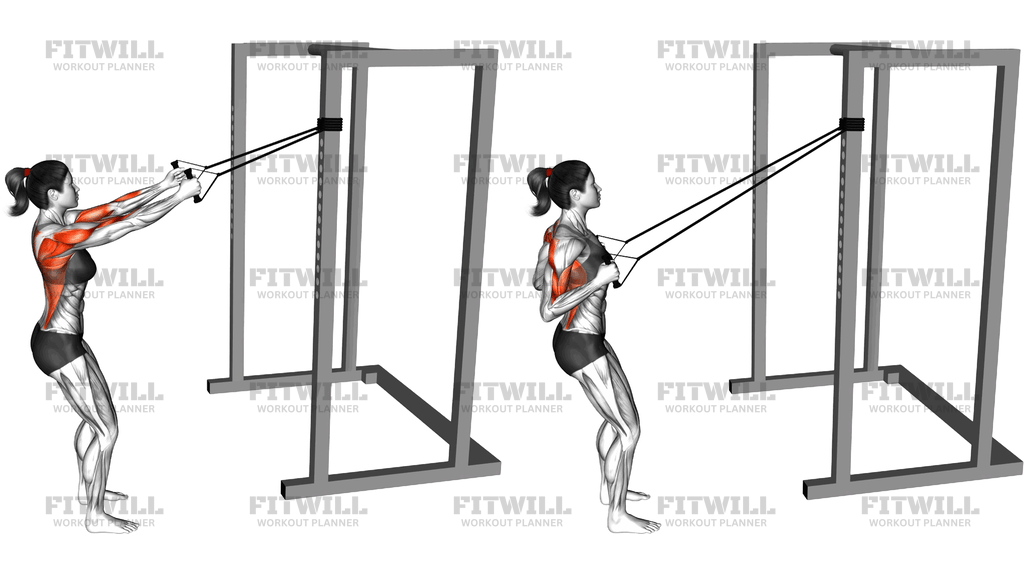
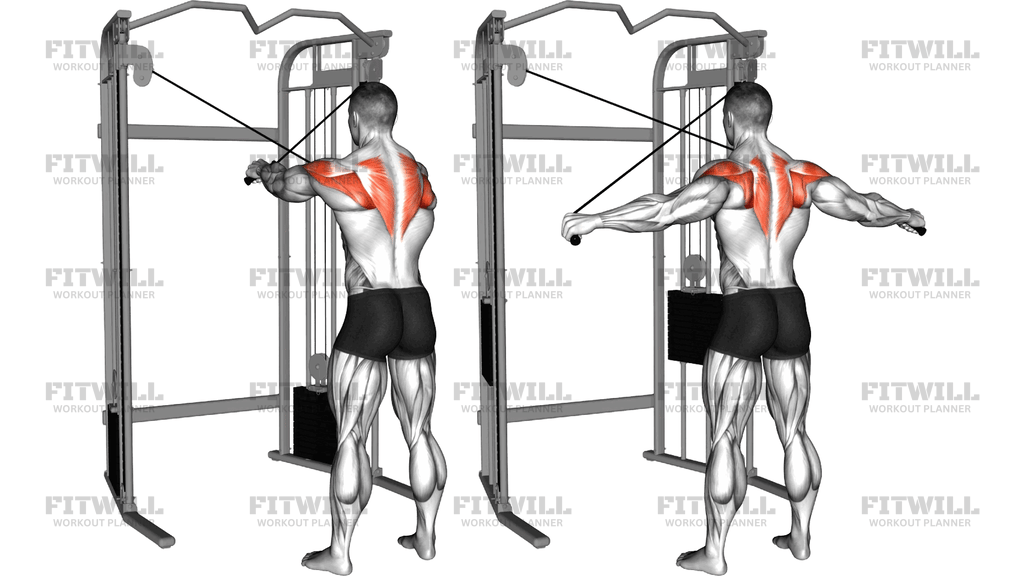
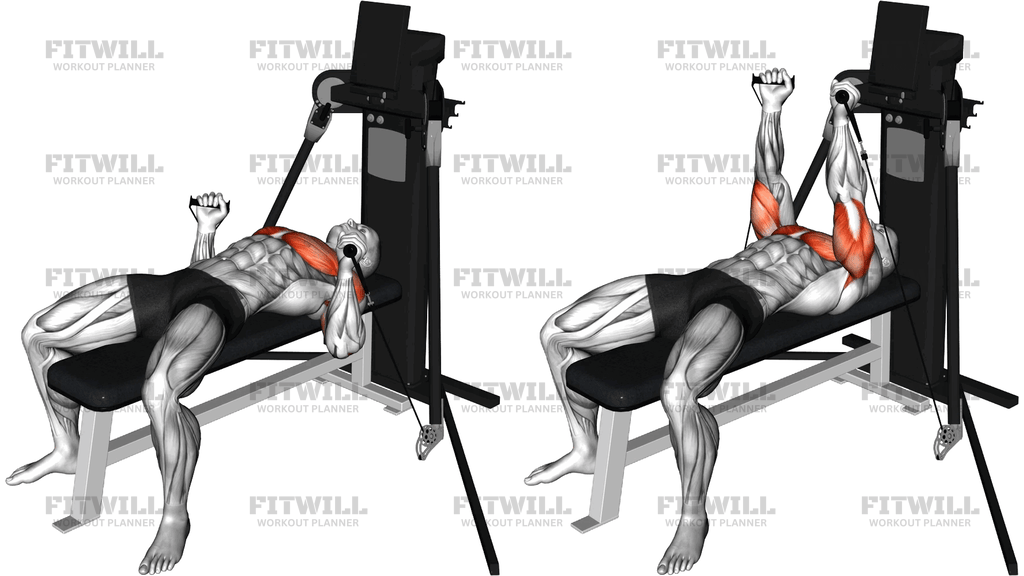
Cable Seated Rear Delt Fly With Chest Support
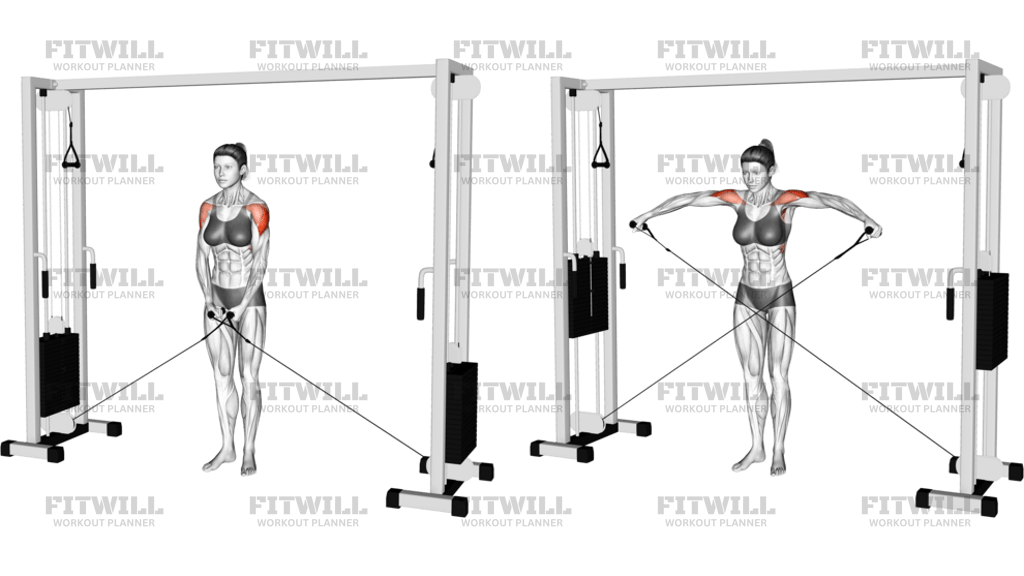
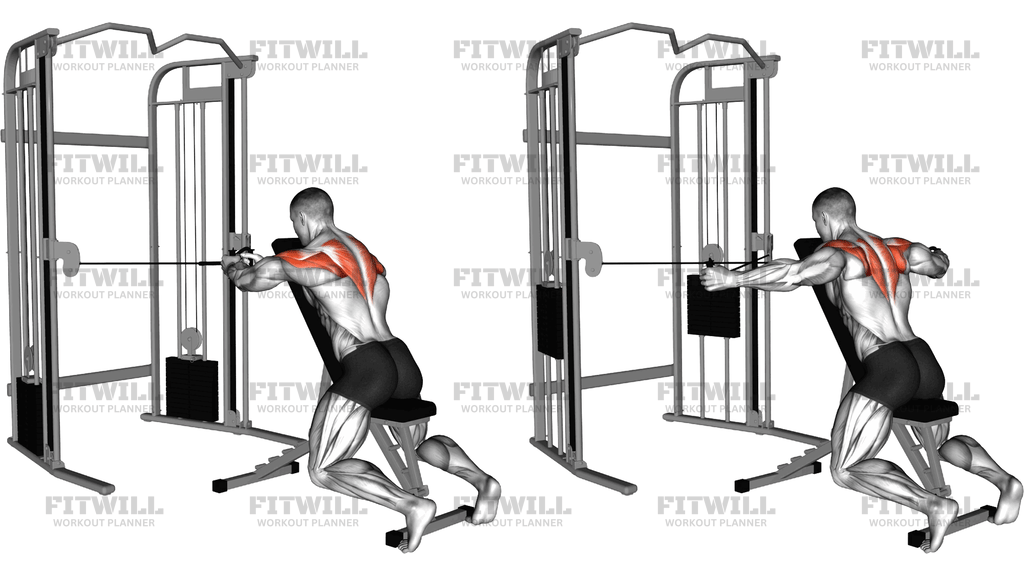
Cable Seated Rear Delt Fly With Chest Support is a chest-supported cable isolation exercise that targets the rear delts while also asking the mid traps, rhomboids, and other upper-back muscles to help stabilize the shoulder blades. The support changes the exercise in a useful way: it removes most of the body swing and makes the rear delts do the work of opening the arms instead of letting momentum take over.
The setup matters because the line of pull and the chest support determine whether this feels like a controlled rear-delt fly or a sloppy row. When the seat and pad are set correctly, your chest stays anchored, your feet stay planted, and the handles start slightly in front of the shoulders so the rear delts are loaded from the first inch of the rep.
Each rep should travel in a wide arc out and slightly back, with only a small bend in the elbows. Think about moving the upper arms rather than cranking the hands. At the finish, the hands should be out at shoulder height or a touch behind it, with the neck relaxed and the shoulders not shrugged up toward the ears. The return should be slow and deliberate so the cable keeps tension on the posterior shoulder.
This is a useful accessory movement on upper-body, pull, or shoulder-focused days, especially when you want clean rear-delt work without standing and cheating through the torso. It also fits well when you need a lower-fatigue option for shoulder balance and posture work after pressing or rowing.
Use lighter loading than you would for a rowing pattern and stop the set when the chest starts coming off the pad or the traps begin to dominate. If the range gets shorter or the handles bounce, the weight is probably too heavy. Done well, this exercise builds the back of the shoulders with a strict, repeatable path that is easy to track and progress.
[ Workout Log & Planner ]
Put your next workout in Fitwill
Keep your plan and training log ready when you are.


Instructions
- Adjust the seat and chest pad so your sternum stays supported and the cable handles start slightly in front of shoulder height.
- Plant both feet flat and take a firm chest-supported position with your torso angled into the pad.
- Hold the handles with a neutral grip if the attachment allows it, and keep a soft bend in both elbows.
- Set your shoulders down away from your ears before the first rep.
- Pull the handles out and slightly back in a wide arc until your upper arms line up with your shoulders or just behind them.
- Pause for a moment at the open position and squeeze the rear delts without letting the rib cage flare.
- Lower the handles slowly on the same path until your arms are long again and the cables stay under control.
- Keep breathing smooth: exhale as you pull, inhale as you return.
- Reset your shoulder blades and posture before starting the next repetition.
Tips & Tricks
- If the rear delts are the goal, keep the elbows only slightly bent so the exercise does not turn into a short row.
- Set the seat high enough that the handles track around shoulder level; a low setup tends to shift work into the lats and mid back.
- Keep your chest pinned to the support pad so the cable does not pull your torso forward on the return.
- Lead with the elbows instead of the hands to keep tension on the back of the shoulders.
- Stop the outward sweep when the upper arms reach shoulder line; forcing extra range usually turns into shrugging.
- Choose a lighter load than you would for a chest-supported row, because the rear delts fatigue before the big back muscles do.
- Let the cables pull you forward slowly under control so the last half of the eccentric still loads the rear delts.
- If your upper traps burn more than the rear delts, lower the load and keep the neck long instead of reaching harder.
- A brief squeeze at the open position helps, but do not pin the shoulder blades hard together or the movement becomes too row-like.
- If the handles bang into the stack, shorten the range a little and slow the return instead of adding momentum.
Frequently Asked Questions
What muscles does Cable Seated Rear Delt Fly With Chest Support work most?
The rear delts are the main target, with the rhomboids, mid traps, and other upper-back muscles helping stabilize the shoulder blades.
Why use the chest support on this cable rear delt fly?
The support reduces torso swing and makes it easier to keep the motion focused on the back of the shoulders instead of turning it into a row.
How should the handles travel during the rep?
They should move out and slightly back in a wide arc, finishing around shoulder height or a little behind it without shrugging.
Should my elbows stay bent on the cable handles?
Yes, keep a small, fixed bend. If the elbows keep changing angle, the movement starts to look like a row instead of a rear-delt fly.
Can beginners do this seated rear delt fly?
Yes. Light resistance, a stable chest position, and a slow return make it a very beginner-friendly shoulder accessory.
What is the most common setup mistake with the chest pad?
Setting the seat too low or too far from the stack often changes the pull angle and shifts tension away from the rear delts.
What if I feel it mostly in my upper traps?
Lower the load, keep your neck long, and stop the rep when the arms reach shoulder line instead of chasing extra height.
Is this a good alternative to dumbbell rear delt flys?
Yes, the cable version keeps constant tension and the chest support makes it easier to stay strict than with free weights.
Where should I feel the stretch at the start?
You should feel the rear delts and upper back lengthen slightly as the handles move forward, but not a sharp pull in the front of the shoulder.