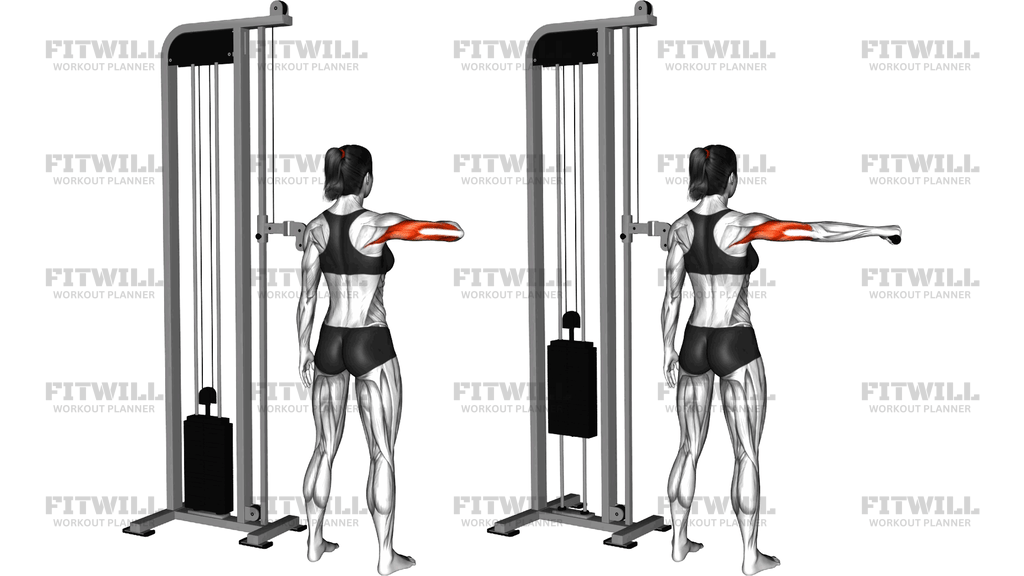
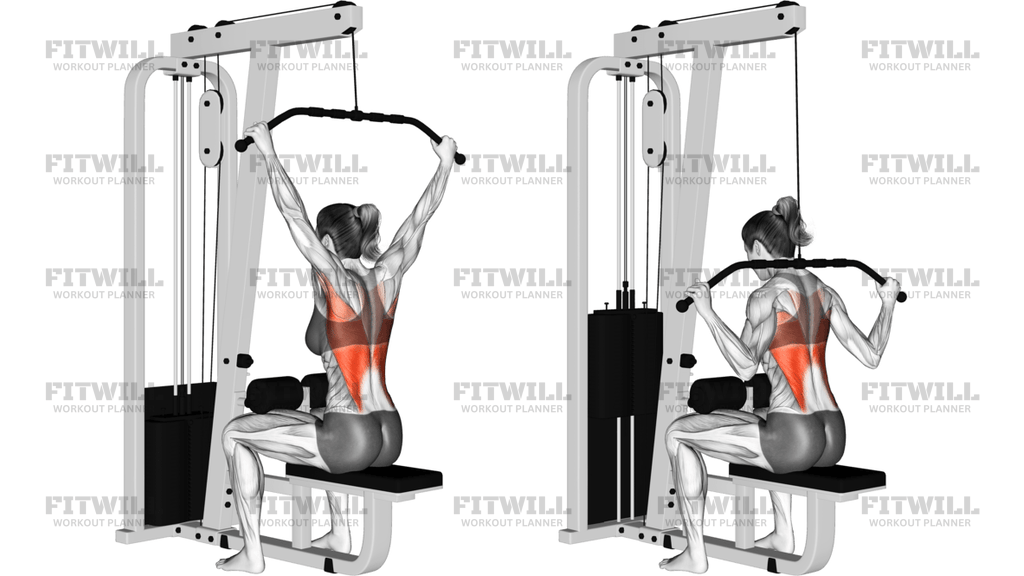
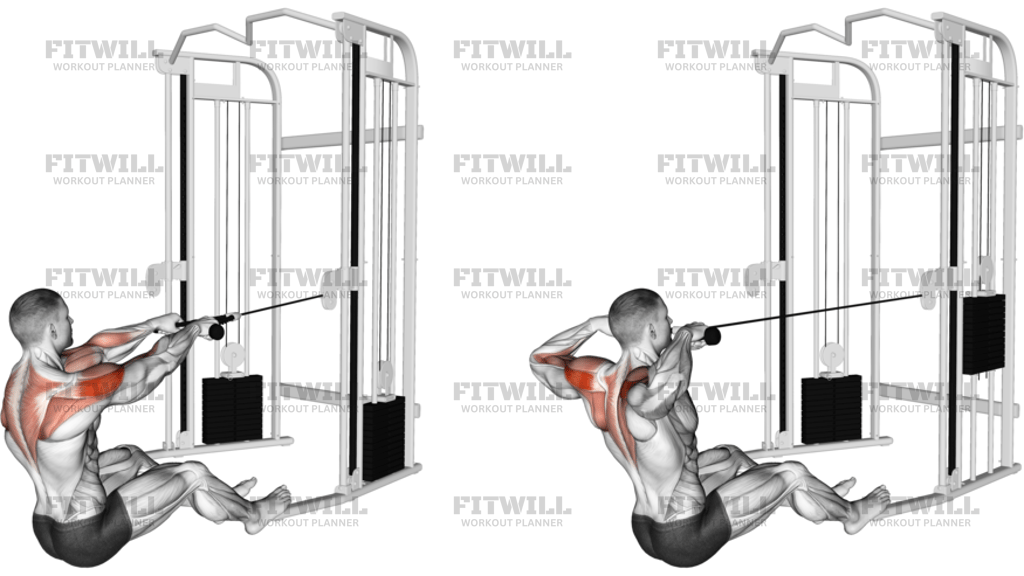
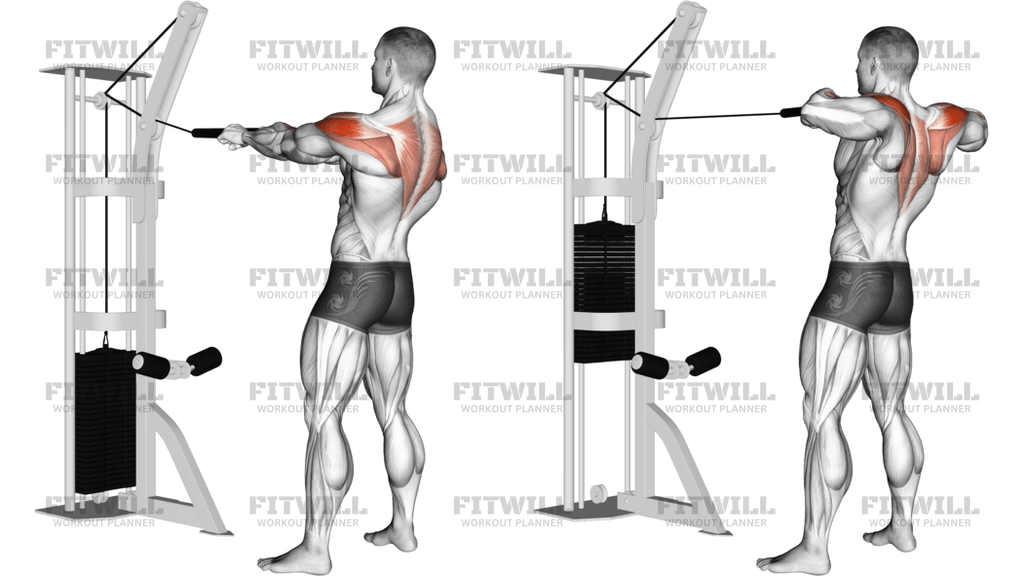
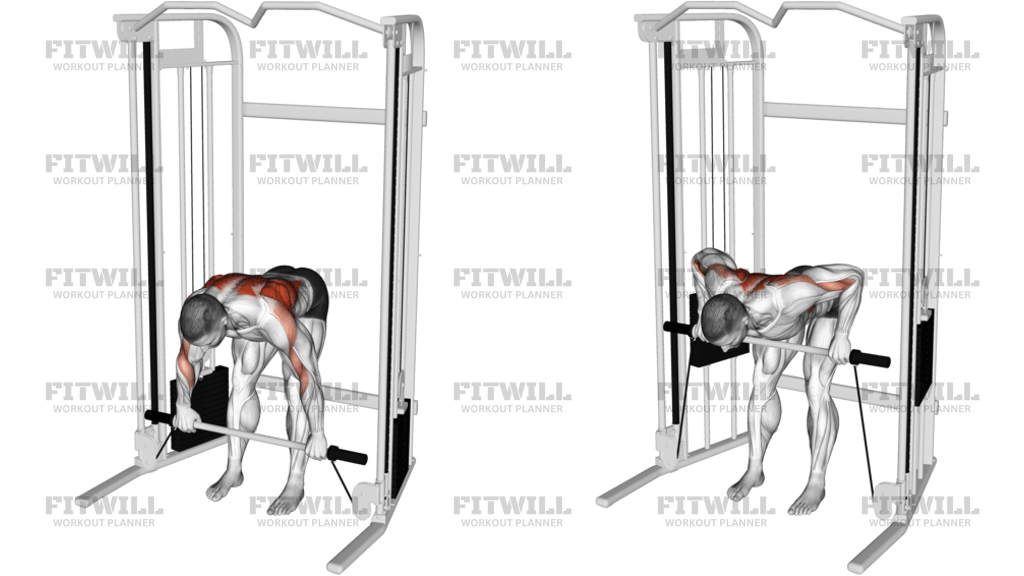
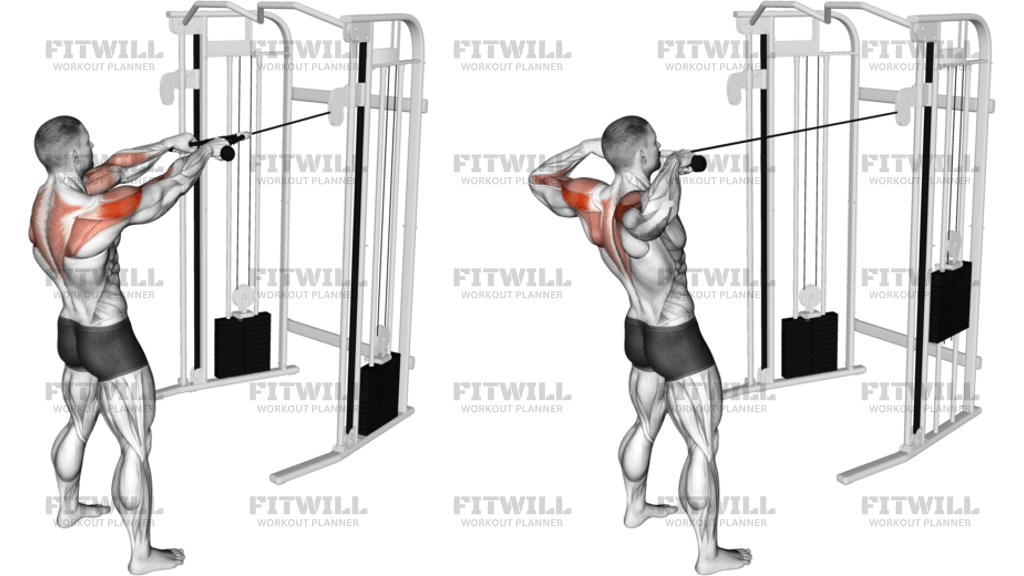
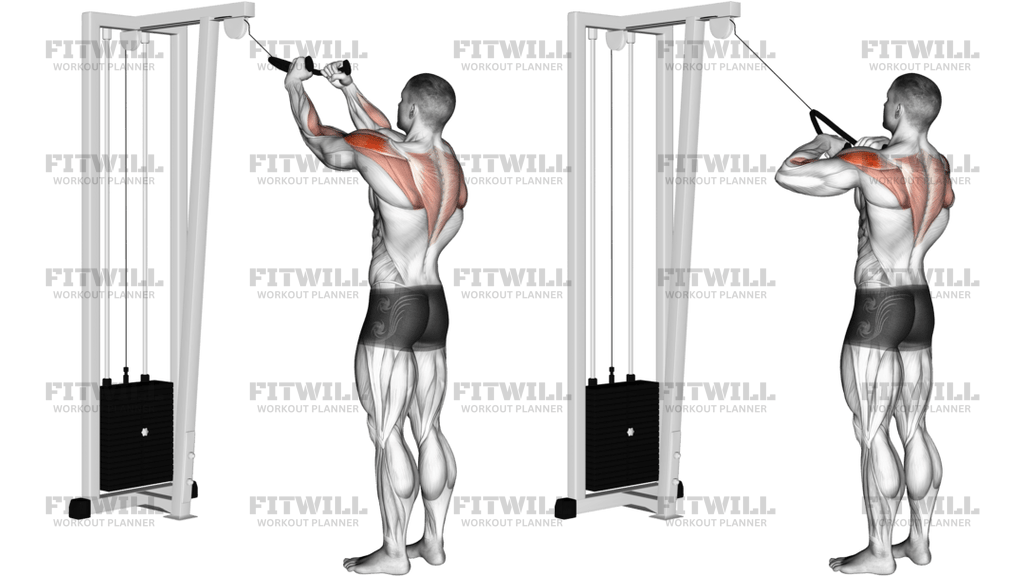
Cable Rear Delt Row Stirrups
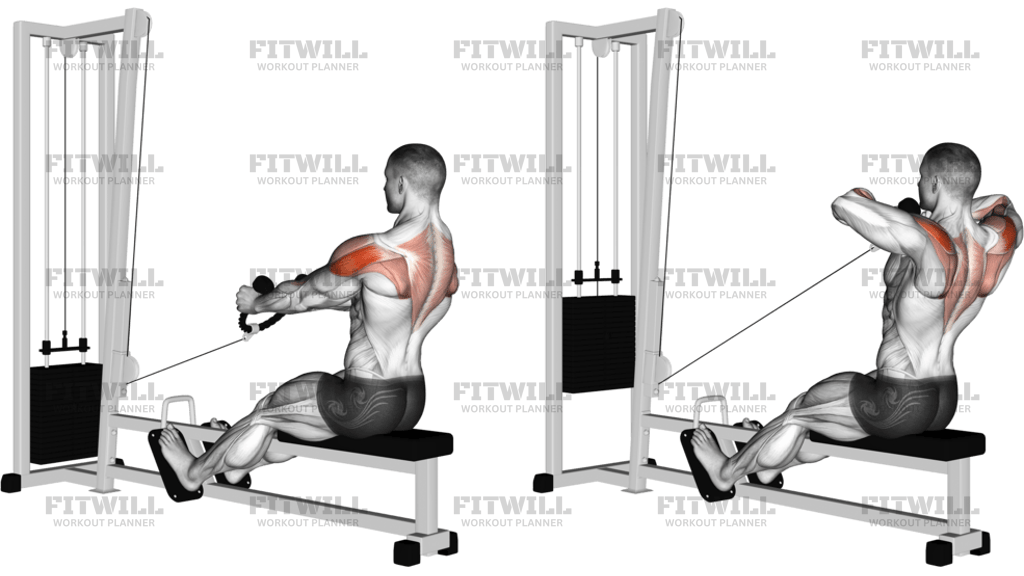
Cable Rear Delt Row with Stirrups is a rear-shoulder dominant rowing variation that uses separate handles so each arm can travel on its own path. The independent handles make it easier to keep the movement symmetrical while still letting the elbows open out a little wider than a standard low row, which shifts the emphasis toward the rear delts and upper back.
The main targets are the posterior deltoids and upper back, with the biceps and rhomboids supporting the pull. It works best when the torso stays steady, the neck stays long, and the elbows drive back in a slightly wider row path instead of turning the movement into a heavy lat row. That makes Cable Rear Delt Row with Stirrups useful for rear-delt development, scapular control, and cleaner side-to-side balance.
Set the stirrup handles at a chest-height row line, step back until the cables are under tension, and hinge slightly or sit depending on the setup. Begin with the arms long and the chest open, then row the elbows back and slightly out while keeping the shoulders from shrugging. Pause briefly at the squeeze and return the handles forward slowly so both sides stay under control.
Cable Rear Delt Row with Stirrups works well as a rear-delt accessory after bigger pulls or presses, especially when you want independent arm paths and a little more control over each side. It can also help reveal side differences because each handle moves separately. Good sets feel balanced, deliberate, and controlled, with the rear shoulders and upper back doing the visible work while the torso stays quiet.
If the movement turns into a lat row or the torso starts swinging, reduce the load and keep the elbows a little higher and wider. The goal is a strict rear-delt row that feels clean on both sides.
[ Workout Log & Planner ]
Put your next workout in Fitwill
Keep your plan and training log ready when you are.


Instructions
- Set the stirrup handles to a chest-height row line and step back until the cables are under tension.
- Take one handle in each hand and hinge slightly or sit, depending on the setup you have.
- Keep your chest open and your neck long before the first rep.
- Row the elbows back and slightly out in a rear-delt path.
- Pause briefly at the squeeze without shrugging the shoulders.
- Return the handles forward slowly until both arms are long again.
- Keep the torso quiet so each handle follows the same path every rep.
- Repeat with symmetrical movement for the planned set.
Tips & Tricks
- Keep the elbows a little wider than a low row, but not so wide that the movement turns into a shrug.
- The separate handles are useful for symmetry, so pay attention if one side finishes early or feels much stronger.
- If the torso starts swinging, the load is too heavy for a strict rear-delt row.
- Use a moderate load and a short pause at the squeeze to make the rear shoulders do the work.
- Keep the neck relaxed so the upper traps do not take over the finish.
- The return should be slow enough that the shoulders stay organized all the way back to the start.
- Lead with the elbows and let the hands simply follow the row path.
- A clean rear-delt row is usually smaller and more controlled than people expect.
Frequently Asked Questions
What muscles does Cable Rear Delt Row with Stirrups work?
It mainly works the rear deltoids and upper back, with the biceps and rhomboids helping support the pull.
Why use stirrup handles for this row?
They allow independent arm paths and make it easier to check symmetry side to side.
Can beginners do Cable Rear Delt Row with Stirrups?
Yes, as long as the load is light and the torso stays stable.
Should my elbows stay tucked in this row?
No, the elbows usually track a little wider to keep the rear delts involved.
What is the most common mistake in Cable Rear Delt Row with Stirrups?
Turning it into a heavy lat row with torso swing instead of a rear-delt row.
Is Cable Rear Delt Row with Stirrups good for posture?
It can help strengthen muscles that support better shoulder position and posture.
What rep range works well here?
Moderate to high reps usually work well because rear-delt work responds well to control and feel.