Cable Reverse Curl
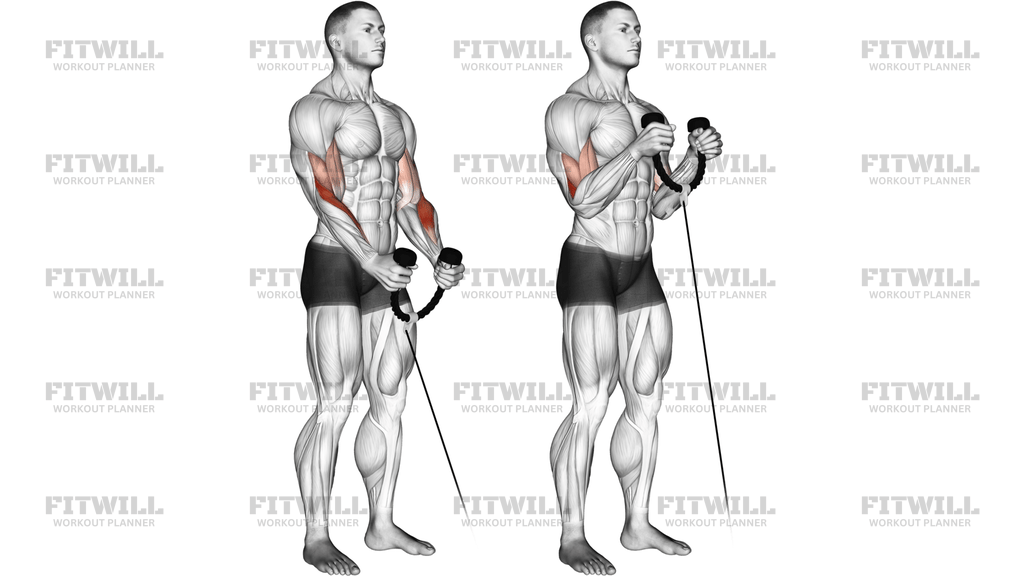
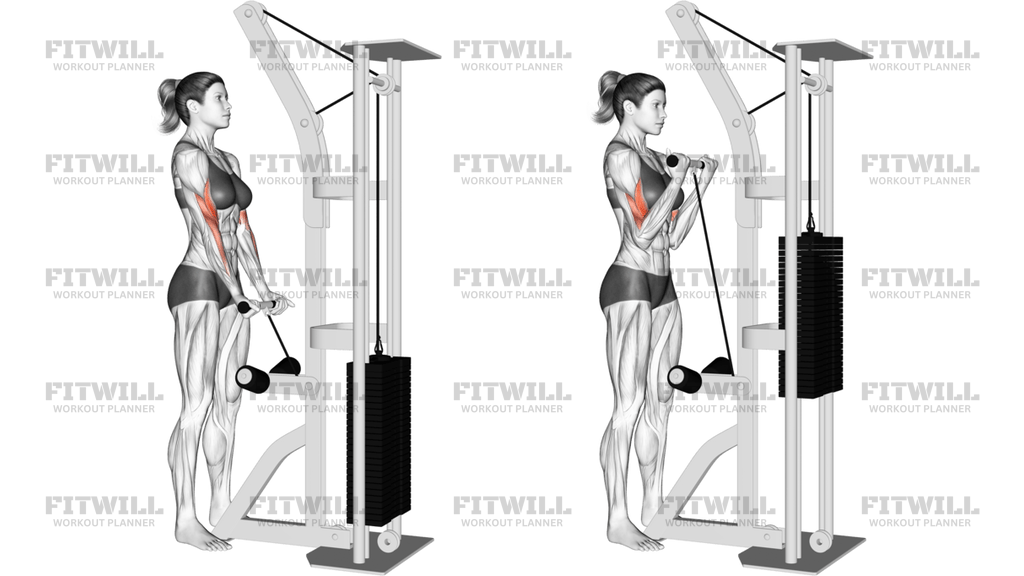
Cable Reverse Curl is an overhand cable curl that shifts more of the work toward the forearms and brachialis while still training the biceps. The palms-down grip makes the curl feel mechanically harder than a standard curl, which is why this variation is often used to build forearm thickness, elbow-flexion strength, and grip endurance.
The main target in the current labeling is the biceps, with the brachioradialis, brachialis, and wrist extensors helping a lot more than they do in a supinated curl. It works best when the elbows stay tucked, the wrists remain neutral, and the torso stays still. That keeps the load on the arm flexors instead of turning the set into a shoulder swing or a wrist-cranking contest.
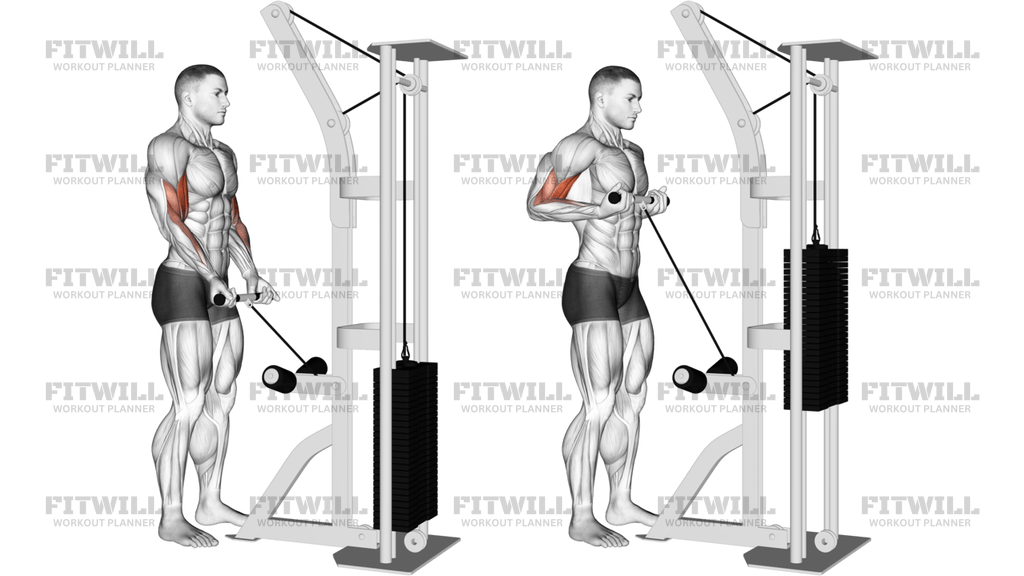
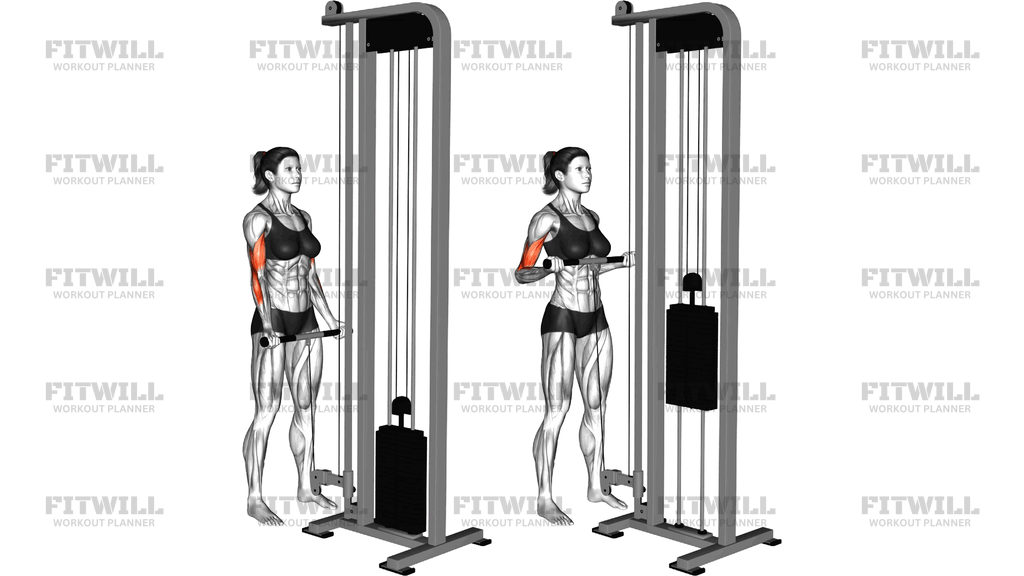
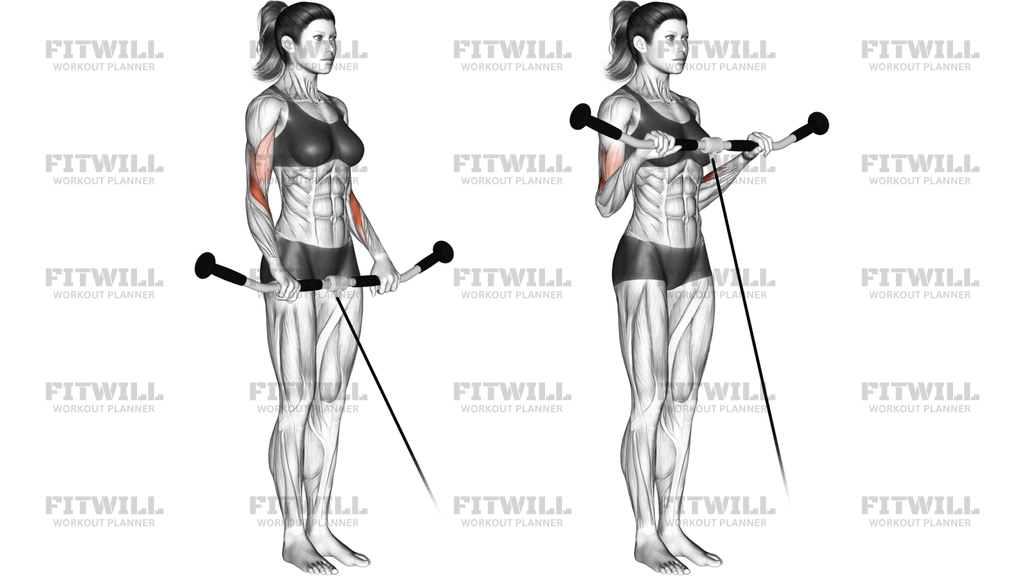
Set a straight bar on a low pulley and take an overhand grip about shoulder width apart. Stand tall, brace your core, and curl the bar upward by bending the elbows while keeping the upper arms near your sides. Pause briefly near the top, then lower the bar slowly back down without letting the wrists bend back or the torso rock forward and backward.
Cable Reverse Curl is useful as a forearm accessory, a brachialis-focused arm movement, or a way to build stronger elbows for other pulling and gripping work. Because the overhand grip is mechanically weaker, the load should usually stay lighter than your normal curl weight. Good sets feel controlled and deliberate, with the forearms and brachialis doing a lot of the visible work.
If the wrists start to ache or the torso starts swinging, reduce the load and keep the path tighter. The goal is a strict reverse curl with neutral wrists and a clean elbow bend from start to finish.
[ Workout Log & Planner ]
Put your next workout in Fitwill
Keep your plan and training log ready when you are.


Instructions
- Attach a straight bar to a low pulley and take an overhand grip about shoulder width apart.
- Stand tall and brace your core before the first rep.
- Keep your elbows near your sides and your wrists neutral.
- Curl the bar upward by bending the elbows without letting the torso swing.
- Pause briefly near the top, then keep the forearms in control.
- Lower the bar slowly back to the start without letting the wrists bend back.
- Keep the upper arms quiet through the whole set.
- Repeat for the planned reps, then let the bar settle before stepping away.
Tips & Tricks
- Use lighter load than your regular curl because the overhand grip is mechanically weaker.
- Keep the wrists straight; bending them back usually turns this into a forearm strain instead of a clean reverse curl.
- If the elbows drift forward, the set stops being a strict forearm and brachialis movement.
- A slow lowering phase is especially useful here because it keeps the forearms loaded through the weaker grip position.
- If the bar feels unstable, narrow the grip slightly and lighten the load before adding volume.
- Do not chase a huge squeeze at the top if it makes the wrists bend or the shoulders rise.
- Reverse curls usually work best with moderate to higher reps and strict control.
- Stop the set if the wrists start complaining, because that usually means the load or grip position is off.
Frequently Asked Questions
What muscles does Cable Reverse Curl work?
It mainly works the forearms and brachialis, with the biceps assisting the curl.
Why is the weight usually lighter on Cable Reverse Curl?
The overhand grip is mechanically weaker for elbow flexion, so most people need less load.
Can beginners do Cable Reverse Curl?
Yes, as long as they use a conservative load and keep the wrists neutral.
Should my wrists stay straight in Cable Reverse Curl?
Yes, keep the wrists neutral for better comfort and control.
What is the most common mistake in Cable Reverse Curl?
Swinging the torso or bending the wrists back to finish the rep.
What rep range works well for Cable Reverse Curl?
Moderate to higher reps are typical because the movement is strict and the grip is demanding.
Can Cable Reverse Curl improve grip strength?
Yes, it can support grip and forearm strength development.