Cable Reverse-Grip Pulldown
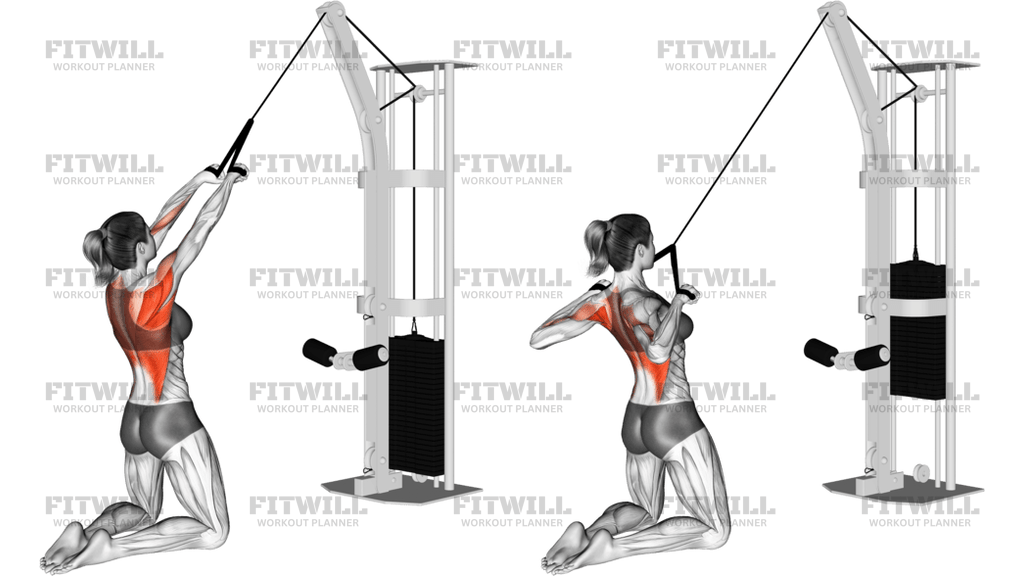
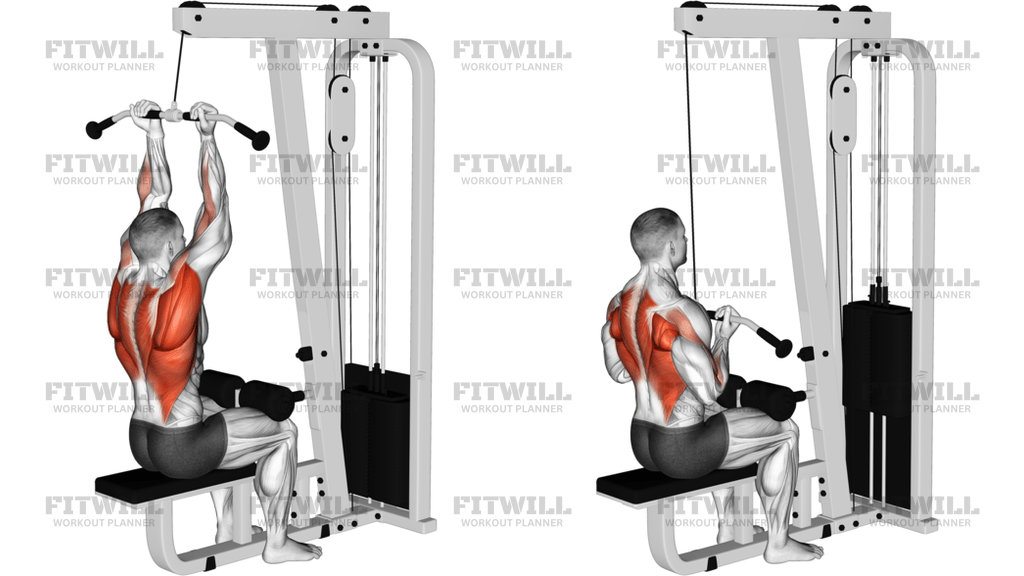
Cable Reverse-Grip Pulldown is a seated vertical pulling exercise performed on a lat pulldown machine with an underhand grip. The image shows a reverse-grip handle attached to a high cable, a knee pad securing the thighs, and the torso held tall while the bar is pulled down toward the upper chest. That setup matters because the bench, thigh pad, and grip angle all help keep the body fixed while the back and arms do the work.
This variation shifts the pulling line so you can emphasize the lower lat fibers and ask a little more from the biceps than a standard overhand pulldown. It is still a back exercise first, but the underhand position often feels smoother for lifters who want a strong lat contraction without the shoulder position of a wide pronated grip. The path should stay vertical and controlled, not turned into a lean-back row.
A good rep starts by locking the thighs under the pad, sitting squarely on the seat, and setting the chest tall before the pull begins. From there, drive the elbows down and slightly back while keeping the wrists stacked over the forearms. The bar should travel toward the upper chest or collarbone area, then return slowly until the lats lengthen without the shoulders dumping forward.
Because the movement is guided by a cable, the main challenge is control rather than balance. The torso should stay mostly fixed, with only a small amount of natural ribcage movement. If you have to kick the torso back to finish the rep, the load is too heavy or the seat position is wrong. Clean reps should feel like the elbows are carving down alongside the ribs while the hands simply connect you to the handle.
Use Cable Reverse-Grip Pulldown as a main or accessory pull on back day, or as a lower-lat focused variation when you want a strict machine movement with consistent tension. It works well for beginners and intermediate lifters alike because the machine sets the path, but the reverse grip still demands good shoulder control and a deliberate return to the top.
Fitwill
Log Workouts, Track Progress & Build Strength.
Achieve more with Fitwill: explore over 9600 exercises with images and videos, access built-in and custom workouts, perfect for both gym and home sessions, and see real results.
Start your journey. Download today!




Instructions
- Adjust the seat so the thigh pad locks your legs in place and sit tall with your chest lifted.
- Grasp the reverse-grip handle with palms facing up, hands about shoulder width or slightly narrower.
- Plant both feet flat, stack your ribs over your pelvis, and keep your lower back neutral before you start.
- Begin with your arms extended overhead and your shoulders set down away from your ears.
- Pull the handle down by driving your elbows toward your sides and slightly back, not by leaning hard away from the stack.
- Bring the handle to your upper chest or collarbone while keeping the wrists straight and the neck relaxed.
- Pause for a brief squeeze at the bottom without losing the tall torso position.
- Return the handle to the top under control until the lats are fully lengthened and the elbows are straight.
- Exhale as you pull, inhale as you let the cable rise, and reset before the next repetition.
Tips & Tricks
- Keep the thighs pinned under the pad so the cable does not pull you off the seat.
- Think about dropping the elbows into your back pockets to keep the lats involved.
- Stop the bar at the upper chest rather than turning the rep into a behind-the-neck or mid-chest heave.
- Use a grip width that lets your forearms stay vertical at the bottom; too wide shortens the range.
- Avoid curling the bar with the hands, because the reverse grip already recruits the biceps strongly.
- Do not swing your torso backward to finish the rep; if you need to lean, reduce the load.
- Let the shoulders rise only at the very top of the return, then set them down again before the next pull.
- Choose a controlled tempo on the way up so the stretch at the top stays active instead of being yanked by the stack.
Frequently Asked Questions
What does Cable Reverse-Grip Pulldown train most?
It mainly trains the lats, especially the lower lat line, while the biceps help more than they do in an overhand pulldown.
Why use an underhand grip on the pulldown handle?
The reverse grip changes the elbow path and usually lets you feel a stronger lat contraction with a bit more arm involvement.
Should the torso move during the rep?
A tiny amount of natural movement is fine, but the seat and thigh pad should keep this mostly vertical and strict.
Where should the bar touch at the bottom?
Pull the handle to the upper chest or collarbone area, not low to the stomach and not behind the neck.
What is the most common mistake on this machine?
Lifters often lean back and turn the exercise into a body swing, which reduces lat tension and stresses the setup.
Is this easier on the shoulders than a wide pulldown?
Many people find the reverse-grip version friendlier because the elbows stay closer to the body and the shoulder position feels less extreme.
Can beginners use Cable Reverse-Grip Pulldown?
Yes, beginners can usually learn it well because the machine guides the path, as long as the load stays light enough to keep the torso still.
How can I make the set more lat-focused?
Use a slightly slower return, keep the elbows driving down, and stop each rep before the shoulders start to shrug forward.