Cable Side Crunch
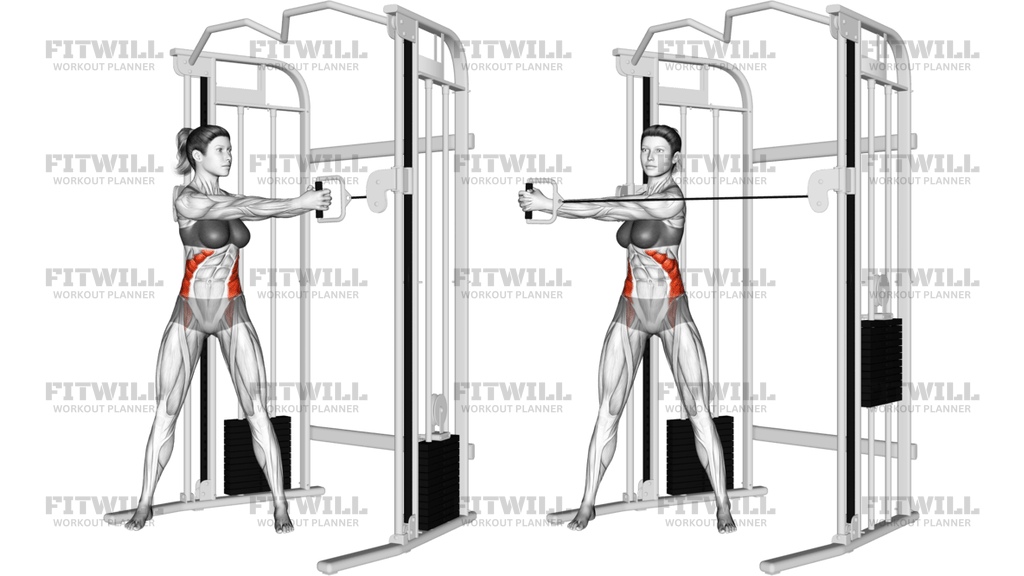
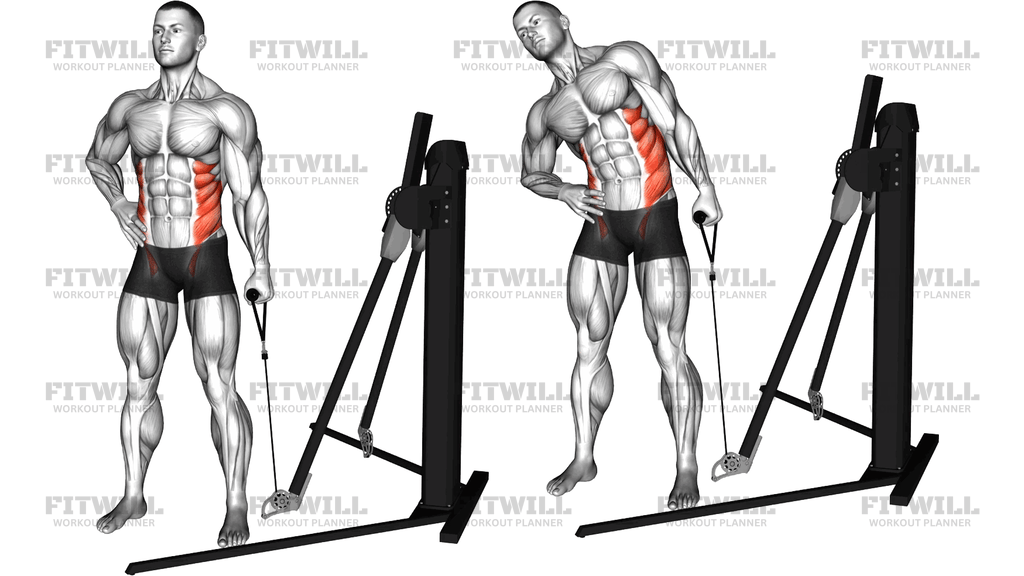
Cable Side Crunch is a cable-loaded oblique movement that combines side flexion with a short crunching path. The rope attachment gives the exercise a very direct feel: you are not trying to heave the torso around, you are trying to compress the ribcage toward the working side with enough control that the waist stays active from the first rep to the last. When the rep is clean, the movement feels focused and compact rather than big and swinging.
The main target is the external obliques, with the rectus abdominis, erector spinae, and iliopsoas helping stabilize the trunk. That makes Cable Side Crunch a good choice when you want the waist to do visible work without turning the set into a full-body pull. The hips should stay mostly quiet, the neck should stay long, and the torso should move in a controlled arc that feels more like a side crunch than a side lean.
Set the rope on a high cable and stand sideways to the machine with your feet planted firmly. Bring the rope near head level or slightly above the shoulder, then brace your core before you start. The setup should leave you tall and organized, with the ribs stacked over the pelvis and the shoulders relaxed. If the start position already feels twisted or stretched, the rest of the set tends to get messy fast.
As you crunch, think about drawing the ribcage down toward the loaded side while keeping the hips mostly in place. The cable should guide the line of resistance, but the torso creates the motion. Pause briefly at the bottom, then return slowly to the start without letting the cable jerk you back up. The return phase matters because it keeps tension on the obliques instead of letting the rep end in a quick bounce.
Cable Side Crunch works well as an accessory core drill after compound lifts, during a trunk-focused block, or in a higher-rep conditioning circuit where you still want strict form. Use a load you can own, not one that forces the shoulders to shrug or the spine to twist. If you keep the range compact and the tempo steady, the exercise delivers a strong oblique contraction without needing to be dramatic.
[ Workout Log & Planner ]
Put your next workout in Fitwill
Keep your plan and training log ready when you are.


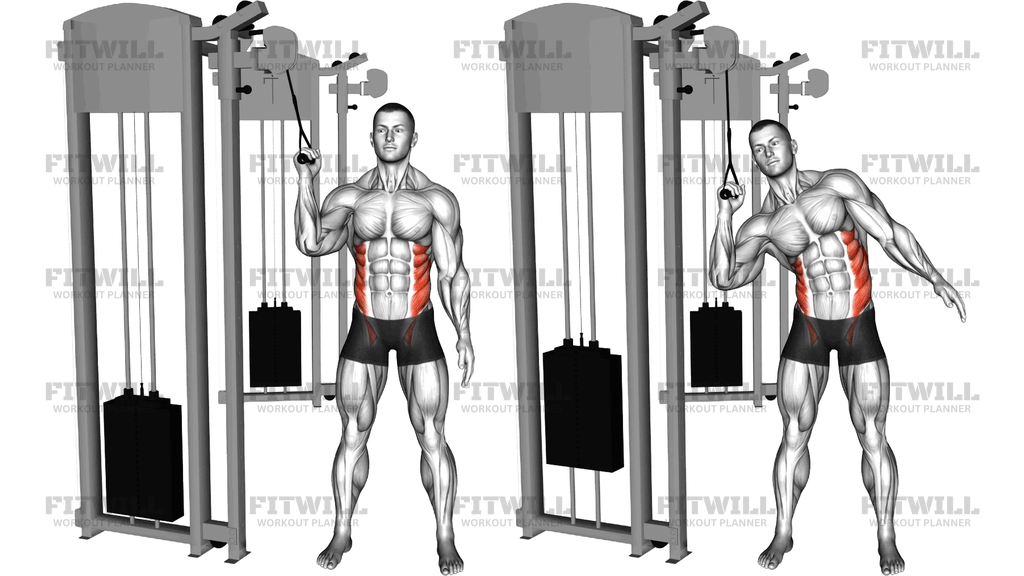
Instructions
- Attach the rope to a high cable position.
- Stand sideways to the machine with your feet planted firmly.
- Hold the rope near head level or just above the shoulder.
- Stack your ribs over your pelvis and brace your core.
- Keep your neck long and your shoulders relaxed before the first rep.
- Crunch the torso down toward the loaded side in a compact path.
- Keep the hips mostly fixed while the waist does the work.
- Pause briefly at the bottom when the working side is fully shortened.
- Return slowly to the start and repeat before switching sides.
Tips & Tricks
- Keep the movement short and deliberate; bigger is not better here.
- Think about bringing the ribs down toward the hip, not pulling the handle with the arms.
- If the shoulders start shrugging, the load is probably too heavy.
- Hold the hips steady so the obliques stay in charge of the rep.
- Exhale on the crunch to help the torso fold cleanly.
- A brief pause at the bottom makes the side contraction easier to feel.
- Use a weight that keeps the return phase slow and controlled.
- Stop the set as soon as the torso starts twisting or the neck starts tightening.
Frequently Asked Questions
What is the primary muscle in Cable Side Crunch?
The external obliques are the primary target.
Is Cable Side Crunch different from side bends?
Yes, this version emphasizes a shorter crunching motion instead of a longer standing side bend.
Can I train both sides in one workout?
Yes, just make sure both sides get the same number of controlled reps.
Should I use heavy weight?
Moderate load with strict trunk control is usually the better choice.
What if my neck gets tense?
Reduce the load and keep the neck long so the rope does not turn into a shrugging movement.
Is Cable Side Crunch okay for beginners?
Yes, as long as the load is light and the movement stays compact and controlled.
How many reps should I do?
Moderate reps per side work well when the goal is clean oblique tension.
What is a common error?
Turning the exercise into an arm pull, a twist, or a fast bounce back to the start.