Cable Standing Lift
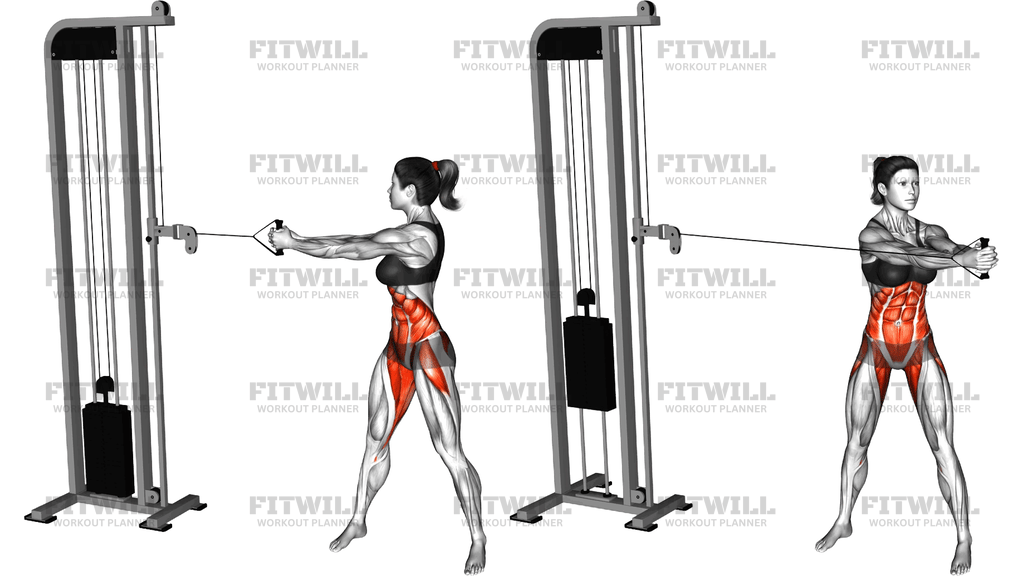
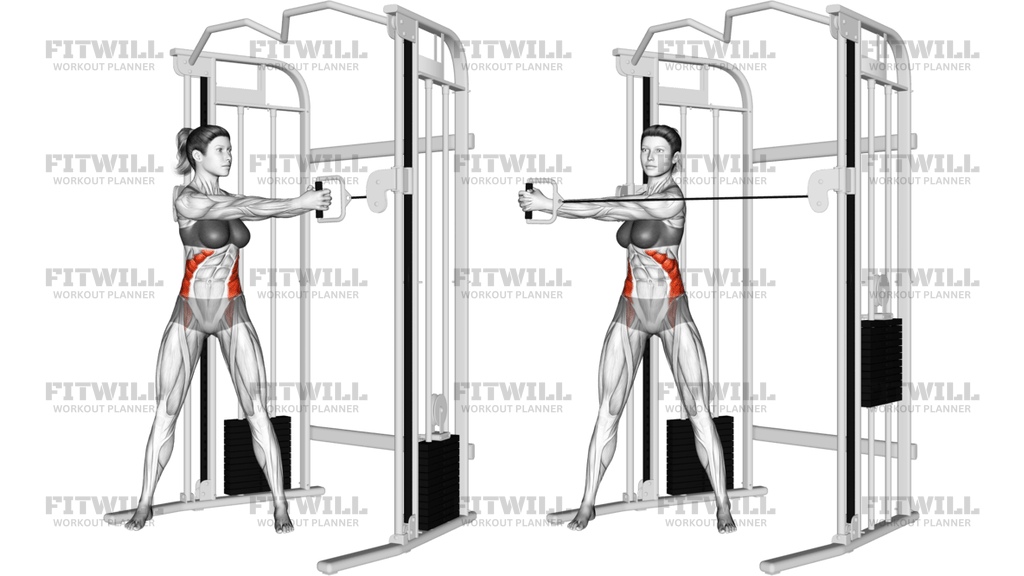
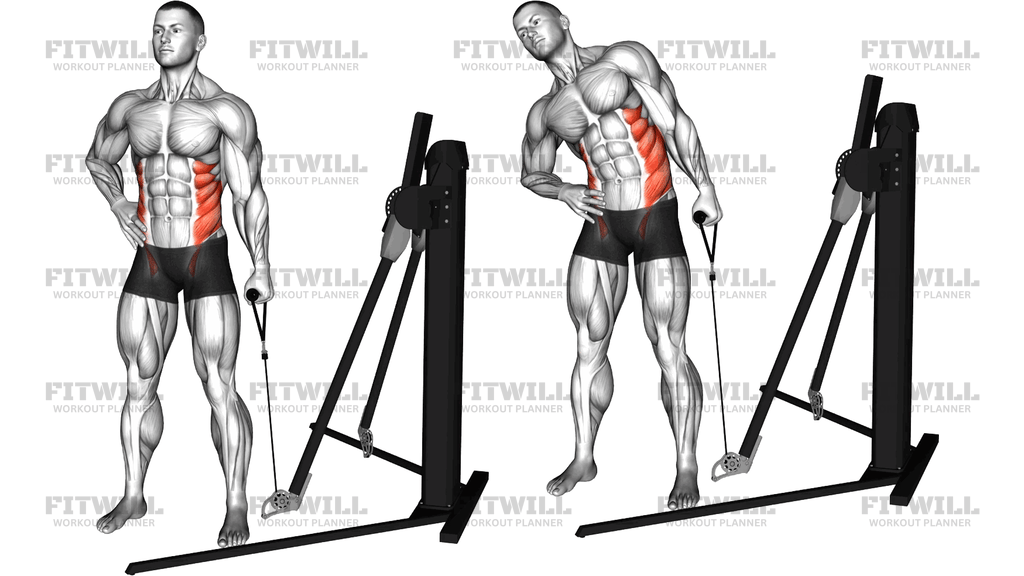
Cable Standing Lift is a rotational core exercise that brings the cable upward and across the body in a controlled diagonal path. The movement trains the obliques to organize rotation while the hips and torso stay coordinated, which makes it useful when you want the trunk to produce power without letting the motion become sloppy or overly large. The line of pull is the point of the exercise: the cable should feel like it is guiding a clean lift, not dragging the body around.
The primary target is the external obliques, with the rectus abdominis, iliopsoas, and erector spinae helping stabilize the trunk. That means the rep should start from a solid brace and move through the torso rather than through the arms alone. A small amount of natural hip and trunk turn is fine, but the exercise loses quality quickly if the pelvis swings open or the spine rotates too far to finish the rep.
Set the cable low and stand side-on with a stance that feels athletic and steady. Use both hands on the single handle if that is the version you have, then brace your core and stack the ribs over the pelvis before the first rep. The start position should feel ready to move in a diagonal line, not twisted or leaned over. If the lower body cannot stay grounded, the obliques usually end up chasing balance instead of doing the work.
Lift the handle diagonally across the torso with a smooth, controlled rise. Think about the torso and cable moving together as one organized pattern instead of snapping the handle upward with the arms. Pause briefly near the top, then return slowly along the same path to the start. The lowering phase matters because it keeps the obliques under tension and prevents the exercise from becoming a fast chop-and-drop.
Cable Standing Lift fits well in core blocks, athletic warm-ups, and accessory work where rotational control matters. Use light to moderate load and a range you can repeat cleanly on both sides. If you feel the movement turning into a shoulder yank or a hip swing, shorten the arc and slow the tempo. The best version of this lift looks compact, deliberate, and repeatable.
[ Workout Log & Planner ]
Put your next workout in Fitwill
Keep your plan and training log ready when you are.


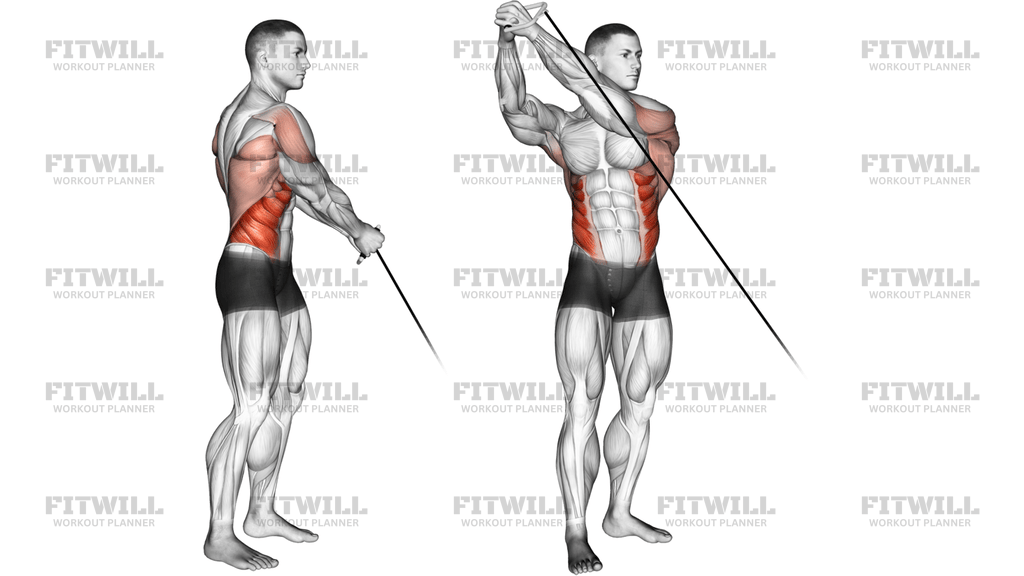
Instructions
- Set the cable to a low position and attach a single handle.
- Stand side-on with an athletic stance that feels stable.
- Grip the handle with both hands if that is the version you are using.
- Brace your core and stack your ribs over your pelvis.
- Keep your knees soft and your neck relaxed before the first rep.
- Lift the handle diagonally across the torso in a smooth path.
- Pause briefly near the top while keeping the trunk controlled.
- Return slowly along the same path to the start.
- Complete the reps on one side, then switch and repeat.
Tips & Tricks
- Let the torso drive the lift, not the arms pulling the handle across the body.
- Keep the stance grounded so the hips do not spin open to cheat the rep.
- Use a load that lets you pause briefly without losing alignment.
- A smooth diagonal path usually feels better than trying to force a bigger arc.
- Exhale as you lift to help the obliques finish the movement.
- If the lower back feels like it is doing the work, shorten the range.
- Keep the neck quiet so the upper body does not add extra tension.
- Match both sides closely so the rotational pattern stays balanced.
Frequently Asked Questions
What muscle is primary in Cable Standing Lift?
The external obliques are the primary target.
Is Cable Standing Lift an ab exercise?
Yes, it is a core exercise that trains rotational control through the trunk.
Should hips rotate a lot?
No, only a small natural turn is needed; avoid letting the hips swing open.
Can beginners do this movement?
Yes, with light resistance and strict control.
Why do my arms tire first?
You may be pulling too much with the arms instead of rotating through the torso.
How many reps are common?
Moderate reps per side are common for this pattern.
Can Cable Standing Lift help sports rotation power?
It can support rotational strength when it is progressed appropriately.
What common mistake should I avoid?
Using momentum or losing the core brace during the return.