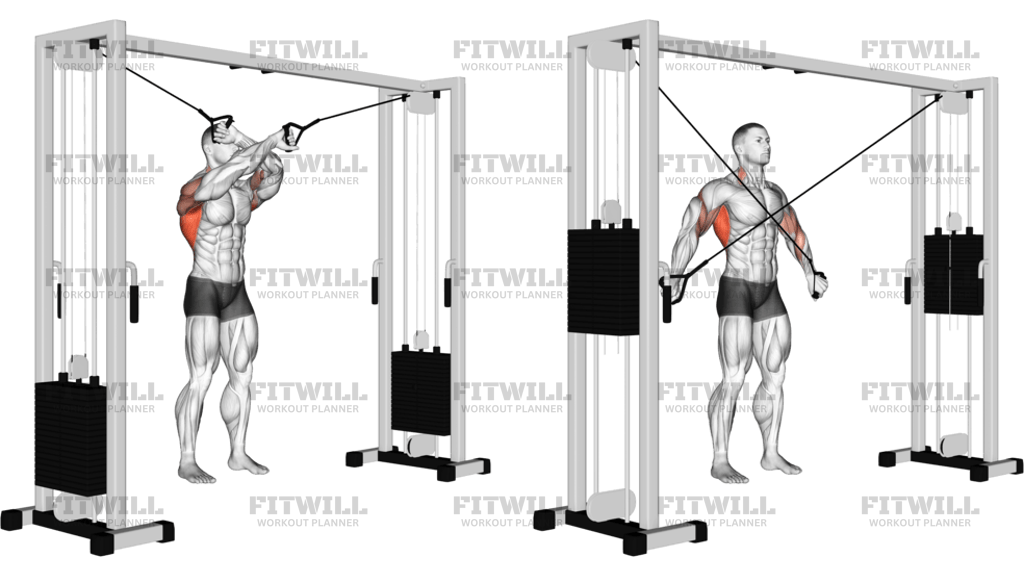
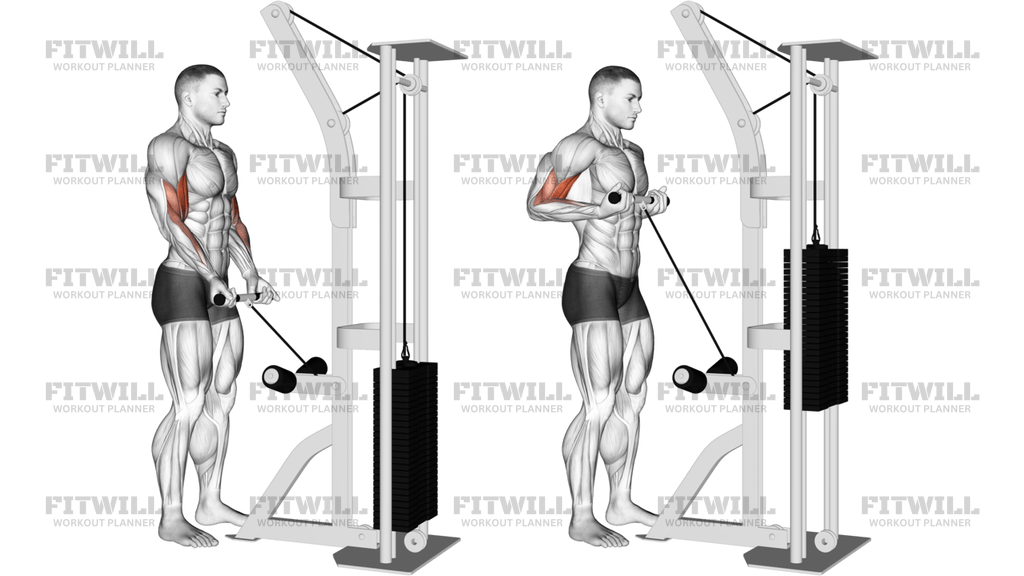
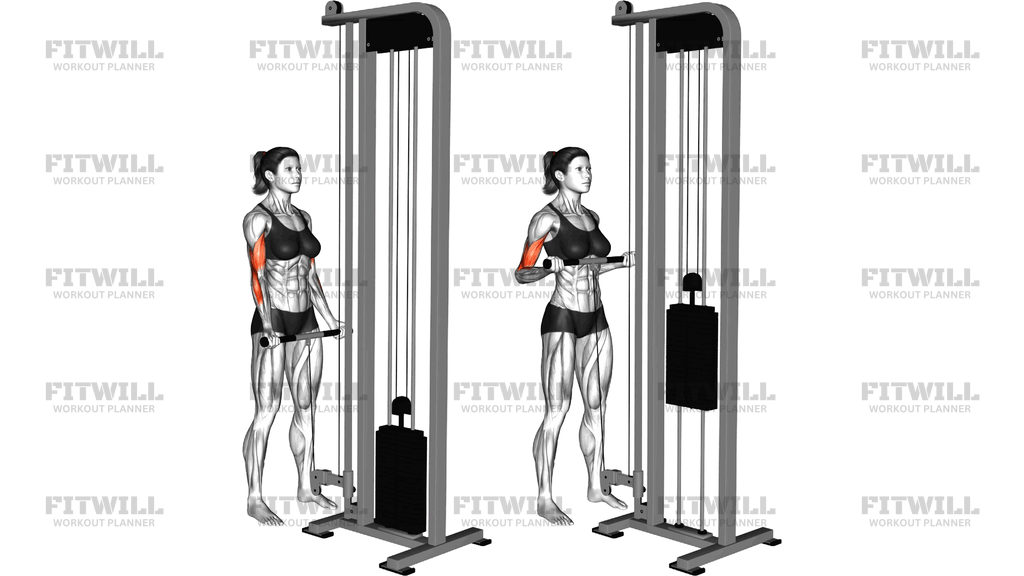
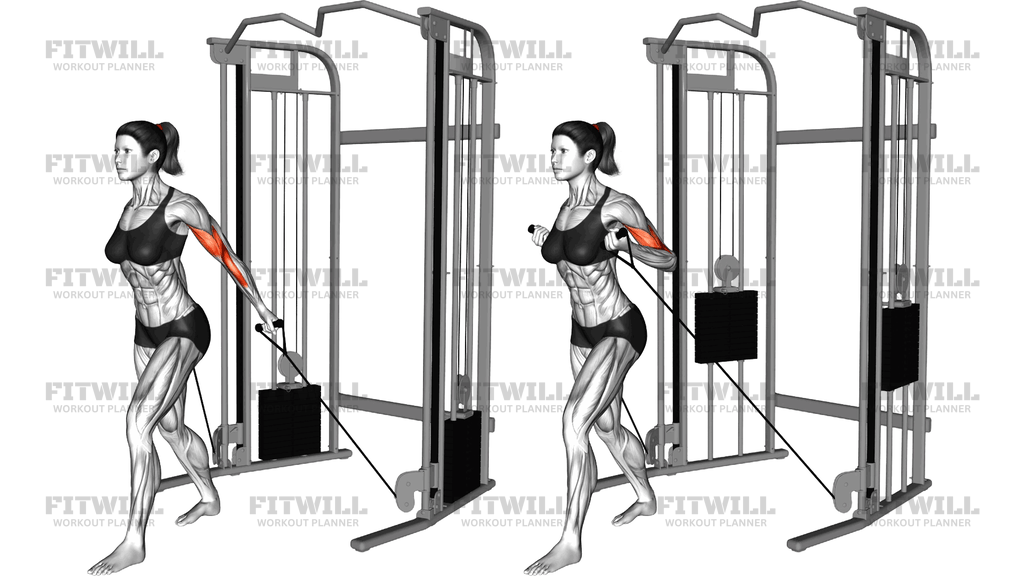
Cable Standing Pulldown With Rope
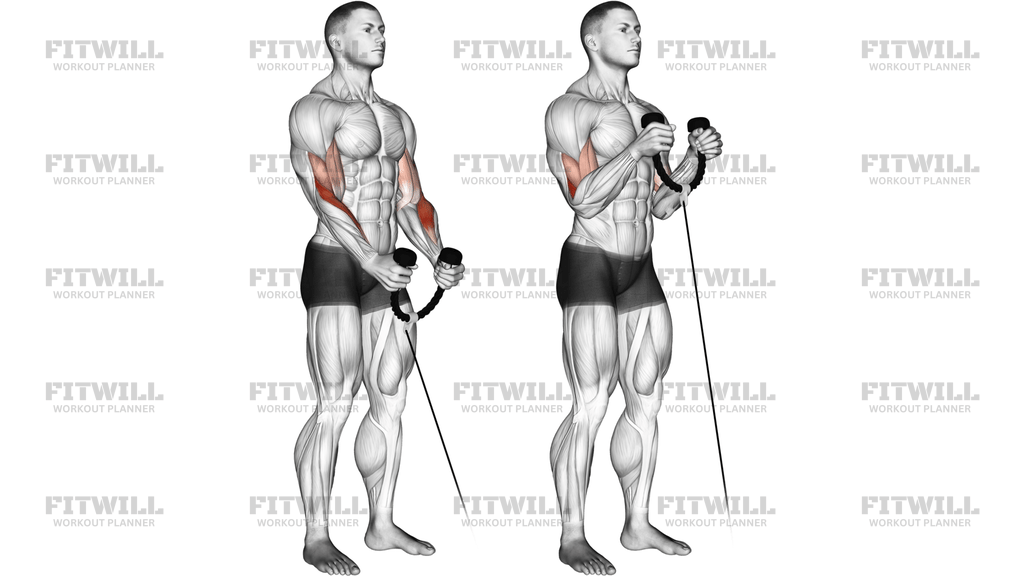
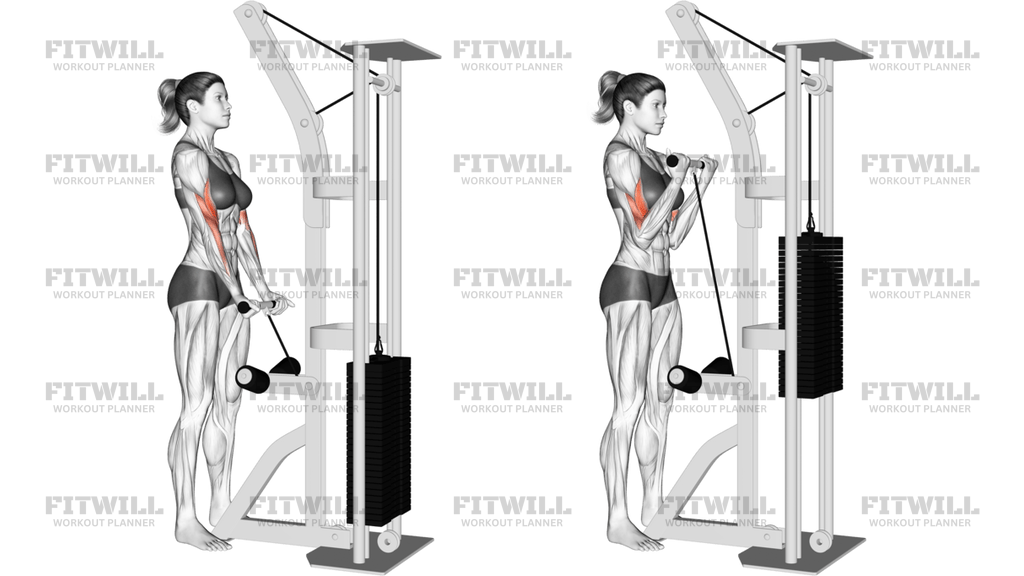
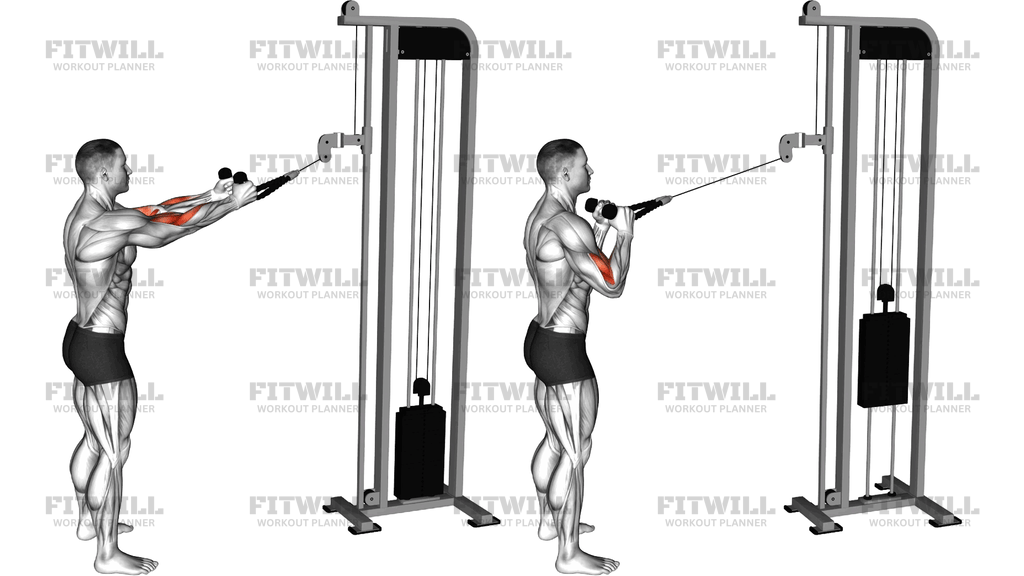
Cable Standing Pulldown With Rope is a rope-based arm movement that looks like a pulldown but behaves more like a strict elbow-flexion drill. The cable keeps tension on the biceps as the rope is pulled downward, which makes the exercise useful when you want a controlled arm pattern with a slightly freer hand position than a straight bar would give you. The movement only stays useful if the elbows do the lifting and the torso stays out of the way.
The primary target is the biceps brachii, with the brachialis, brachioradialis, and forearm flexors helping with elbow control and grip. That means the work should live in the front of the upper arm, not in the lower back or shoulders. When the rep is good, the elbows stay tucked, the wrists stay neutral, and the rope travels down because the arms are flexing, not because the body is throwing itself into the stack.
Set a rope on a high pulley and stand facing the cable with a stance that feels stable and neutral. Grip the rope ends securely and brace your core before you start. The start position should feel tall and organized, with the shoulders relaxed and the elbows close to the torso. If you need to lean back to make the rope move, the load is probably too heavy or the path is getting too long.
Pull the rope down by flexing the elbows and keeping the upper arms mostly in place. Pause briefly at the bottom contraction, then return slowly to the starting length. The upward return matters because it keeps tension on the biceps and stops the exercise from turning into a fast snap-back. The rope allows a natural hand path, but the elbows still need to stay the main hinge of the movement.
Cable Standing Pulldown With Rope works well as an arm accessory after bigger lifts, in a biceps-focused block, or at the end of a session when you want controlled volume without complicated setup. Use a load you can own, keep the torso quiet, and stop the set when the shoulders start to pull the cable instead of the arms. Clean reps are the whole point here.
Fitwill
Log Workouts, Track Progress & Build Strength.
Achieve more with Fitwill: explore over 9600 exercises with images and videos, access built-in and custom workouts, perfect for both gym and home sessions, and see real results.
Start your journey. Download today!




Instructions
- Attach a rope to a high pulley.
- Stand facing the cable with a neutral, stable stance.
- Grip the rope ends securely and keep your shoulders relaxed.
- Brace your core before the first rep.
- Keep your elbows tucked near the torso.
- Pull the rope down by flexing the elbows.
- Pause briefly at the bottom contraction.
- Return slowly to the start without letting the stack jerk you upward.
- Repeat with the same controlled arm path on each rep.
Tips & Tricks
- Think about bending the elbows down, not pulling the torso through the stack.
- Keep the ribcage stacked so the lower back does not join the lift.
- The rope should feel like it helps your hand position, not like it changes the exercise into a back movement.
- Use a load that lets you hold the bottom squeeze for a beat.
- Keep the wrists neutral and avoid death-gripping the rope.
- A slow return keeps the biceps under tension longer.
- If the shoulders start leading, reduce the load and reset the elbow tuck.
- Exhale on the pull and keep the body tall.
Frequently Asked Questions
What is the primary muscle here?
The biceps brachii is the primary target in this variation.
Why use a rope attachment?
The rope can improve hand comfort and let the hands follow a more natural path.
Is Cable Standing Pulldown With Rope a back pulldown?
Not really; it is arm-focused when the elbows stay close to the torso.
Can beginners do this safely?
Yes, with modest load and strict posture.
Should elbows move forward a lot?
No, keep elbow travel minimal for better arm isolation.
What if forearms fatigue quickly?
Reduce the load and check whether you are over-gripping the rope.
How many reps are common?
Moderate to higher reps are often used for cable arm work.
What is a common form issue?
Using torso momentum or leaning back to finish the repetition.