Dumbbell Decline Triceps Extension
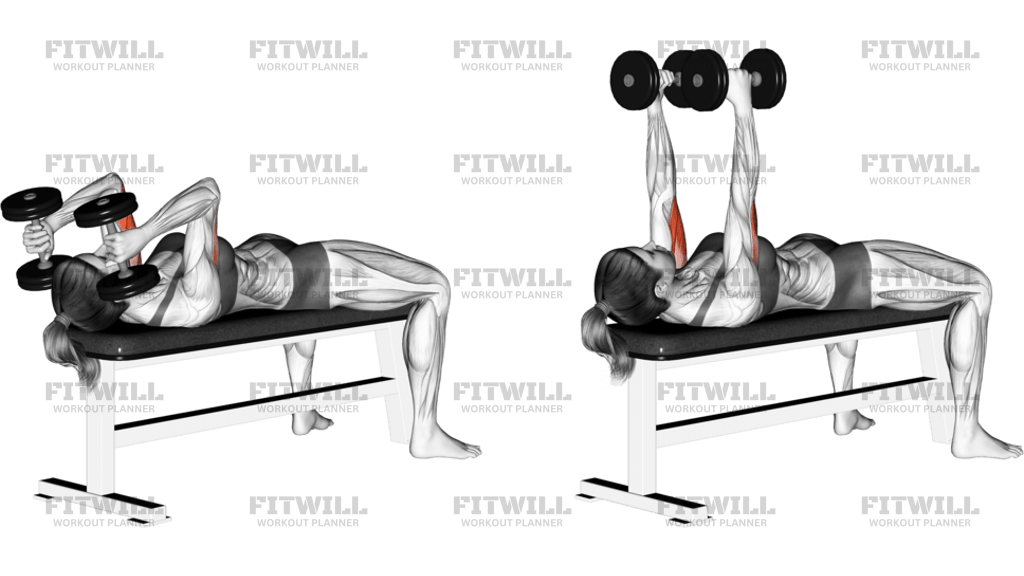
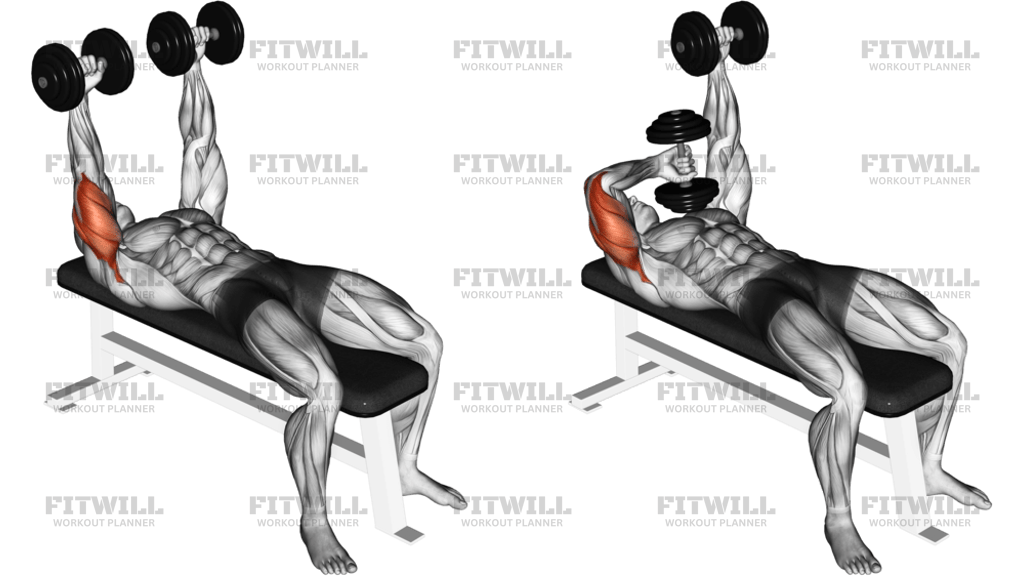
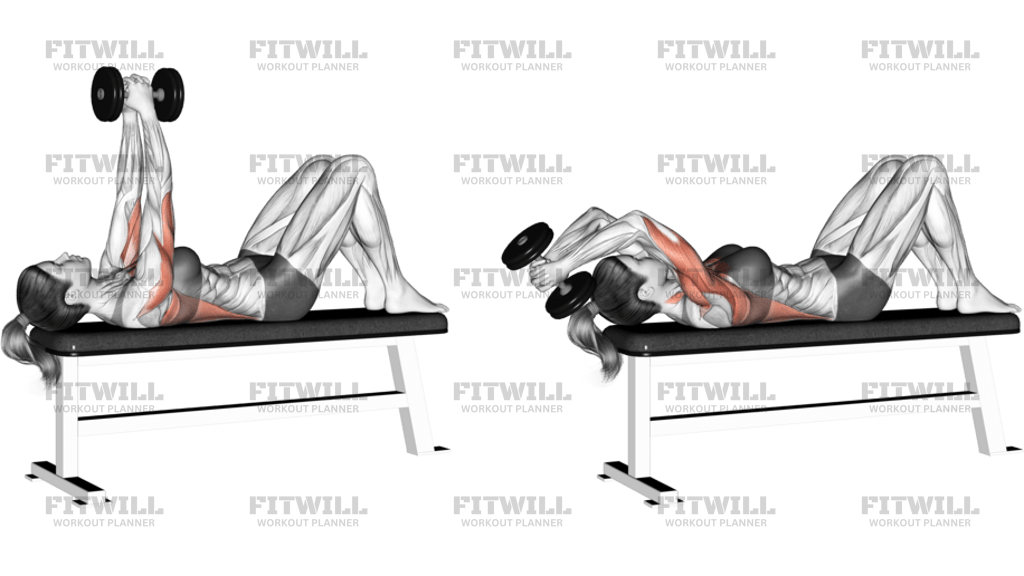
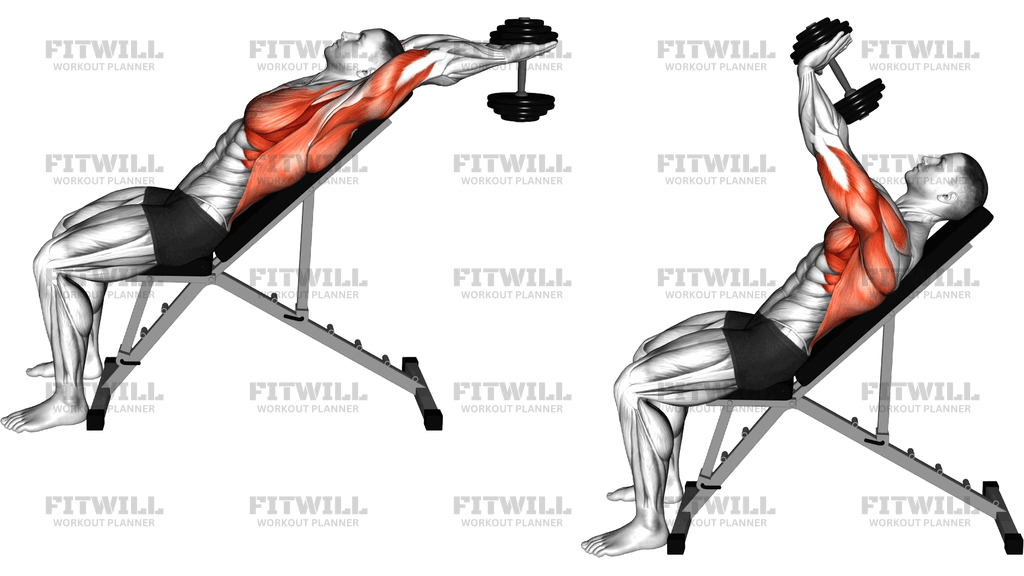
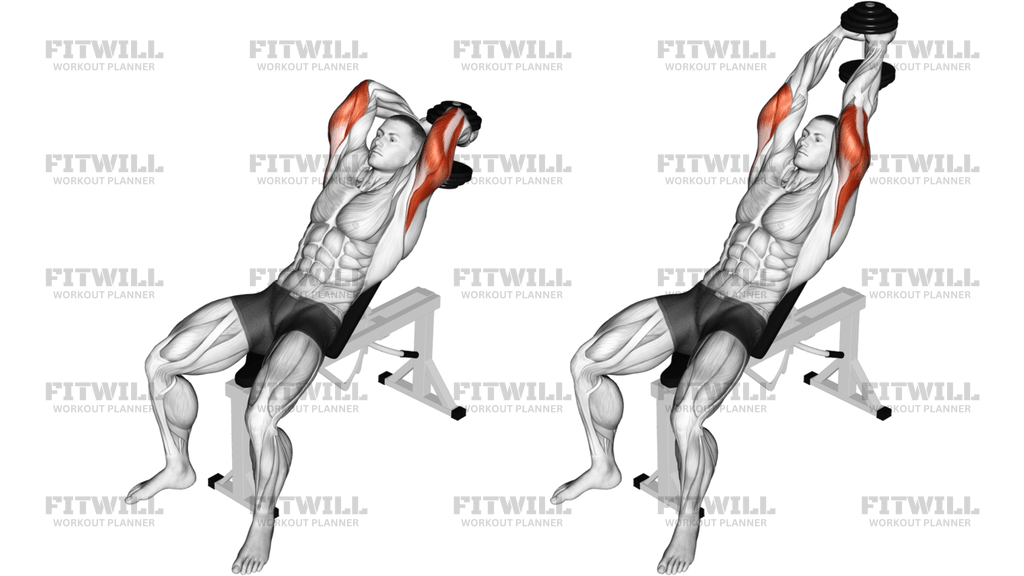
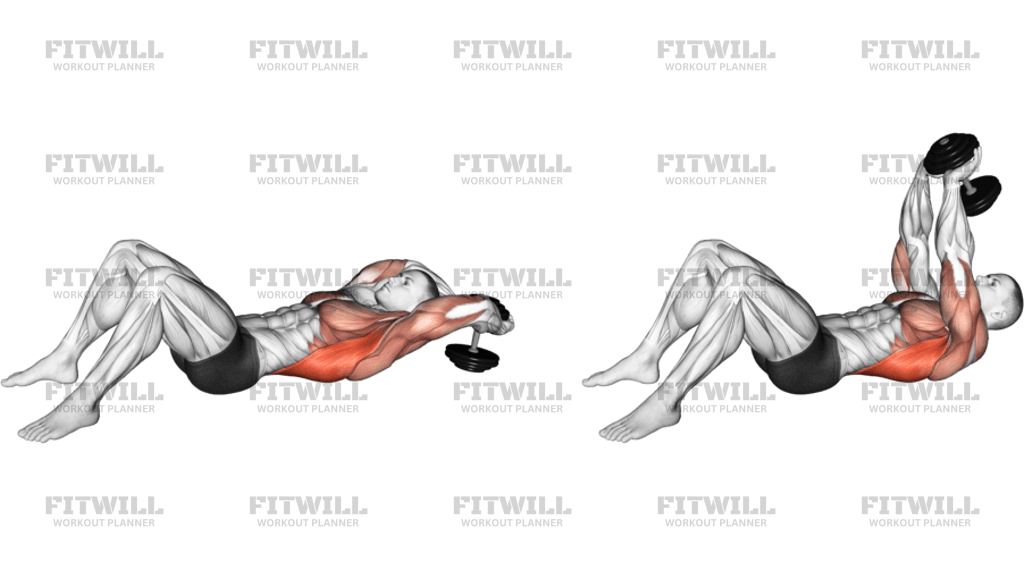
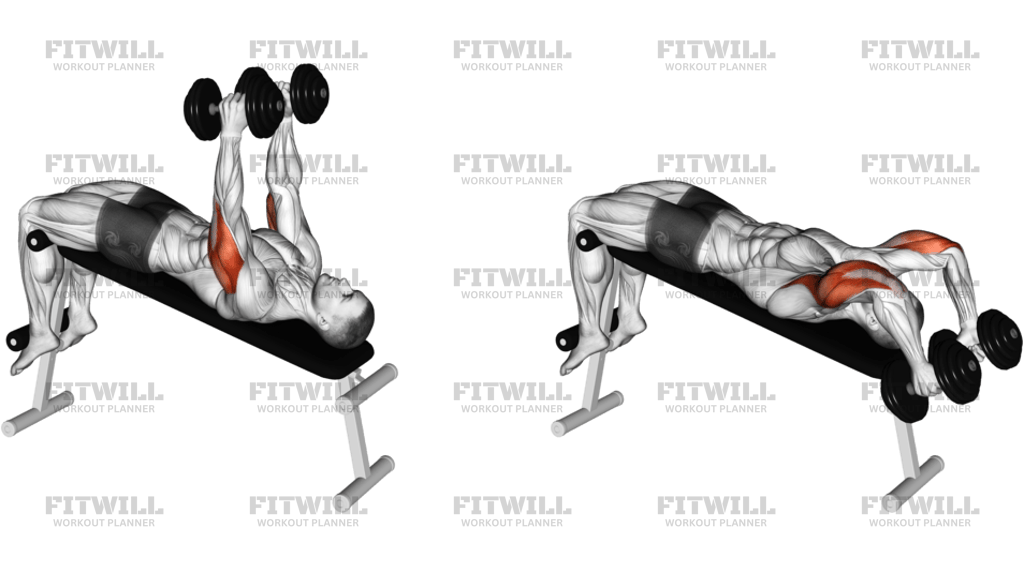
Dumbbell Decline Triceps Extension is a decline-bench isolation movement for the triceps brachii. The decline position changes the line of pull compared with a flat-bench extension and puts a strong emphasis on elbow extension while the shoulders and upper back stay organized on the bench. In the pictured version, the lifter is anchored on a decline bench with the head lower than the hips and the dumbbells held over the chest with a neutral, palms-facing grip.
The exercise mainly targets the triceps, especially the long and lateral heads, while the forearms, front shoulders, and core help stabilize the arms and torso. Because the bench angle fixes your body in place, the quality of the rep depends on keeping the upper arms quiet and letting the elbows do the work. If the shoulders drift or the weights swing, the triceps lose tension and the bottom position becomes harder to control.
Set up carefully before the first repetition. Hook the feet under the bench rollers, lie back so the shoulders and head are supported, and hold the dumbbells directly above the upper chest or shoulders. A shoulder-width neutral grip is the clearest setup for this version. From there, bend only at the elbows and let the dumbbells travel in an arc toward the sides of the head or slightly behind it.
Lower with control until the triceps are fully stretched but the shoulders stay stacked and the elbows do not flare. Then extend the elbows and bring the dumbbells back to the start along the same path. The return should feel deliberate, not snappy. Breathing should stay steady: inhale on the lower, exhale as you press the dumbbells back up.
Use this movement as accessory work after pressing, chest, or arm training when you want direct triceps loading without standing balance demands. It works best with moderate loads, clean tempos, and a pain-free elbow path. The decline angle can make the stretch feel deeper than a flat bench version, so reduce range slightly if the shoulders or elbows lose position before the rep is complete.
[ Workout Log & Planner ]
Put your next workout in Fitwill
Keep your plan and training log ready when you are.


Instructions
- Hook your feet under the decline bench pads and lie back so your head, upper back, and hips are supported.
- Hold one dumbbell in each hand directly above the upper chest with a neutral, palms-facing grip.
- Stack the wrists over the elbows and keep the upper arms nearly vertical before the first rep.
- Brace the torso and set the shoulder blades firmly against the bench.
- Bend only at the elbows to lower the dumbbells in an arc toward the sides of your head or just behind it.
- Keep the upper arms still while the forearms move through the lowering phase.
- Pause briefly in the stretched position without letting the shoulders roll forward or the elbows flare wide.
- Extend the elbows to bring the dumbbells back over the chest on the same path.
- Exhale as you press up and inhale as you lower.
- Finish the set by lowering the dumbbells under control to the starting position.
Tips & Tricks
- Choose dumbbells you can lower slowly; the decline angle makes momentum easy to hide and hard on the elbows.
- Keep your elbows slightly tucked instead of flaring straight out to the sides.
- Let the dumbbells travel behind the forehead only as far as the shoulders stay pinned to the bench.
- Think of moving from the elbow joint, not pushing from the shoulder.
- A neutral grip usually feels friendlier on the wrists than turning the palms forward.
- If the lower back arches hard off the bench, the load is too heavy or the torso is not braced well enough.
- A short pause in the bottom position increases triceps tension without needing more weight.
- Avoid locking out by snapping the elbows; finish the rep with a controlled squeeze instead.
- If one arm drifts more than the other, reset the wrists and match the dumbbells at the top before continuing.
Frequently Asked Questions
What muscles does Dumbbell Decline Triceps Extension work?
It mainly works the triceps brachii. The forearms, front shoulders, and core help stabilize the dumbbells and keep the body fixed on the decline bench.
Is Dumbbell Decline Triceps Extension good for beginners?
Yes, if you start light and keep the elbows quiet. Beginners should use a smaller range until they can lower the dumbbells without the shoulders rolling or the wrists bending back.
Should I use a neutral grip or palms-forward grip on the dumbbells?
A neutral, palms-facing grip is usually the easiest on the wrists and elbows for this decline version. A palms-forward grip can work too, but only if it stays comfortable and stable.
How low should the dumbbells go behind my head?
Lower them only until you feel a strong triceps stretch while the upper arms stay controlled. If the shoulders roll forward or the elbows drift too wide, stop the descent earlier.
What is the biggest mistake with the decline bench setup?
Letting the body slide or the lower back arch hard off the pad. Keep the feet anchored under the rollers and the upper back firmly planted so the arms can move without compensation.
Why use a decline bench instead of a flat bench?
The decline angle changes the feel of the triceps stretch and gives some lifters a more stable shoulder position. It also makes the movement feel less like a chest press and more like a strict triceps extension.
Should my elbows stay pointed straight up?
Mostly yes. They should stay close to that position with only a small amount of natural drift so the triceps stay loaded and the shoulders do not take over.
What if my elbows hurt at the bottom?
Shorten the range, lighten the load, and slow the lowering phase. Sharp pain is a sign to stop and adjust the setup rather than forcing the stretch.
How do I progress this exercise safely?
Add reps first, then load only when every rep looks the same from the top to the bottom. You can also progress by slowing the lowering phase or pausing in the stretched position.