Dumbbell Kickback
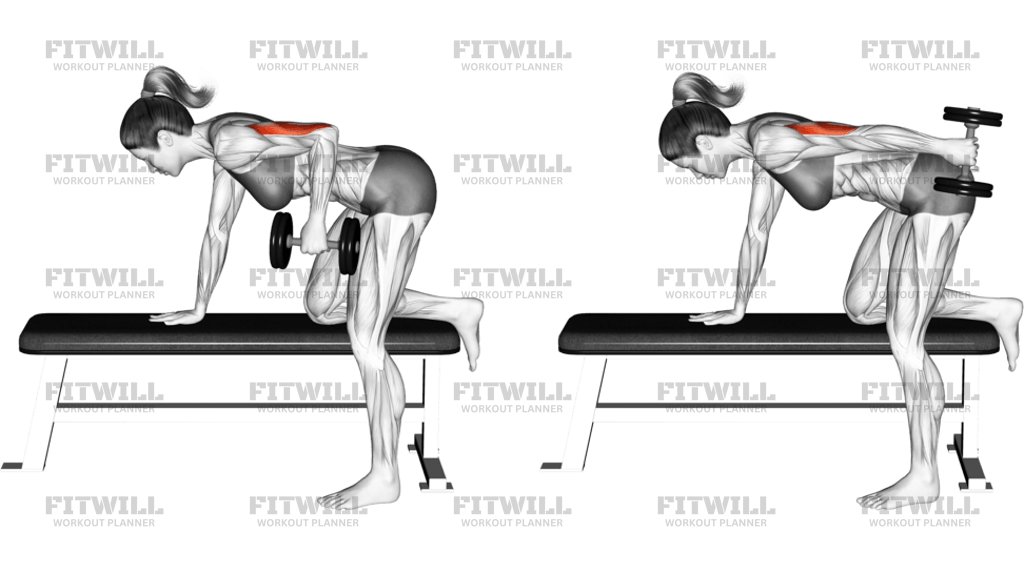
Dumbbell Kickback is a single-arm triceps exercise built around a supported hinge position, usually with one hand and the same-side knee braced on a bench while the other foot stays on the floor. That support is the key feature of the movement: it takes away most of the body swing and lets you isolate elbow extension instead of turning the set into a rowing motion or a shoulder raise.
The main target is the triceps, especially the long and lateral heads working together to straighten the elbow. The forearm, front shoulder, and trunk muscles still have to stabilize the position, but they should stay quiet compared with the triceps. When the setup is right, Dumbbell Kickback is a clean accessory exercise for arm size, finishing volume after presses, or lighter work when you want direct triceps tension without loading the shoulders heavily.
The setup matters more here than in many arm exercises. Keep the torso hinged forward with the back flat, the working upper arm tucked close to the side, and the elbow bent so the dumbbell starts near the ribcage. If the elbow drifts high or the chest opens and twists, the shoulder takes over and the triceps lose tension. A steady bench position and a quiet head and neck make it much easier to keep the rep strict.
Drive the dumbbell backward by straightening the elbow until the arm is nearly locked out behind the body, then bring it forward under control without letting the upper arm swing. The path should feel short and precise, not explosive. Exhale as you extend the arm and inhale as you return to the bent-elbow start. A smooth tempo keeps the triceps working through the whole range instead of relying on momentum at the top.
Use Dumbbell Kickback when you want direct triceps work that does not require heavy loading or complex equipment. It fits well after compound presses, on upper-body accessory days, or as a controlled finisher with lighter dumbbells and higher reps. Keep the range pain-free, stay square through the hips and shoulders, and stop the set when the elbow starts to drift or the torso starts to rotate.
[ Workout Log & Planner ]
Put your next workout in Fitwill
Keep your plan and training log ready when you are.


Instructions
- Place one hand and the same-side knee on a flat bench, then set the other foot on the floor and hinge forward until your torso is nearly parallel to the ground.
- Hold a dumbbell in the free hand, bend the elbow to about 90 degrees, and tuck the upper arm close to your side with the palm facing in.
- Square your hips and shoulders to the floor, keep your neck long, and brace your midsection before the first rep.
- Lift the working elbow slightly so the upper arm stays level with your torso and the dumbbell starts just below the ribcage.
- Straighten the elbow to send the dumbbell straight back until the arm is nearly locked out behind your hip.
- Squeeze the triceps for a brief pause at the top without letting the shoulder roll or the torso twist.
- Lower the dumbbell slowly until the forearm returns to the starting angle and the triceps stay under tension.
- Finish the set by placing the dumbbell down carefully, resetting your support points, and switching sides.
Tips & Tricks
- Keep the upper arm pinned in line with your torso; if the elbow drifts forward, the kickback turns into a shoulder movement.
- Let the dumbbell travel behind the hip by opening the elbow, not by swinging the shoulder backward.
- Use the bench hand as a firm brace so your trunk stays quiet and the working side does not rotate open.
- Choose a lighter dumbbell than you would for curls or rows; strict kickbacks usually need less load to stay honest.
- Stop just short of a hard elbow snap at the top so the triceps stay loaded instead of the joint taking over.
- Keep the wrist straight and stacked over the forearm; bending the wrist makes the dumbbell feel heavier and less controlled.
- If your torso rises during the rep, reset the hinge and bring the chest a little lower before continuing.
- Use a slower lowering phase so the triceps keep working as the elbow bends back to the start.
Frequently Asked Questions
What muscle does Dumbbell Kickback train most?
Dumbbell Kickback mainly trains the triceps, with the long and lateral heads doing most of the work as you straighten the elbow.
Why do I need to support my hand and knee on a bench?
The bench support locks your torso in place so the rep stays focused on elbow extension instead of becoming a body swing.
How high should my elbow stay during Dumbbell Kickback?
Keep the upper arm close to your side and roughly level with your torso, not flared high toward the ceiling.
Should the dumbbell move in a big arc?
No. The movement should look short and direct, with the forearm swinging back by straightening the elbow while the upper arm stays almost still.
Can I do Dumbbell Kickback without a bench?
You can, but the bench-supported version is usually stricter because it reduces torso sway and makes it easier to keep the triceps isolated.
How heavy should the dumbbell be for this exercise?
Use a light to moderate dumbbell that lets you keep the upper arm fixed and the wrist steady for every rep; if the shoulder starts helping, the load is too heavy.
What should I do if I feel this mostly in my shoulder?
Lower the elbow back to your side, hinge a little more over the bench, and shorten the range until the elbow is doing the work again.
Is Dumbbell Kickback a good finisher after pressing?
Yes. It pairs well after bench presses, overhead presses, or dips when you want extra triceps volume without adding much joint stress from heavier pressing.