Dumbbell Incline Two Arm Extension
Dumbbell Incline Two Arm Extension is an incline-bench triceps exercise that places the upper arms in a long overhead position while you flex and extend the elbows against dumbbells. The bench support makes the movement easier to control than a standing overhead extension, but it also raises the demand on elbow position, shoulder control, and ribcage position. The goal is not to swing the weight through a big arc. The goal is to keep the upper arms organized, load the triceps through the stretch, and finish each rep with a clean elbow lockout.
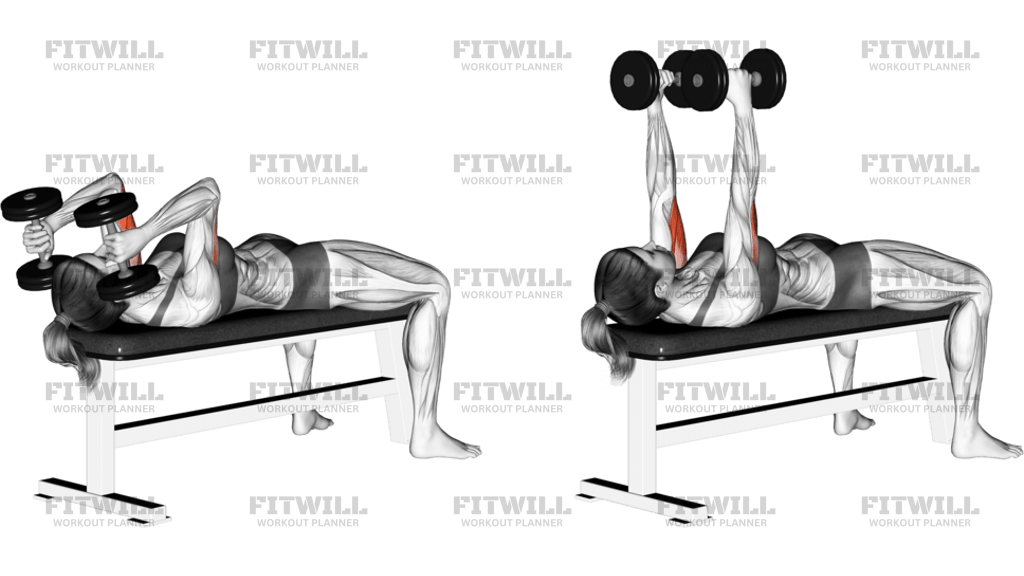
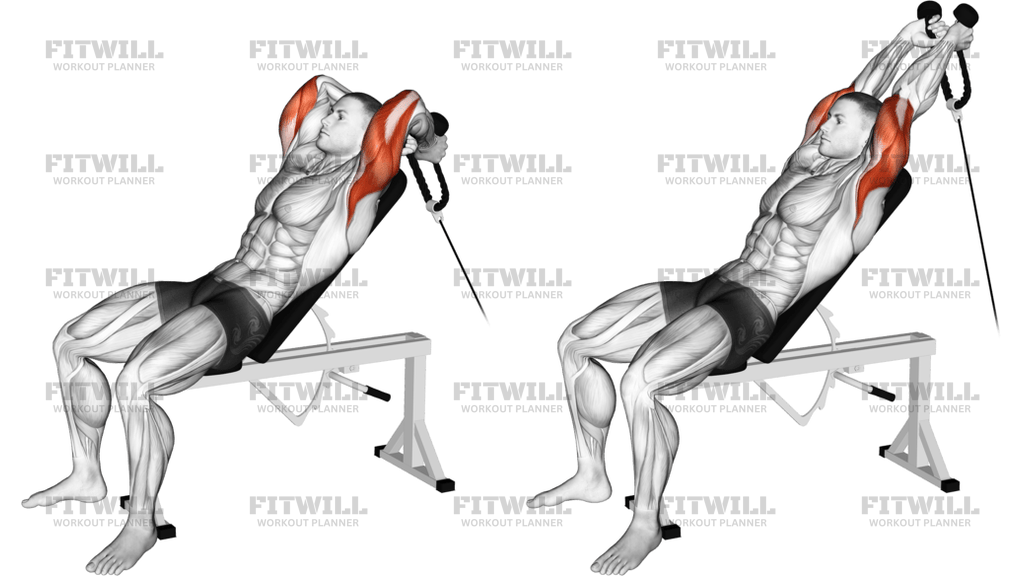
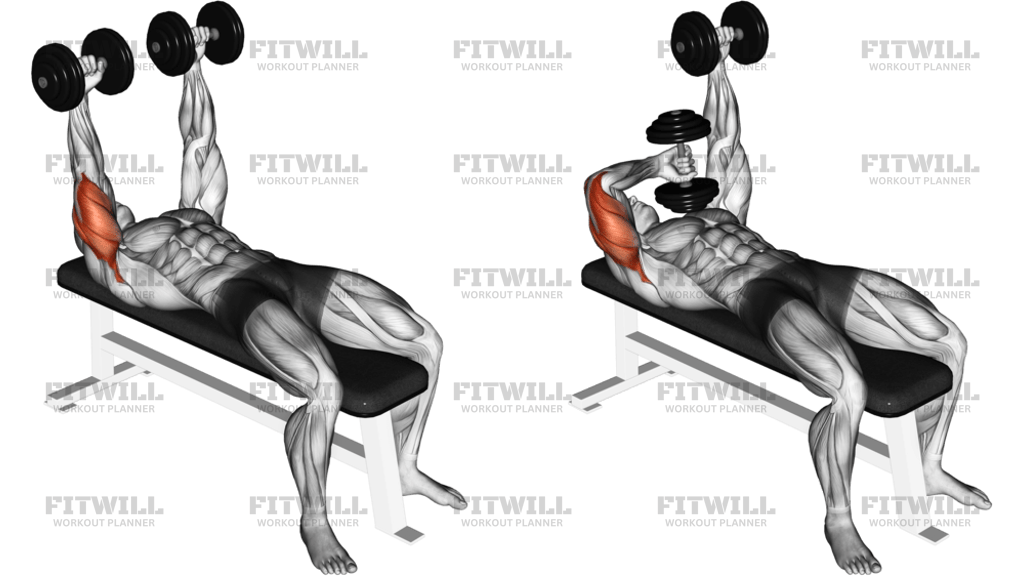
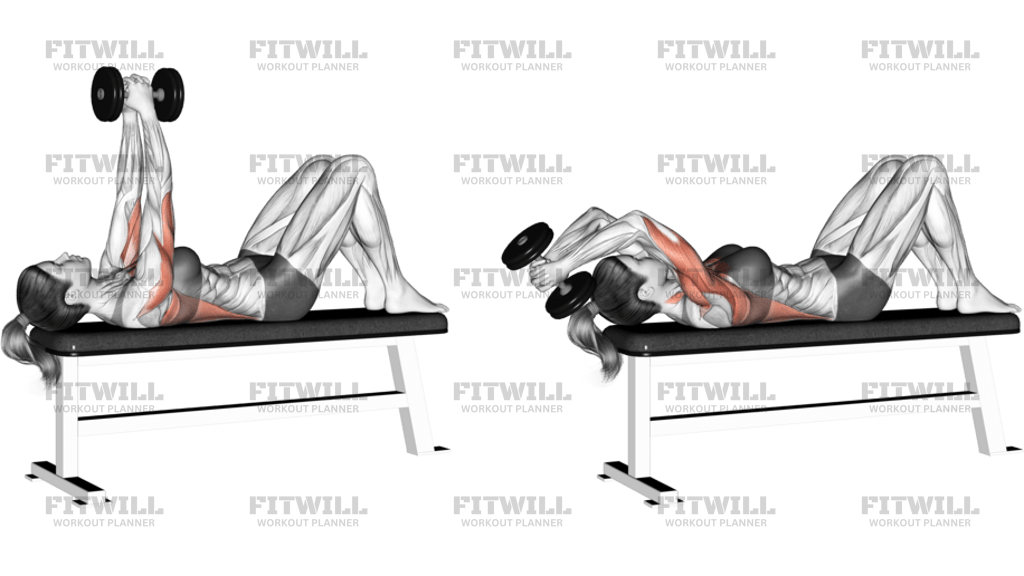
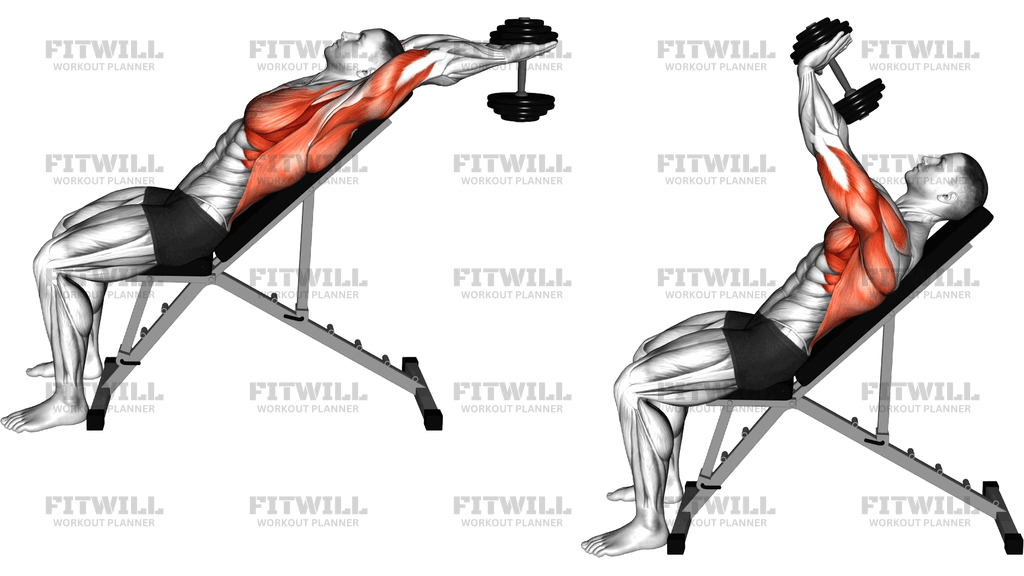
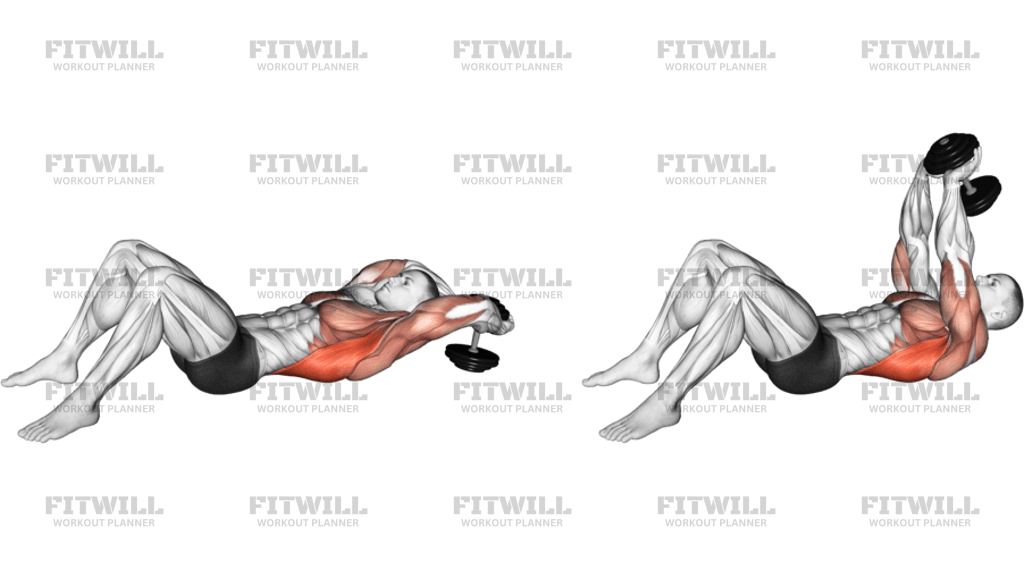
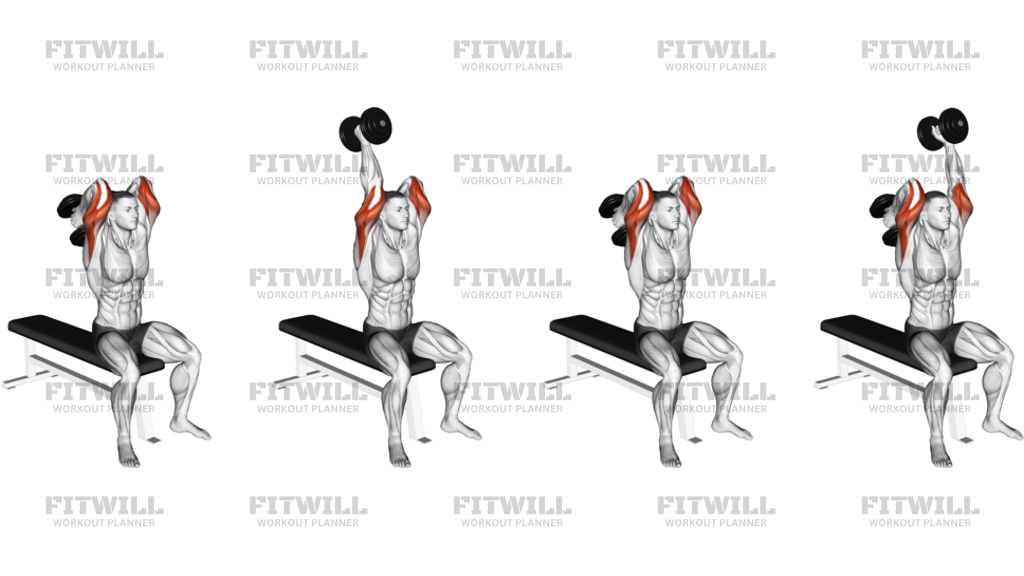
The image shows a lifter lying back on an incline bench with the dumbbells moving from behind the head to overhead. That position shifts a lot of the work to the triceps brachii, especially because the elbows start in deep flexion and the shoulder stays flexed throughout the set. Forearm flexors help stabilize the grip, while the front deltoids and trunk contribute to holding the torso and arms steady. Because the arms are overhead, small changes in elbow flare, bench angle, or back position can change the feel of the exercise quickly.
Setup matters here more than it does on many isolation movements. A moderate incline usually gives enough back support without turning the exercise into a steep overhead press pattern. Once you lie back, plant the feet, keep the ribs from flaring hard, and bring the dumbbells to the start position with the upper arms angled back beside the head. From there, the elbows should open and close while the shoulders stay mostly quiet. If the shoulders drift forward or the low back arches hard, the triceps lose tension and the movement becomes harder to control.
Use this exercise when you want direct triceps work with a stable torso and a long range of motion. It fits well in hypertrophy work, accessory triceps volume, or as a technique-focused isolation movement after bigger presses. The most useful reps are smooth: lower the dumbbells under control, feel the triceps lengthen, then extend without snapping the elbows or changing the arm path. Stop the set if the weights start drifting behind the head, the elbows wander wide, or the shoulders take over the lift.
For safety and quality, choose a load that lets you keep the wrists stacked over the elbows and finish every rep in the same path. This is a good exercise for lifters who want triceps emphasis without standing balance demands, but the overhead position still requires careful shoulder tolerance. If the elbows feel irritated, shorten the range slightly and keep the tempo slower. Used well, the movement gives a strong triceps stimulus with clear mechanical tension and predictable form.
[ Workout Log & Planner ]
Put your next workout in Fitwill
Keep your plan and training log ready when you are.


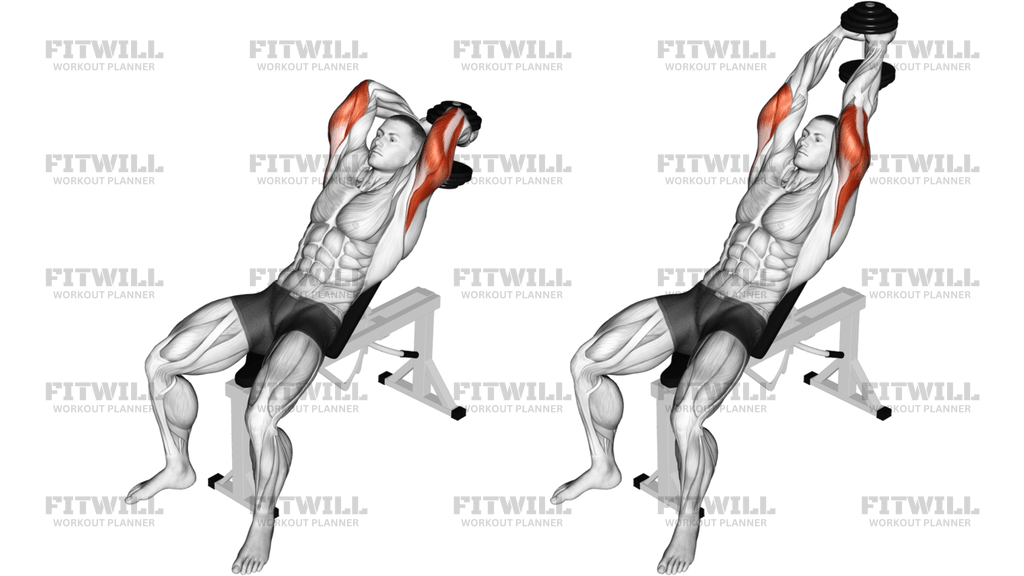
Instructions
- Set an incline bench to a moderate angle and sit down with a dumbbell in each hand.
- Lean back so your upper back and head are supported, then plant both feet firmly on the floor.
- Bring the dumbbells above your face or forehead with your elbows pointing upward and slightly back.
- Brace your midsection so your ribs stay down and your lower back does not overarch.
- Bend only at the elbows to lower the dumbbells behind your head in a controlled arc.
- Keep your upper arms mostly fixed while the forearms move and the triceps lengthen.
- Extend the elbows to drive the dumbbells back to the start without letting the shoulders roll forward.
- Pause briefly at the top, then repeat for the planned reps with smooth breathing.
Tips & Tricks
- Pick a bench angle that supports your upper back without forcing the elbows too far behind the head.
- Keep the upper arms angled in the same line for the whole set; do not let them drift forward as you fatigue.
- Lower the dumbbells until you feel a strong triceps stretch, but stop before the shoulders take over.
- Let the elbows travel through the motion, not the chest or ribcage.
- Stack the wrists over the elbows so the dumbbells do not wobble at the bottom.
- Exhale as you extend and inhale as you lower so you do not lose trunk position.
- Use a controlled lowering phase; this exercise usually punishes fast eccentrics more than it rewards them.
- If one arm finishes earlier than the other, reduce the load and match both sides to the weaker side.
Frequently Asked Questions
What does the dumbbell incline two arm extension train most?
It primarily trains the triceps, especially through the elbow-extension portion of the lift.
Why use an incline bench instead of doing this standing?
The incline bench supports your upper back and makes it easier to keep the arms in a fixed overhead path.
How should my elbows move during the set?
They should stay pointed upward and only bend and straighten at the elbow joint, with minimal drifting.
Should the dumbbells go behind my head or stop above it?
A small move behind the head is normal if your shoulders tolerate it, but stop before the weight pulls your upper arms out of position.
Can I use a neutral grip?
Yes. A neutral grip often feels easier on the wrists and helps keep the dumbbells stable.
What is the most common form mistake?
Letting the elbows flare and turning the movement into a shoulder exercise instead of an elbow-dominant triceps extension.
Is this a good beginner triceps exercise?
Yes, if the load is light and the bench angle and elbow path are kept simple and controlled.
What should I do if my elbows feel irritated?
Shorten the range slightly, lower the load, and keep the lowering phase slower so you do not drop into the bottom position.