Dumbbell Lying Triceps Extension
Dumbbell Lying Triceps Extension is a flat-bench isolation exercise for the triceps that uses a pair of dumbbells and a stable bench position to train elbow extension under control. The movement is often called a dumbbell skull crusher, but the purpose here is not to crush through a big load; it is to keep the upper arms organized and make the triceps do the work through a smooth, repeatable arc.
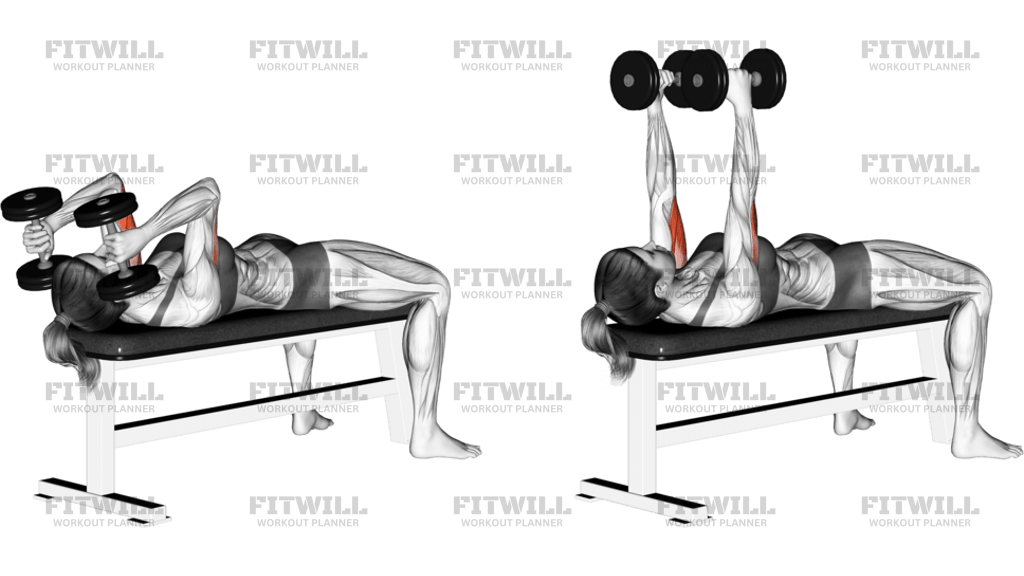
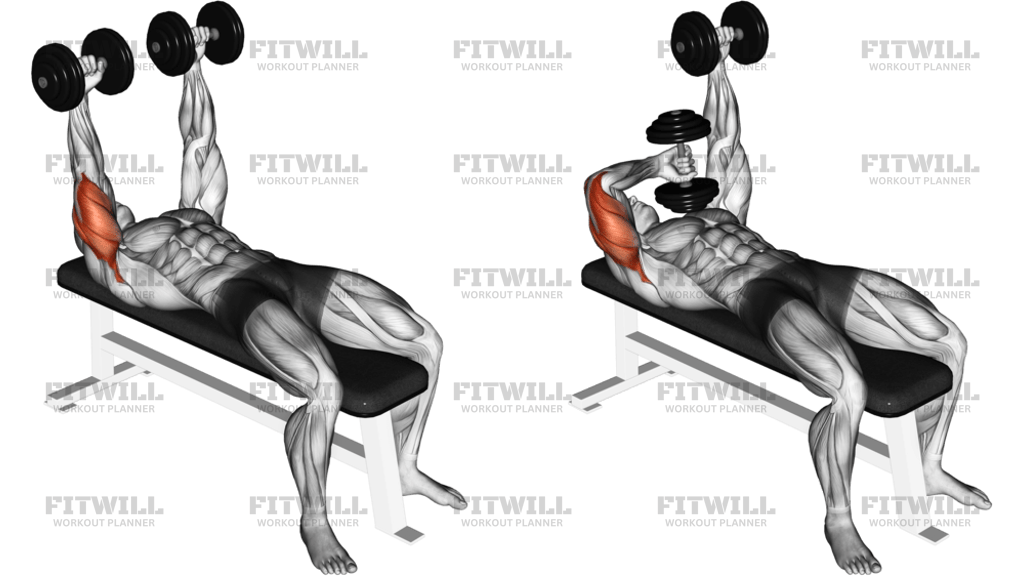
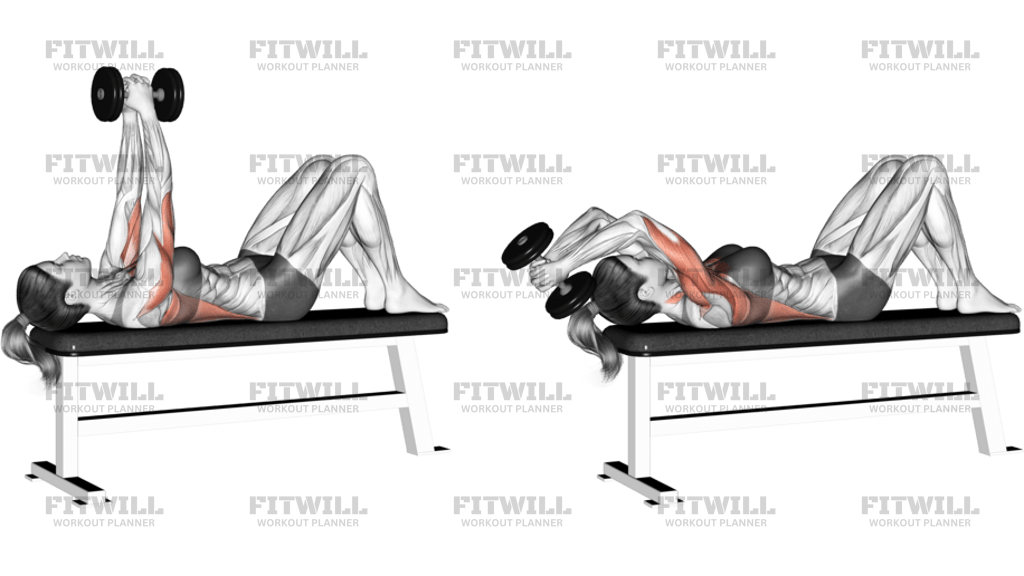
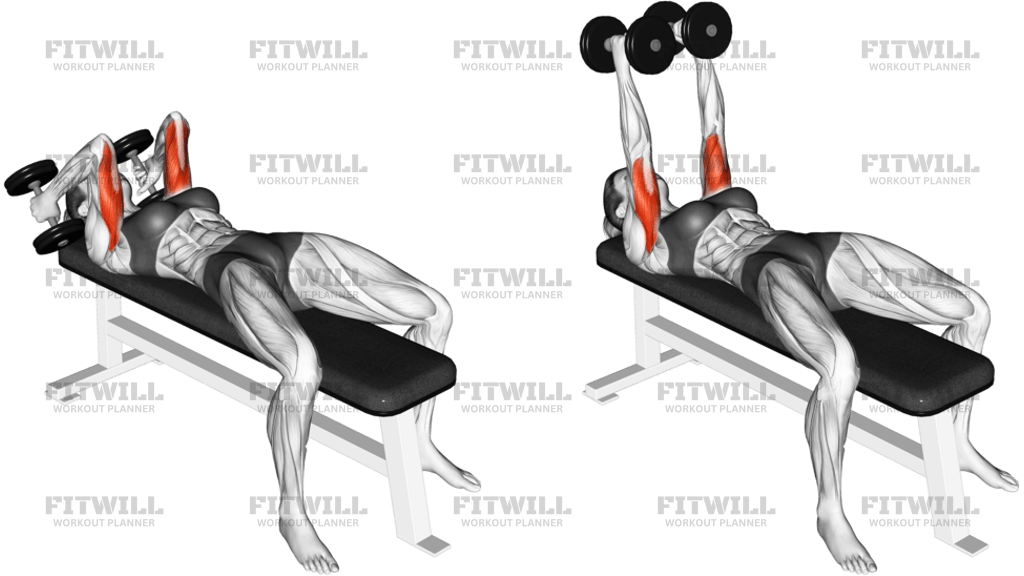
The image shows a neutral-grip setup with the lifter lying on the bench, arms reaching straight up over the shoulders, and the dumbbells lowered by bending only at the elbows. That setup matters because the triceps can produce a much cleaner contraction when the elbows stay relatively fixed instead of drifting wide or letting the shoulders take over. Forearms, front shoulders, and the trunk assist, but the elbows should be the moving joint.
Start with the dumbbells stacked over the chest or shoulders, wrists straight, feet planted, and ribs controlled against the bench. From there, lower the weights toward the sides of the head or slightly behind the forehead by bending the elbows, then reverse the motion by driving the dumbbells back to the top with elbow extension. The best reps look almost identical from one repetition to the next, with the upper arms staying in roughly the same line the whole set.
This exercise is useful when you want direct triceps volume without heavy pressing fatigue. It can fit after bench pressing, as a standalone arm movement, or in a higher-rep accessory block where control matters more than absolute load. Beginners can use it safely if they keep the dumbbells light, shorten the range if needed, and avoid letting the elbows flare or the lower back arch aggressively.
What usually breaks down first is elbow position, wrist angle, or control on the way down. If the dumbbells travel too far behind the head, the shoulders start to dominate and the elbows may feel irritated. Keep the descent deliberate, stop where the triceps still own the movement, and finish each set with the same clean shape you started with. That is what turns the exercise into useful triceps training instead of just moving weight on a bench.
[ Workout Log & Planner ]
Put your next workout in Fitwill
Keep your plan and training log ready when you are.


Instructions
- Lie flat on a bench with a dumbbell in each hand, palms facing each other, feet planted on the floor, and the weights stacked above your shoulders.
- Straighten your arms so the dumbbells are directly over your chest, then set your shoulders and keep your wrists neutral.
- Keep your upper arms nearly still and angle the elbows slightly in so the triceps stay in charge of the movement.
- Inhale and bend only at the elbows to lower the dumbbells toward the sides of your forehead or just behind it.
- Stop the descent when the forearms are close to parallel with the floor and the upper arms have not drifted forward or outward.
- Exhale and extend the elbows to press the dumbbells back to the starting position over the chest.
- Squeeze the triceps at the top without letting the shoulders shrug or the lower back arch hard off the bench.
- Reset the dumbbells under control before the next rep, and finish the set by bringing the weights to your thighs before sitting up.
Tips & Tricks
- Keep the movement at the elbows; if your upper arms are swinging, the triceps are losing tension.
- A neutral grip is usually friendlier on the wrists and elbows than turning the palms forward.
- Use lighter dumbbells than you would for pressing work, because this exercise loads the elbows in a long lever position.
- Lower the dumbbells slowly so the eccentric phase does not yank the elbows open.
- If the weights disappear behind your head, reduce the range slightly and keep the tension where the triceps can control it.
- Let the elbows track in a narrow path instead of flaring toward the room.
- Keep the ribcage down on the bench so you do not turn the rep into a back-arched press.
- Stop a set when the descent starts to wobble or the dumbbells begin to drift away from the same path each rep.
Frequently Asked Questions
What muscle does Dumbbell Lying Triceps Extension target most?
The triceps brachii is the main mover, with the forearms and front deltoids helping stabilize the dumbbells.
Can beginners perform this exercise?
Yes. Beginners should start with very light dumbbells, keep the range short at first, and learn to bend only at the elbows.
Should I use a neutral grip on the dumbbells?
A neutral grip, with palms facing each other, is the standard setup and usually feels best on the wrists.
How low should the dumbbells go?
Lower them until they are beside the forehead or just behind it, as long as the upper arms stay steady and the elbows feel controlled.
Why do my elbows ache during this movement?
Elbow discomfort usually comes from using too much load, letting the elbows flare, or dropping the dumbbells too far behind the head.
Is the flat bench the best bench position for this exercise?
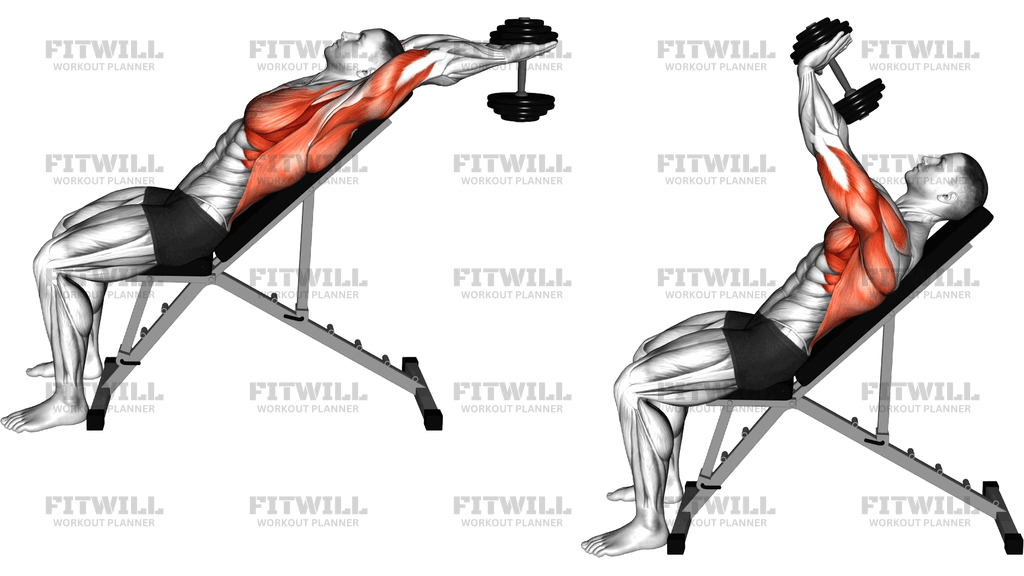
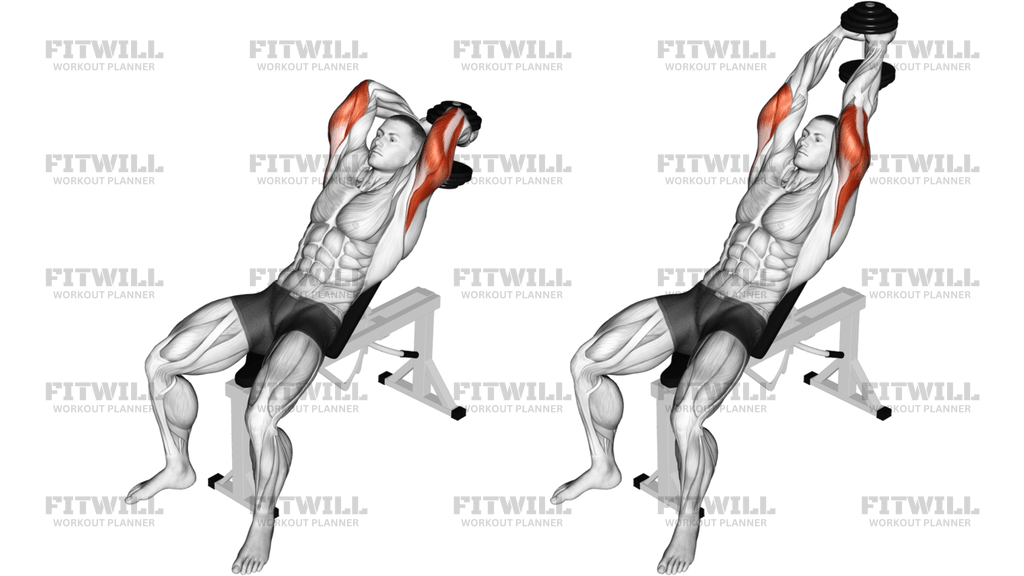
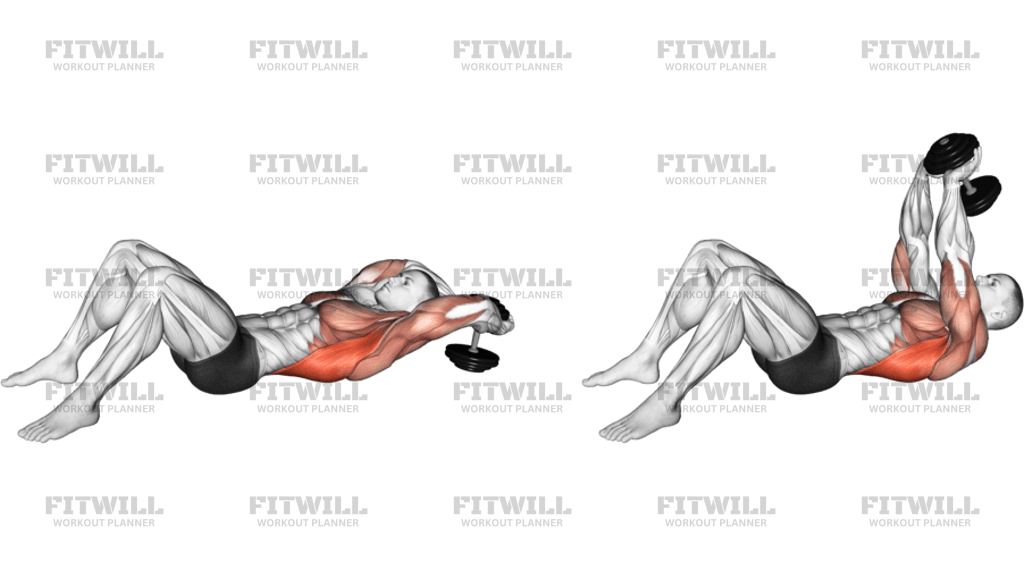
A flat bench is the classic version and matches the image. A slight incline can be used if a flat bench bothers your shoulders.
Where does this fit in a workout?
It works well after compound pressing or as a triceps accessory when you want direct arm work without heavy chest fatigue.
What is the most common form mistake?
Letting the upper arms drift and turning the rep into a loose shoulder movement instead of a controlled elbow extension.