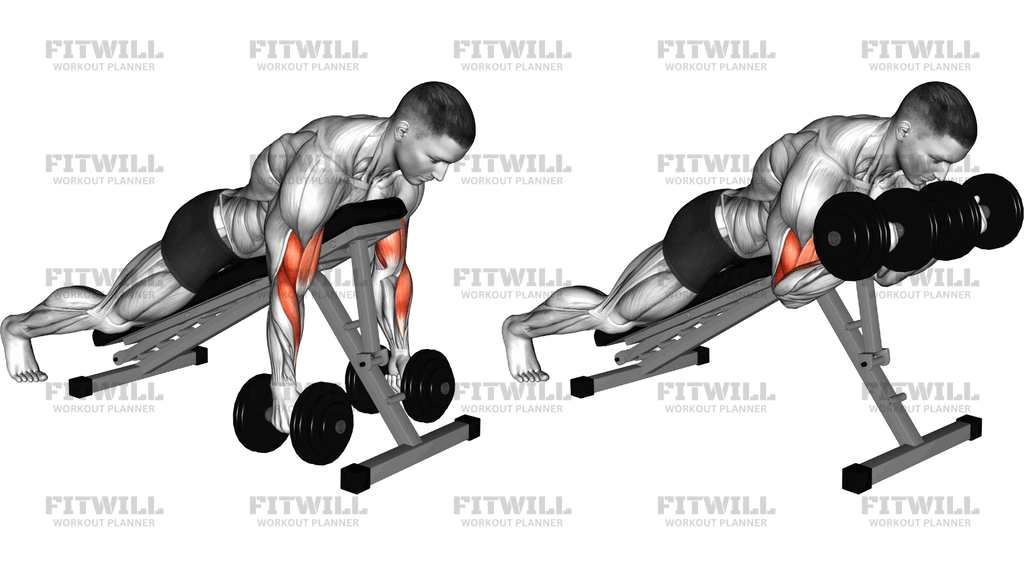
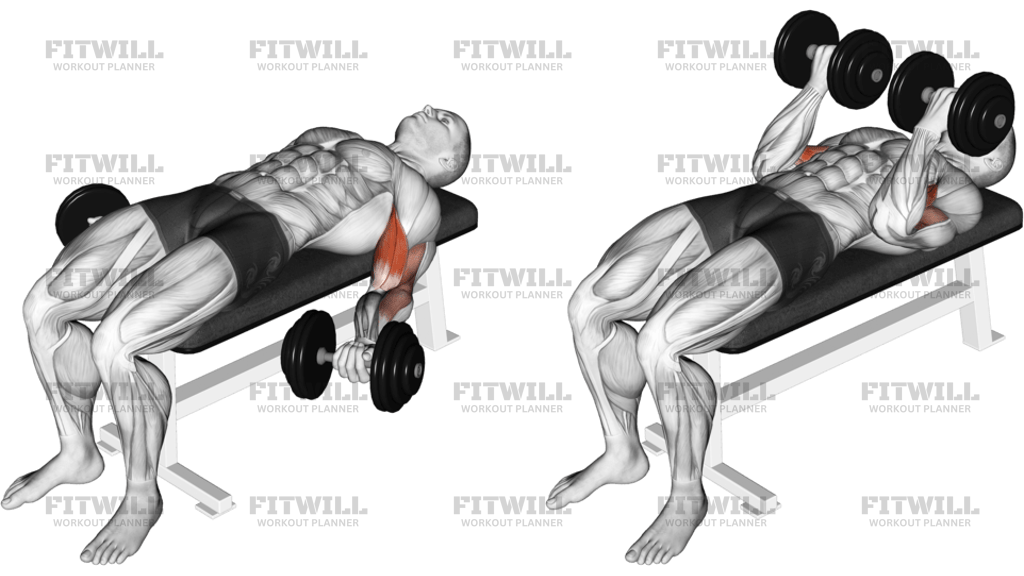
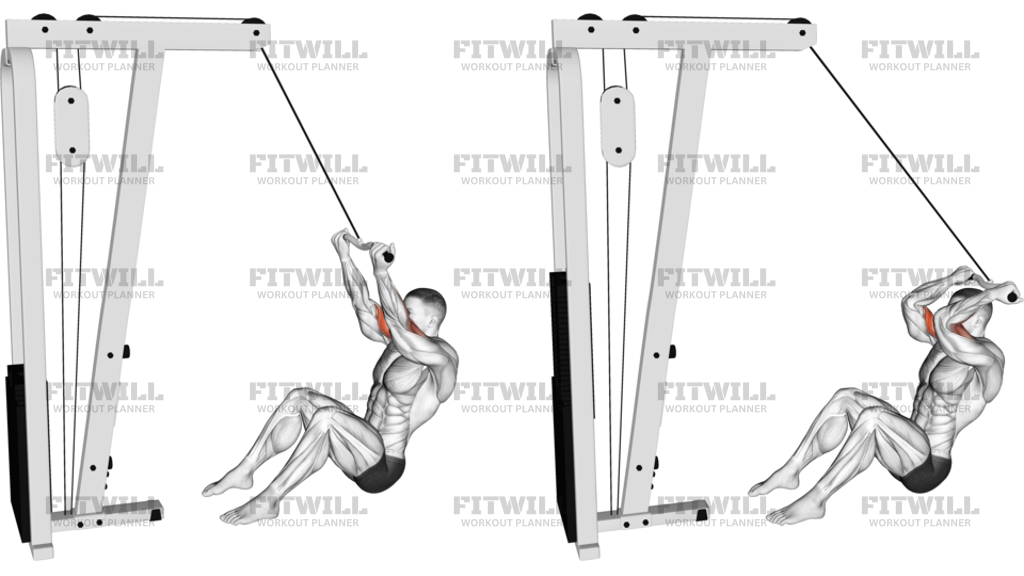
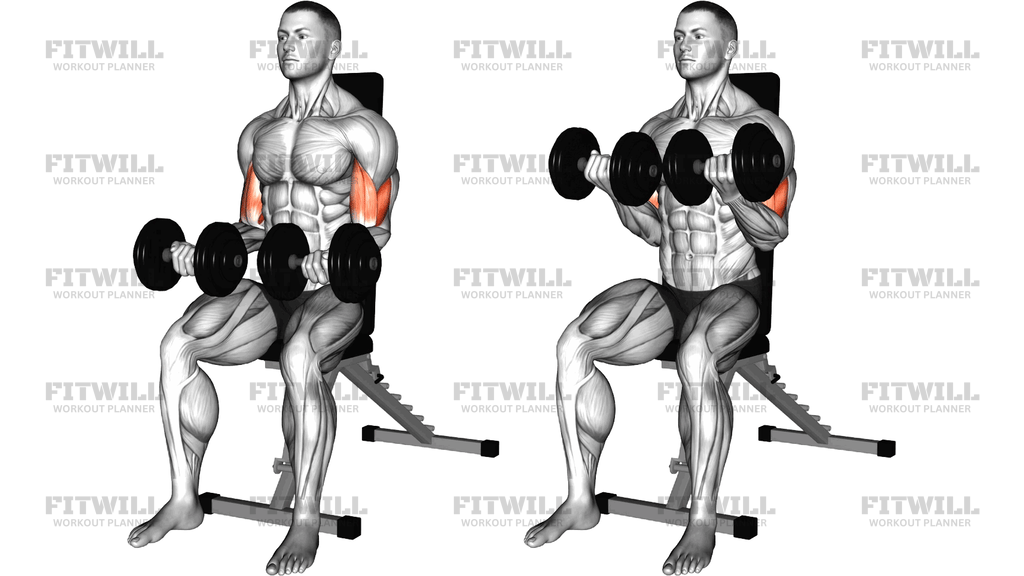
Dumbbell Incline Inner Biceps Curl
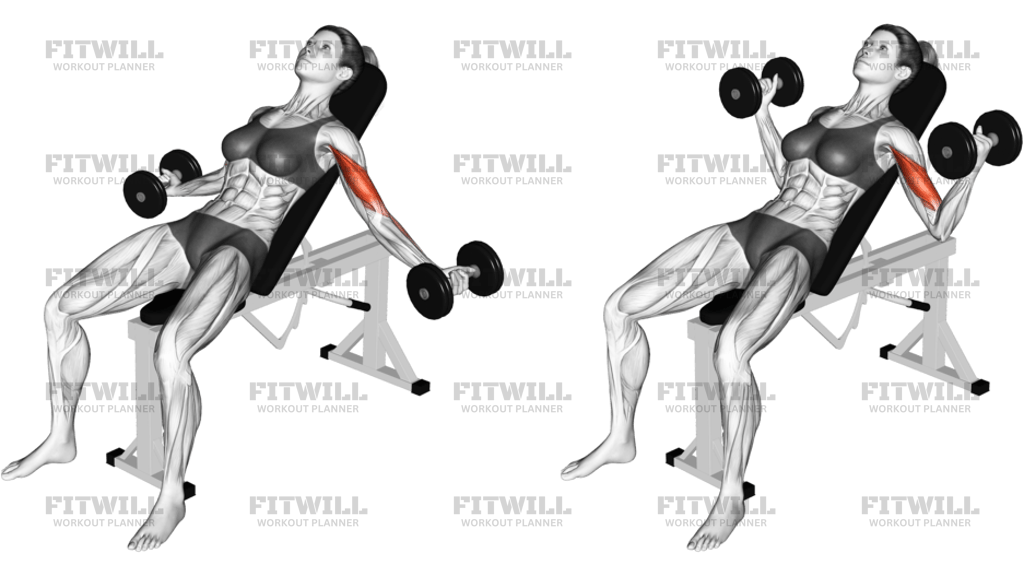
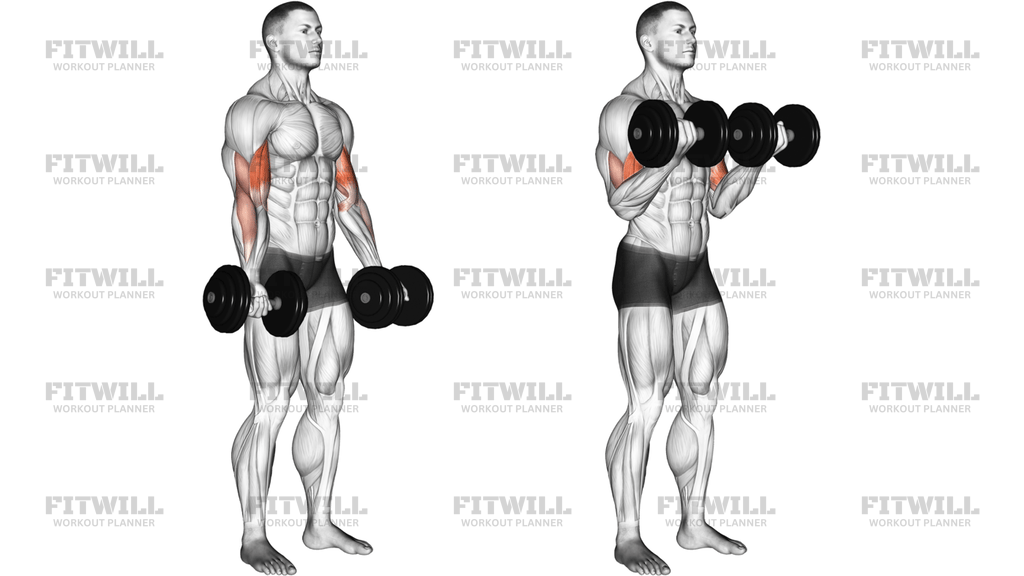
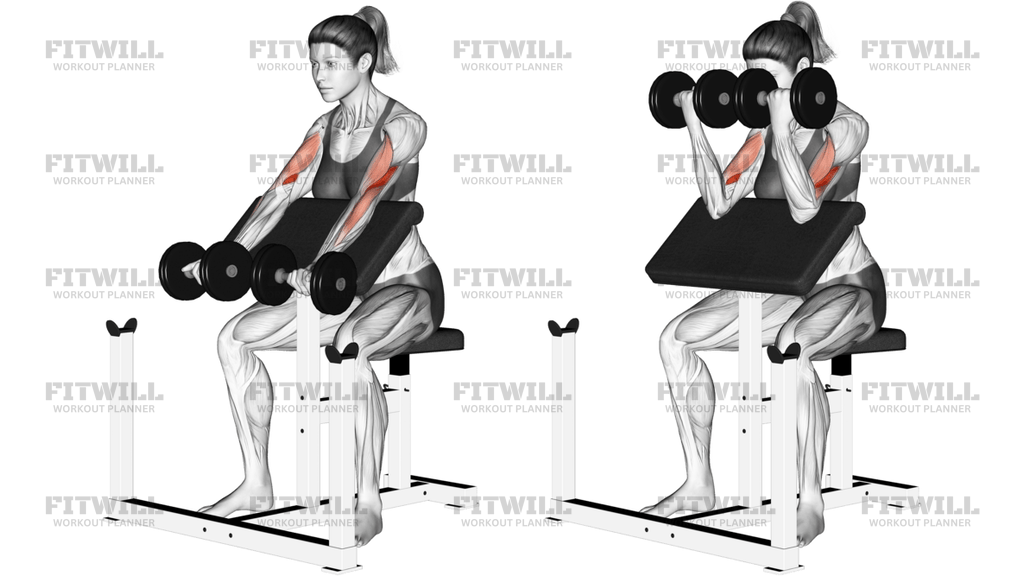
Dumbbell Incline Inner Biceps Curl is a strict incline-bench curl that keeps the upper arms hanging slightly behind the torso while you flex the elbows against dumbbells. The setup places the biceps under a longer stretch than a standing curl, so the movement feels more controlled, more isolated, and more demanding in the bottom half of the rep.
This variation is primarily an upper-arm exercise, with the biceps doing the main work and the brachialis, brachioradialis, and forearm flexors helping stabilize the wrist and elbow path. In anatomy terms, the biceps brachii is the main driver, while the long, stretched starting position often makes the inner portion of the biceps feel especially prominent to the lifter.
The incline bench matters because it removes a lot of the body English that turns curls into momentum work. With your back supported, the shoulders stay quiet, the chest stays open, and the elbows can travel through a cleaner arc. That makes this a useful choice when the goal is arm hypertrophy, strict tension, or a high-quality accessory movement after heavier compound lifts.
To get the most from it, set the bench to a moderate incline, let the dumbbells hang with the wrists stacked over the forearms, and keep the upper arms mostly fixed as you curl. The top of the rep should finish near the front of the shoulders without letting the elbows drift forward. The lowering phase should be slow enough to preserve tension, but not so deep or loose that the shoulders roll forward or the bottom position becomes uncomfortable.
This is not a load-maximizing curl. It rewards a controlled tempo, a steady grip, and a pain-free range of motion far more than heavy weight. Use it when you want a strict biceps movement with a pronounced stretch and a clean end-range squeeze. Beginners can use it safely with light dumbbells, but the bench angle and arm position should stay strict so the movement does not turn into a swinging incline curl.
[ Workout Log & Planner ]
Put your next workout in Fitwill
Keep your plan and training log ready when you are.


Instructions
- Set an incline bench to a moderate angle and sit with your upper back and head supported, feet flat on the floor.
- Hold a dumbbell in each hand with palms facing up, letting your arms hang beside the bench and your wrists stay stacked over the forearms.
- Pin your shoulder blades gently into the bench pad and keep your chest open without arching your lower back.
- Start with the elbows slightly behind your torso so the dumbbells hang in a long, relaxed stretch without losing control of the grip.
- Curl both dumbbells by bending the elbows and keep the upper arms mostly still as the weights travel in a smooth arc toward the front of your shoulders.
- Keep the palms turned up, squeeze the biceps briefly at the top, and stop the rep before the elbows drift forward.
- Lower the dumbbells slowly until the arms are almost straight again, keeping the shoulders down and the bench contact stable.
- Exhale as you curl up, inhale as you lower, and reset the stretch before starting the next repetition.
Tips & Tricks
- Choose lighter dumbbells than you would use for standing curls because the incline position lengthens the lever and makes the bottom range much harder.
- Keep the elbows from drifting forward on the way up; if they slide toward the ribs, the exercise starts to lose the stretched-biceps effect.
- Let the wrists stay neutral instead of bending them back toward the forearms, especially when the dumbbells get close to shoulder level.
- Set the bench at a moderate incline rather than nearly upright, so the arms hang behind the torso without forcing the shoulders into an awkward position.
- Lower the weights slowly enough to feel the biceps lengthen, but stop before the shoulders roll forward or the upper back peels off the pad.
- Keep the neck relaxed and the chin slightly tucked so you do not turn the rep into a shrugging motion.
- Use a smooth supinated grip throughout the set; twisting hard at the top usually creates tension in the forearms instead of the biceps.
- End the set when the top position starts to shorten, swing, or lose the clean line from elbow to shoulder.
Frequently Asked Questions
What muscle does Dumbbell Incline Inner Biceps Curl target most?
The biceps brachii is the primary mover, with the incline position also putting strong work onto the brachialis, brachioradialis, and forearm flexors.
Why use an incline bench for this curl?
The incline bench keeps the upper arms slightly behind the torso, which creates a bigger stretch on the biceps and makes cheating much harder.
How heavy should I train this movement?
Use a lighter load than your usual curl variation. The stretched starting position makes this exercise more demanding, so strict control matters more than load.
Should my elbows move during the rep?
They should stay mostly fixed. A small natural shift is fine, but letting the elbows drift far forward turns the movement into a looser curl.
Where should the dumbbells finish at the top?
Finish near the front of the shoulders with the palms still up and the wrists stacked over the forearms, not with the elbows pushed far in front of the body.
Can beginners do this exercise safely?
Yes, as long as the bench angle is moderate and the dumbbells are light enough to keep the shoulders quiet and the lowering phase controlled.
How is this different from a standing dumbbell curl?
A standing curl lets you use more body movement. This version pins you to the bench and keeps the biceps under tension in a longer, stricter range.
What should I do if my shoulders feel stressed at the bottom?
Reduce the bench angle, shorten the range slightly, or lower the weight. The goal is a strong biceps stretch, not discomfort in the front of the shoulder.