Dumbbell Lying One-Arm Deltoid Rear
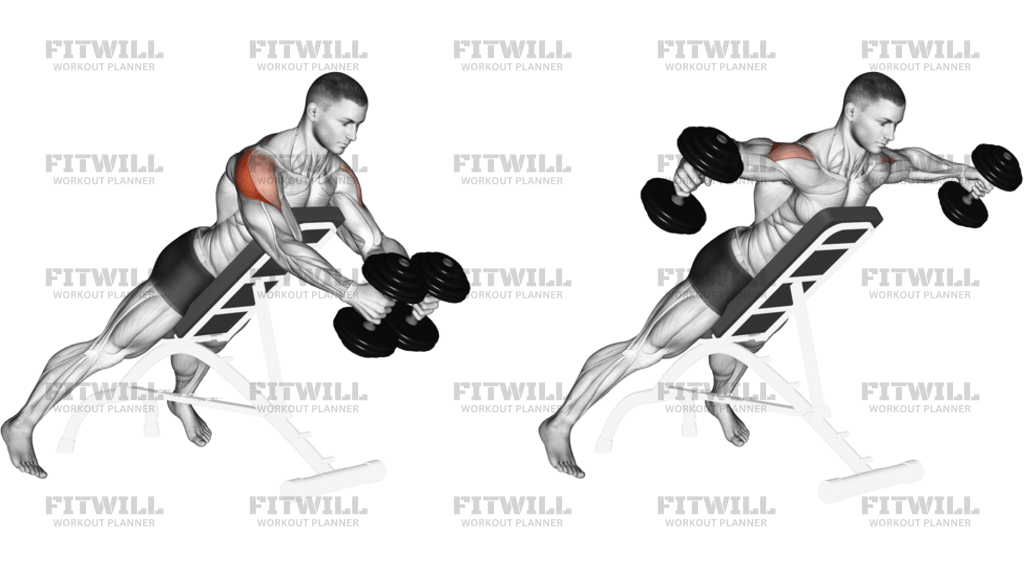
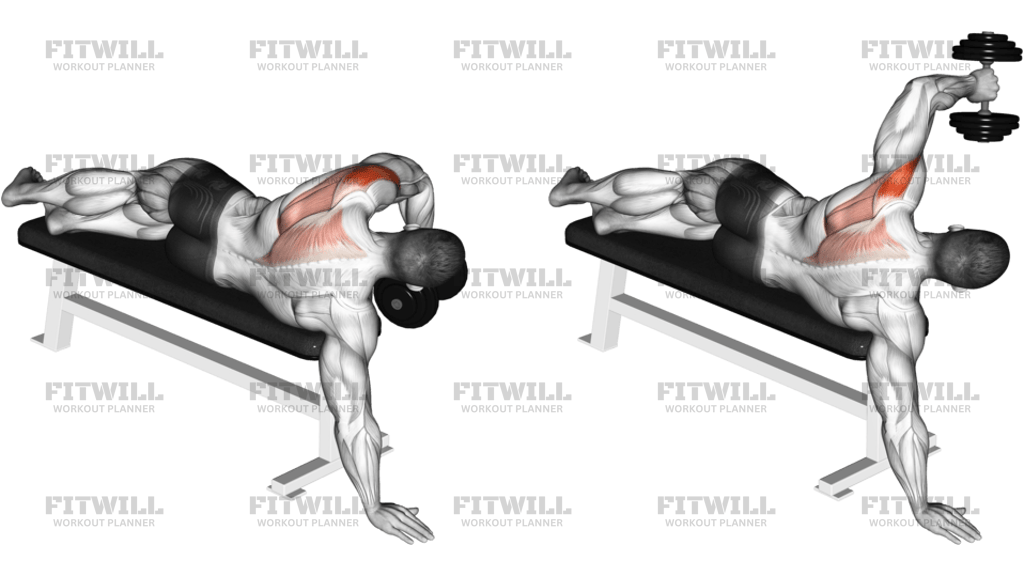
Dumbbell Lying One-Arm Deltoid Rear is a chest-supported rear-delt raise performed with one dumbbell at a time. The bench removes most of the body English, so the rear shoulder has to do the work instead of the torso, hips, or momentum. In the image, the lifter lies face down across a flat bench with one arm hanging free and the dumbbell moving in a wide arc to the side.
This setup is useful when you want cleaner isolation than a standing bent-over raise. The rear delts, rhomboids, mid traps, and smaller rotator-cuff muscles help guide the shoulder blade and upper arm through the lift, while the supporting side and trunk keep the torso steady on the bench. Because the range is short and the muscle is small, the exercise usually responds best to light loads and deliberate reps.
Set the bench flat and lie with your chest and hips supported, then let the working shoulder hang just off the side so the dumbbell starts below the shoulder line. Keep the neck relaxed, the ribs down, and the elbow softly bent. From the bottom, raise the arm out and slightly back until the upper arm is near line with the torso or shoulder, depending on comfort and control.
At the top, squeeze the rear shoulder without twisting the torso or shrugging toward the ear. Lower the dumbbell slowly to a dead hang and reset each rep instead of bouncing from the bottom. A smooth path matters more than height; if the shoulder rolls forward, the trunk rotates, or the movement turns into a swing, the load is too heavy.
Use this variation as rear-delt accessory work, especially if you want one side at a time to expose strength differences or clean up asymmetry. It also works well as a higher-rep finisher after pressing or rowing, provided the shoulder stays comfortable and the bench contact remains stable throughout the set.
Fitwill
Log Workouts, Track Progress & Build Strength.
Achieve more with Fitwill: explore over 9600 exercises with images and videos, access built-in and custom workouts, perfect for both gym and home sessions, and see real results.
Start your journey. Download today!




Instructions
- Set a flat bench and lie chest-down with your hips and ribs supported, letting the working shoulder hang off the side.
- Hold one dumbbell in the free hand with a soft elbow bend and let it hang directly below the shoulder.
- Plant the non-working hand and keep your neck long, ribs down, and abdomen lightly braced against the bench.
- Pull the dumbbell out in a wide arc until the upper arm reaches roughly shoulder height or slightly below.
- Pause briefly at the top without rotating the torso or shrugging the shoulder.
- Lower the dumbbell slowly until the arm is fully long again under control.
- Reset the shoulder at the bottom before starting the next rep.
- Repeat on the same side for the planned reps, then switch sides.
Tips & Tricks
- A lighter dumbbell usually produces a better rear-delt contraction than a heavier one on this movement.
- Keep the elbow slightly bent and fixed so the rep comes from the shoulder, not from turning it into a triceps raise.
- Let the dumbbell travel in a shallow arc away from the bench; if it drifts straight up, the line of pull is too vertical.
- Keep the top position just short of a shrug, because elevating the shoulder turns the work toward the upper traps.
- If your torso starts rolling open on the bench, shorten the range or reduce the load.
- Use a slower lowering phase to keep tension on the rear delt instead of dropping into the bottom.
- Keep the wrist neutral so the hand does not lead the lift and steal attention from the shoulder.
- Stop the set if the front of the shoulder pinches; the bench angle or range may need adjusting.
Frequently Asked Questions
What muscles does Dumbbell Lying One-Arm Deltoid Rear work?
It mainly targets the rear delts, with help from the rhomboids, mid traps, and rotator-cuff muscles that steady the shoulder blade and upper arm.
Is Dumbbell Lying One-Arm Deltoid Rear good for beginners?
Yes, as long as the dumbbell is light and the bench setup feels stable. The chest support makes it easier to learn than a standing bent-over rear-delt raise.
Where should the dumbbell travel on the bench?
It should move out and slightly back in a smooth arc, ending around shoulder height without twisting the torso or letting the shoulder shrug.
How much elbow bend should I keep?
Keep only a soft bend and hold it nearly fixed. Bending and straightening the elbow turns the movement into an arm raise instead of a rear-delt raise.
What is the biggest form mistake with this exercise?
Shrugging the shoulder or rolling the chest off the bench. Both reduce rear-delt tension and usually mean the dumbbell is too heavy.
Why use one arm at a time?
Training one arm at a time makes it easier to keep the bench stable and notice side-to-side differences in rear-delt strength or shoulder control.
Should I lift higher if I want more rear-delt work?
Not necessarily. Once the upper arm reaches shoulder level, extra height often comes from traps or torso rotation instead of the rear delt.
What can I use instead of this exercise?
A chest-supported incline rear-delt raise or a bent-over one-arm rear-delt raise are the closest substitutions if you need a similar pattern with different support.
How should this feel during the set?
You should feel a localized burn at the back of the shoulder with minimal lower-back or neck involvement. Sharp pain or pinching means you should stop and adjust the setup.