Arm Down Rotator Stretch
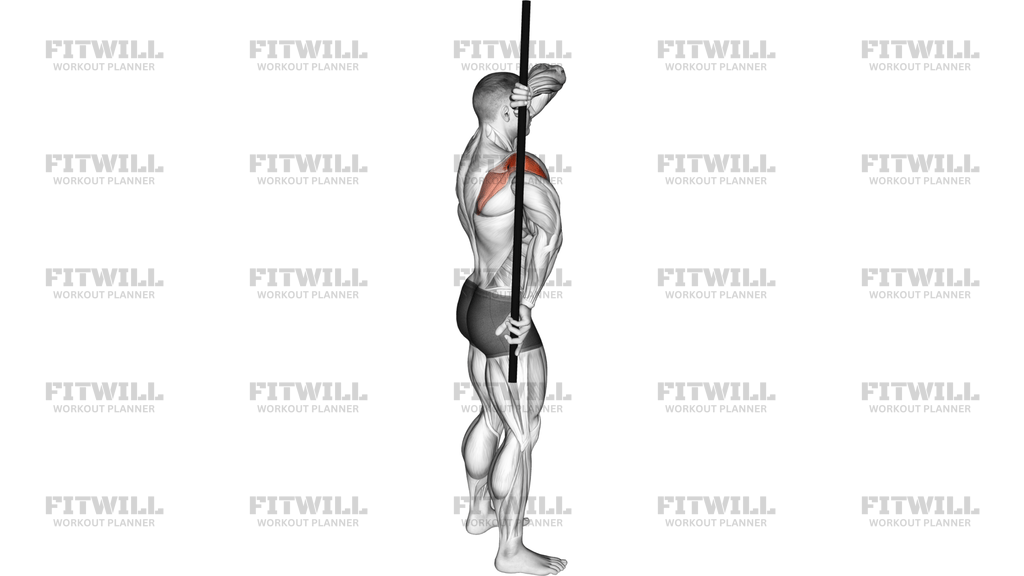
Arm Down Rotator Stretch is a standing shoulder mobility drill performed against a vertical pole or fixed upright support. One hand reaches high above the head while the other hand stays lower and behind the torso, creating a long line through the shoulder, upper back, and arm as you gently rotate into the stretch.
This movement is most useful when the shoulders feel stiff from pressing, climbing, overhead lifting, throwing, or desk work. It places the deltoids under a controlled stretch while the upper back, triceps, and scapular muscles help keep the body organized. The goal is not to force a dramatic range of motion; it is to create a smooth, repeatable position that opens the shoulder without pinching at the front of the joint.
The pole matters because it gives you a fixed reference for both hands. With the hands separated high and low, you can keep the chest tall, the ribs from flaring, and the neck relaxed while you rotate through the shoulder. That makes the stretch easier to control than a loose standing version, especially if one side is tighter or if you tend to twist through the lower back instead of the shoulder girdle.
A clean Arm Down Rotator Stretch starts with the feet planted, the pelvis stacked, and the top hand reaching only as far as you can keep the shoulder down and stable. From there, ease into the position until you feel a strong but tolerable stretch across the shoulder and upper arm. Breathe slowly, keep the movement smooth, and back off if the sensation shifts into sharp pain, numbness, or a pinching feeling at the front of the shoulder.
Use Arm Down Rotator Stretch as part of a warm-up, cooldown, or mobility block when you want to restore shoulder rotation and upper-body reach. It is also a practical reset after heavy upper-body training because it encourages controlled range instead of aggressive forcing. Treat each side separately, match the range you can own, and let the stretch feel long and open rather than strained.
Fitwill
Log Workouts, Track Progress & Build Strength.
Achieve more with Fitwill: explore over 9600 exercises with images and videos, access built-in and custom workouts, perfect for both gym and home sessions, and see real results.
Start your journey. Download today!




Instructions
- Stand beside a vertical pole or upright support and place one hand high above your head while the other hand reaches lower behind your torso.
- Plant your feet hip-width apart and square your ribs over your pelvis before you start turning.
- Keep the upper hand wrapped around the pole and the lower hand on the lower section so both arms stay anchored.
- Lift through the crown of your head, then gently draw the shoulder blades into a long, neutral position.
- Rotate your torso just enough to feel the stretch open through the shoulder, upper arm, and upper back.
- Keep the neck relaxed and the lower back from arching as you settle into the end range.
- Breathe slowly for the duration of the hold and let each exhale soften the stretch slightly.
- Ease out of the position with control, then switch sides and repeat with the same setup.
- Stop the set if the stretch becomes sharp, numb, or pinchy at the shoulder.
Tips & Tricks
- A slightly staggered stance often helps you keep your ribs stacked instead of leaning into the pole.
- Let the lower hand stay active on the support so the stretch comes from rotation, not from hanging on the shoulder capsule.
- If the front of the shoulder feels jammed, lower the top hand a little and reduce the torso turn.
- Keep the chest open without flaring the lower ribs; the movement should feel like shoulder rotation, not a backbend.
- The stretch should run through the deltoid and upper arm more than the neck. If the neck takes over, reset your shoulder position.
- Exhale slowly to help the shoulder relax into the position instead of forcing the range with pressure.
- Use the same hand spacing on both sides when possible so you can compare left and right shoulder mobility accurately.
- Do not rush out of the bottom position; a controlled exit keeps the shoulder from getting yanked back into place.
Frequently Asked Questions
What does Arm Down Rotator Stretch mainly target?
It mainly targets the delts and nearby shoulder tissues, with support from the upper back and triceps.
Do I need a pole or upright support for Arm Down Rotator Stretch?
A fixed pole, post, or sturdy vertical support makes the stretch more controlled because it gives each hand a stable anchor.
How should Arm Down Rotator Stretch feel?
You should feel a strong, steady stretch through the shoulder and upper arm, not sharp pain or a pinching sensation in the front of the joint.
What is the most common mistake in Arm Down Rotator Stretch?
Most people arch the lower back or twist the torso instead of keeping the ribcage and pelvis stacked while the shoulder opens.
Can I use Arm Down Rotator Stretch before pressing or overhead work?
Yes. It works well in a warm-up if you keep the range gentle and do not force the shoulder into a painful position.
Which side should feel tighter in Arm Down Rotator Stretch?
The tighter side is often the one with less overhead time or more pressing volume, but both sides should be checked separately.
Is Arm Down Rotator Stretch good after desk work?
Yes. The anchored position can help open a shoulder that has been rounded forward for long periods.
How long should I hold Arm Down Rotator Stretch?
A short, controlled hold is usually enough; stay long enough to soften the tissue without losing posture or turning it into a passive hang.