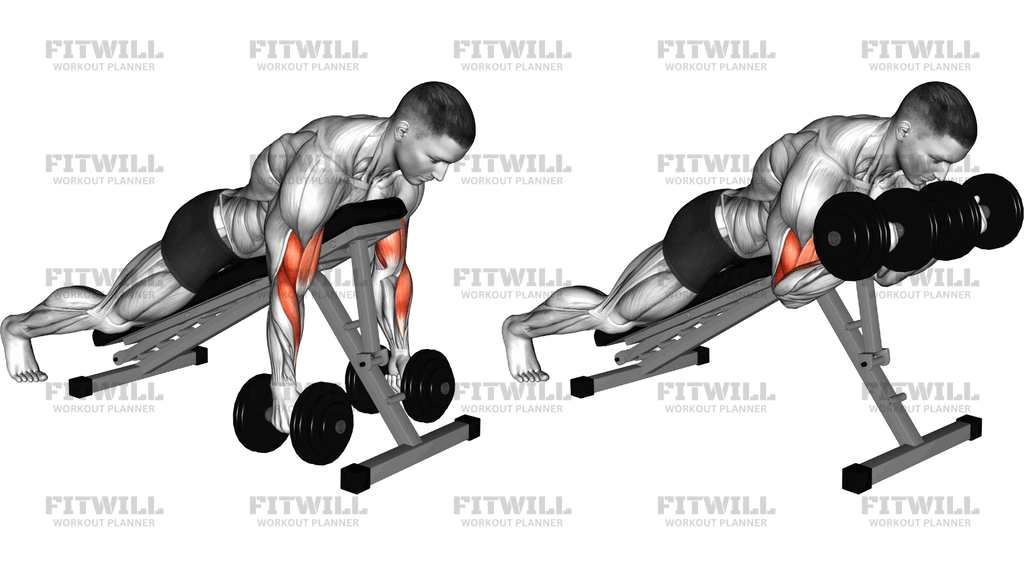
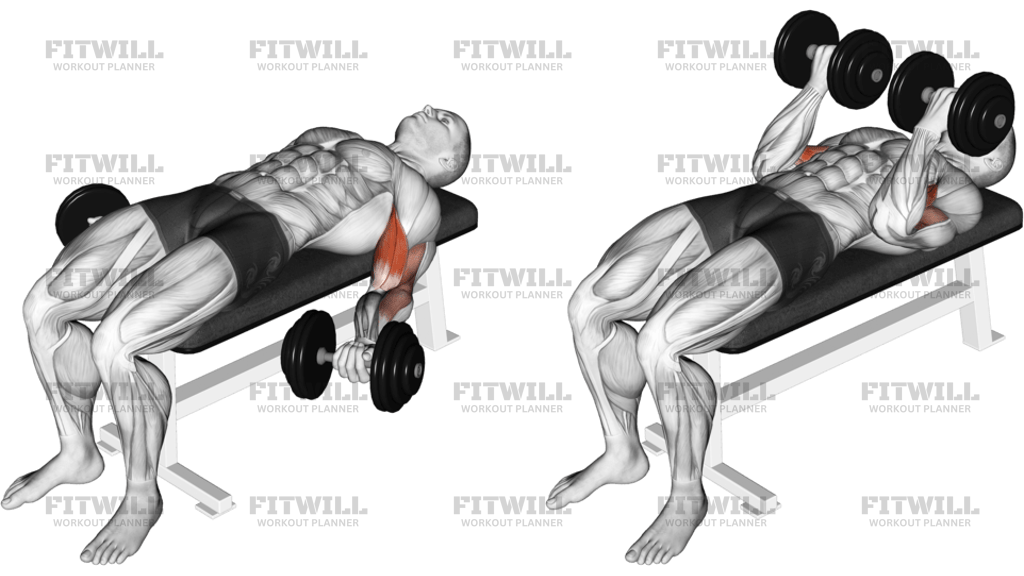
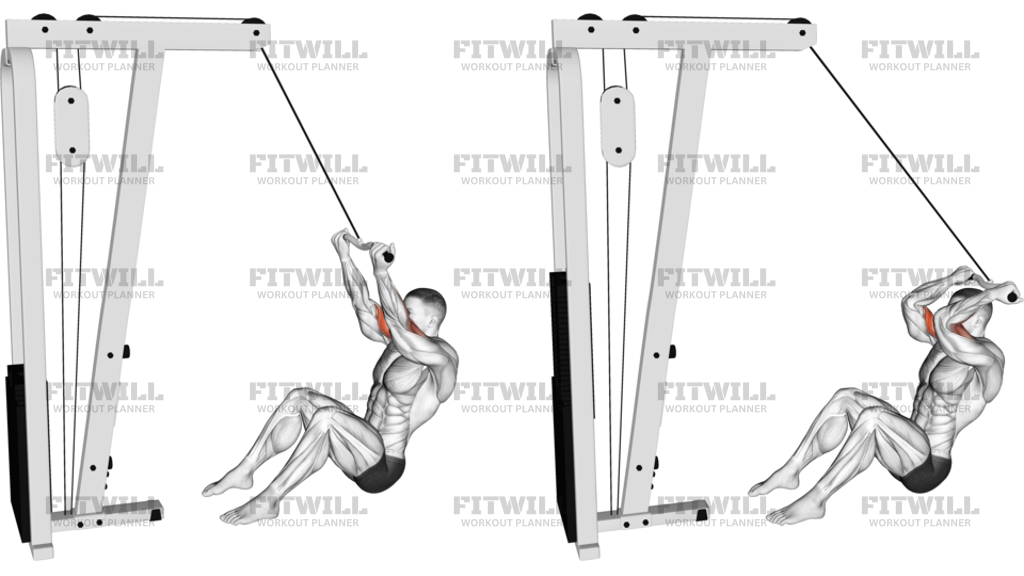
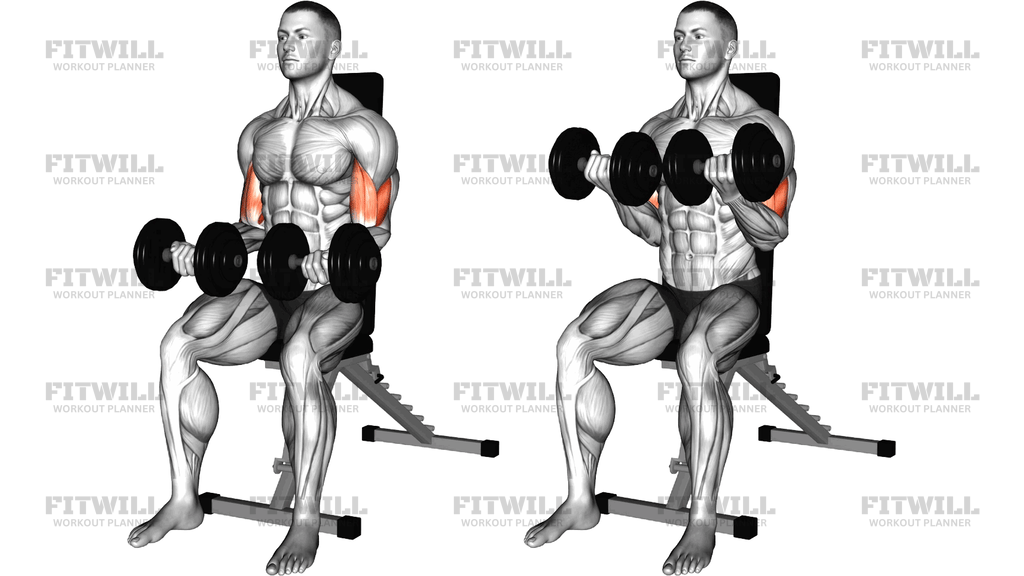
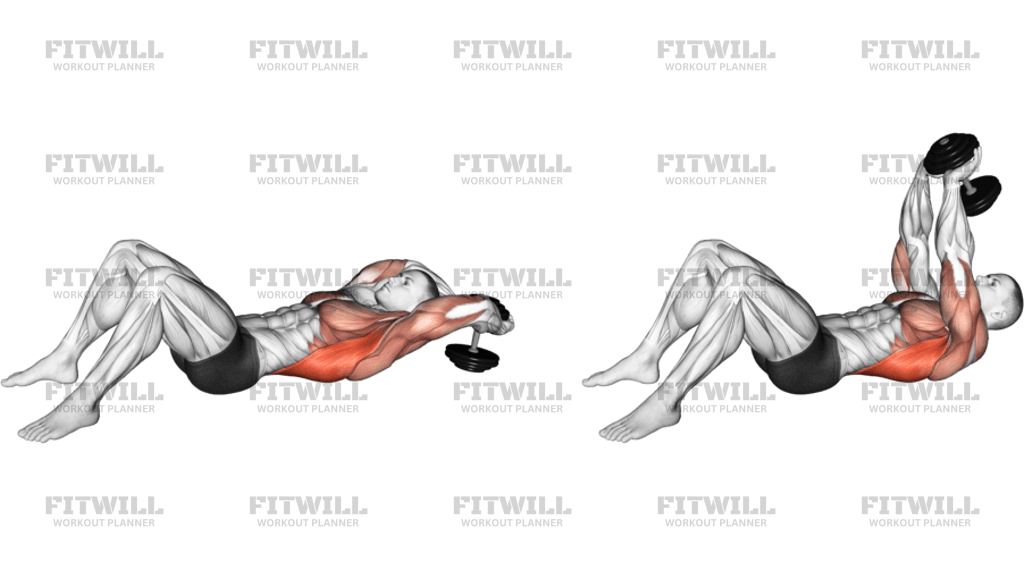
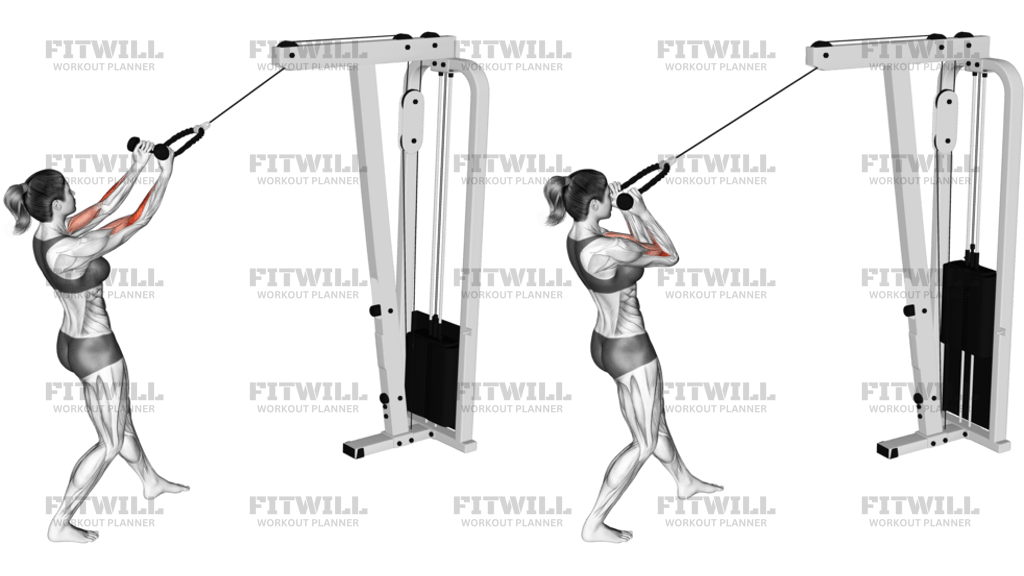
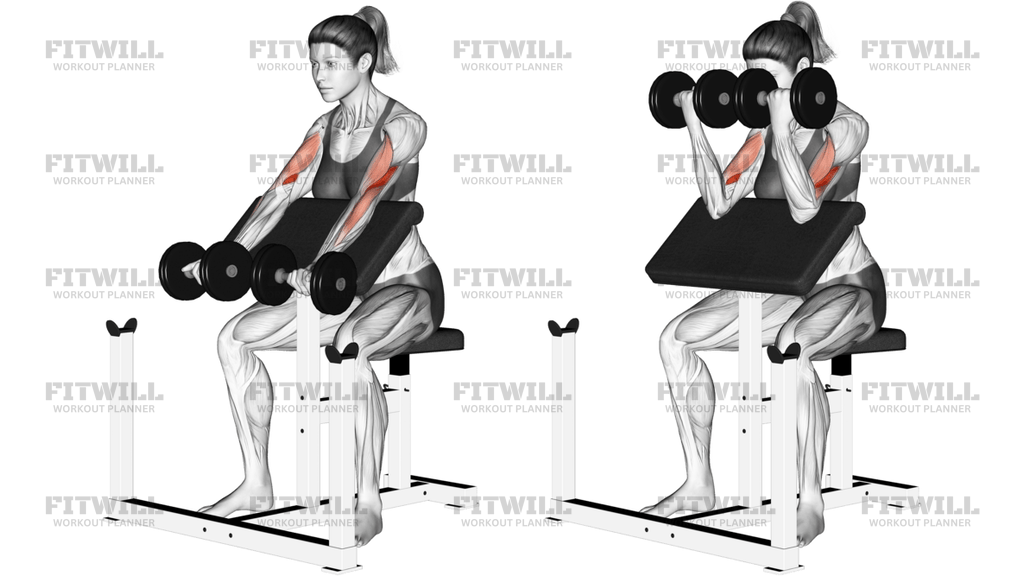
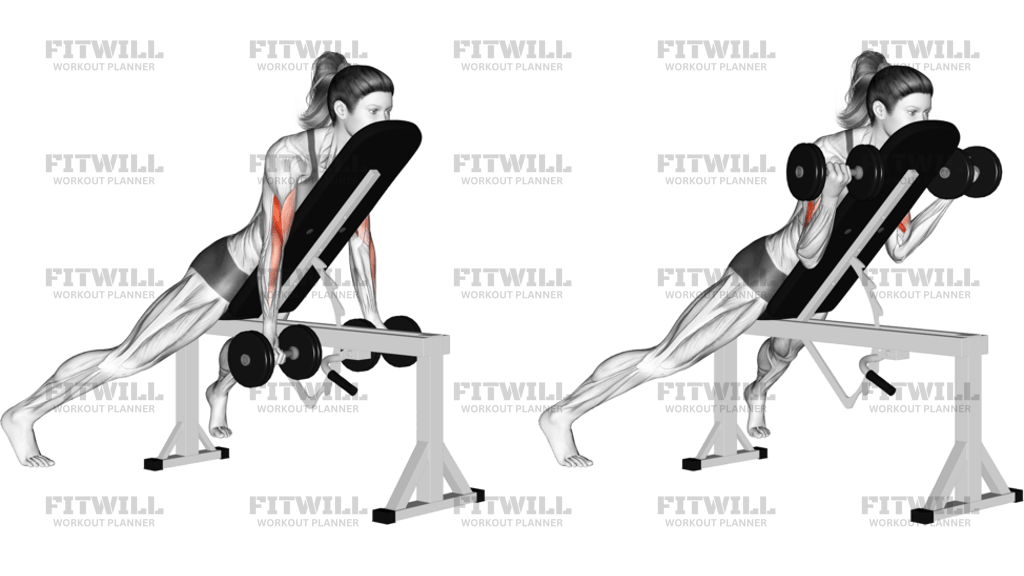
Dumbbell Biceps Curl
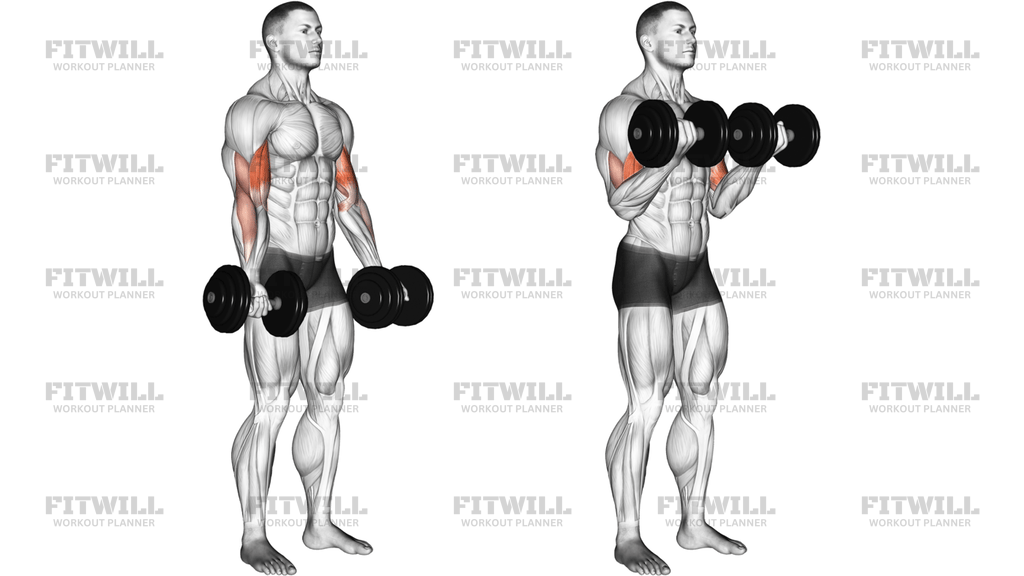
Dumbbell Biceps Curl is a standing elbow-flexion exercise that builds the biceps while also challenging the brachialis, brachioradialis, and forearm flexors. The dumbbells travel in a simple arc from the sides of the thighs to the front of the shoulders, but the value of the movement comes from keeping the upper arms quiet and the torso stacked instead of turning it into a swing.
This exercise is useful when you want direct arm work without a machine or barbell. A Dumbbell Biceps Curl lets each arm work independently, so a weaker side cannot hide behind the stronger one. It also gives you a clear way to adjust grip, stance, and range of motion if your wrists, elbows, or shoulders prefer a slightly different curl path.
The setup matters because the curl is easy to cheat. Stand tall with the ribs down, feet planted, and the dumbbells hanging at your sides before you begin. Keep the elbows close to the torso and the wrists straight so the biceps can do the lifting instead of the shoulders drifting forward or the lower back leaning back to help the rep.
On each rep, curl the dumbbells by bending the elbows and letting the forearms turn up naturally as the weights rise. The top position should feel like a strong squeeze near the front of the shoulders, not a shrug. Lower the dumbbells under control until the arms are almost straight, then reset without bouncing out of the bottom.
Dumbbell Biceps Curl fits well in upper-body or arm-focused sessions after bigger pulling work or press work, depending on your goal. It is also easy to scale for beginners by using lighter weights, a smaller range, or an alternating pattern. What matters most is that the same strict path repeats on every rep, with no torso swing, no wrist collapse, and no forward drift of the elbows.
When the movement stays clean, Dumbbell Biceps Curl is a reliable way to build arm size, improve elbow flexion strength, and practice controlled supination under load. If the weights force you to rock the body or shorten the lowering phase, the load is too heavy for the exercise goal.
[ Workout Log & Planner ]
Put your next workout in Fitwill
Keep your plan and training log ready when you are.


Instructions
- Stand tall with your feet about hip-width apart and hold a dumbbell in each hand at your sides, palms facing forward or slightly in.
- Keep your chest stacked over your pelvis, knees soft, shoulders down, and elbows tucked close to your ribs before the first rep.
- Brace your torso and keep your wrists straight so the dumbbells hang under your forearms instead of folding back at the wrist.
- Curl both dumbbells by bending the elbows and bringing the weights up in a smooth arc toward the front of your shoulders.
- Let the forearms rotate so the palms finish facing up as the dumbbells rise, but do not let the shoulders roll forward.
- Pause briefly at the top and squeeze the biceps without shrugging or leaning back to finish the rep.
- Lower the dumbbells slowly until your arms are nearly straight and the biceps are still under tension.
- Reset the shoulders and elbows at the bottom, then start the next rep from a dead-hang position without bouncing.
Tips & Tricks
- If your elbows drift in front of your ribs, the load is too heavy or you are trying to turn the curl into a front raise.
- Keep the wrists stacked over the forearms; bent-back wrists usually shift tension away from the biceps and into the forearm tendons.
- A small amount of forearm rotation is useful, but the dumbbell should not spin wildly as it rises.
- Use a slower lowering phase than lifting phase so the biceps stay loaded instead of resting at the bottom.
- If your torso rocks, switch to alternating reps or reduce the weight until you can keep the chest still.
- Stop the rep just before the shoulders roll forward; the top position should feel like a curl, not a shrug.
- A slightly shorter range is better than bouncing off a fully relaxed bottom position.
- Choose a load that lets both arms match the same path, even if one side feels stronger.
Frequently Asked Questions
What muscles does Dumbbell Biceps Curl work?
Dumbbell Biceps Curl mainly works the biceps, with help from the brachialis, brachioradialis, and forearm flexors. The shoulders and trunk mainly stabilize while the elbows do the lifting.
Is Dumbbell Biceps Curl good for beginners?
Yes. Beginners usually do best with light dumbbells, a strict standing posture, and a slow lowering phase. If the body starts swaying, reduce the load before adding more reps.
Should I curl both dumbbells at the same time or alternate?
Either works, but alternating is often easier if you tend to lean back or swing. Curling both at once keeps the effort symmetrical if you can keep the torso still.
Why do my elbows drift forward during Dumbbell Biceps Curl?
That usually means the weight is too heavy or the curl is turning into a shoulder movement. Keep the elbows pinned near the ribs and stop the set when they start traveling forward.
Do my palms need to turn up during the curl?
Yes, in a standard Dumbbell Biceps Curl the palms finish facing up as the dumbbells approach shoulder height. Keep the rotation smooth and avoid twisting the wrists backward.
What is the difference between Dumbbell Biceps Curl and a hammer curl?
A Dumbbell Biceps Curl uses a more supinated hand position, which emphasizes the biceps more. A hammer curl keeps the palms facing in and shifts more work toward the brachialis and brachioradialis.
Can I do Dumbbell Biceps Curl if my lower back gets tired standing?
Yes, but switch to lighter dumbbells or sit on a bench so you cannot lean back to finish the curl. The goal is to keep the torso quiet while the elbows flex.
How high should the dumbbells come up?
Bring them to about the front of the shoulders, where the biceps are fully shortened without shrugging. If you have to lift the shoulders to reach higher, the rep is too high.